
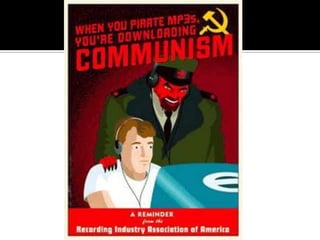
   What is communism?
   What is socialism?
   a theory or system of social organization based
    on the holding of all property in common, actual
    ownership being ascribed to the community as a
    whole or to the state.
   a theory or system of social organization that
    advocates the vesting of the ownership and
    control of the means of production and
    distribution, of capital, land, etc., in the
    community as a whole.
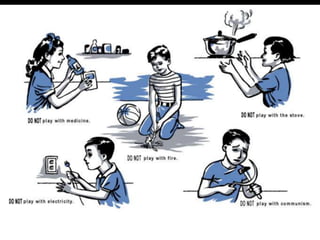
For every action there is an equal and opposite reaction.
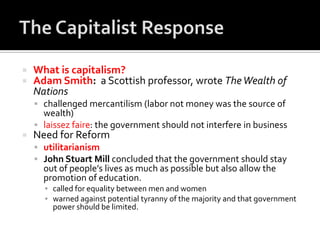
   What is capitalism?
   Adam Smith: a Scottish professor, wrote The Wealth of
    Nations
     challenged mercantilism (labor not money was the source of
      wealth)
     laissez faire: the government should not interfere in business
   Need for Reform
     utilitarianism
     John Stuart Mill concluded that the government should stay
      out of people’s lives as much as possible but also allow the
      promotion of education.
      ▪ called for equality between men and women
      ▪ warned against potential tyranny of the majority and that government
        power should be limited.
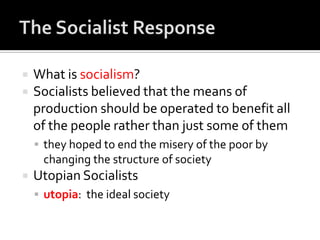
   What is socialism?
   Socialists believed that the means of
    production should be operated to benefit all
    of the people rather than just some of them
     they hoped to end the misery of the poor by
     changing the structure of society
   Utopian Socialists
     utopia: the ideal society
   Karl Marx
     German, studied at the Universities of Bonn and
      Berlin
     forced to Paris where he met Friedrich Engel
   Friedrich Engels
     Son of a German manufactuer
     Wrote a book that caught the eye of Karl Marx
 Karl Marx and Freidrich Engels believed that it wasn’t
  possible to have a utopian society. They felt that it was
  important to dissolve the existing social system. Their
  basis was on the struggle of the classes.
 Marx’s ideas
     Conflict between the classes was inevitable
     division of classes
     Capitalism was not a permanent state
   Marx’s Writings
     Communist Manifesto (1848)
     Das Capital (1885)
     Greatly effected the workers
      ▪ Trade unions
      ▪ Strikes
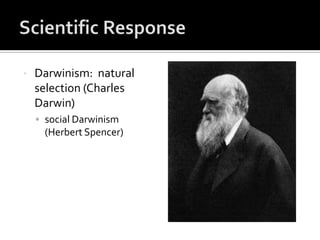
•   Darwinism: natural
    selection (Charles
    Darwin)
     social Darwinism
      (Herbert Spencer)
   Romanticism: the idea that humankind was
    good, emphasized the senses and emotions
     followed the basic idea of Jean-Jacques Rousseau
     Other famous romanticists
      ▪ Johann Wolfgang von Goethe
      ▪ Alexander Dumas (Three Musketeers and Count of
        Monte Cristo)
      ▪ Victor Hugo (The Hunchback of Notre Dame)
      ▪ Sir Walter Scott (Ivanhoe)
      ▪ John Keats
   Realism: portrayed life in a realistic style,
    advocated human freedom and wanted a
    better world, wanted change-not escape
     Charles Dickens
   Naturalism: took a scientific approach to
    their art, describing everything with objective
    precision
     Leo Tolstoy ( War and Peace, Anna Karenina)
     Stephen Crane (Red Badge of Courage)
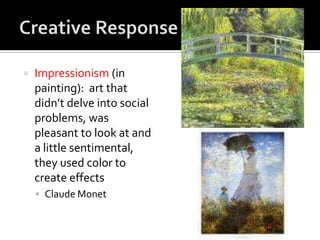
   Impressionism (in
    painting): art that
    didn’t delve into social
    problems, was
    pleasant to look at and
    a little sentimental,
    they used color to
    create effects
     Claude Monet
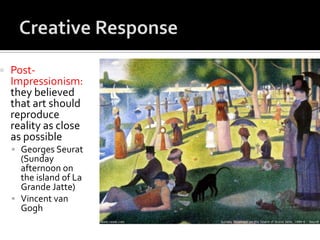
   Post-
    Impressionism:
    they believed
    that art should
    reproduce
    reality as close
    as possible
     Georges Seurat
      (Sunday
      afternoon on
      the island of La
      Grande Jatte)
     Vincent van
      Gogh

Response to the industrial revolution

  • 1.
    What is communism?  What is socialism?  a theory or system of social organization based on the holding of all property in common, actual ownership being ascribed to the community as a whole or to the state.  a theory or system of social organization that advocates the vesting of the ownership and control of the means of production and distribution, of capital, land, etc., in the community as a whole.
  • 2.
    For every actionthere is an equal and opposite reaction.
  • 7.
    What is capitalism?  Adam Smith: a Scottish professor, wrote The Wealth of Nations  challenged mercantilism (labor not money was the source of wealth)  laissez faire: the government should not interfere in business  Need for Reform  utilitarianism  John Stuart Mill concluded that the government should stay out of people’s lives as much as possible but also allow the promotion of education. ▪ called for equality between men and women ▪ warned against potential tyranny of the majority and that government power should be limited.
  • 8.
    What is socialism?  Socialists believed that the means of production should be operated to benefit all of the people rather than just some of them  they hoped to end the misery of the poor by changing the structure of society  Utopian Socialists  utopia: the ideal society
  • 9.
    Karl Marx  German, studied at the Universities of Bonn and Berlin  forced to Paris where he met Friedrich Engel  Friedrich Engels  Son of a German manufactuer  Wrote a book that caught the eye of Karl Marx
  • 10.
     Karl Marxand Freidrich Engels believed that it wasn’t possible to have a utopian society. They felt that it was important to dissolve the existing social system. Their basis was on the struggle of the classes.  Marx’s ideas  Conflict between the classes was inevitable  division of classes  Capitalism was not a permanent state  Marx’s Writings  Communist Manifesto (1848)  Das Capital (1885)  Greatly effected the workers ▪ Trade unions ▪ Strikes
  • 11.
    Darwinism: natural selection (Charles Darwin)  social Darwinism (Herbert Spencer)
  • 12.
    Romanticism: the idea that humankind was good, emphasized the senses and emotions  followed the basic idea of Jean-Jacques Rousseau  Other famous romanticists ▪ Johann Wolfgang von Goethe ▪ Alexander Dumas (Three Musketeers and Count of Monte Cristo) ▪ Victor Hugo (The Hunchback of Notre Dame) ▪ Sir Walter Scott (Ivanhoe) ▪ John Keats
  • 13.
    Realism: portrayed life in a realistic style, advocated human freedom and wanted a better world, wanted change-not escape  Charles Dickens  Naturalism: took a scientific approach to their art, describing everything with objective precision  Leo Tolstoy ( War and Peace, Anna Karenina)  Stephen Crane (Red Badge of Courage)
  • 14.
    Impressionism (in painting): art that didn’t delve into social problems, was pleasant to look at and a little sentimental, they used color to create effects  Claude Monet
  • 15.
    Post- Impressionism: they believed that art should reproduce reality as close as possible  Georges Seurat (Sunday afternoon on the island of La Grande Jatte)  Vincent van Gogh

Editor's Notes

  • #15 http://images.google.com/images?hl=en&q=Monet&btnG=Search+Images&gbv=2