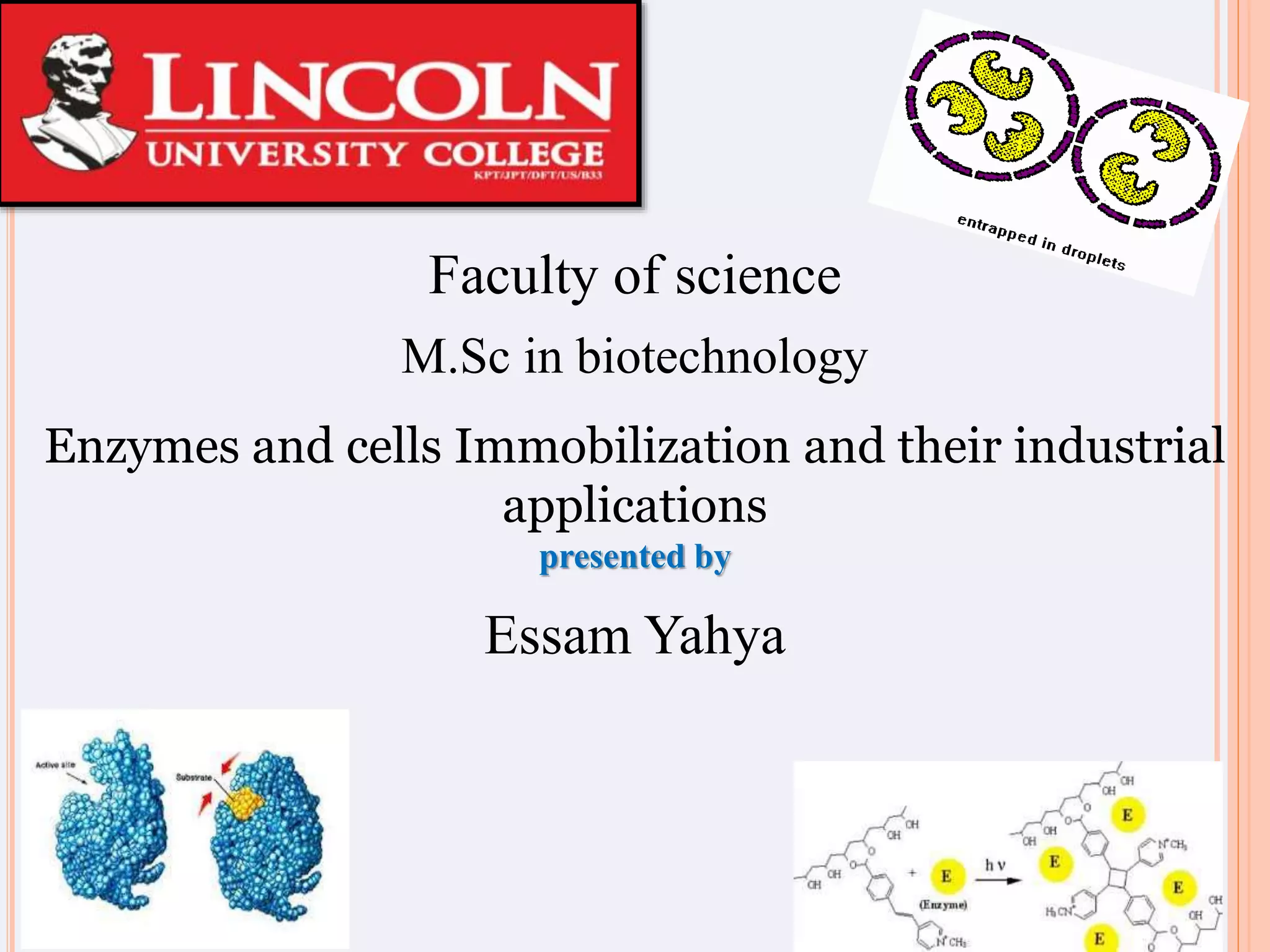
Immobilization involves attaching enzymes or cells to insoluble carriers to make them stable and reusable. The main immobilization techniques are adsorption, covalent binding, ionic interactions, cross-linking, and entrapment. Immobilization provides advantages like enabling enzyme use in non-aqueous solvents and extreme pH/temperatures while maintaining activity. It also allows for reuse of enzymes and reduces product inhibition. The document discusses various industrial applications of immobilized enzymes and cells in areas like biomedical treatment, food production, biofuel synthesis, waste treatment, and more.