INEN 3353
 a branch of engineering which deals with the optimization of
complex processes or systems. It is concerned with the
development, improvement, and implementation of
integrated systems of people, money, knowledge,
information, equipment, energy, materials, analysis
and synthesis, as well as the mathematical, physical
and social sciences together with the principles and methods
of engineering design to specify, predict, and evaluate the
results to be obtained from such systems or processes
 Accounting
 the measurement, processing and
communication of financial information about
economic entities
 Operations research
 also known as management science: discipline
that deals with the application of advanced
analytical methods to help make better decisions
 Operations Management
 an area of management concerned with
overseeing, designing, and controlling the process
of production and redesigning business
operations in the production of goods or services.
 Project Management
 is the process and activity of planning, organizing,
motivating, and controlling resources, procedures
and protocols to achieve specific goals in scientific
or daily problems.
 Job Design
 the specification of contents, methods and
relationship of jobs in order to satisfy
technological and organizational requirements as
well as the social and personal requirements of
the job holder.
 Financial Engineering
 the application of technical methods, especially
from mathematical finance and computational
finance, in the practice of finance
 Management Engineering
 a specialized form of management that is
concerned with the application of engineering
principles to business practice
 Supply Chain Management
 the management of the flow of goods. It includes
the movement and storage of raw materials,
work-in-process inventory, and finished goods
from point of origin to point of consumption.
 Process Engineering
 design, operation, control, and optimization of
chemical, physical, and biological processes.
 Systems Engineering
 the management of the flow of goods. It includes
the movement and storage of raw materials,
work-in-process inventory, and finished goods
from point of origin to point of consumption.
 Ergonomics
 the practice of designing products, systems or
processes to take proper account of the
interaction between them and the people that use
them.
 Safety Engineering
 an engineering discipline which assures that
engineered systems provide acceptable levels of
safety.
 Cost Engineering
 the practice devoted to the management of
project cost, involving such activities as cost- and
control- estimating, which is cost control and cost
forecasting, investment appraisal, and risk
analysis.
 Value Engineering
 a systematic method to improve the "value" of
goods or products and services by using an
examination of function.
 Quality Engineering
 a way of preventing mistakes or defects in
manufactured products and avoiding problems
when delivering solutions or services to
customers.
 Engineering Design Process
 formulation of a plan to help an engineer build a
product with a specified performance goal.
 Industrial Plant Configuration
 sizing of necessary infrastructure used in support
and maintenance of a given facility
 Facility Management
 an interdisciplinary field devoted to the
coordination of space, infrastructure, people and
organization
 Proposed byTaiichi Ohno
 Also known as theTPS (Toyota Production
System)
 is a production model in which items are
created to meet demand, not created in
surplus or in advance of need.
 The purpose of JIT production is to avoid the
waste associated with overproduction, waiting
and excess inventory.
 preview
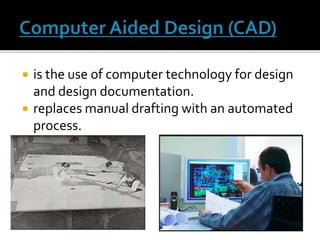
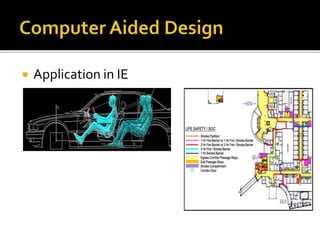
 is the use of computer technology for design
and design documentation.
 replaces manual drafting with an automated
process.
 Application in IE
 the use of computer software to
control machine tools and related machinery
in the manufacturing of work pieces.
 refer to the use of a computer to assist in all
operations of a manufacturing plant,
including planning, management,
transportation and storage.

Industrial Engineering Concepts

  • 1.
  • 2.
     a branchof engineering which deals with the optimization of complex processes or systems. It is concerned with the development, improvement, and implementation of integrated systems of people, money, knowledge, information, equipment, energy, materials, analysis and synthesis, as well as the mathematical, physical and social sciences together with the principles and methods of engineering design to specify, predict, and evaluate the results to be obtained from such systems or processes
  • 4.
     Accounting  themeasurement, processing and communication of financial information about economic entities  Operations research  also known as management science: discipline that deals with the application of advanced analytical methods to help make better decisions
  • 5.
     Operations Management an area of management concerned with overseeing, designing, and controlling the process of production and redesigning business operations in the production of goods or services.  Project Management  is the process and activity of planning, organizing, motivating, and controlling resources, procedures and protocols to achieve specific goals in scientific or daily problems.
  • 6.
     Job Design the specification of contents, methods and relationship of jobs in order to satisfy technological and organizational requirements as well as the social and personal requirements of the job holder.  Financial Engineering  the application of technical methods, especially from mathematical finance and computational finance, in the practice of finance
  • 7.
     Management Engineering a specialized form of management that is concerned with the application of engineering principles to business practice  Supply Chain Management  the management of the flow of goods. It includes the movement and storage of raw materials, work-in-process inventory, and finished goods from point of origin to point of consumption.
  • 8.
     Process Engineering design, operation, control, and optimization of chemical, physical, and biological processes.  Systems Engineering  the management of the flow of goods. It includes the movement and storage of raw materials, work-in-process inventory, and finished goods from point of origin to point of consumption.
  • 9.
     Ergonomics  thepractice of designing products, systems or processes to take proper account of the interaction between them and the people that use them.  Safety Engineering  an engineering discipline which assures that engineered systems provide acceptable levels of safety.
  • 10.
     Cost Engineering the practice devoted to the management of project cost, involving such activities as cost- and control- estimating, which is cost control and cost forecasting, investment appraisal, and risk analysis.  Value Engineering  a systematic method to improve the "value" of goods or products and services by using an examination of function.
  • 11.
     Quality Engineering a way of preventing mistakes or defects in manufactured products and avoiding problems when delivering solutions or services to customers.  Engineering Design Process  formulation of a plan to help an engineer build a product with a specified performance goal.
  • 12.
     Industrial PlantConfiguration  sizing of necessary infrastructure used in support and maintenance of a given facility  Facility Management  an interdisciplinary field devoted to the coordination of space, infrastructure, people and organization
  • 14.
     Proposed byTaiichiOhno  Also known as theTPS (Toyota Production System)  is a production model in which items are created to meet demand, not created in surplus or in advance of need.  The purpose of JIT production is to avoid the waste associated with overproduction, waiting and excess inventory.  preview
  • 15.
     is theuse of computer technology for design and design documentation.  replaces manual drafting with an automated process.
  • 16.
  • 17.
     the useof computer software to control machine tools and related machinery in the manufacturing of work pieces.  refer to the use of a computer to assist in all operations of a manufacturing plant, including planning, management, transportation and storage.