INDUCTIVE EFFECT & ELECTROMERIC EFFECT
PREPARED BY
MR. NARAYAN P. PAWAR
(PHARMACEUTICAL CHEMISTRY)
Inductive effect
Definition:- The polarization of σ bond due to electron withdrawing or
electron donating effect of adjacent groups or atoms is called inductive
effect.
Or
It is defined as permanent displacement of shared electron pair in carbon
chain towards more electronegative atoms or group is called inductive
effect.
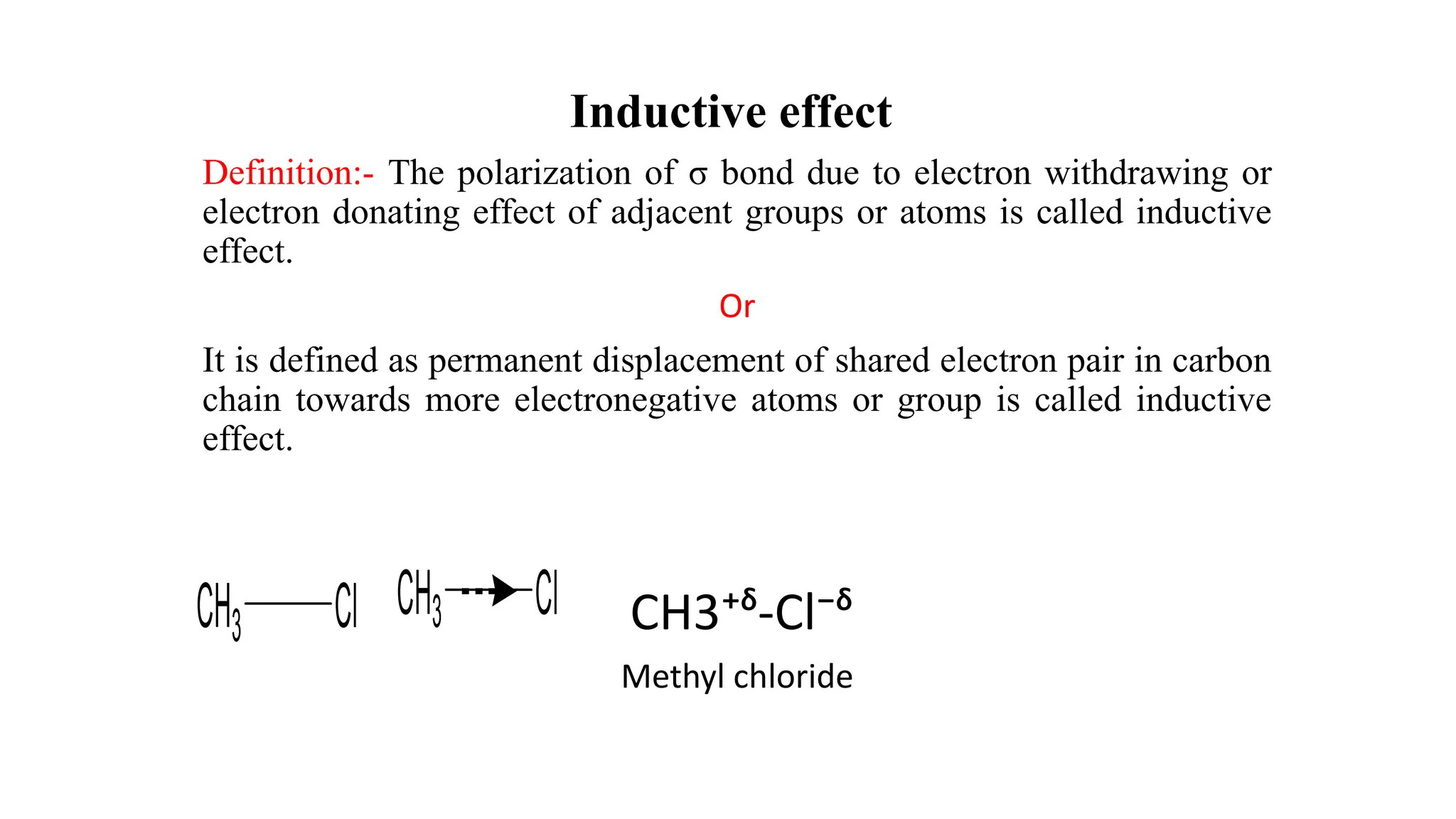
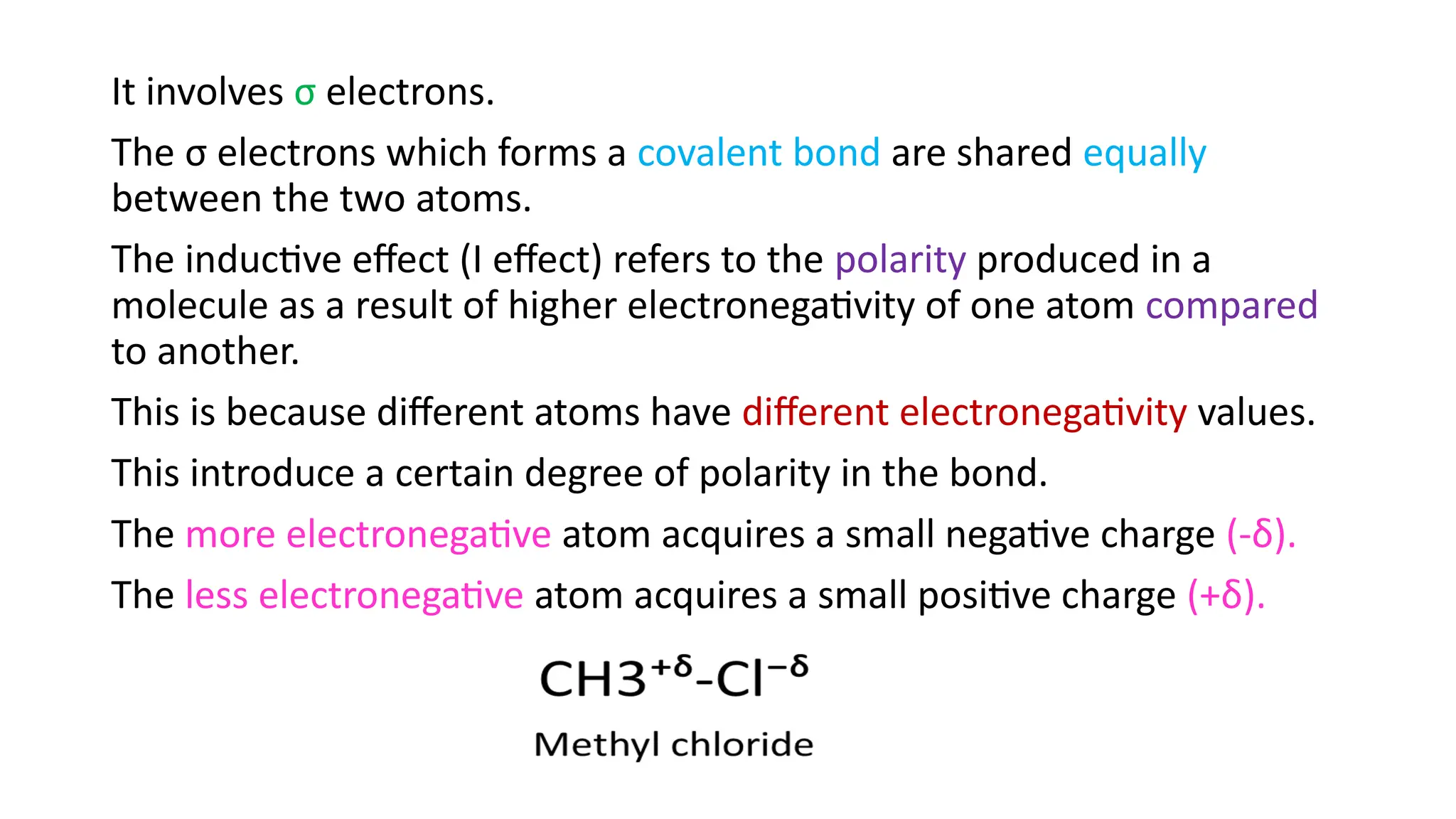
CH3⁺ᵟ-Cl⁻ᵟ
Methyl chloride
CH3 Cl CH3 Cl
It involves σ electrons.
The σ electrons which forms a covalent bond are shared equally
between the two atoms.
The inductive effect (I effect) refers to the polarity produced in a
molecule as a result of higher electronegativity of one atom compared
to another.
This is because different atoms have different electronegativity values.
This introduce a certain degree of polarity in the bond.
The more electronegative atom acquires a small negative charge (-δ).
The less electronegative atom acquires a small positive charge (+δ).
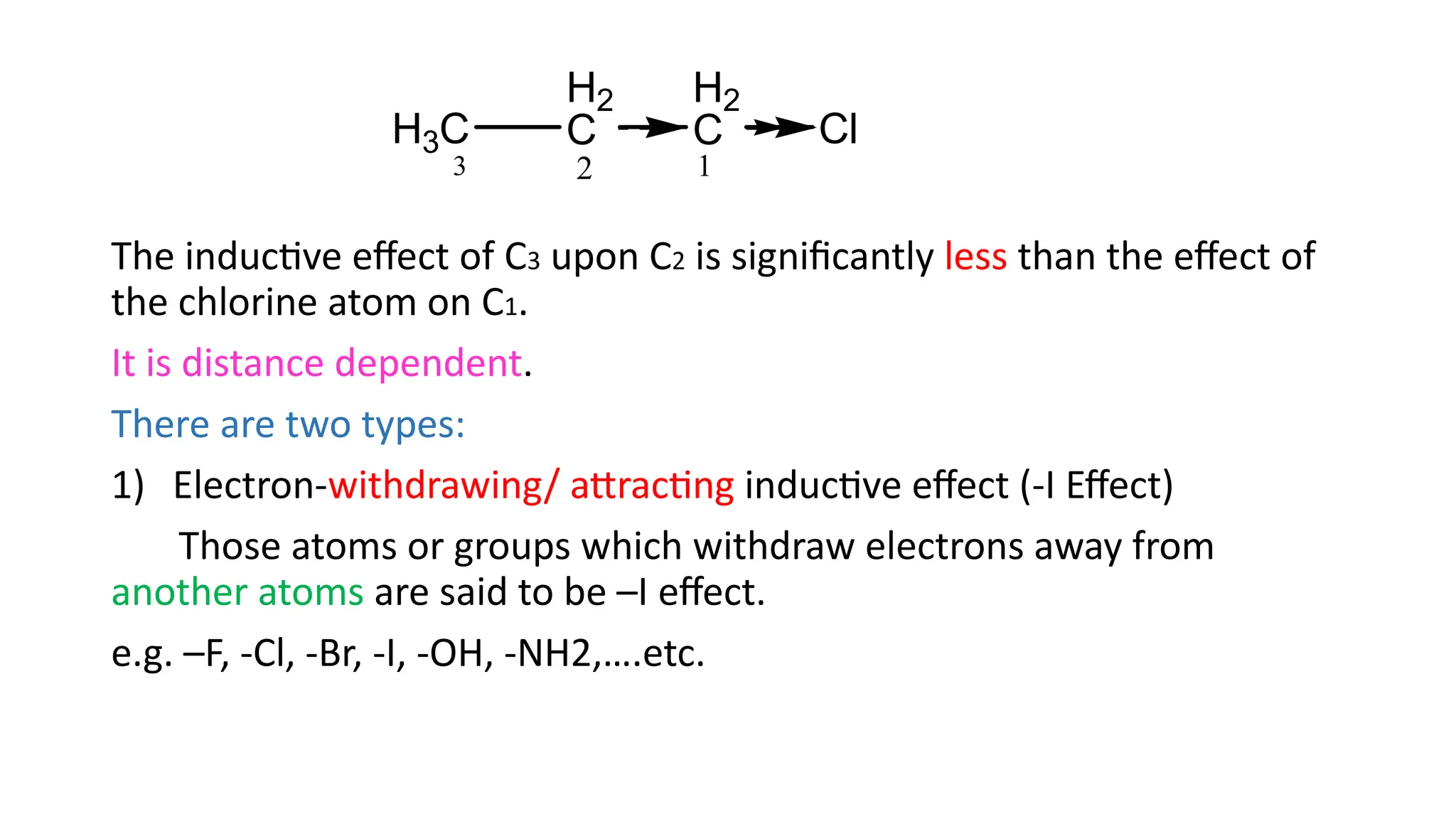
The inductive effect of C3 upon C2 is significantly less than the effect of
the chlorine atom on C1.
It is distance dependent.
There are two types:
1) Electron-withdrawing/ attracting inductive effect (-I Effect)
Those atoms or groups which withdraw electrons away from
another atoms are said to be –I effect.
e.g. –F, -Cl, -Br, -I, -OH, -NH2,….etc.
H3C
H2
C
H2
C Cl
1
2
3
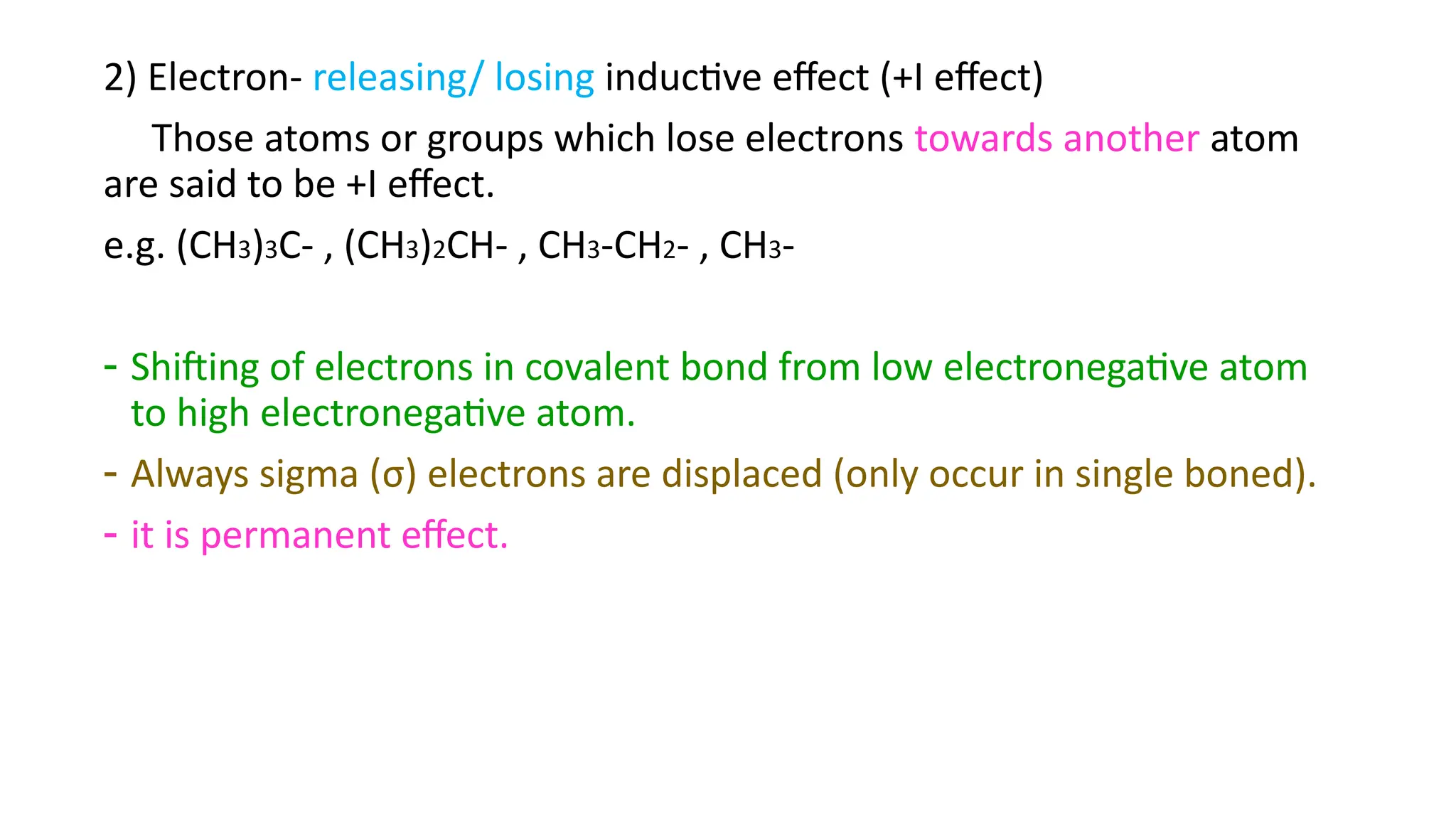
2) Electron- releasing/ losing inductive effect (+I effect)
Those atoms or groups which lose electrons towards another atom
are said to be +I effect.
e.g. (CH3)3C- , (CH3)2CH- , CH3-CH2- , CH3-
- Shifting of electrons in covalent bond from low electronegative atom
to high electronegative atom.
- Always sigma (σ) electrons are displaced (only occur in single boned).
- it is permanent effect.
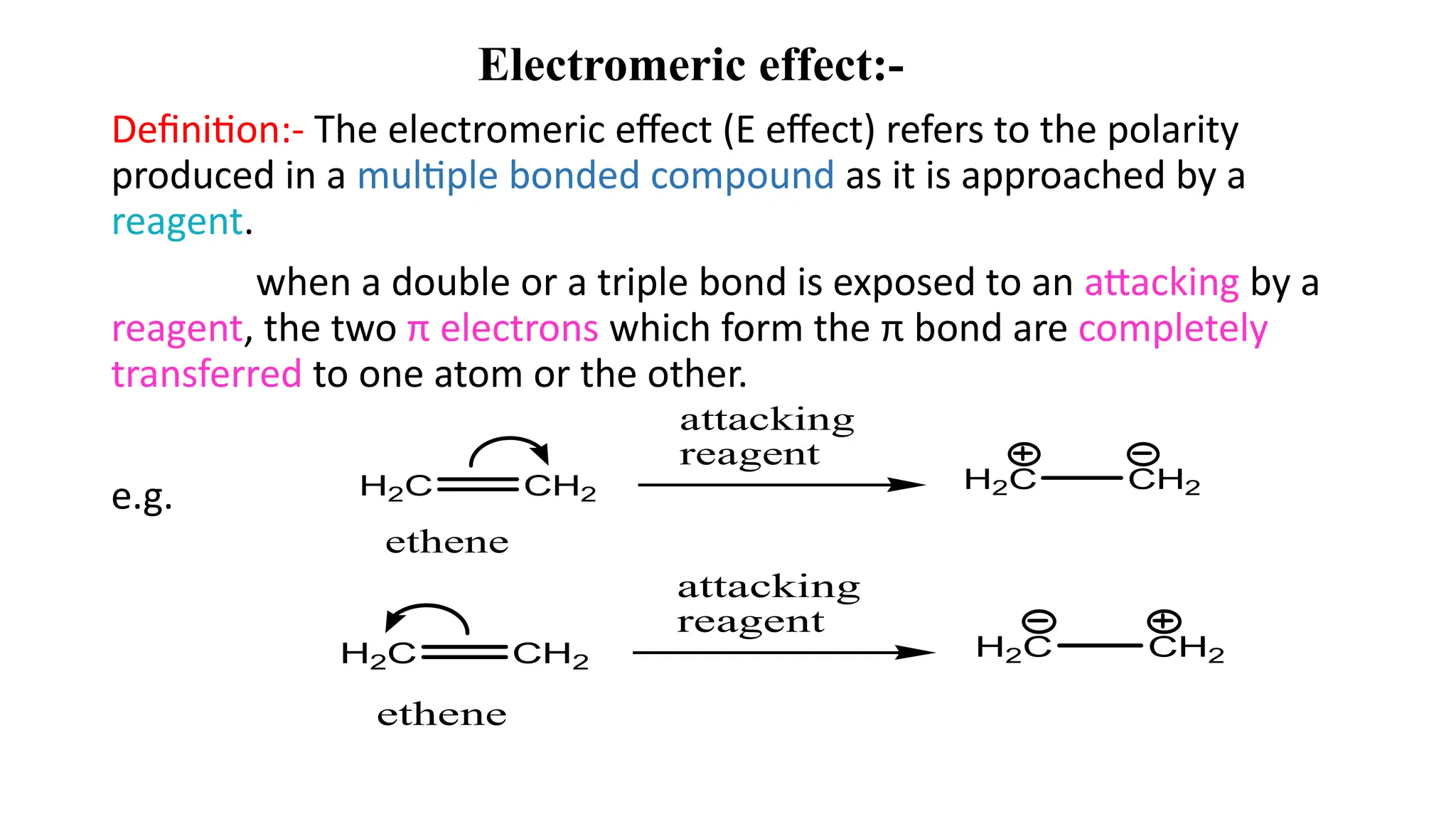
Electromeric effect:-
Definition:- The electromeric effect (E effect) refers to the polarity
produced in a multiple bonded compound as it is approached by a
reagent.
when a double or a triple bond is exposed to an attacking by a
reagent, the two π electrons which form the π bond are completely
transferred to one atom or the other.
e.g. H2C CH2
attacking
reagent
H2C CH2
ethene
H2C CH2
attacking
reagent
H2C CH2
ethene
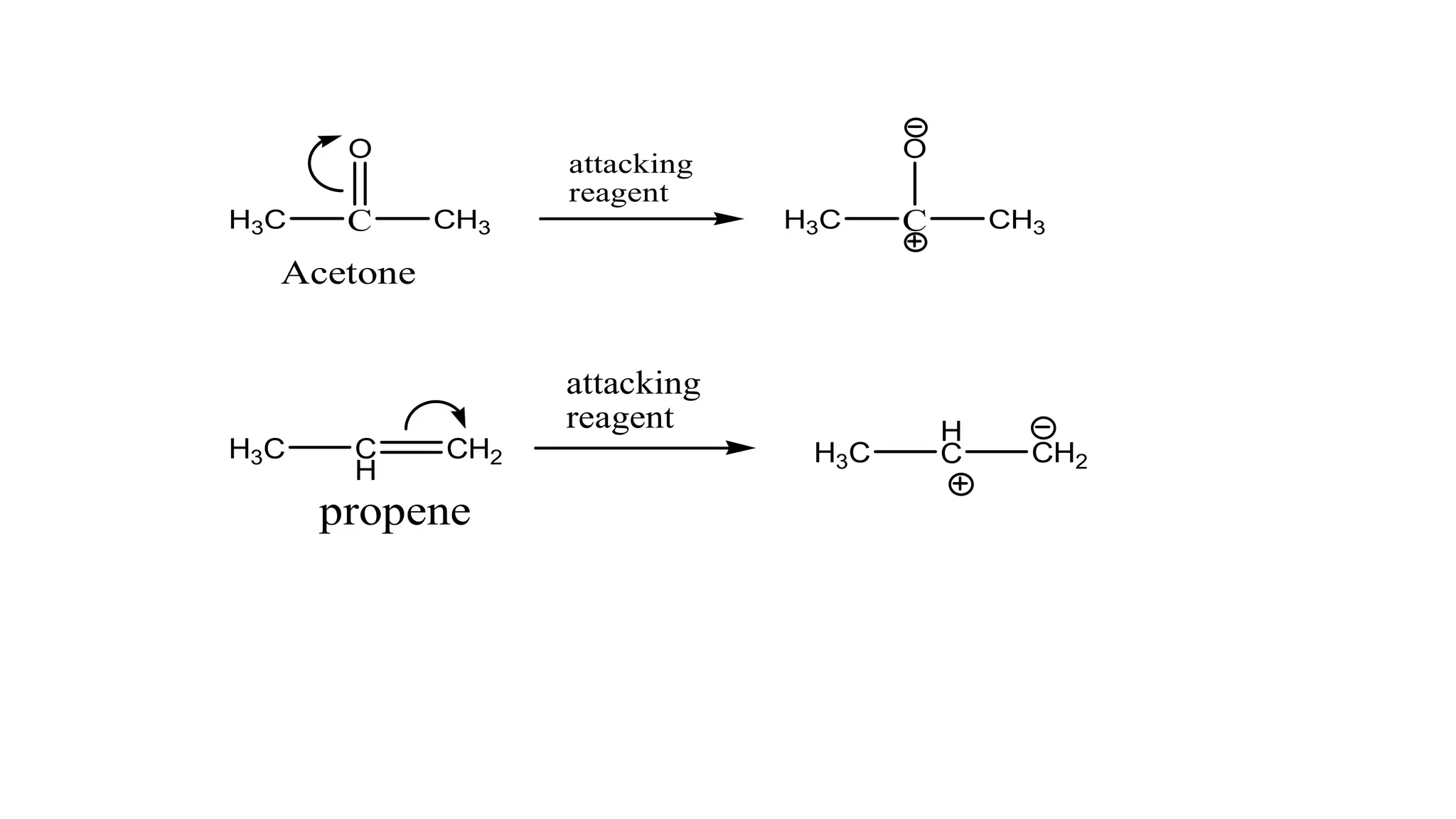
C
O
CH3
H3C
attacking
reagent
C
O
CH3
H3C
Acetone
C
H
CH2
attacking
reagent H
C CH2
propene
H3C H3C
Their are two types of electromeric effect:
1) + E effect :
If electron pair shifted towards the site where attacking reagent to
be attached.
e.g.
C
H
CH2
attacking
reagent
H
C CH3
propene
H3C H3C
+ H
C
O
CH3
H3C
attacking
reagent
C
OH
CH3
H3C
Acetone
+ H
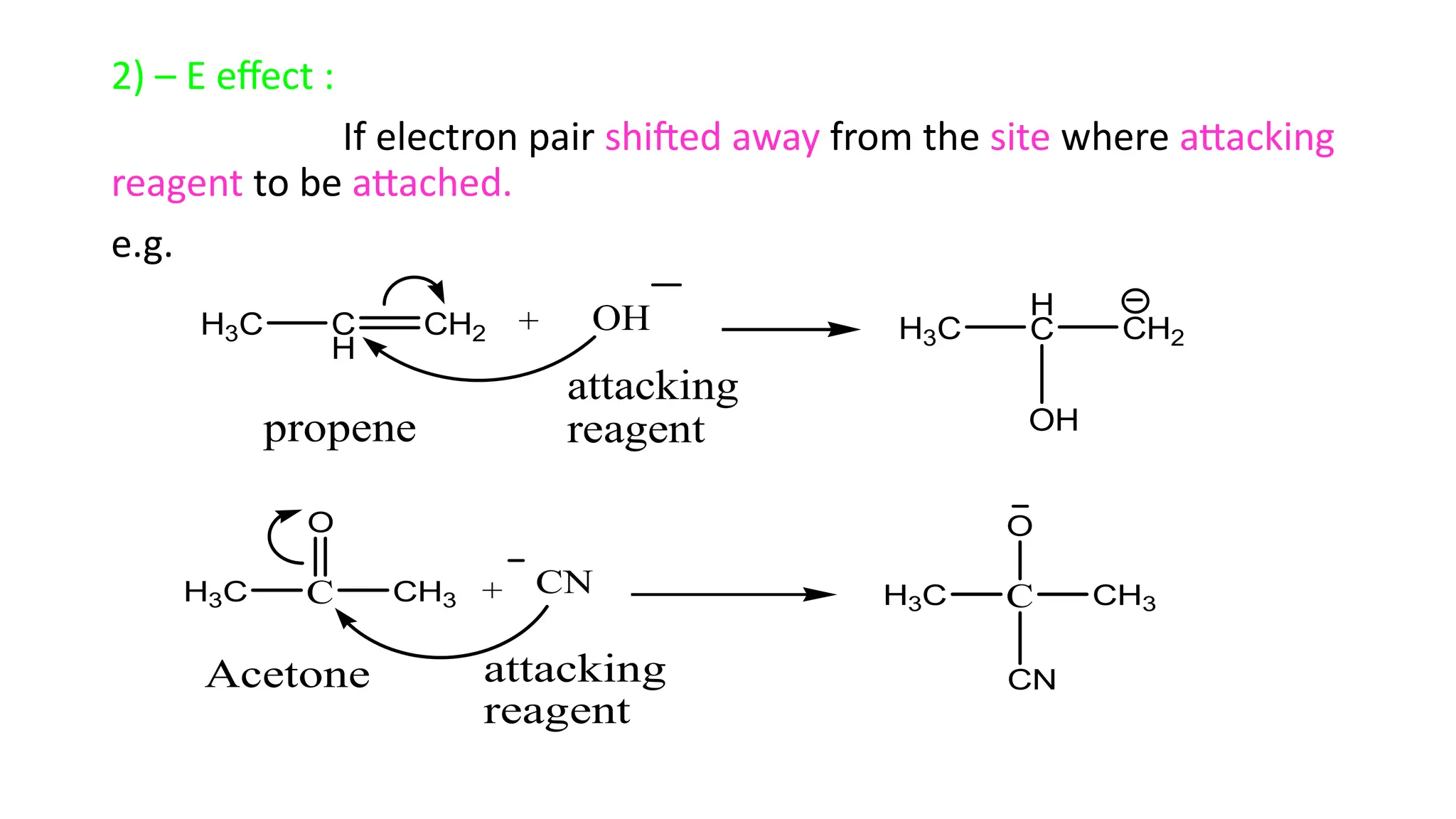
2) – E effect :
If electron pair shifted away from the site where attacking
reagent to be attached.
e.g.
C
H
CH2
attacking
reagent
H
C CH2
propene
H3C H3C
+
OH
OH
C
O
CH3
H3C
attacking
reagent
C
O
CH3
H3C
Acetone
+ CN
CN
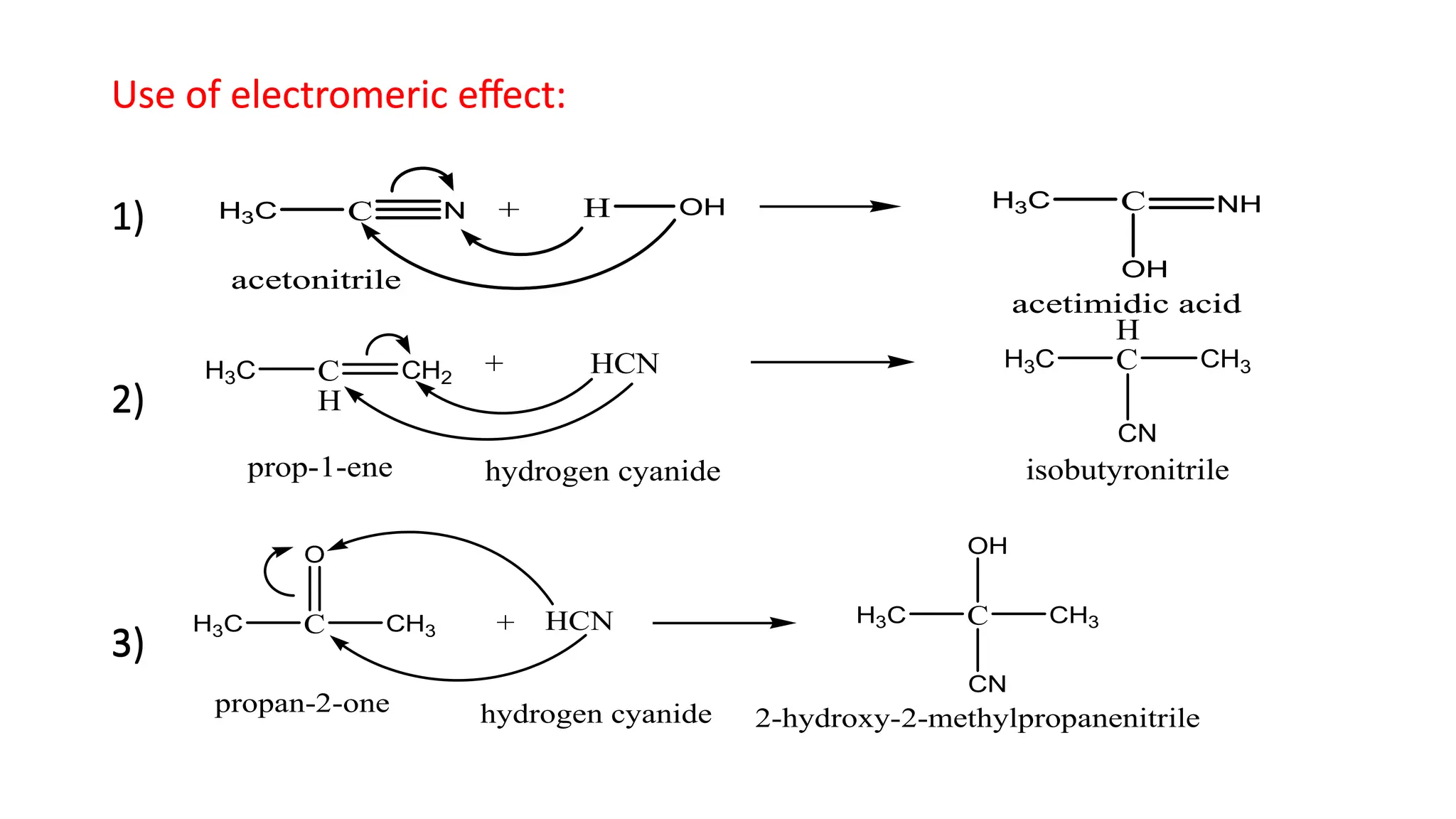
Use of electromeric effect:
1)
2)
3)
C N
H3C
acetonitrile
+ H OH C NH
OH
H3C
acetimidic acid
C
H
CH2
H3C + HCN
hydrogen cyanide
prop-1-ene
H
C CH3
H3C
CN
isobutyronitrile
C CH3
H3C
O
propan-2-one
+ HCN C CH3
OH
CN
H3C
2-hydroxy-2-methylpropanenitrile
hydrogen cyanide
Use of electromeric effect:
1)
2)
3)
C N
H3C
acetonitrile
+ H OH C NH
OH
H3C
acetimidic acid
- Temporary effect, observed only in reaction.
- It involves the π electron.
- Displacement of pi (π) electron only.
- Only occur in presence of attacking reagent.
THANK YOU

inductive-effect organic chemistry mechanism.pptx

  • 1.
    INDUCTIVE EFFECT &ELECTROMERIC EFFECT PREPARED BY MR. NARAYAN P. PAWAR (PHARMACEUTICAL CHEMISTRY)
  • 2.
    Inductive effect Definition:- Thepolarization of σ bond due to electron withdrawing or electron donating effect of adjacent groups or atoms is called inductive effect. Or It is defined as permanent displacement of shared electron pair in carbon chain towards more electronegative atoms or group is called inductive effect. CH3⁺ᵟ-Cl⁻ᵟ Methyl chloride CH3 Cl CH3 Cl
  • 3.
    It involves σelectrons. The σ electrons which forms a covalent bond are shared equally between the two atoms. The inductive effect (I effect) refers to the polarity produced in a molecule as a result of higher electronegativity of one atom compared to another. This is because different atoms have different electronegativity values. This introduce a certain degree of polarity in the bond. The more electronegative atom acquires a small negative charge (-δ). The less electronegative atom acquires a small positive charge (+δ).
  • 4.
    The inductive effectof C3 upon C2 is significantly less than the effect of the chlorine atom on C1. It is distance dependent. There are two types: 1) Electron-withdrawing/ attracting inductive effect (-I Effect) Those atoms or groups which withdraw electrons away from another atoms are said to be –I effect. e.g. –F, -Cl, -Br, -I, -OH, -NH2,….etc. H3C H2 C H2 C Cl 1 2 3
  • 5.
    2) Electron- releasing/losing inductive effect (+I effect) Those atoms or groups which lose electrons towards another atom are said to be +I effect. e.g. (CH3)3C- , (CH3)2CH- , CH3-CH2- , CH3- - Shifting of electrons in covalent bond from low electronegative atom to high electronegative atom. - Always sigma (σ) electrons are displaced (only occur in single boned). - it is permanent effect.
  • 6.
    Electromeric effect:- Definition:- Theelectromeric effect (E effect) refers to the polarity produced in a multiple bonded compound as it is approached by a reagent. when a double or a triple bond is exposed to an attacking by a reagent, the two π electrons which form the π bond are completely transferred to one atom or the other. e.g. H2C CH2 attacking reagent H2C CH2 ethene H2C CH2 attacking reagent H2C CH2 ethene
  • 7.
  • 8.
    Their are twotypes of electromeric effect: 1) + E effect : If electron pair shifted towards the site where attacking reagent to be attached. e.g. C H CH2 attacking reagent H C CH3 propene H3C H3C + H C O CH3 H3C attacking reagent C OH CH3 H3C Acetone + H
  • 9.
    2) – Eeffect : If electron pair shifted away from the site where attacking reagent to be attached. e.g. C H CH2 attacking reagent H C CH2 propene H3C H3C + OH OH C O CH3 H3C attacking reagent C O CH3 H3C Acetone + CN CN
  • 10.
    Use of electromericeffect: 1) 2) 3) C N H3C acetonitrile + H OH C NH OH H3C acetimidic acid C H CH2 H3C + HCN hydrogen cyanide prop-1-ene H C CH3 H3C CN isobutyronitrile C CH3 H3C O propan-2-one + HCN C CH3 OH CN H3C 2-hydroxy-2-methylpropanenitrile hydrogen cyanide Use of electromeric effect: 1) 2) 3) C N H3C acetonitrile + H OH C NH OH H3C acetimidic acid
  • 11.
    - Temporary effect,observed only in reaction. - It involves the π electron. - Displacement of pi (π) electron only. - Only occur in presence of attacking reagent.
  • 12.