- AASTHA RASTOGI
(IMBA/25010/11)
Orientation also called induction is a
systematic & planned introduction of
employees to their jobs.
It is a planned introduction of new hires
to their job, their peers & to the
company.
Orientation is one-way as well as two-
way communication process.
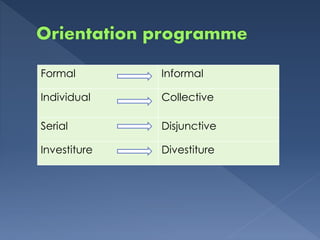
Formal Informal
Individual Collective
Serial Disjunctive
Investiture Divestiture
 To reduce anxiety
 To reduce employee turnover
 To save time for supervisor & colleagues
 To develop realistic job expectation &
job satisfaction
 Assist in newcomer assimilation
 Enhance adjustment to work group &
norms
 Encourage positive attitude
 History of the employer
 Names & titles of key executive
 Employees’ title & department
 Company policies & rules
 Disciplinary regulations
 Introduction to supervisor, co-workers,
trainers, employee counsellor
Cont...
 Introduction to job duties
 Pay scale & pay days
 Paid leaves
 Retirement benefits
 Training & education benefits
 Vacations & holidays
 Prepare For new employees
 Determine information new employees
want to know
 Determine how to present information
 Completion of paperwork
 Too much paperwork
 Information overload
 Information irrelevance
 Too much selling of organisation
 Too much one-way communication
 One-shot mentality
 Lack of follow up
 Employee has to fill in a questionnaire
evaluating the programme
 GD sessions with new employees who
have settled into their jobs
 Verbal feedback from the employees
GOOD ORIENTATION BAD ORIENTAITON
HR welcomes the new employees Employee has to search for HR
dept
Orientation kit ready Takes hours to get in place
Colleagues are aware Colleagues have no idea
Introduction to senior manager No introduction to the senior
manager
Lasts for over a week One day event
Colleagues are not prejudiced Colleagues are prejudiced
Formal & Informal Interaction No interaction at all
Employee orientation

Employee orientation

  • 1.
  • 2.
    Orientation also calledinduction is a systematic & planned introduction of employees to their jobs. It is a planned introduction of new hires to their job, their peers & to the company. Orientation is one-way as well as two- way communication process.
  • 3.
    Formal Informal Individual Collective SerialDisjunctive Investiture Divestiture
  • 4.
     To reduceanxiety  To reduce employee turnover  To save time for supervisor & colleagues  To develop realistic job expectation & job satisfaction  Assist in newcomer assimilation  Enhance adjustment to work group & norms  Encourage positive attitude
  • 6.
     History ofthe employer  Names & titles of key executive  Employees’ title & department  Company policies & rules  Disciplinary regulations  Introduction to supervisor, co-workers, trainers, employee counsellor
  • 7.
    Cont...  Introduction tojob duties  Pay scale & pay days  Paid leaves  Retirement benefits  Training & education benefits  Vacations & holidays
  • 8.
     Prepare Fornew employees  Determine information new employees want to know  Determine how to present information  Completion of paperwork
  • 9.
     Too muchpaperwork  Information overload  Information irrelevance  Too much selling of organisation  Too much one-way communication  One-shot mentality  Lack of follow up
  • 10.
     Employee hasto fill in a questionnaire evaluating the programme  GD sessions with new employees who have settled into their jobs  Verbal feedback from the employees
  • 11.
    GOOD ORIENTATION BADORIENTAITON HR welcomes the new employees Employee has to search for HR dept Orientation kit ready Takes hours to get in place Colleagues are aware Colleagues have no idea Introduction to senior manager No introduction to the senior manager Lasts for over a week One day event Colleagues are not prejudiced Colleagues are prejudiced Formal & Informal Interaction No interaction at all