Downloaded 96 times


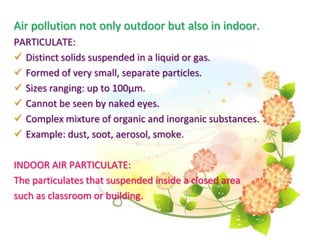
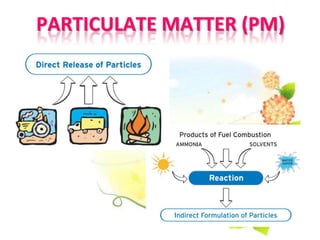
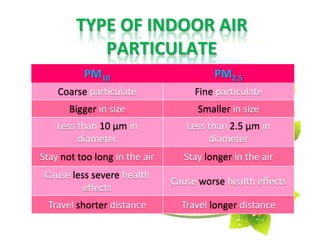
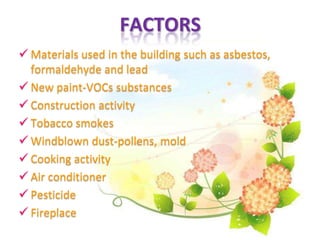
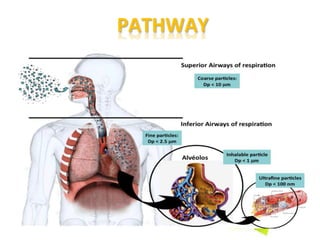

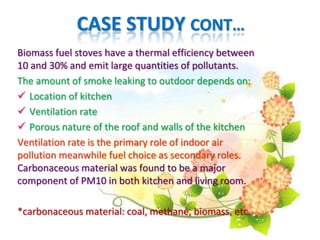
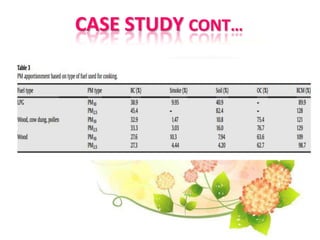


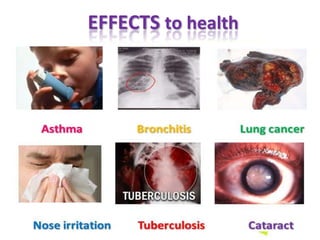

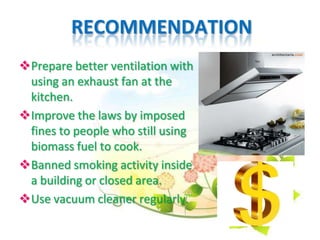



Indoor air pollution, particularly particulate matter, comes from a variety of sources in homes and buildings. Particulates less than 10 micrometers (PM10) and 2.5 micrometers (PM2.5) can penetrate deep into lungs and cause health effects. A case study in Bangladesh found that biomass fuels for cooking released more particulates than liquefied petroleum gas, and ventilation rates affected indoor concentrations. Exposure to indoor air pollution has been linked to respiratory diseases, cancer, and other health issues. Reducing use of biomass fuels, improving kitchen ventilation, and increasing use of cleaner fuels can help lower risks from indoor air particulates.


