SMOKE
THE SILENT KILLER
BY:
UMANG DOSHI
What is Smoke?
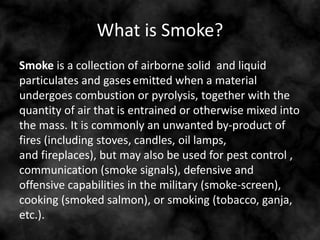
Smoke is a collection of airborne solid and liquid
particulates and gases emitted when a material
undergoes combustion or pyrolysis, together with the
quantity of air that is entrained or otherwise mixed into
the mass. It is commonly an unwanted by-product of
fires (including stoves, candles, oil lamps,
and fireplaces), but may also be used for pest control ,
communication (smoke signals), defensive and
offensive capabilities in the military (smoke-screen),
cooking (smoked salmon), or smoking (tobacco, ganja,
etc.).
Where it is used?
• Used in rituals, when incense, sage, or resin is
burned to produce a smell for spiritual
purposes.
• Sometimes used as a flavoring agent, and
preservative for various foodstuffs.
Causes
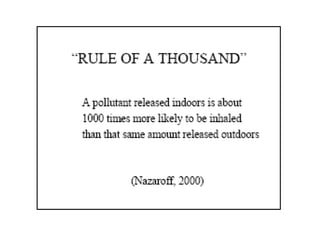
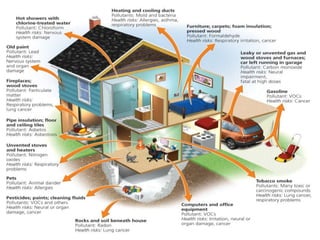
• Indoor air contains higher concentrations of
pollutants than outdoor air (up to 70x).
• Indoor pollution sources that release gases or
particles into the air.
• Inadequate ventilation.
• High temperature and humidity levels can also
increase concentrations of some pollutants.
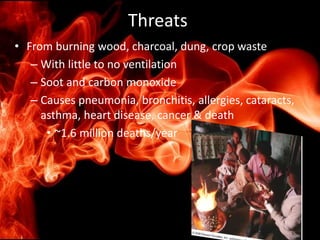
Threats
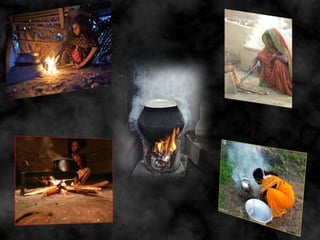
• From burning wood, charcoal, dung, crop waste
– With little to no ventilation
– Soot and carbon monoxide
– Causes pneumonia, bronchitis, allergies, cataracts,
asthma, heart disease, cancer & death
• ~1.6 million deaths/year
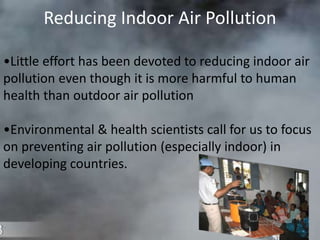
Reducing Indoor Air Pollution
•Little effort has been devoted to reducing indoor air
pollution even though it is more harmful to human
health than outdoor air pollution
•Environmental & health scientists call for us to focus
on preventing air pollution (especially indoor) in
developing countries.
We can reduce indoor air pollution
• In developed countries:
– Use low-toxicity material
– Monitor air quality
– Keep rooms clean
– Limit exposure to chemicals
– Allow for better mixing of indoor & outdoor air
• In developing countries:
– Dry wood before burning
– Cook outside
– Use less-polluting fuels (natural gas)
• The amount of air available (for mixing of indoor &
outdoor air) to dilute pollutants is an important
indicator of the likely contaminant concentration
– Indoor air can mix with outside air by 3 mechanisms
• infiltration
• natural ventilation
• forced ventilation
Contd…
12
INDOOR AIR QUALITY
Indoor air quality is influenced by:
 Outdoor air pollution: vehicles and industrial plants
 Secondhand tobacco smoke
 Fuels used for heating and cooking
 Confined and poorly ventilated spaces
 Overcrowded homes and insufficient living space
 Customs, habits, traditions
 Level of economic development:
Industrialized ≠ developing countries
13
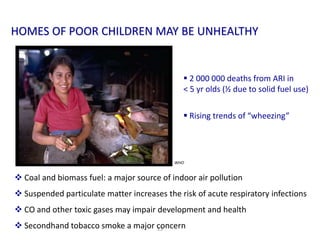
 2 000 000 deaths from ARI in
< 5 yr olds (½ due to solid fuel use)
 Rising trends of “wheezing”
 Coal and biomass fuel: a major source of indoor air pollution
 Suspended particulate matter increases the risk of acute respiratory infections
 CO and other toxic gases may impair development and health
 Secondhand tobacco smoke a major concern
HOMES OF POOR CHILDREN MAY BE UNHEALTHY
WHO
Fig. 19-21, p. 461
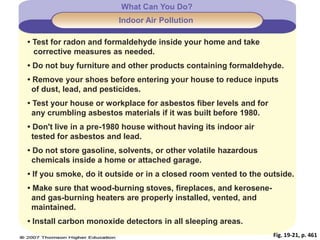
What Can You Do?
Indoor Air Pollution
• Test for radon and formaldehyde inside your home and take
corrective measures as needed.
• Do not buy furniture and other products containing formaldehyde.
• Remove your shoes before entering your house to reduce inputs
of dust, lead, and pesticides.
• Test your house or workplace for asbestos fiber levels and for
any crumbling asbestos materials if it was built before 1980.
• Don't live in a pre-1980 house without having its indoor air
tested for asbestos and lead.
• Do not store gasoline, solvents, or other volatile hazardous
chemicals inside a home or attached garage.
• If you smoke, do it outside or in a closed room vented to the outside.
• Make sure that wood-burning stoves, fireplaces, and kerosene-
and gas-burning heaters are properly installed, vented, and
maintained.
• Install carbon monoxide detectors in all sleeping areas.
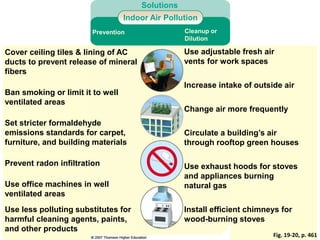
Fig. 19-20, p. 461
Solutions
Indoor Air Pollution
Prevention
Cover ceiling tiles & lining of AC
ducts to prevent release of mineral
fibers
Use adjustable fresh air
vents for work spaces
Increase intake of outside air
Ban smoking or limit it to well
ventilated areas
Change air more frequently
Set stricter formaldehyde
emissions standards for carpet,
furniture, and building materials
Circulate a building’s air
through rooftop green houses
Prevent radon infiltration Use exhaust hoods for stoves
and appliances burning
natural gasUse office machines in well
ventilated areas
Use less polluting substitutes for
harmful cleaning agents, paints,
and other products
Install efficient chimneys for
wood-burning stoves
Cleanup or
Dilution
Thank You

Smoke

  • 1.
  • 3.
    What is Smoke? Smokeis a collection of airborne solid and liquid particulates and gases emitted when a material undergoes combustion or pyrolysis, together with the quantity of air that is entrained or otherwise mixed into the mass. It is commonly an unwanted by-product of fires (including stoves, candles, oil lamps, and fireplaces), but may also be used for pest control , communication (smoke signals), defensive and offensive capabilities in the military (smoke-screen), cooking (smoked salmon), or smoking (tobacco, ganja, etc.).
  • 4.
    Where it isused? • Used in rituals, when incense, sage, or resin is burned to produce a smell for spiritual purposes. • Sometimes used as a flavoring agent, and preservative for various foodstuffs.
  • 5.
    Causes • Indoor aircontains higher concentrations of pollutants than outdoor air (up to 70x). • Indoor pollution sources that release gases or particles into the air. • Inadequate ventilation. • High temperature and humidity levels can also increase concentrations of some pollutants.
  • 6.
    Threats • From burningwood, charcoal, dung, crop waste – With little to no ventilation – Soot and carbon monoxide – Causes pneumonia, bronchitis, allergies, cataracts, asthma, heart disease, cancer & death • ~1.6 million deaths/year
  • 9.
    Reducing Indoor AirPollution •Little effort has been devoted to reducing indoor air pollution even though it is more harmful to human health than outdoor air pollution •Environmental & health scientists call for us to focus on preventing air pollution (especially indoor) in developing countries.
  • 10.
    We can reduceindoor air pollution • In developed countries: – Use low-toxicity material – Monitor air quality – Keep rooms clean – Limit exposure to chemicals – Allow for better mixing of indoor & outdoor air • In developing countries: – Dry wood before burning – Cook outside – Use less-polluting fuels (natural gas)
  • 11.
    • The amountof air available (for mixing of indoor & outdoor air) to dilute pollutants is an important indicator of the likely contaminant concentration – Indoor air can mix with outside air by 3 mechanisms • infiltration • natural ventilation • forced ventilation Contd…
  • 12.
    12 INDOOR AIR QUALITY Indoorair quality is influenced by:  Outdoor air pollution: vehicles and industrial plants  Secondhand tobacco smoke  Fuels used for heating and cooking  Confined and poorly ventilated spaces  Overcrowded homes and insufficient living space  Customs, habits, traditions  Level of economic development: Industrialized ≠ developing countries
  • 13.
    13  2 000000 deaths from ARI in < 5 yr olds (½ due to solid fuel use)  Rising trends of “wheezing”  Coal and biomass fuel: a major source of indoor air pollution  Suspended particulate matter increases the risk of acute respiratory infections  CO and other toxic gases may impair development and health  Secondhand tobacco smoke a major concern HOMES OF POOR CHILDREN MAY BE UNHEALTHY WHO
  • 14.
    Fig. 19-21, p.461 What Can You Do? Indoor Air Pollution • Test for radon and formaldehyde inside your home and take corrective measures as needed. • Do not buy furniture and other products containing formaldehyde. • Remove your shoes before entering your house to reduce inputs of dust, lead, and pesticides. • Test your house or workplace for asbestos fiber levels and for any crumbling asbestos materials if it was built before 1980. • Don't live in a pre-1980 house without having its indoor air tested for asbestos and lead. • Do not store gasoline, solvents, or other volatile hazardous chemicals inside a home or attached garage. • If you smoke, do it outside or in a closed room vented to the outside. • Make sure that wood-burning stoves, fireplaces, and kerosene- and gas-burning heaters are properly installed, vented, and maintained. • Install carbon monoxide detectors in all sleeping areas.
  • 15.
    Fig. 19-20, p.461 Solutions Indoor Air Pollution Prevention Cover ceiling tiles & lining of AC ducts to prevent release of mineral fibers Use adjustable fresh air vents for work spaces Increase intake of outside air Ban smoking or limit it to well ventilated areas Change air more frequently Set stricter formaldehyde emissions standards for carpet, furniture, and building materials Circulate a building’s air through rooftop green houses Prevent radon infiltration Use exhaust hoods for stoves and appliances burning natural gasUse office machines in well ventilated areas Use less polluting substitutes for harmful cleaning agents, paints, and other products Install efficient chimneys for wood-burning stoves Cleanup or Dilution
  • 17.