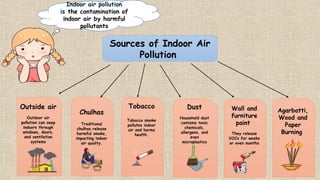
Indoor air pollution
isthe contamination of
indoor air by harmful
pollutants
Sources of Indoor Air
Pollution
Outside air
Outdoor air
pollution can seep
indoors through
windows, doors,
and ventilation
systems
Chulhas
Traditional
chulhas release
harmful smoke,
impacting indoor
air quality.
Tobacco
Tobacco smoke
pollutes indoor
air and harms
health.
Dust
Household dust
contains toxic
chemicals,
allergens, and
even
microplastics
Wall and
furniture
paint
They release
VOCs for weeks
or even months
Agarbatti,
Wood and
Paper
Burning
3.
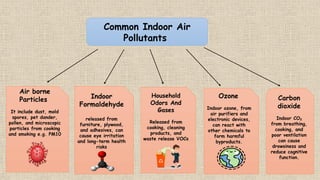
Common Indoor Air
Pollutants
Airborne
Particles
It include dust, mold
spores, pet dander,
pollen, and microscopic
particles from cooking
and smoking e.g. PM10
Indoor
Formaldehyde
released from
furniture, plywood,
and adhesives, can
cause eye irritation
and long-term health
risks
Household
Odors And
Gases
Released from
cooking, cleaning
products, and
waste release VOCs
Ozone
Indoor ozone, from
air purifiers and
electronic devices,
can react with
other chemicals to
form harmful
byproducts.
Carbon
dioxide
Indoor CO₂
from breathing,
cooking, and
poor ventilation
can cause
drowsiness and
reduce cognitive
function.
4.
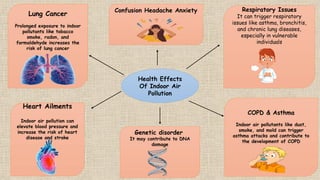
Health Effects
Of IndoorAir
Pollution
Respiratory Issues
It can trigger respiratory
issues like asthma, bronchitis,
and chronic lung diseases,
especially in vulnerable
individuals
Confusion Headache Anxiety
Lung Cancer
Prolonged exposure to indoor
pollutants like tobacco
smoke, radon, and
formaldehyde increases the
risk of lung cancer
Heart Ailments
Indoor air pollution can
elevate blood pressure and
increase the risk of heart
disease and stroke
Genetic disorder
It may contribute to DNA
damage
COPD & Asthma
Indoor air pollutants like dust,
smoke, and mold can trigger
asthma attacks and contribute to
the development of COPD
5.
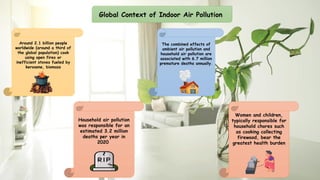
Around 2.1 billionpeople
worldwide (around a third of
the global population) cook
using open fires or
inefficient stoves fueled by
kerosene, biomass
Global Context of Indoor Air Pollution
Household air pollution
was responsible for an
estimated 3.2 million
deaths per year in
2020
The combined effects of
ambient air pollution and
household air pollution are
associated with 6.7 million
premature deaths annually.
Women and children,
typically responsible for
household chores such
as cooking collecting
firewood, bear the
greatest health burden
6.
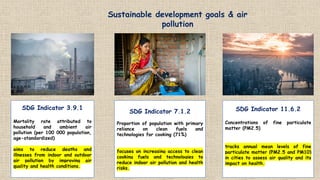
Sustainable development goals& air
pollution
SDG Indicator 3.9.1
Mortality rate attributed to
household and ambient air
pollution (per 100 000 population,
age-standardized)
aims to reduce deaths and
illnesses from indoor and outdoor
air pollution by improving air
quality and health conditions.
SDG Indicator 7.1.2
Proportion of population with primary
reliance on clean fuels and
technologies for cooking (71%)
focuses on increasing access to clean
cooking fuels and technologies to
reduce indoor air pollution and health
risks.
SDG Indicator 11.6.2
Concentrations of fine particulate
matter (PM2.5)
tracks annual mean levels of fine
particulate matter (PM2.5 and PM10)
in cities to assess air quality and its
impact on health.
7.
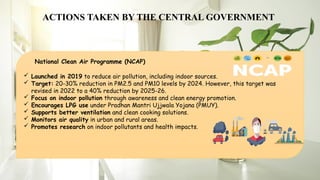
ACTIONS TAKEN BYTHE CENTRAL GOVERNMENT
Launched in 2019 to reduce air pollution, including indoor sources.
Target: 20-30% reduction in PM2.5 and PM10 levels by 2024. However, this target was
revised in 2022 to a 40% reduction by 2025-26.
Focus on indoor pollution through awareness and clean energy promotion.
Encourages LPG use under Pradhan Mantri Ujjwala Yojana (PMUY).
Supports better ventilation and clean cooking solutions.
Monitors air quality in urban and rural areas.
Promotes research on indoor pollutants and health impacts.
National Clean Air Programme (NCAP)
8.
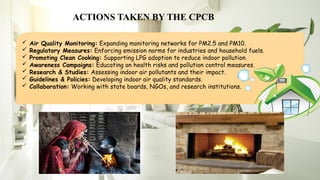
ACTIONS TAKEN BYTHE CPCB
Air Quality Monitoring: Expanding monitoring networks for PM2.5 and PM10.
Regulatory Measures: Enforcing emission norms for industries and household fuels.
Promoting Clean Cooking: Supporting LPG adoption to reduce indoor pollution.
Awareness Campaigns: Educating on health risks and pollution control measures.
Research & Studies: Assessing indoor air pollutants and their impact.
Guidelines & Policies: Developing indoor air quality standards.
Collaboration: Working with state boards, NGOs, and research institutions.