Post = ‘in response to’ the Digital 
Helen Beetham, November 2014 
cc licensed to Christine Monteith http://pebblebeachcoast.com/archives/212
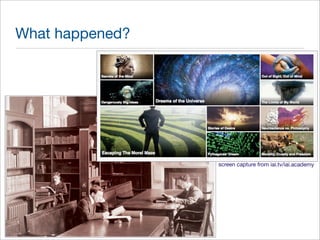
What happened? 
screen capture from iai.tv/iai.academy
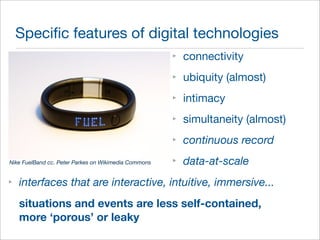
Specific features of digital technologies 
‣ connectivity 
‣ ubiquity (almost) 
‣ intimacy 
‣ simultaneity (almost) 
‣ continuous record 
‣ data-at-scale 
‣ interfaces that are interactive, intuitive, immersive... 
situations and events are less self-contained, 
more ‘porous’ or leaky
Specific features of digital technologies 
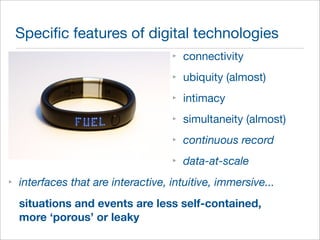
Nike FuelBand cc. Peter Parkes on Wikimedia Commons 
‣ connectivity 
‣ ubiquity (almost) 
‣ intimacy 
‣ simultaneity (almost) 
‣ continuous record 
‣ data-at-scale 
‣ interfaces that are interactive, intuitive, immersive... 
situations and events are less self-contained, 
more ‘porous’ or leaky
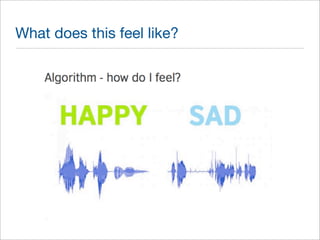
What does this feel like?
What does this feel like? 
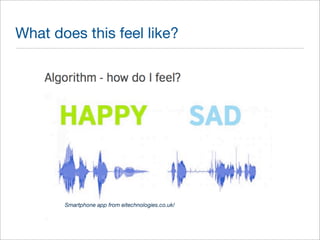
Smartphone app from eitechnologies.co.uk/
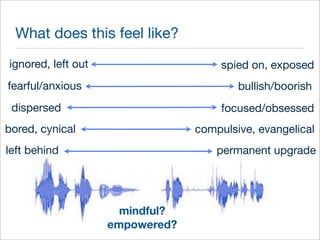
What does this feel like? 
ignored, left out spied on, exposed 
fearful/anxious 
dispersed 
bored, cynical 
bullish/boorish 
focused/obsessed 
compulsive, evangelical 
left behind permanent upgrade 
mindful? 
empowered?
What does this feel like?
What does this feel like? 
http://www.hackeducation.com/2014/10/17/hack-education-weekly-news-10-17-2014/
What does this feel like?
What does this feel like? 
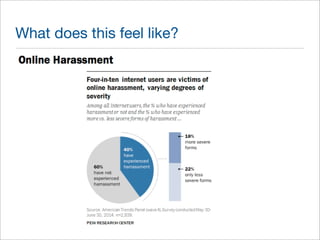
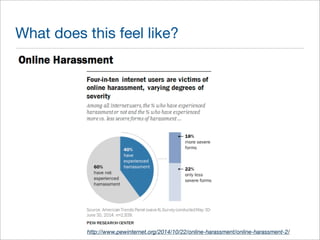
http://www.pewinternet.org/2014/10/22/online-harassment/online-harassment-2/
What does this feel like? 
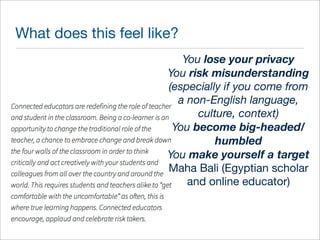
You lose your privacy 
You risk misunderstanding 
(especially if you come from 
a non-English language, 
culture, context) 
You become big-headed/ 
humbled 
You make yourself a target 
Maha Bali (Egyptian scholar 
and online educator)
What does this feel like? 
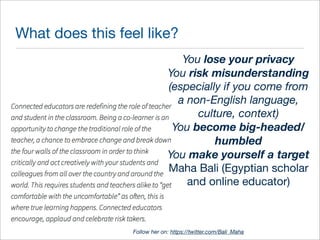
You lose your privacy 
You risk misunderstanding 
(especially if you come from 
a non-English language, 
culture, context) 
You become big-headed/ 
humbled 
You make yourself a target 
Maha Bali (Egyptian scholar 
and online educator) 
Follow her on: https://twitter.com/Bali_Maha
What does this feel like? 
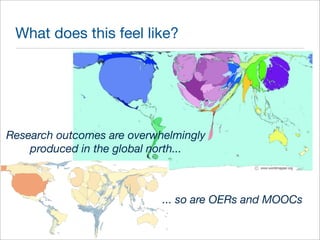
Research outcomes are overwhelmingly 
produced in the global north... 
... so are OERs and MOOCs
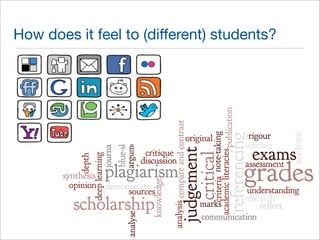
How does it feel to (different) students? 
+
What do students say they want? 
‣ Learning spaces: closed, private → open, public 
‣ ICT provision: VLE → third party, open, networked, BYO 
‣ Problems: narrow, structured → interdisciplinary, complex 
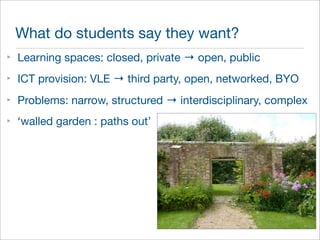
‣ ‘walled garden : paths out’
What do students say they want? 
‣ Learning spaces: closed, private → open, public 
‣ ICT provision: VLE → third party, open, networked, BYO 
‣ Problems: narrow, structured → interdisciplinary, complex 
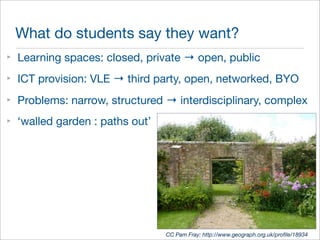
‣ ‘walled garden : paths out’ 
CC Pam Fray: http://www.geograph.org.uk/profile/18934
What do students say they want? 
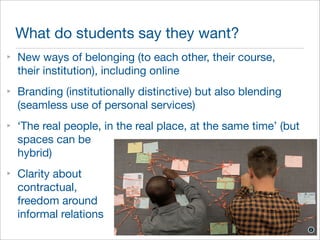
‣ New ways of belonging (to each other, their course, 
their institution), including online 
‣ Branding (institutionally distinctive) but also blending 
(seamless use of personal services) 
‣ ‘The real people, in the real place, at the same time’ (but 
spaces can be 
hybrid) 
‣ Clarity about 
contractual, 
freedom around 
informal relations
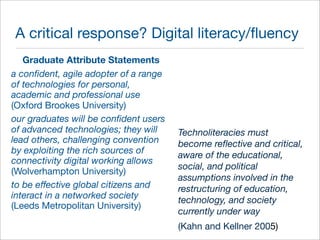
A critical response? Digital literacy/fluency 
Graduate Attribute Statements 
a confident, agile adopter of a range 
of technologies for personal, 
academic and professional use 
(Oxford Brookes University) 
our graduates will be confident users 
of advanced technologies; they will 
lead others, challenging convention 
by exploiting the rich sources of 
connectivity digital working allows 
(Wolverhampton University) 
to be effective global citizens and 
interact in a networked society 
(Leeds Metropolitan University) 
Technoliteracies must 
become reflective and critical, 
aware of the educational, 
social, and political 
assumptions involved in the 
restructuring of education, 
technology, and society 
currently under way 
(Kahn and Kellner 2005)
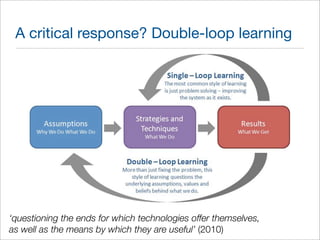
A critical response? Double-loop learning 
‘questioning the ends for which technologies offer themselves, 
as well as the means by which they are useful’ (2010)
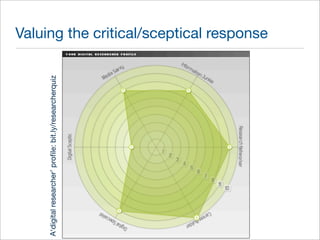
Valuing the critical/sceptical response 
A‘digital researcher’ profile: bit.ly/researcherquiz
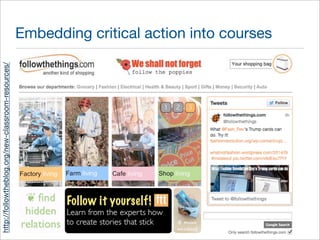
http://followtheblog.org/new-classroom-resources/ 
Embedding critical action into courses

In response

  • 1.
    Post = ‘inresponse to’ the Digital Helen Beetham, November 2014 cc licensed to Christine Monteith http://pebblebeachcoast.com/archives/212
  • 2.
    What happened? screencapture from iai.tv/iai.academy
  • 3.
    Specific features ofdigital technologies ‣ connectivity ‣ ubiquity (almost) ‣ intimacy ‣ simultaneity (almost) ‣ continuous record ‣ data-at-scale ‣ interfaces that are interactive, intuitive, immersive... situations and events are less self-contained, more ‘porous’ or leaky
  • 4.
    Specific features ofdigital technologies Nike FuelBand cc. Peter Parkes on Wikimedia Commons ‣ connectivity ‣ ubiquity (almost) ‣ intimacy ‣ simultaneity (almost) ‣ continuous record ‣ data-at-scale ‣ interfaces that are interactive, intuitive, immersive... situations and events are less self-contained, more ‘porous’ or leaky
  • 5.
    What does thisfeel like?
  • 6.
    What does thisfeel like? Smartphone app from eitechnologies.co.uk/
  • 7.
    What does thisfeel like? ignored, left out spied on, exposed fearful/anxious dispersed bored, cynical bullish/boorish focused/obsessed compulsive, evangelical left behind permanent upgrade mindful? empowered?
  • 8.
    What does thisfeel like?
  • 9.
    What does thisfeel like? http://www.hackeducation.com/2014/10/17/hack-education-weekly-news-10-17-2014/
  • 10.
    What does thisfeel like?
  • 11.
    What does thisfeel like? http://www.pewinternet.org/2014/10/22/online-harassment/online-harassment-2/
  • 12.
    What does thisfeel like? You lose your privacy You risk misunderstanding (especially if you come from a non-English language, culture, context) You become big-headed/ humbled You make yourself a target Maha Bali (Egyptian scholar and online educator)
  • 13.
    What does thisfeel like? You lose your privacy You risk misunderstanding (especially if you come from a non-English language, culture, context) You become big-headed/ humbled You make yourself a target Maha Bali (Egyptian scholar and online educator) Follow her on: https://twitter.com/Bali_Maha
  • 14.
    What does thisfeel like? Research outcomes are overwhelmingly produced in the global north... ... so are OERs and MOOCs
  • 15.
    How does itfeel to (different) students? +
  • 16.
    What do studentssay they want? ‣ Learning spaces: closed, private → open, public ‣ ICT provision: VLE → third party, open, networked, BYO ‣ Problems: narrow, structured → interdisciplinary, complex ‣ ‘walled garden : paths out’
  • 17.
    What do studentssay they want? ‣ Learning spaces: closed, private → open, public ‣ ICT provision: VLE → third party, open, networked, BYO ‣ Problems: narrow, structured → interdisciplinary, complex ‣ ‘walled garden : paths out’ CC Pam Fray: http://www.geograph.org.uk/profile/18934
  • 18.
    What do studentssay they want? ‣ New ways of belonging (to each other, their course, their institution), including online ‣ Branding (institutionally distinctive) but also blending (seamless use of personal services) ‣ ‘The real people, in the real place, at the same time’ (but spaces can be hybrid) ‣ Clarity about contractual, freedom around informal relations
  • 19.
    A critical response?Digital literacy/fluency Graduate Attribute Statements a confident, agile adopter of a range of technologies for personal, academic and professional use (Oxford Brookes University) our graduates will be confident users of advanced technologies; they will lead others, challenging convention by exploiting the rich sources of connectivity digital working allows (Wolverhampton University) to be effective global citizens and interact in a networked society (Leeds Metropolitan University) Technoliteracies must become reflective and critical, aware of the educational, social, and political assumptions involved in the restructuring of education, technology, and society currently under way (Kahn and Kellner 2005)
  • 20.
    A critical response?Double-loop learning ‘questioning the ends for which technologies offer themselves, as well as the means by which they are useful’ (2010)
  • 21.
    Valuing the critical/scepticalresponse A‘digital researcher’ profile: bit.ly/researcherquiz
  • 22.