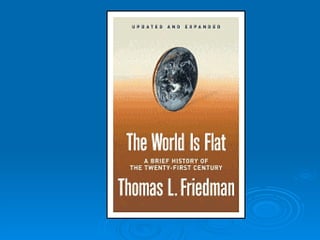
MD 400 Intro to Educational Technology http://tinyurl.com/ pb2fnw
What Does our Class Look Like? http://www.surveymonkey.com/Default.aspx
How has the world changed for me? How things have changed for me activity Fill out in small groups  Use google docs spreadsheet  Link on Class web page under projects http://cms.westport.k12.ct.us/cmslmc/md400/Default.htm   -or- http://tinyurl.com/ pb2fnw
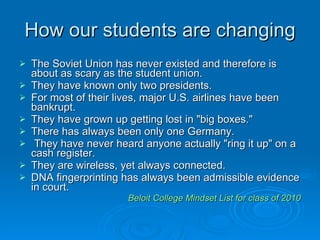
How our students are changing The Soviet Union has never existed and therefore is about as scary as the student union.  They have known only two presidents.  For most of their lives, major U.S. airlines have been bankrupt.  They have grown up getting lost in "big boxes."  There has always been only one Germany.  They have never heard anyone actually "ring it up" on a cash register.  They are wireless, yet always connected.  DNA fingerprinting has always been admissible evidence in court.  Beloit College Mindset List for class of 2010
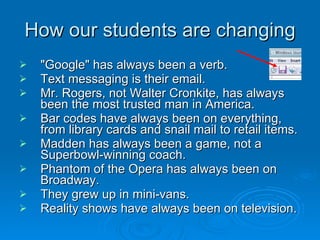
How our students are changing "Google" has always been a verb.  Text messaging is their email.  Mr. Rogers, not Walter Cronkite, has always been the most trusted man in America.  Bar codes have always been on everything, from library cards and snail mail to retail items.  Madden has always been a game, not a Superbowl-winning coach.  Phantom of the Opera has always been on Broadway.  They grew up in mini-vans.  Reality shows have always been on television.
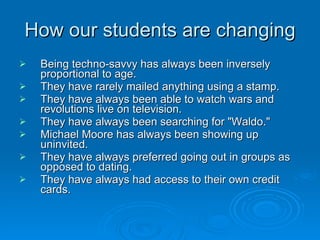
How our students are changing Being techno-savvy has always been inversely proportional to age.  They have rarely mailed anything using a stamp.  They have always been able to watch wars and revolutions live on television.  They have always been searching for "Waldo."  Michael Moore has always been showing up uninvited.  They have always preferred going out in groups as opposed to dating.  They have always had access to their own credit cards.
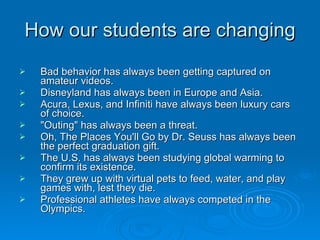
How our students are changing Bad behavior has always been getting captured on amateur videos.  Disneyland has always been in Europe and Asia.  Acura, Lexus, and Infiniti have always been luxury cars of choice.  "Outing" has always been a threat.  Oh, The Places You'll Go by Dr. Seuss has always been the perfect graduation gift.  The U.S. has always been studying global warming to confirm its existence.  They grew up with virtual pets to feed, water, and play games with, lest they die.  Professional athletes have always competed in the Olympics.
 
How has the world changed? Did you know :   How our world is changing
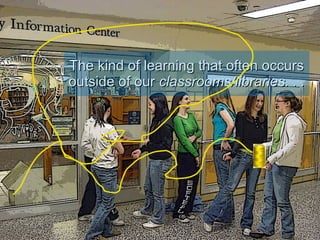
The kind of learning that often occurs outside of our  classrooms/libraries. . .
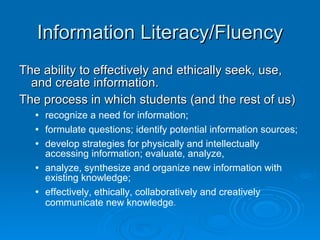
Information Literacy/Fluency The ability to effectively and ethically seek, use, and create information.  The process in which students (and the rest of us)  recognize a need for information;  formulate questions; identify potential information sources;  develop strategies for physically and intellectually accessing information; evaluate, analyze,  analyze, synthesize and organize new information with existing knowledge;  effectively, ethically, collaboratively and creatively communicate new knowledge .
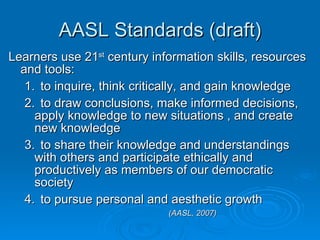
AASL Standards (draft) Learners use 21 st  century information skills, resources and tools: 1. to inquire, think critically, and gain knowledge 2. to draw conclusions, make informed decisions, apply knowledge to new situations , and create new knowledge 3. to share their knowledge and understandings with others and participate ethically and productively as members of our democratic society 4. to pursue personal and aesthetic growth  (AASL, 2007)
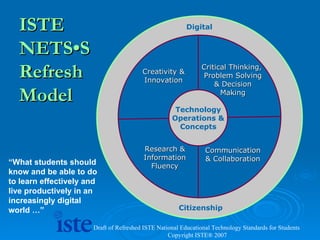
“ What students should know and be able to do to learn effectively and live productively in an increasingly digital world …” ISTE NETS•S  Refresh  Model Digital Citizenship Technology Operations & Concepts Critical Thinking,  Problem Solving & Decision Making Creativity & Innovation Research & Information Fluency Communication & Collaboration Draft of Refreshed ISTE National Educational Technology Standards for Students  Copyright ISTE® 2007
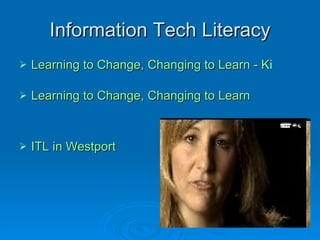
Information Tech Literacy Learning to Change, Changing to Learn - Kid's Tech   Learning to Change, Changing to Learn  ITL in Westport
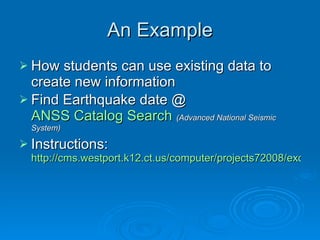
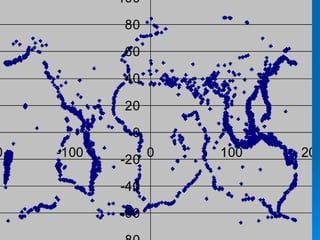
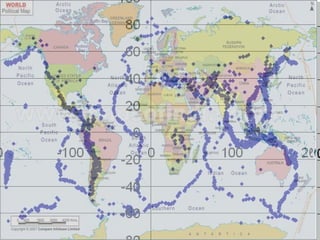
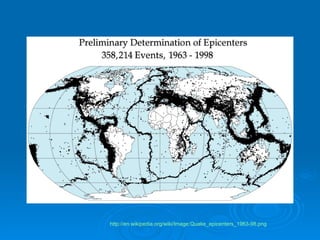
An Example How students can use existing data to create new information Find Earthquake date @  ANSS Catalog Search   (Advanced National Seismic System)  Instructions:  http://cms.westport.k12.ct.us/computer/projects72008/excel/earthquakes.htm


http://en.wikipedia.org/wiki/Image:Quake_epicenters_1963-98.png
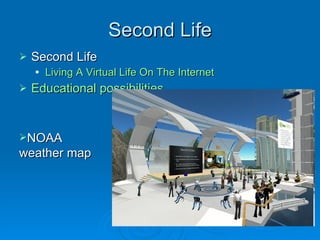
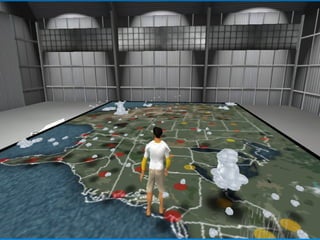
Second Life Second Life Living A Virtual Life On The Internet   Educational possibilities NOAA  weather map
 
What is Web 2.0? Do #1 & 2 on activity sheet: Characteristics of Web 2.0 Find some examples  Use the class web page  to download the instructions or go directly to the Google Docs form http://tinyurl.com/ pb2fnw
 
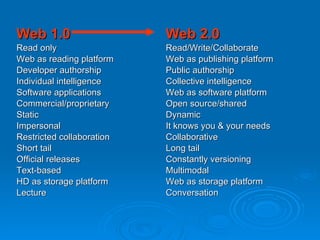
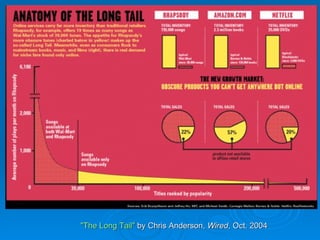
Web 1.0 Read only Web as reading platform Developer authorship Individual intelligence Software applications Commercial/proprietary Static  Impersonal Restricted collaboration Short tail Official releases Text-based HD as storage platform Lecture Web 2.0 Read/Write/Collaborate Web as publishing platform Public authorship Collective intelligence Web as software platform Open source/shared Dynamic It knows you & your needs Collaborative Long tail Constantly versioning Multimodal Web as storage platform Conversation
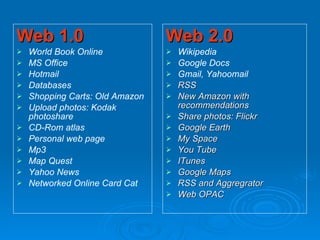
Web 1.0 World Book Online MS Office Hotmail Databases Shopping Carts: Old Amazon Upload photos: Kodak photoshare CD-Rom atlas Personal web page Mp3 Map Quest Yahoo News Networked Online Card Cat Web 2.0 Wikipedia Google Docs Gmail, Yahoomail RSS New Amazon with recommendations Share photos: Flickr Google Earth My Space You Tube ITunes Google Maps RSS and Aggregrator Web OPAC
"The Long Tail"  by Chris Anderson,  Wired , Oct. 2004
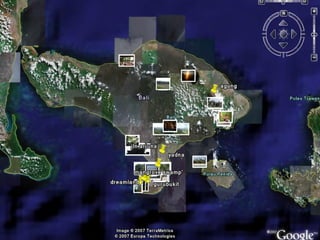
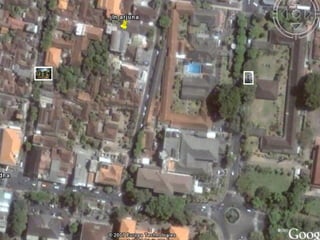
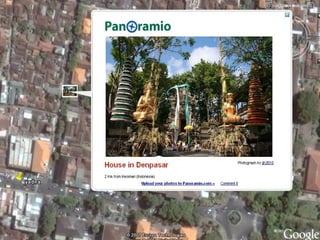
Web 2.0: Mash-ups Mash-ups: a combination of one or more data sources to create a unified interface and experience.  Adding content on top of content Photos in Google Earth Panoramio Darfur Crisis


Web 2.0: Tag (metadata) Tag A  tag  is a (relevant)  keyword  or term associated with or assigned to a piece of information  Wikipedia Informal: chosen by author/creator Folksonomy: user created taxonomy Contrast with Dewey Used in Del icio us to group similar items
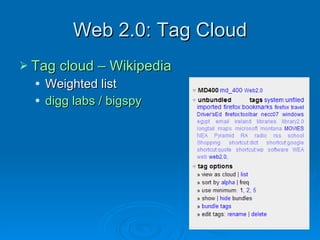
Web 2.0: Tag Cloud Tag cloud – Wikipedia Weighted list digg labs / bigspy
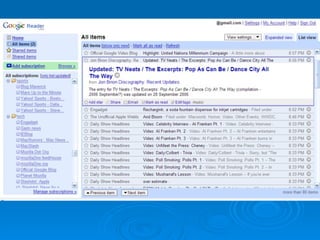
Web 2.0: RSS Really Simple Syndication  family of web feed formats used to publish frequently updated content such as blog entries, news headlines or podcasts. An RSS document, which is called a "feed," "web feed," or "channel," contains either a summary of content from an associated web site or the full text.  Aggregator Feed reader, is client software or a Web service which aggregates syndicated web content such as news headlines, blogs, podcasts, and vlogs in a single location for easy viewing. Wikipedia
 
More about Web 2.0 Do # 3 Del icio us activity Do #4 Wiki Activity
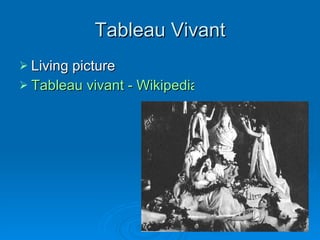
Tableau Vivant Living picture Tableau vivant - Wikipedia

MD 400 Introduction

  • 1.
    MD 400 Introto Educational Technology http://tinyurl.com/ pb2fnw
  • 2.
    What Does ourClass Look Like? http://www.surveymonkey.com/Default.aspx
  • 3.
    How has theworld changed for me? How things have changed for me activity Fill out in small groups Use google docs spreadsheet Link on Class web page under projects http://cms.westport.k12.ct.us/cmslmc/md400/Default.htm -or- http://tinyurl.com/ pb2fnw
  • 4.
    How our studentsare changing The Soviet Union has never existed and therefore is about as scary as the student union. They have known only two presidents. For most of their lives, major U.S. airlines have been bankrupt. They have grown up getting lost in "big boxes." There has always been only one Germany. They have never heard anyone actually "ring it up" on a cash register. They are wireless, yet always connected. DNA fingerprinting has always been admissible evidence in court. Beloit College Mindset List for class of 2010
  • 5.
    How our studentsare changing "Google" has always been a verb. Text messaging is their email. Mr. Rogers, not Walter Cronkite, has always been the most trusted man in America. Bar codes have always been on everything, from library cards and snail mail to retail items. Madden has always been a game, not a Superbowl-winning coach. Phantom of the Opera has always been on Broadway. They grew up in mini-vans. Reality shows have always been on television.
  • 6.
    How our studentsare changing Being techno-savvy has always been inversely proportional to age. They have rarely mailed anything using a stamp. They have always been able to watch wars and revolutions live on television. They have always been searching for "Waldo." Michael Moore has always been showing up uninvited. They have always preferred going out in groups as opposed to dating. They have always had access to their own credit cards.
  • 7.
    How our studentsare changing Bad behavior has always been getting captured on amateur videos. Disneyland has always been in Europe and Asia. Acura, Lexus, and Infiniti have always been luxury cars of choice. "Outing" has always been a threat. Oh, The Places You'll Go by Dr. Seuss has always been the perfect graduation gift. The U.S. has always been studying global warming to confirm its existence. They grew up with virtual pets to feed, water, and play games with, lest they die. Professional athletes have always competed in the Olympics.
  • 8.
  • 9.
    How has theworld changed? Did you know : How our world is changing
  • 10.
    The kind oflearning that often occurs outside of our classrooms/libraries. . .
  • 11.
    Information Literacy/Fluency Theability to effectively and ethically seek, use, and create information. The process in which students (and the rest of us) recognize a need for information; formulate questions; identify potential information sources; develop strategies for physically and intellectually accessing information; evaluate, analyze, analyze, synthesize and organize new information with existing knowledge; effectively, ethically, collaboratively and creatively communicate new knowledge .
  • 12.
    AASL Standards (draft)Learners use 21 st century information skills, resources and tools: 1. to inquire, think critically, and gain knowledge 2. to draw conclusions, make informed decisions, apply knowledge to new situations , and create new knowledge 3. to share their knowledge and understandings with others and participate ethically and productively as members of our democratic society 4. to pursue personal and aesthetic growth (AASL, 2007)
  • 13.
    “ What studentsshould know and be able to do to learn effectively and live productively in an increasingly digital world …” ISTE NETS•S Refresh Model Digital Citizenship Technology Operations & Concepts Critical Thinking, Problem Solving & Decision Making Creativity & Innovation Research & Information Fluency Communication & Collaboration Draft of Refreshed ISTE National Educational Technology Standards for Students Copyright ISTE® 2007
  • 14.
    Information Tech LiteracyLearning to Change, Changing to Learn - Kid's Tech Learning to Change, Changing to Learn ITL in Westport
  • 15.
    An Example Howstudents can use existing data to create new information Find Earthquake date @ ANSS Catalog Search (Advanced National Seismic System) Instructions: http://cms.westport.k12.ct.us/computer/projects72008/excel/earthquakes.htm
  • 16.
  • 17.
  • 18.
  • 19.
  • 20.
  • 21.
  • 22.
    Second Life SecondLife Living A Virtual Life On The Internet Educational possibilities NOAA weather map
  • 23.
  • 24.
    What is Web2.0? Do #1 & 2 on activity sheet: Characteristics of Web 2.0 Find some examples Use the class web page to download the instructions or go directly to the Google Docs form http://tinyurl.com/ pb2fnw
  • 25.
  • 26.
    Web 1.0 Readonly Web as reading platform Developer authorship Individual intelligence Software applications Commercial/proprietary Static Impersonal Restricted collaboration Short tail Official releases Text-based HD as storage platform Lecture Web 2.0 Read/Write/Collaborate Web as publishing platform Public authorship Collective intelligence Web as software platform Open source/shared Dynamic It knows you & your needs Collaborative Long tail Constantly versioning Multimodal Web as storage platform Conversation
  • 27.
    Web 1.0 WorldBook Online MS Office Hotmail Databases Shopping Carts: Old Amazon Upload photos: Kodak photoshare CD-Rom atlas Personal web page Mp3 Map Quest Yahoo News Networked Online Card Cat Web 2.0 Wikipedia Google Docs Gmail, Yahoomail RSS New Amazon with recommendations Share photos: Flickr Google Earth My Space You Tube ITunes Google Maps RSS and Aggregrator Web OPAC
  • 28.
    "The Long Tail" by Chris Anderson, Wired , Oct. 2004
  • 29.
    Web 2.0: Mash-upsMash-ups: a combination of one or more data sources to create a unified interface and experience. Adding content on top of content Photos in Google Earth Panoramio Darfur Crisis
  • 30.
  • 31.
  • 32.
  • 33.
    Web 2.0: Tag(metadata) Tag A tag is a (relevant) keyword or term associated with or assigned to a piece of information Wikipedia Informal: chosen by author/creator Folksonomy: user created taxonomy Contrast with Dewey Used in Del icio us to group similar items
  • 34.
    Web 2.0: TagCloud Tag cloud – Wikipedia Weighted list digg labs / bigspy
  • 35.
    Web 2.0: RSSReally Simple Syndication family of web feed formats used to publish frequently updated content such as blog entries, news headlines or podcasts. An RSS document, which is called a "feed," "web feed," or "channel," contains either a summary of content from an associated web site or the full text. Aggregator Feed reader, is client software or a Web service which aggregates syndicated web content such as news headlines, blogs, podcasts, and vlogs in a single location for easy viewing. Wikipedia
  • 36.
  • 37.
    More about Web2.0 Do # 3 Del icio us activity Do #4 Wiki Activity
  • 38.
    Tableau Vivant Livingpicture Tableau vivant - Wikipedia