In Memory
Computing
Presented By:
Kiran Ghanta
 What is In Memory Computing?
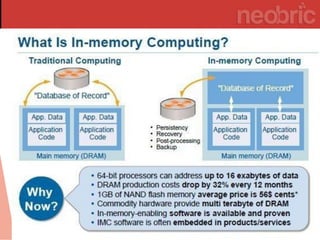
 Storage of information in the main random access memory (RAM)
 Rather than in complicated RDBMS operating on comparatively slow disk drives
 What are the Uses of In Memory Computing?
 Helps business customers, like, banks and utilities, to
 Quickly analyse patterns
 Analyse massive data volumes on the fly
 Perform their operations quickly
 Why In Memory Computing increasingly popular now a days?
 The drop in memory prices in the present market
 Need for “peed is the dri ing fa tor
 Why is it time for in-memory computing?
 DRAM costs are dropping about 30% every 12 - 18 months
 Things are getting bigger, and costs are getting lower
General Architecture
In Memory Computing
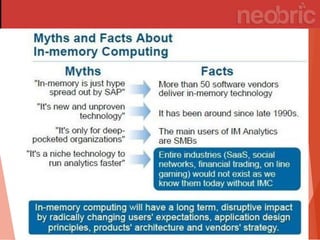
Myths
In Memory Computing
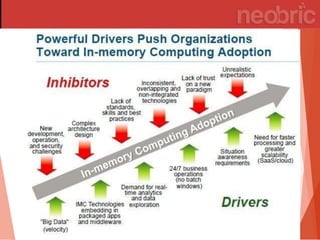
Drivers
In Memory Computing
Challenges
 Lack of standards:
 No specific standards for developing IMC solutions
 Companies are providing their offerings in ad hoc manner
 Compatibility issues among solutions from other vendors
 Migration:
 Costs associated with IMC systems are comparatively high
 It is a time consuming process.
 Persistence:
 We are talking a out DRAM: the D stands for destru ti e
 It doesn’t hold data, if e lose po er
In Memory Computing
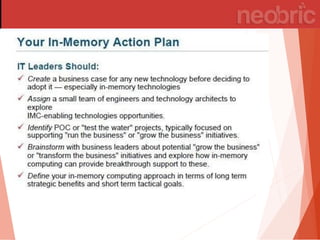
Action Plan
In Memory Computing
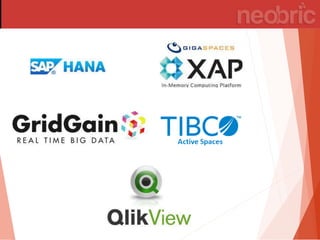
Platforms and Applications
References :
http://timoelliott.com/blog/2013/04/the-business-impact-of-in-memory-computing-from-run-to-
transform.html
http://timoelliott.com/blog/2013/04/how-and-why-to-create-an-in-memory-action-plan.html

A quick intro to In memory computing