IN-MEMORY 
COMPUTING 
Prepared by Debajit Banerjee for: http://debajitb.wix.com/debajitbanerjee/ & http://debajitb.wix.com/debajitbanerjee/apps/blog
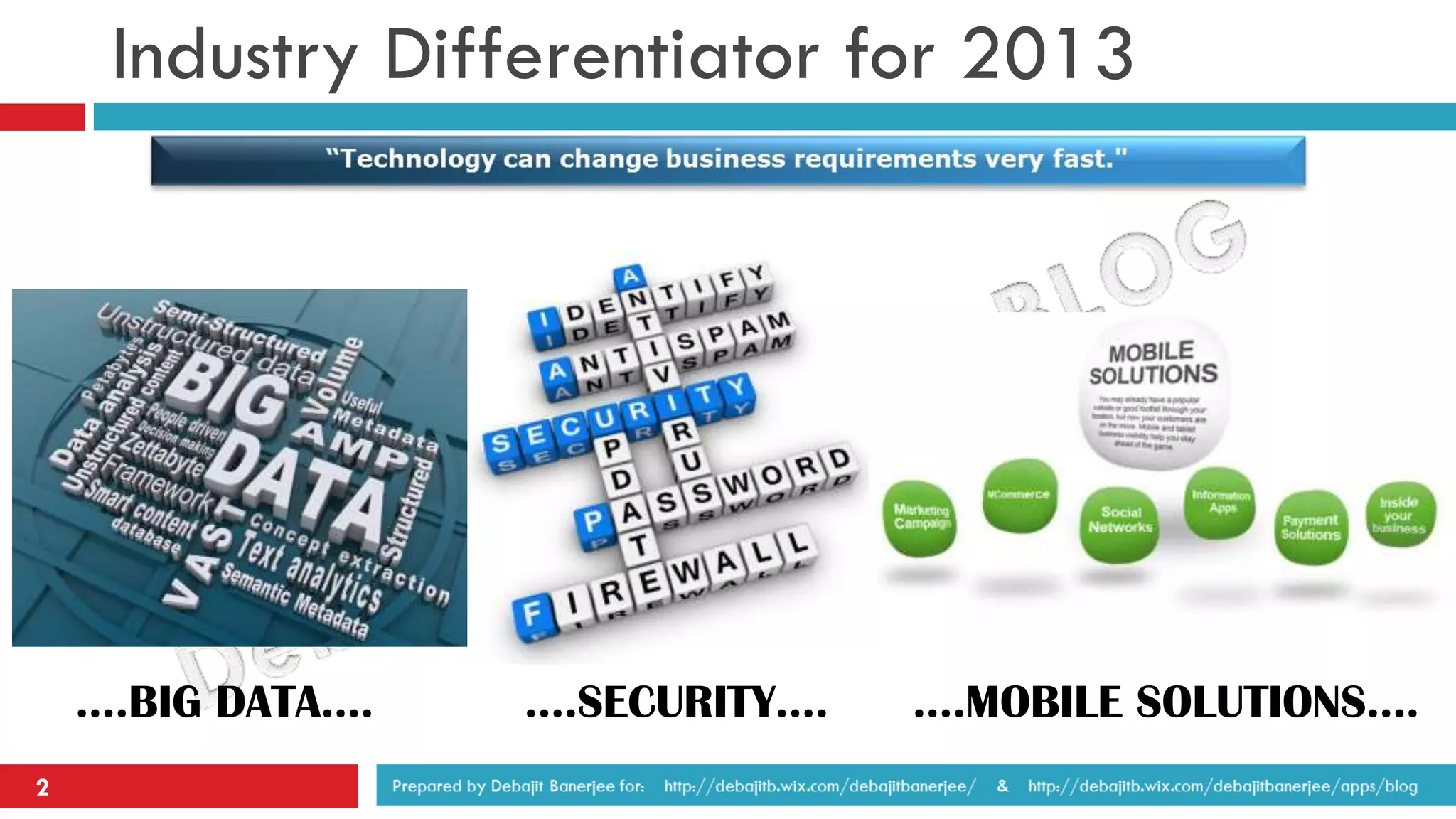
Industry Differentiator for 2013 
Prepared by Debajit Banerjee for: http://debajitb.wix.com/debajitbanerjee/ & http://debajitb.wix.com/debajitbanerjee/apps/blog 
2 
….BIG DATA…. ….SECURITY…. ….MOBILE SOLUTIONS….
Why we are discussing In-Memory Computing? 
3
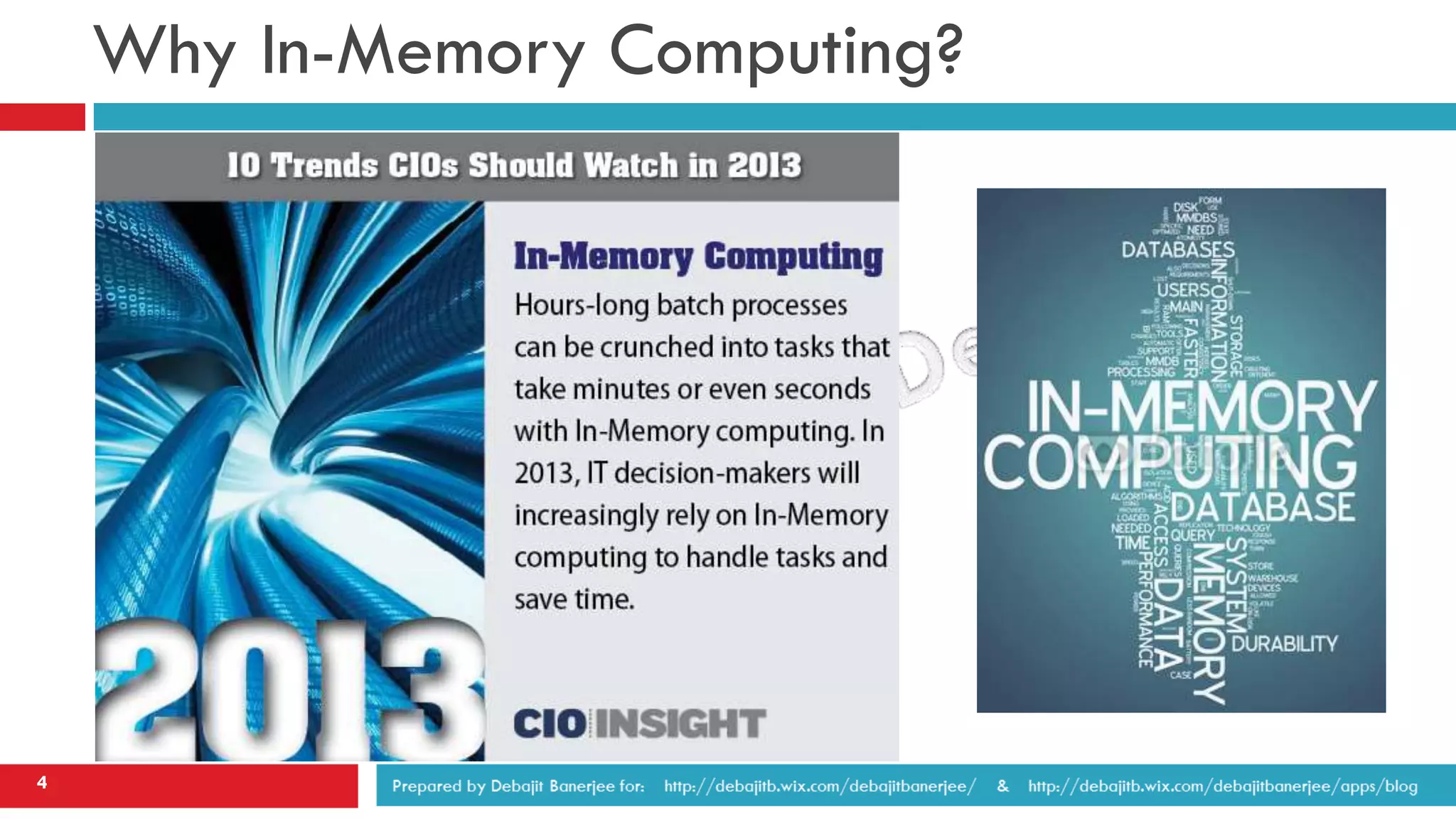
Why In-Memory Computing? 
4
Why In-Memory Computing? 
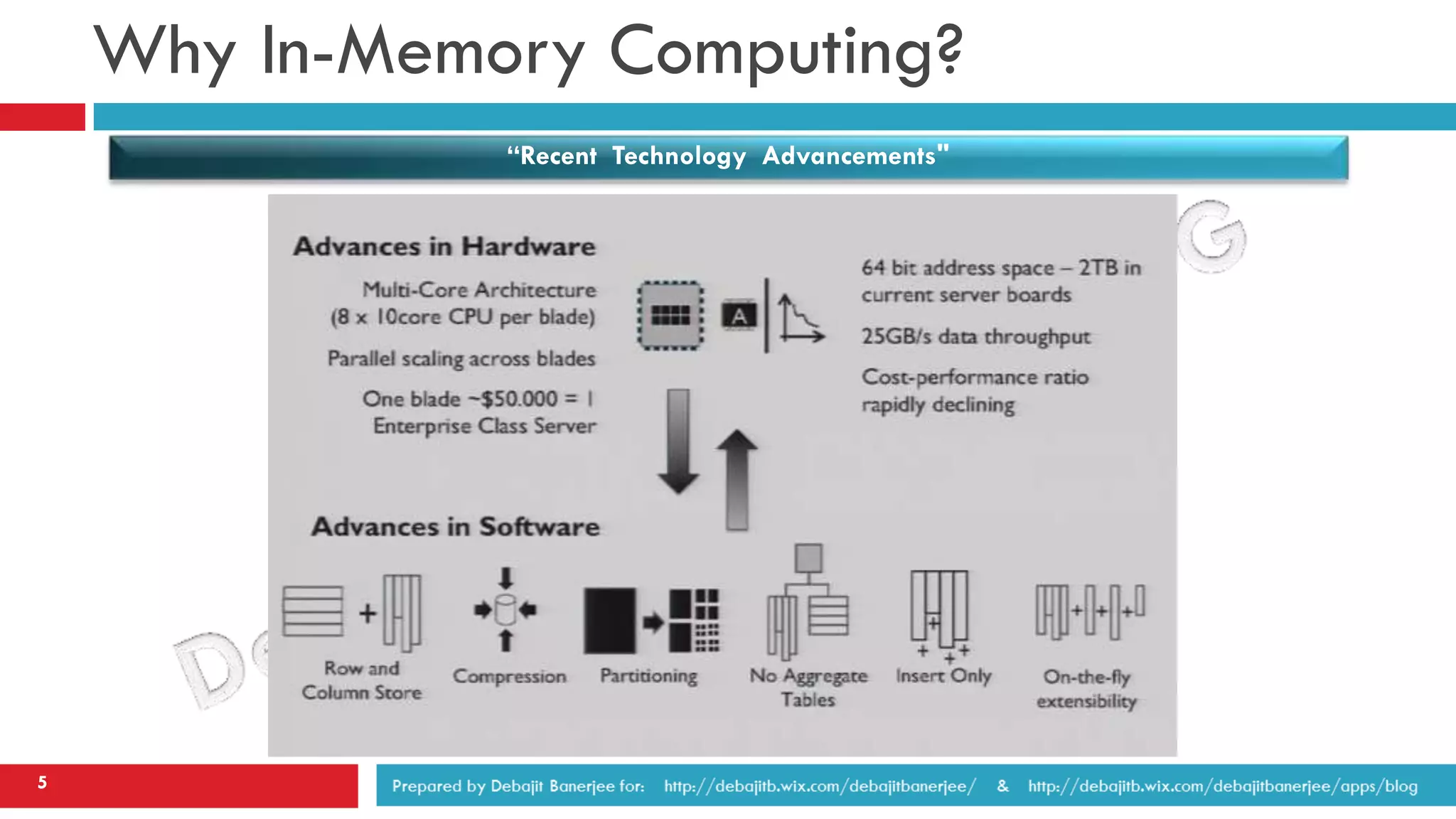
5 
“Recent Technology Advancements"
Why In-Memory Computing? 
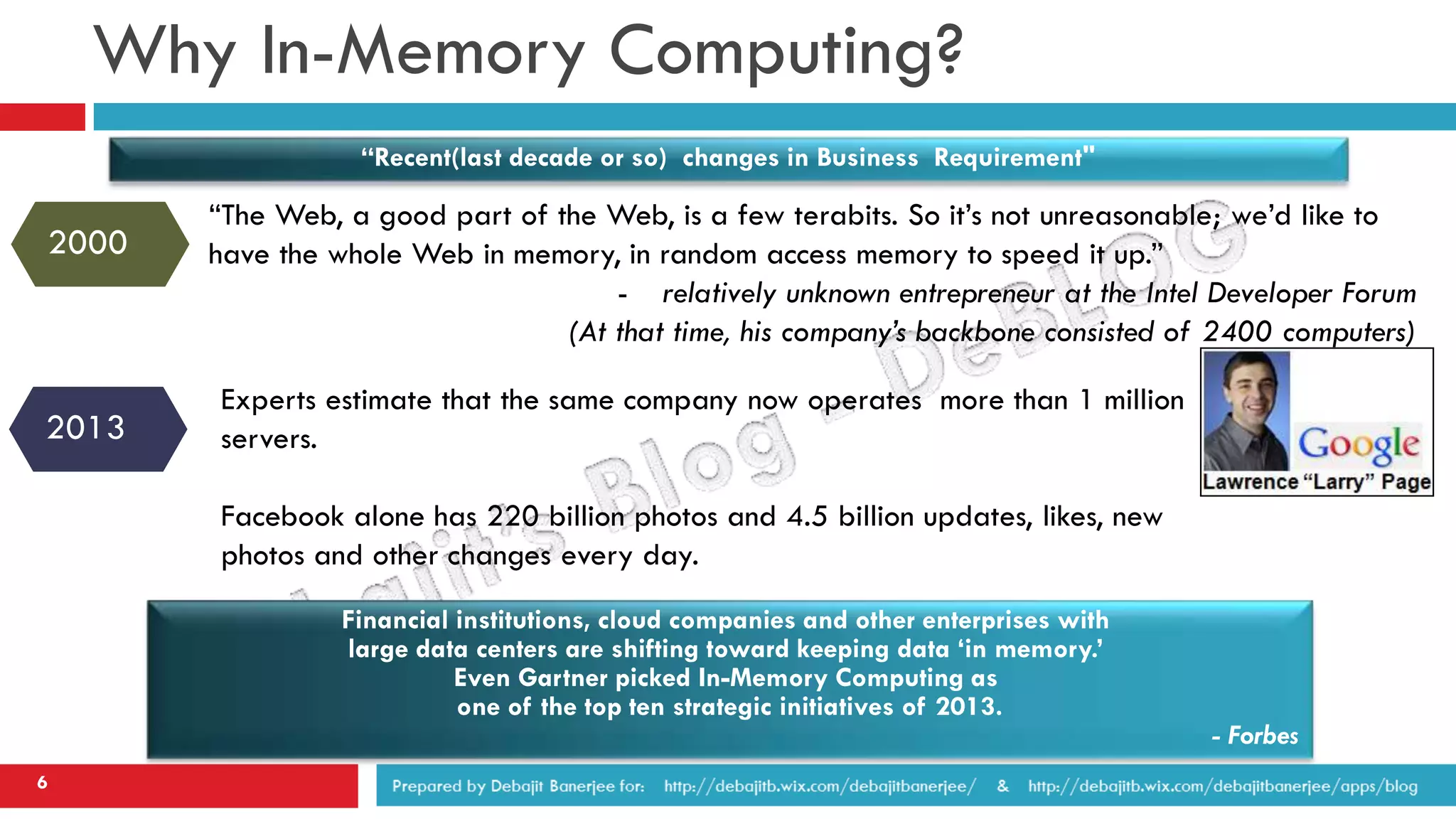
6 
“Recent(last decade or so) changes in Business Requirement" 
“The Web, a good part of the Web, is a few terabits. So it’s not unreasonable; we’d like to 
have the whole Web in memory, in random access memory to speed it up.” 
- relatively unknown entrepreneur at the Intel Developer Forum 
(At that time, his company’s backbone consisted of 2400 computers) 
Financial institutions, cloud companies and other enterprises with 
large data centers are shifting toward keeping data ‘in memory.’ 
Even Gartner picked In-Memory Computing as 
one of the top ten strategic initiatives of 2013. 
- Forbes 
2000 
2013 
Experts estimate that the same company now operates more than 1 million 
servers. 
Facebook alone has 220 billion photos and 4.5 billion updates, likes, new 
photos and other changes every day.
Why In-Memory Computing? 
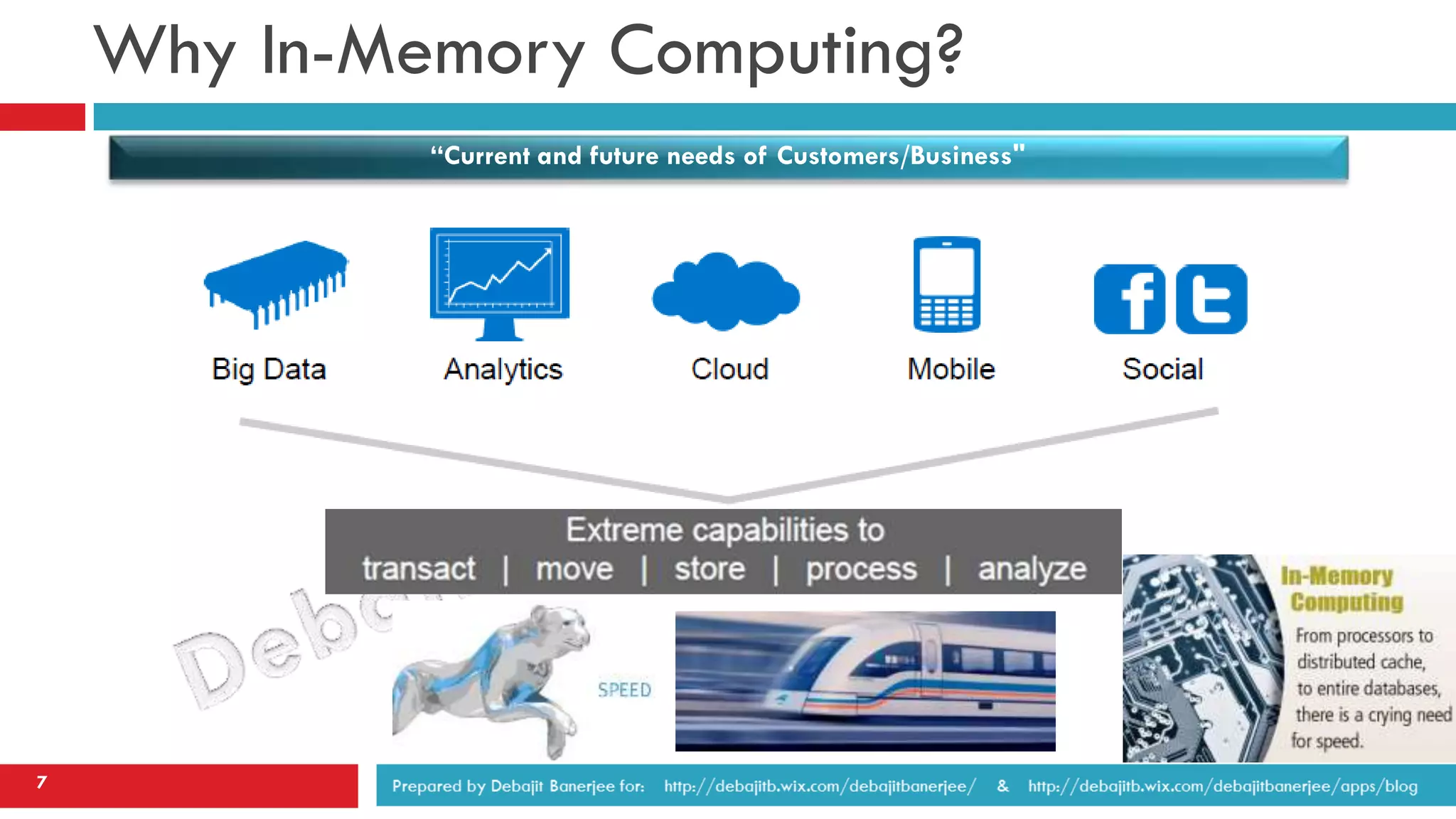
7 
“Current and future needs of Customers/Business"
Why In-Memory Computing? 
8 
“Current and future needs of Customers/Business" 
“[All] business 
transactions [and] 
queries, including 
unrestricted 
aggregations and time-based 
sequences, can 
be answered in just a 
couple of seconds 
(including the 
surprisingly costly 
presentation layer).” 
- Dr. Hasso Plattner
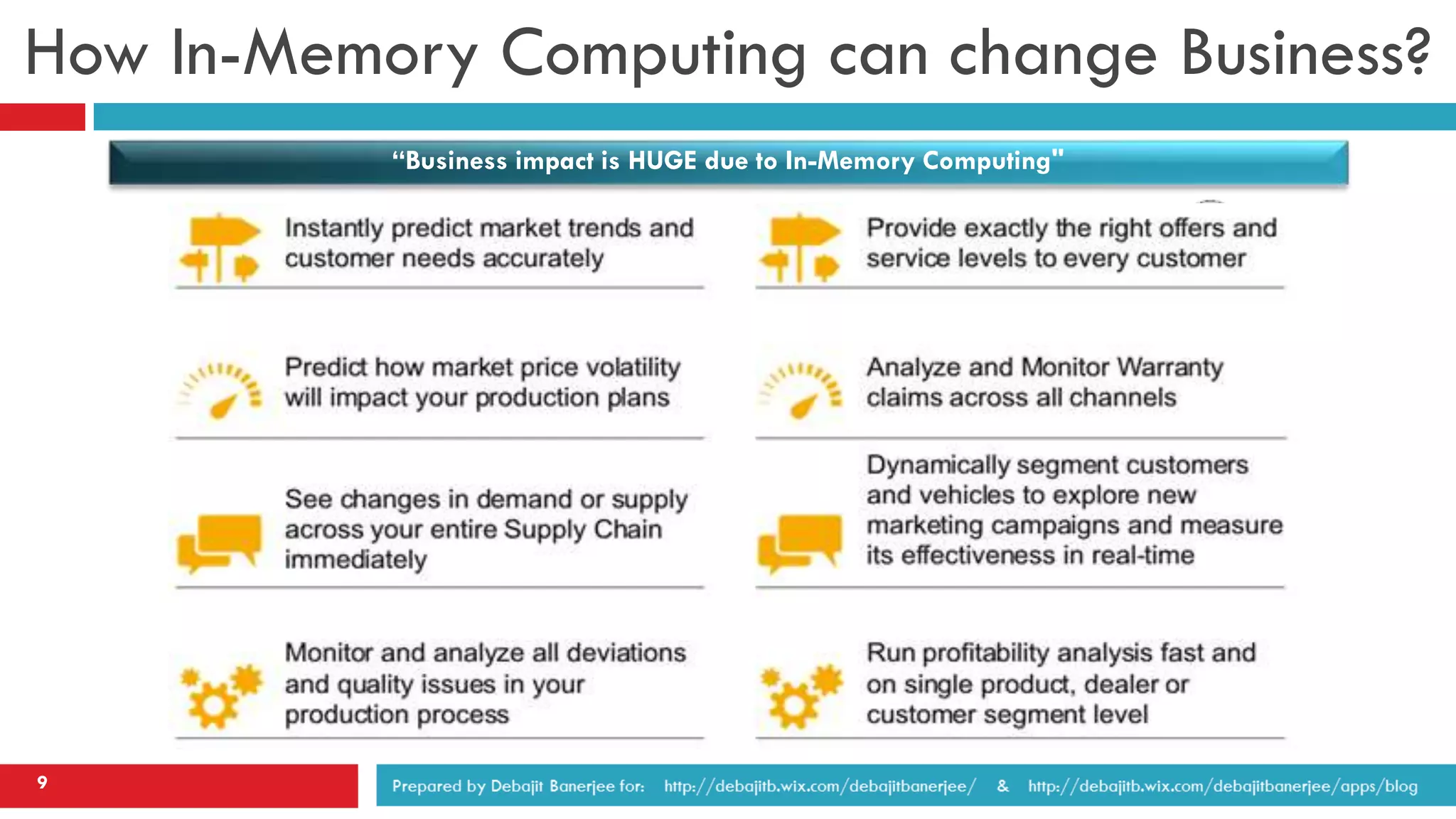
How In-Memory Computing can change Business? 
9 
“Business impact is HUGE due to In-Memory Computing"
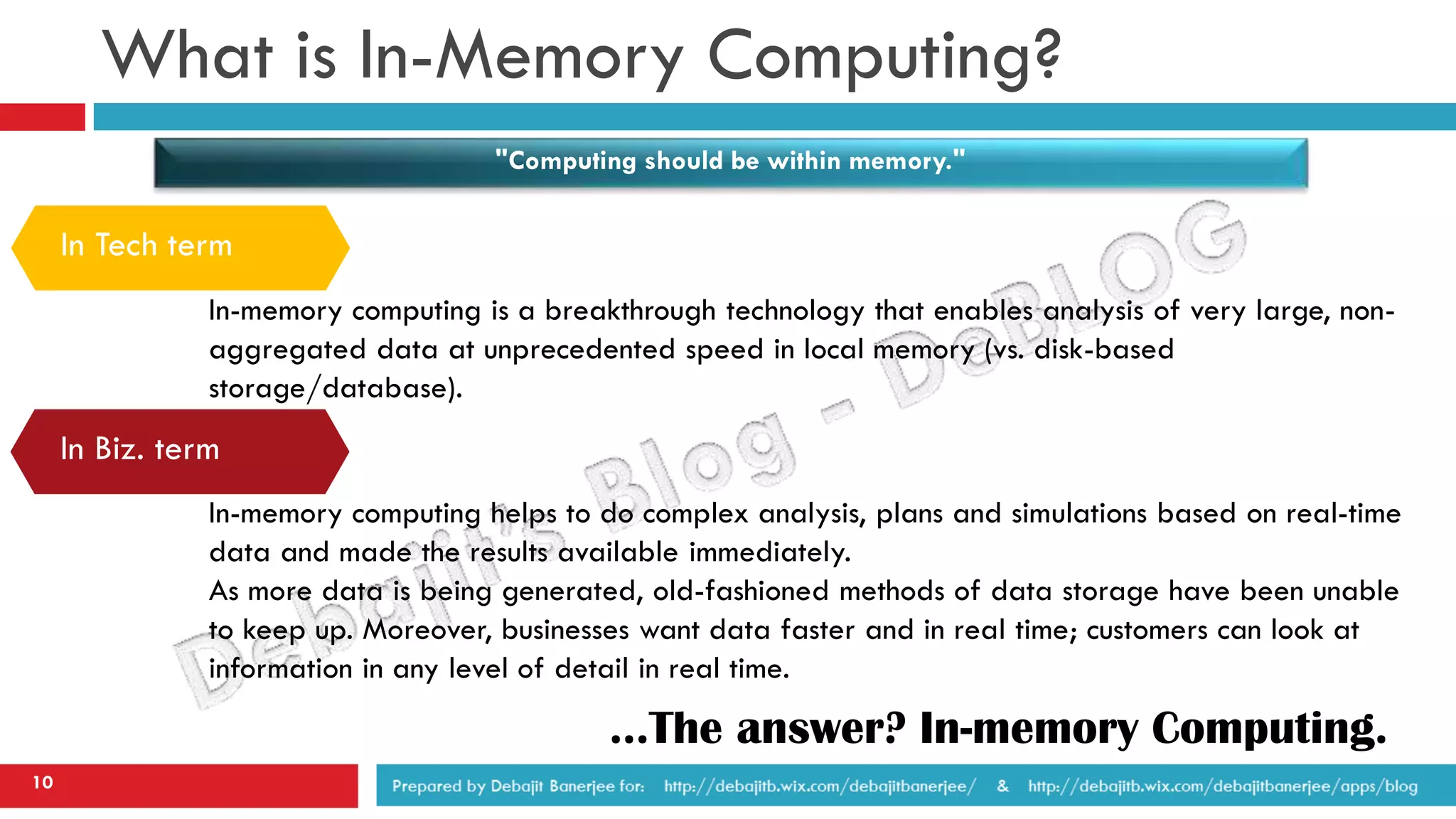
What is In-Memory Computing? 
10 
"Computing should be within memory." 
In Tech term 
In-memory computing is a breakthrough technology that enables analysis of very large, non-aggregated 
data at unprecedented speed in local memory (vs. disk-based 
storage/database). 
In Biz. term 
In-memory computing helps to do complex analysis, plans and simulations based on real-time 
data and made the results available immediately. 
As more data is being generated, old-fashioned methods of data storage have been unable 
to keep up. Moreover, businesses want data faster and in real time; customers can look at 
information in any level of detail in real time. 
…The answer? In-memory Computing.
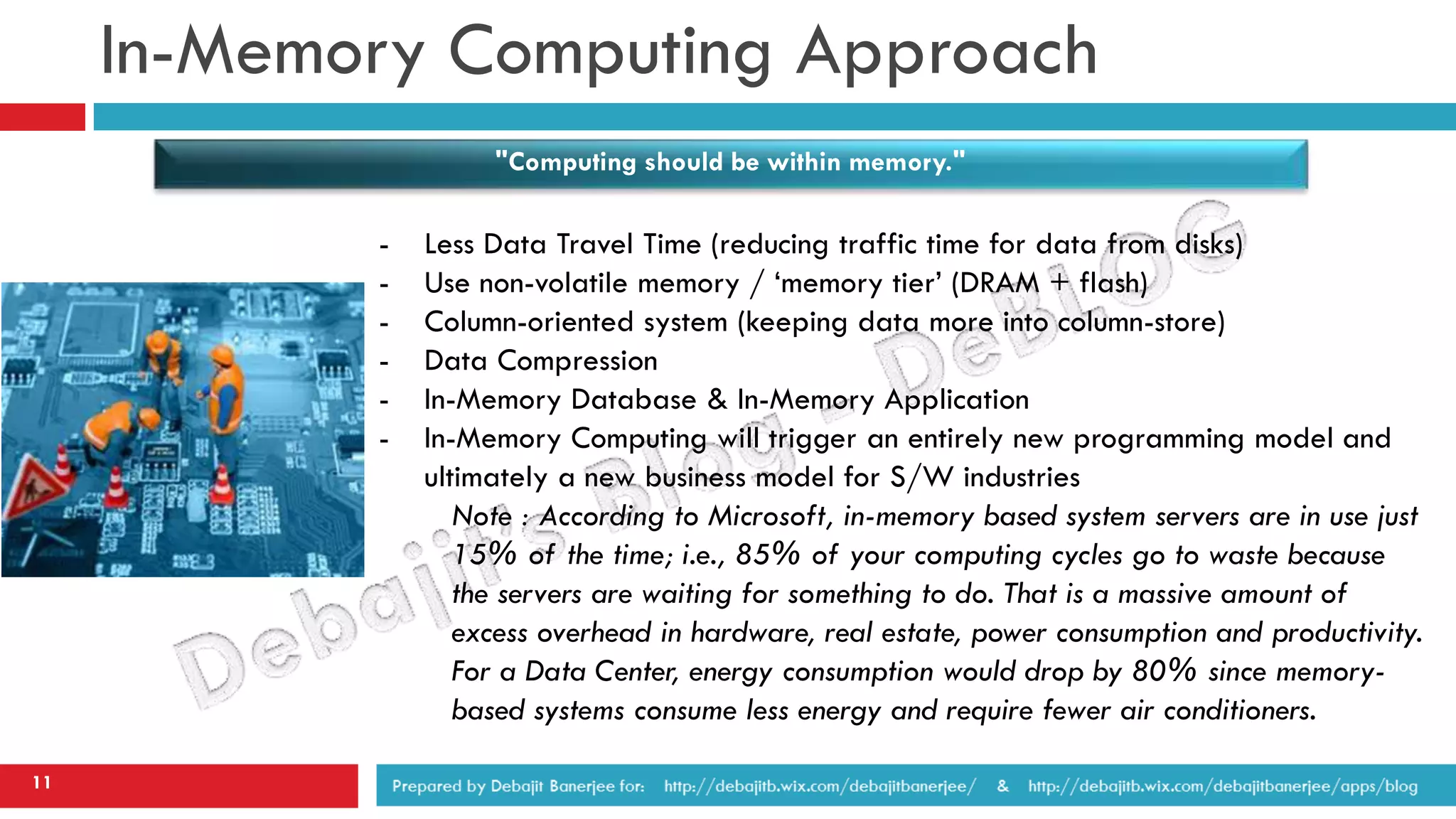
In-Memory Computing Approach 
11 
"Computing should be within memory." 
- Less Data Travel Time (reducing traffic time for data from disks) 
- Use non-volatile memory / ‘memory tier’ (DRAM + flash) 
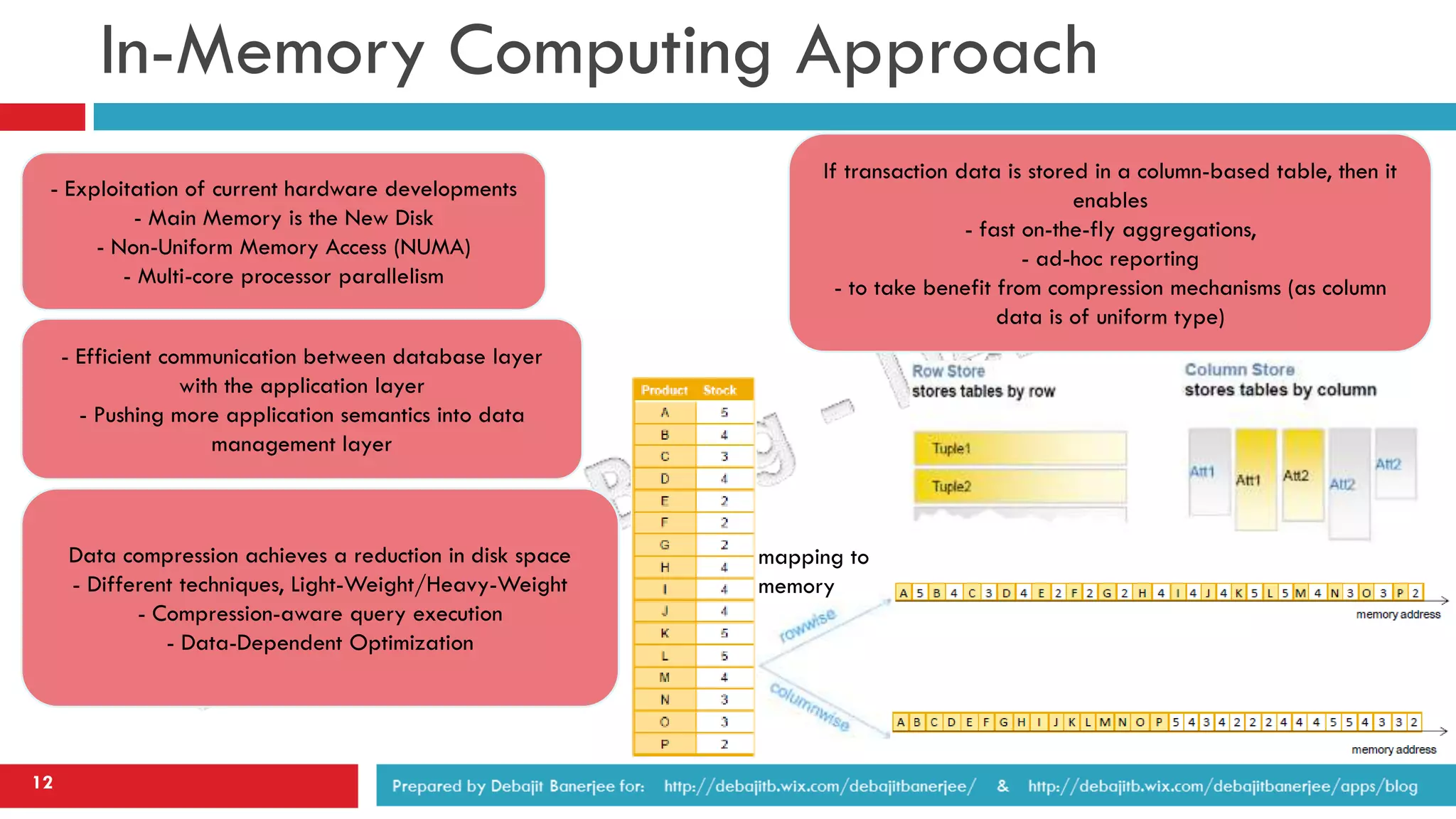
- Column-oriented system (keeping data more into column-store) 
- Data Compression 
- In-Memory Database & In-Memory Application 
- In-Memory Computing will trigger an entirely new programming model and 
ultimately a new business model for S/W industries 
Note : According to Microsoft, in-memory based system servers are in use just 
15% of the time; i.e., 85% of your computing cycles go to waste because 
the servers are waiting for something to do. That is a massive amount of 
excess overhead in hardware, real estate, power consumption and productivity. 
For a Data Center, energy consumption would drop by 80% since memory-based 
systems consume less energy and require fewer air conditioners.
In-Memory Computing Approach 
- Exploitation of current hardware developments 
12 
- Main Memory is the New Disk 
- Non-Uniform Memory Access (NUMA) 
- Multi-core processor parallelism 
- Efficient communication between database layer 
with the application layer 
- Pushing more application semantics into data 
management layer 
Data compression achieves a reduction in disk space 
- Different techniques, Light-Weight/Heavy-Weight 
- Compression-aware query execution 
- Data-Dependent Optimization 
If transaction data is stored in a column-based table, then it 
enables 
- fast on-the-fly aggregations, 
- ad-hoc reporting 
- to take benefit from compression mechanisms (as column 
data is of uniform type) 
mapping to 
memory
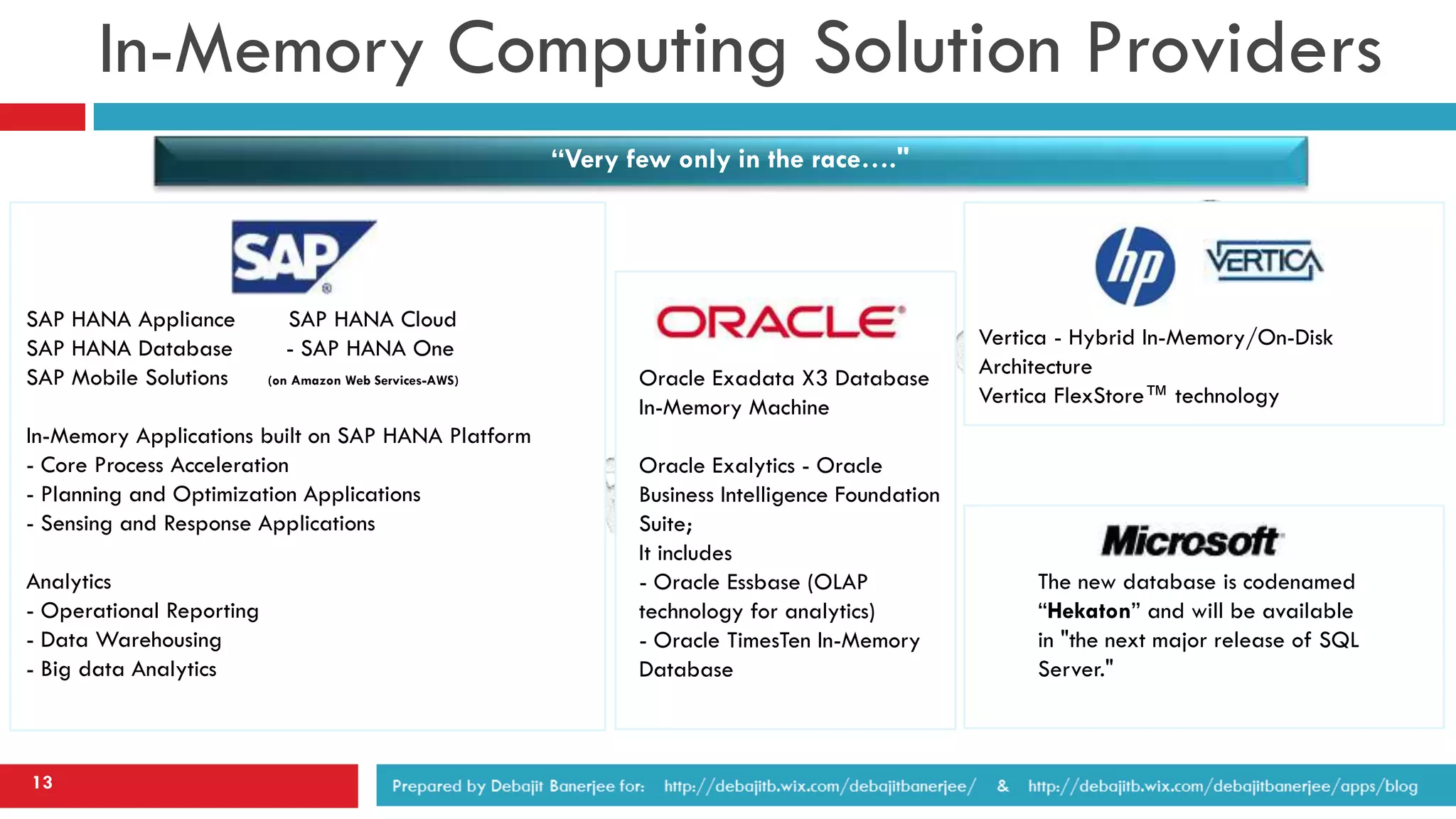
In-Memory Computing Solution Providers 
13 
“Very few only in the race…." 
The new database is codenamed 
“Hekaton” and will be available 
in "the next major release of SQL 
Server." 
Oracle Exadata X3 Database 
In-Memory Machine 
Oracle Exalytics - Oracle 
Business Intelligence Foundation 
Suite; 
It includes 
- Oracle Essbase (OLAP 
technology for analytics) 
- Oracle TimesTen In-Memory 
Database 
Vertica - Hybrid In-Memory/On-Disk 
Architecture 
Vertica FlexStore™ technology 
SAP HANA Appliance SAP HANA Cloud 
SAP HANA Database - SAP HANA One 
SAP Mobile Solutions (on Amazon Web Services-AWS) 
In-Memory Applications built on SAP HANA Platform 
- Core Process Acceleration 
- Planning and Optimization Applications 
- Sensing and Response Applications 
Analytics 
- Operational Reporting 
- Data Warehousing 
- Big data Analytics
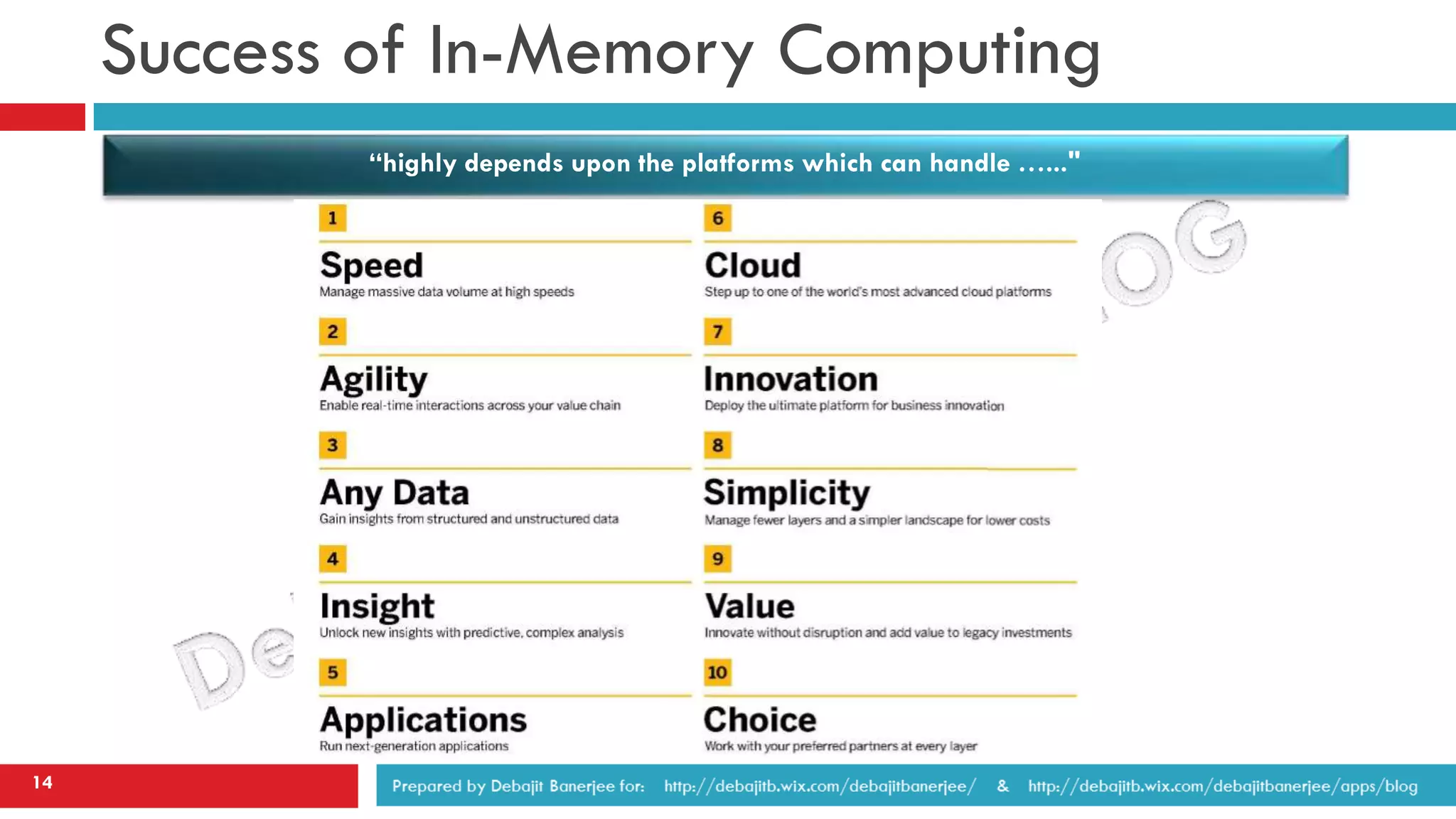
Success of In-Memory Computing 
14 
“highly depends upon the platforms which can handle …..."
15 
Thank You

How In Memory Computing Changes Everything

  • 1.
    IN-MEMORY COMPUTING Preparedby Debajit Banerjee for: http://debajitb.wix.com/debajitbanerjee/ & http://debajitb.wix.com/debajitbanerjee/apps/blog
  • 2.
    Industry Differentiator for2013 Prepared by Debajit Banerjee for: http://debajitb.wix.com/debajitbanerjee/ & http://debajitb.wix.com/debajitbanerjee/apps/blog 2 ….BIG DATA…. ….SECURITY…. ….MOBILE SOLUTIONS….
  • 3.
    Why we arediscussing In-Memory Computing? 3
  • 4.
  • 5.
    Why In-Memory Computing? 5 “Recent Technology Advancements"
  • 6.
    Why In-Memory Computing? 6 “Recent(last decade or so) changes in Business Requirement" “The Web, a good part of the Web, is a few terabits. So it’s not unreasonable; we’d like to have the whole Web in memory, in random access memory to speed it up.” - relatively unknown entrepreneur at the Intel Developer Forum (At that time, his company’s backbone consisted of 2400 computers) Financial institutions, cloud companies and other enterprises with large data centers are shifting toward keeping data ‘in memory.’ Even Gartner picked In-Memory Computing as one of the top ten strategic initiatives of 2013. - Forbes 2000 2013 Experts estimate that the same company now operates more than 1 million servers. Facebook alone has 220 billion photos and 4.5 billion updates, likes, new photos and other changes every day.
  • 7.
    Why In-Memory Computing? 7 “Current and future needs of Customers/Business"
  • 8.
    Why In-Memory Computing? 8 “Current and future needs of Customers/Business" “[All] business transactions [and] queries, including unrestricted aggregations and time-based sequences, can be answered in just a couple of seconds (including the surprisingly costly presentation layer).” - Dr. Hasso Plattner
  • 9.
    How In-Memory Computingcan change Business? 9 “Business impact is HUGE due to In-Memory Computing"
  • 10.
    What is In-MemoryComputing? 10 "Computing should be within memory." In Tech term In-memory computing is a breakthrough technology that enables analysis of very large, non-aggregated data at unprecedented speed in local memory (vs. disk-based storage/database). In Biz. term In-memory computing helps to do complex analysis, plans and simulations based on real-time data and made the results available immediately. As more data is being generated, old-fashioned methods of data storage have been unable to keep up. Moreover, businesses want data faster and in real time; customers can look at information in any level of detail in real time. …The answer? In-memory Computing.
  • 11.
    In-Memory Computing Approach 11 "Computing should be within memory." - Less Data Travel Time (reducing traffic time for data from disks) - Use non-volatile memory / ‘memory tier’ (DRAM + flash) - Column-oriented system (keeping data more into column-store) - Data Compression - In-Memory Database & In-Memory Application - In-Memory Computing will trigger an entirely new programming model and ultimately a new business model for S/W industries Note : According to Microsoft, in-memory based system servers are in use just 15% of the time; i.e., 85% of your computing cycles go to waste because the servers are waiting for something to do. That is a massive amount of excess overhead in hardware, real estate, power consumption and productivity. For a Data Center, energy consumption would drop by 80% since memory-based systems consume less energy and require fewer air conditioners.
  • 12.
    In-Memory Computing Approach - Exploitation of current hardware developments 12 - Main Memory is the New Disk - Non-Uniform Memory Access (NUMA) - Multi-core processor parallelism - Efficient communication between database layer with the application layer - Pushing more application semantics into data management layer Data compression achieves a reduction in disk space - Different techniques, Light-Weight/Heavy-Weight - Compression-aware query execution - Data-Dependent Optimization If transaction data is stored in a column-based table, then it enables - fast on-the-fly aggregations, - ad-hoc reporting - to take benefit from compression mechanisms (as column data is of uniform type) mapping to memory
  • 13.
    In-Memory Computing SolutionProviders 13 “Very few only in the race…." The new database is codenamed “Hekaton” and will be available in "the next major release of SQL Server." Oracle Exadata X3 Database In-Memory Machine Oracle Exalytics - Oracle Business Intelligence Foundation Suite; It includes - Oracle Essbase (OLAP technology for analytics) - Oracle TimesTen In-Memory Database Vertica - Hybrid In-Memory/On-Disk Architecture Vertica FlexStore™ technology SAP HANA Appliance SAP HANA Cloud SAP HANA Database - SAP HANA One SAP Mobile Solutions (on Amazon Web Services-AWS) In-Memory Applications built on SAP HANA Platform - Core Process Acceleration - Planning and Optimization Applications - Sensing and Response Applications Analytics - Operational Reporting - Data Warehousing - Big data Analytics
  • 14.
    Success of In-MemoryComputing 14 “highly depends upon the platforms which can handle …..."
  • 15.