Putting the “rated” into federatedimproving the user experienceAndy Powell@andypowe11
Usability 101“the study of the ease with which people can employ a particular tool or other human-made object in order to achieve a particular goal” (Wikipedia)
A framework for usabilitylearnability: how easy is it for users to accomplish basic tasks the first time they encounter the design?efficiency: once users have learned the design, how quickly can they perform tasks?memorability: when users return to the design after a period of not using it, how easily can they re establish proficiency?errors: how many errors do users make, how severe are these errors, and how easily can they recover from the errors?satisfaction: how pleasant is it to use the design?
Discovery, access and usewith federated access management, “usability” covers a lot of groundfrom discovery (Google search vs. institutional portal)…thru access… (the publisher’s website)to use (having the thing on your desktop)
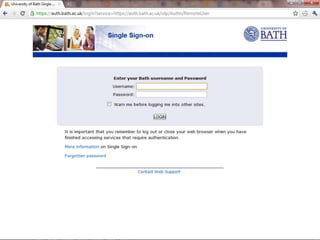
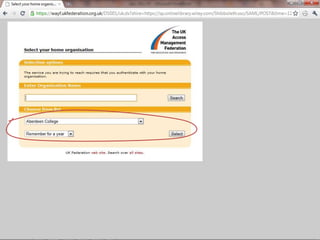
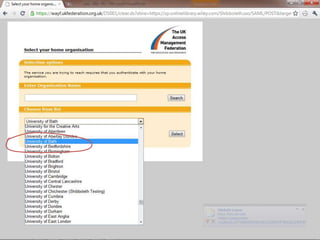
Even ‘access’ spans multiple playersthe publisher’s websitethe federation WAYF service (in some cases)the institutional identity provider (IdP)
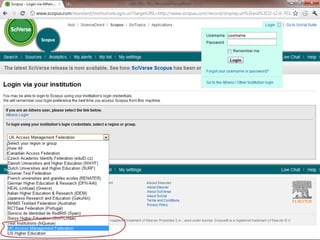
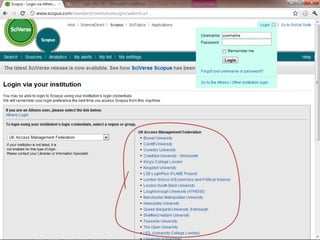
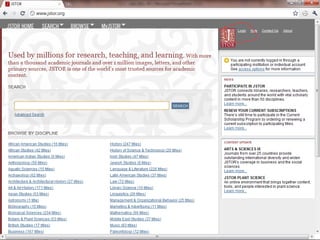
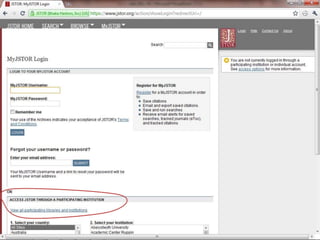
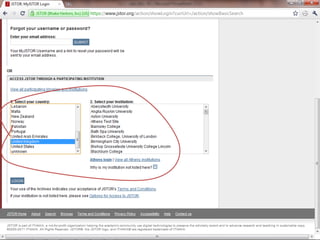
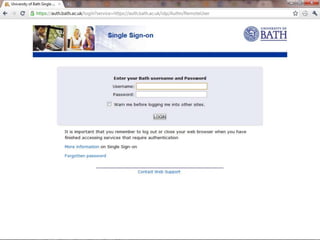
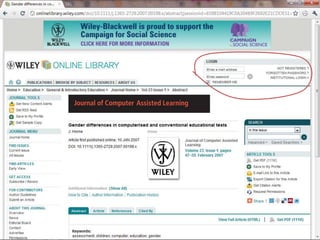
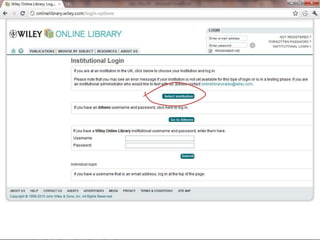
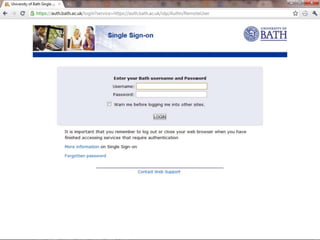
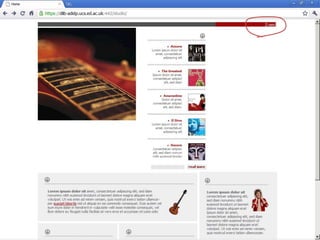
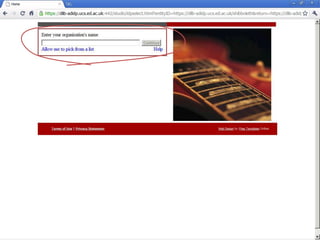
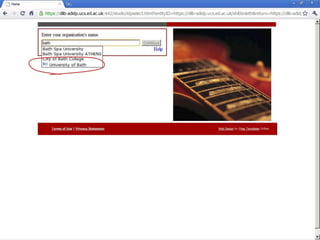
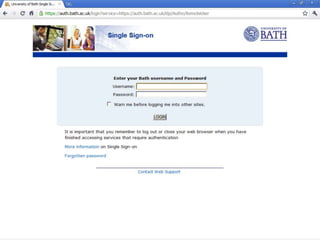
From perspective of the user(and the user’s institution)the institutional IdP is always the samebut every publisher website has different look and feel (for login)some use the WAYF, some don’tnot easy for the institution to provide ‘help’ documentation that covers all cases
From perspective of the publisherevery user sees the same websitebut each user has different IdP (and possibly WAYF)not easy for the publisher to provide ‘help’ documentation that covers everyone
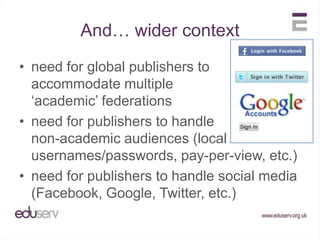
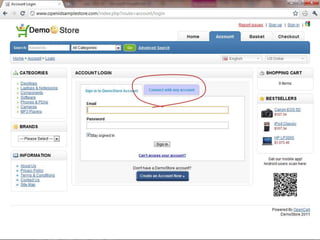
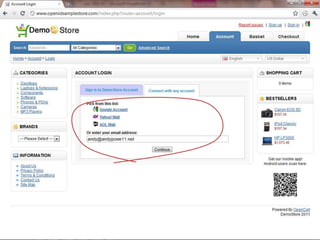
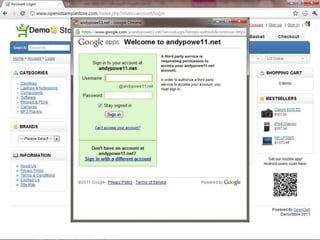
And… wider contextneed for global publishers to accommodate multiple‘academic’ federationsneed for publishers to handlenon-academic audiences (local usernames/passwords, pay-per-view, etc.)need for publishers to handle social media (Facebook, Google, Twitter, etc.)
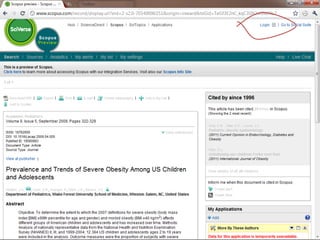
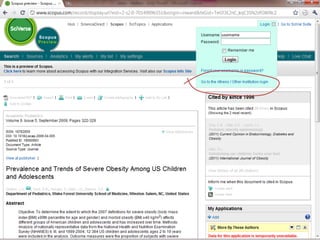
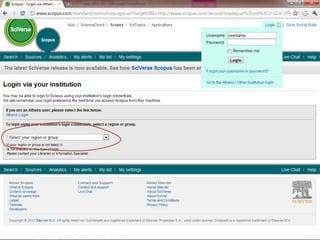
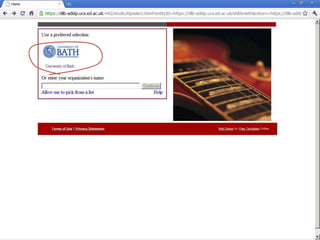
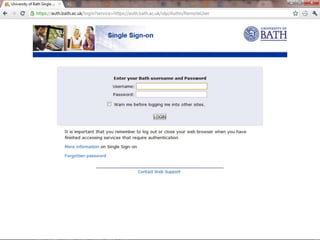
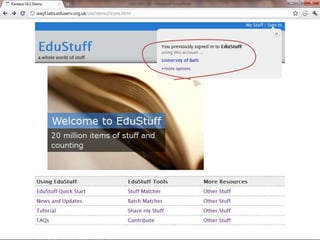
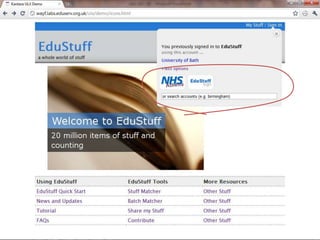
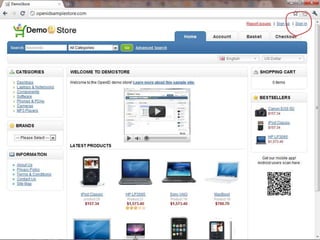
3 examples…of current practice
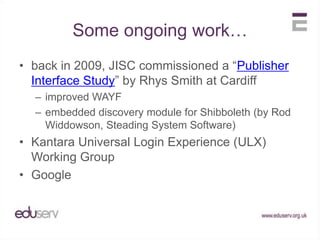
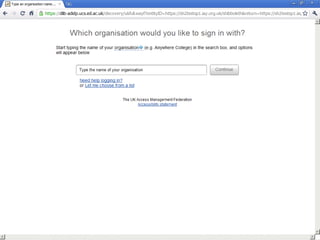
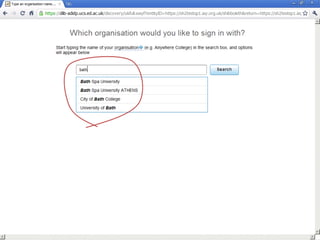
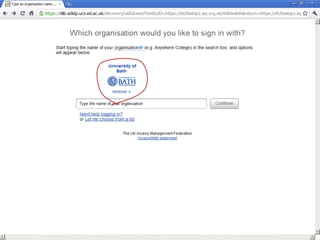
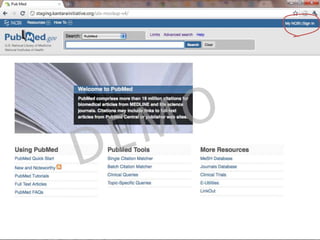
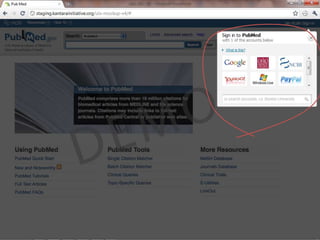
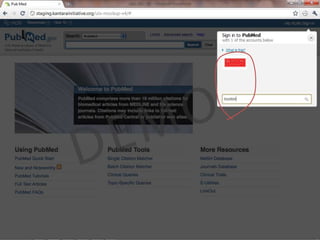
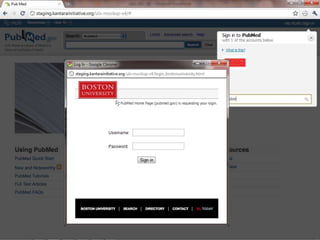
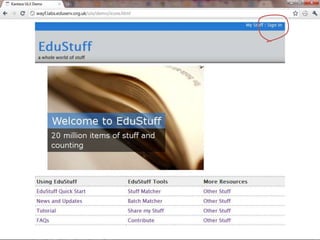
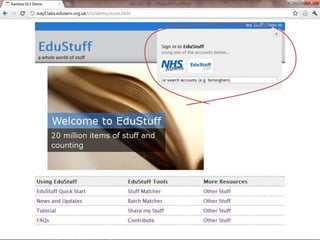
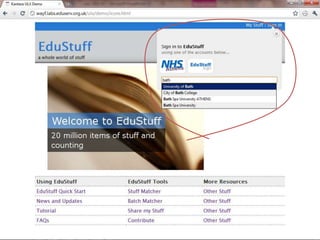
Some ongoing work…back in 2009, JISC commissioned a “Publisher Interface Study” by Rhys Smith at Cardiffimproved WAYFembedded discovery module for Shibboleth (by Rod Widdowson, Steading System Software)KantaraUniversal Login Experience (ULX) Working GroupGoogle
Conclusionsusability across federated login is hardvariety of practice by today’s publishersvariety of exploratory work in progressneed to use this to drive more consistencyno longer just an ‘academic’ problem (c.f. Kantara and Google work)at Eduserv, we are watching this space

Improving the User Experience

  • 1.
    Putting the “rated”into federatedimproving the user experienceAndy Powell@andypowe11
  • 2.
    Usability 101“the studyof the ease with which people can employ a particular tool or other human-made object in order to achieve a particular goal” (Wikipedia)
  • 3.
    A framework forusabilitylearnability: how easy is it for users to accomplish basic tasks the first time they encounter the design?efficiency: once users have learned the design, how quickly can they perform tasks?memorability: when users return to the design after a period of not using it, how easily can they re establish proficiency?errors: how many errors do users make, how severe are these errors, and how easily can they recover from the errors?satisfaction: how pleasant is it to use the design?
  • 4.
    Discovery, access andusewith federated access management, “usability” covers a lot of groundfrom discovery (Google search vs. institutional portal)…thru access… (the publisher’s website)to use (having the thing on your desktop)
  • 5.
    Even ‘access’ spansmultiple playersthe publisher’s websitethe federation WAYF service (in some cases)the institutional identity provider (IdP)
  • 6.
    From perspective ofthe user(and the user’s institution)the institutional IdP is always the samebut every publisher website has different look and feel (for login)some use the WAYF, some don’tnot easy for the institution to provide ‘help’ documentation that covers all cases
  • 7.
    From perspective ofthe publisherevery user sees the same websitebut each user has different IdP (and possibly WAYF)not easy for the publisher to provide ‘help’ documentation that covers everyone
  • 8.
    And… wider contextneedfor global publishers to accommodate multiple‘academic’ federationsneed for publishers to handlenon-academic audiences (local usernames/passwords, pay-per-view, etc.)need for publishers to handle social media (Facebook, Google, Twitter, etc.)
  • 9.
  • 25.
    Some ongoing work…backin 2009, JISC commissioned a “Publisher Interface Study” by Rhys Smith at Cardiffimproved WAYFembedded discovery module for Shibboleth (by Rod Widdowson, Steading System Software)KantaraUniversal Login Experience (ULX) Working GroupGoogle
  • 48.
    Conclusionsusability across federatedlogin is hardvariety of practice by today’s publishersvariety of exploratory work in progressneed to use this to drive more consistencyno longer just an ‘academic’ problem (c.f. Kantara and Google work)at Eduserv, we are watching this space