BY
SOMYA SHUKLA
 The world environment means ‘surroundings’.
The term Environment is derived from French
terms ‘inviron’ meaning to encircle and
represents the interaction between natural
surroundings and organisms.
 Life could originate and flourish on earth only
because this planet provides us all necessary
conditions for life.
 Thus, Environment is simply defined as the sum
of all biotic (living) and abiotic (non-living)
factors that surrounds and potentially influence
an organism. The different components of the
environment are interlinked and interdependent.
Biotic (Living)
 Biotic components
are living things
which includes
plants, animals,
humans as well as
fungi and bacteria.
Abiotic (Non-living)
 Abiotic
components are
non-living physical
and chemical
factors which
includes water,
light, air, soil, and
nutrients.
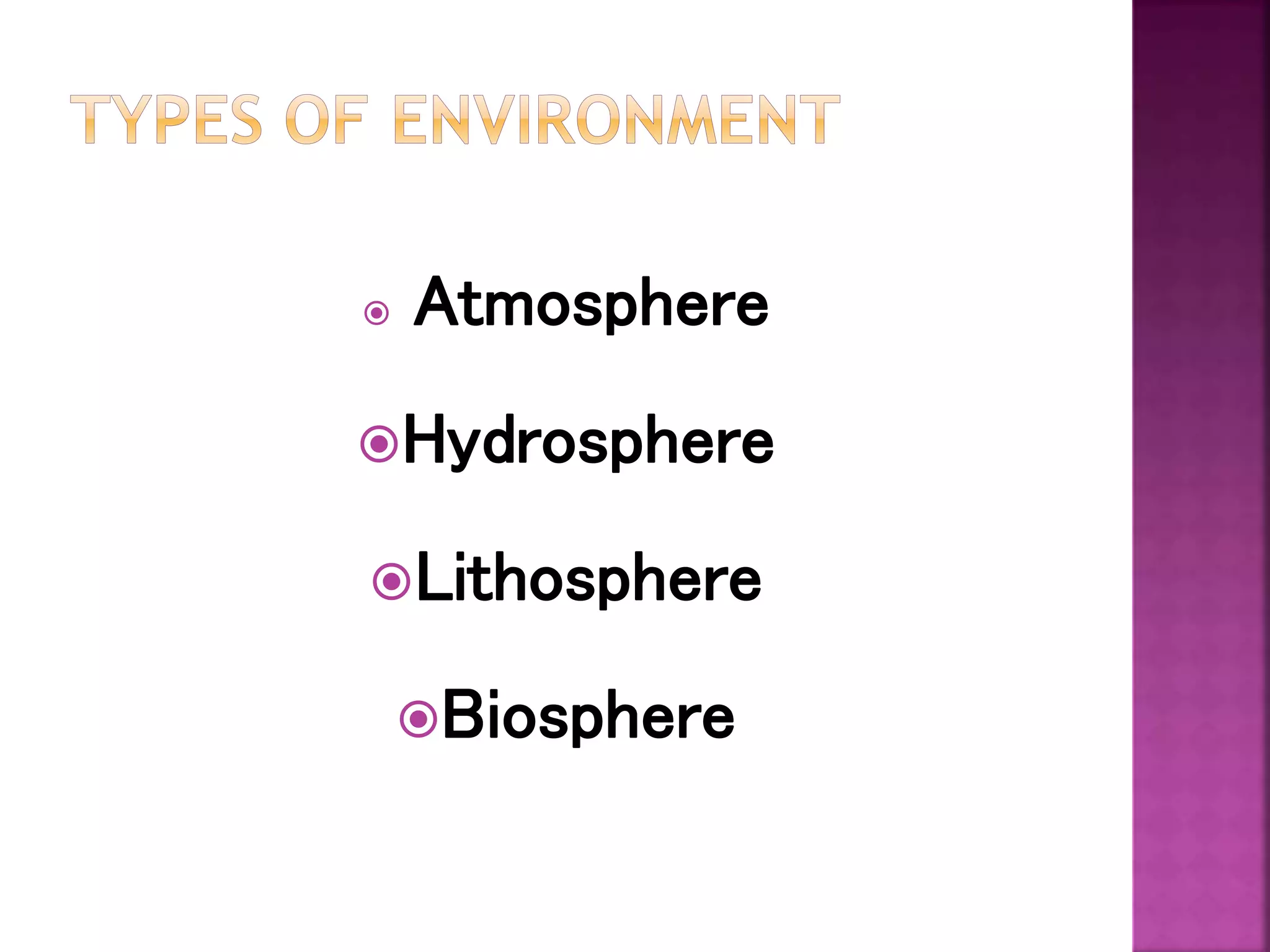
 Atmosphere
Hydrosphere
Lithosphere
Biosphere
 The term atmosphere is originate from two
greek words ‘atoms’ means vapor and
‘sphaira’ means ball or sphere.
 Atmosphere is made up of a mixture of gases
which envelops the earth. These gases
includes nitrogen, oxygen, argon and carbon
dioxide.
 Atmosphere is protective layer which
protect us from cosmic radiations, and it also
provide us oxygen for breath, macronutrient
nitrogen and carbon dioxide for plants for
photosynthesis.
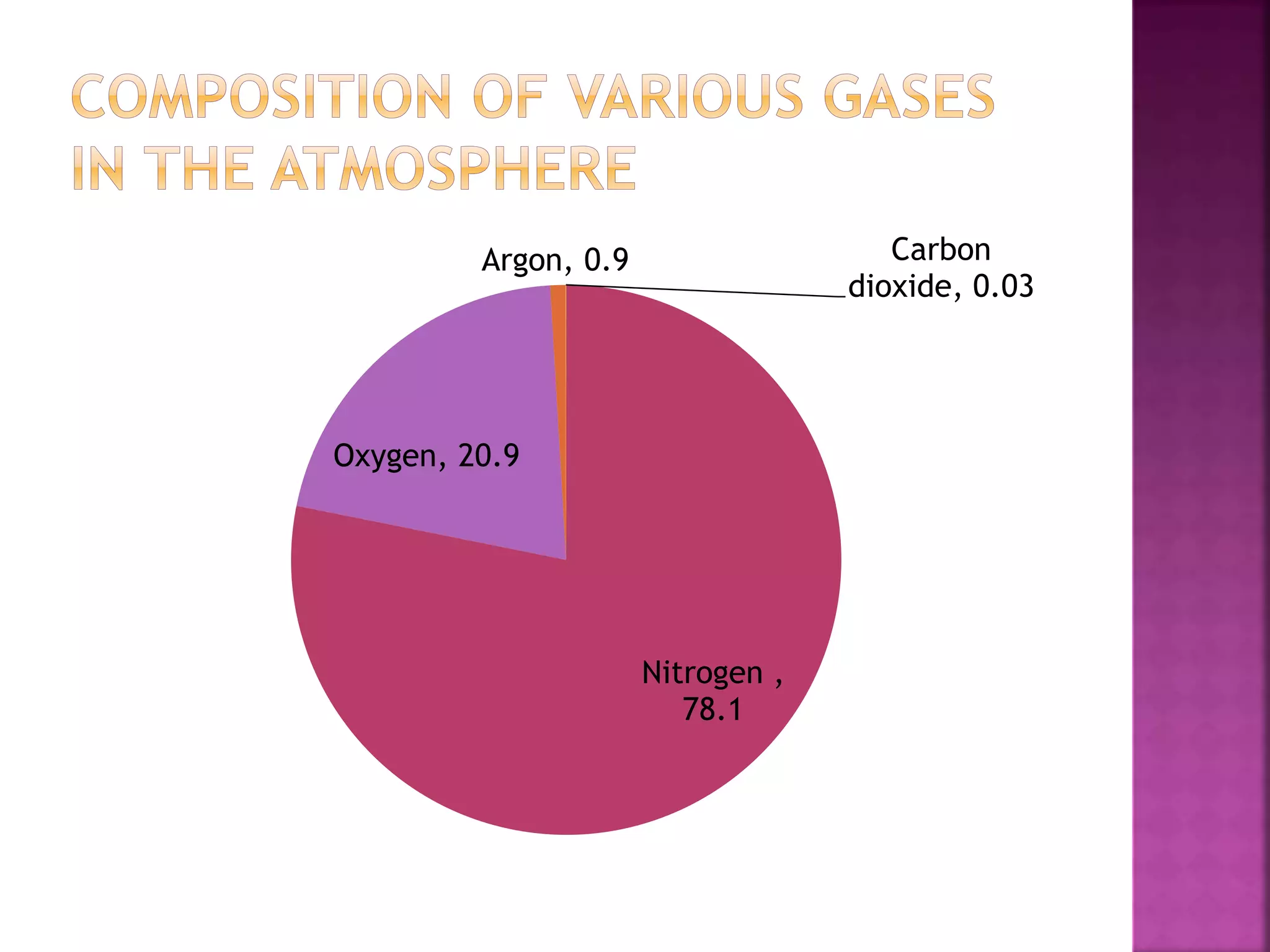
Nitrogen ,
78.1
Oxygen, 20.9
Argon, 0.9 Carbon
dioxide, 0.03
 The atmosphere is divided into a series of
atmospheric layers due to variations in
temperature and pressure at various
altitudes. These layers are:
 Troposphere
 Stratosphere
 Mesosphere
 Thermosphere
 Exosphere
 It includes all water sources such as oceans,
seas, rivers, glaciers, all other inland water
bodies. 70% of the earth is covered with
water.
 Hydrosphere includes water on the surface,
underground and in the air. It is present in
the form of liquid, vapor, and ice.
 97.5% of water is found in oceans and only
2.5% is freshwater and most of this locked
up in glaciers, polar ice caps and rest is in
lakes, rivers, and ground water.
 Lithosphere comprises solid components of
the earth crust i.e., rocks, soil and minerals.
 It consist crust and upper mantle.
nationalgeographic.org
 The biosphere is the layer of the earth where
life exists. It includes all living and non living
factors. Thus, biosphere is the combination
of all the ecosystem.
Pmfias.com
Environment and their components

Environment and their components

  • 1.
  • 2.
     The worldenvironment means ‘surroundings’. The term Environment is derived from French terms ‘inviron’ meaning to encircle and represents the interaction between natural surroundings and organisms.  Life could originate and flourish on earth only because this planet provides us all necessary conditions for life.  Thus, Environment is simply defined as the sum of all biotic (living) and abiotic (non-living) factors that surrounds and potentially influence an organism. The different components of the environment are interlinked and interdependent.
  • 3.
    Biotic (Living)  Bioticcomponents are living things which includes plants, animals, humans as well as fungi and bacteria. Abiotic (Non-living)  Abiotic components are non-living physical and chemical factors which includes water, light, air, soil, and nutrients.
  • 4.
  • 5.
     The termatmosphere is originate from two greek words ‘atoms’ means vapor and ‘sphaira’ means ball or sphere.  Atmosphere is made up of a mixture of gases which envelops the earth. These gases includes nitrogen, oxygen, argon and carbon dioxide.  Atmosphere is protective layer which protect us from cosmic radiations, and it also provide us oxygen for breath, macronutrient nitrogen and carbon dioxide for plants for photosynthesis.
  • 6.
    Nitrogen , 78.1 Oxygen, 20.9 Argon,0.9 Carbon dioxide, 0.03
  • 7.
     The atmosphereis divided into a series of atmospheric layers due to variations in temperature and pressure at various altitudes. These layers are:  Troposphere  Stratosphere  Mesosphere  Thermosphere  Exosphere
  • 8.
     It includesall water sources such as oceans, seas, rivers, glaciers, all other inland water bodies. 70% of the earth is covered with water.  Hydrosphere includes water on the surface, underground and in the air. It is present in the form of liquid, vapor, and ice.  97.5% of water is found in oceans and only 2.5% is freshwater and most of this locked up in glaciers, polar ice caps and rest is in lakes, rivers, and ground water.
  • 9.
     Lithosphere comprisessolid components of the earth crust i.e., rocks, soil and minerals.  It consist crust and upper mantle. nationalgeographic.org
  • 10.
     The biosphereis the layer of the earth where life exists. It includes all living and non living factors. Thus, biosphere is the combination of all the ecosystem. Pmfias.com