1. All living organisms interact with biotic and abiotic factors in their environment to meet their basic survival needs.
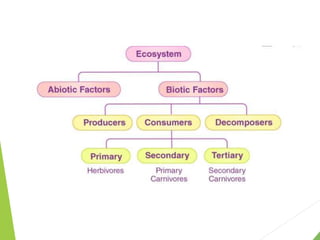
2. An ecosystem is defined as a community of living organisms interacting with each other and their non-living environment. It consists of biotic and abiotic components.
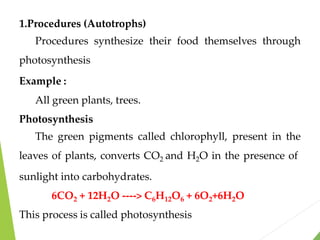
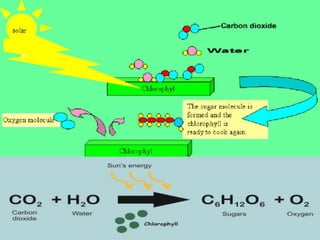
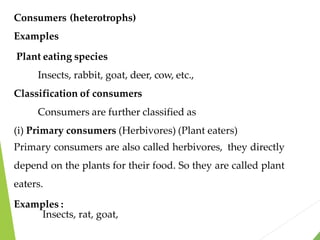
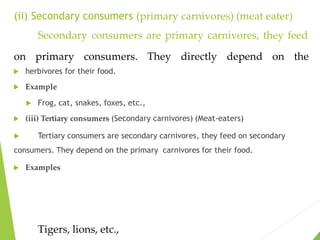
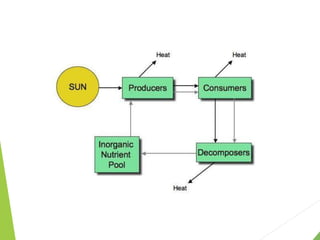
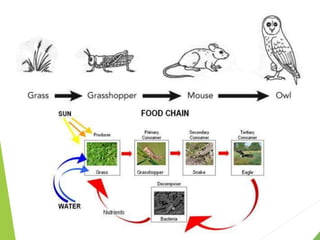
3. Biotic components include producers like plants, primary consumers like herbivores, secondary consumers like carnivores that eat herbivores, and decomposers like bacteria and fungi. Abiotic components include non-living factors like climate, soil, water and sunlight.