PRSENTED BY
DENISH PRAJAPATI
ROLL NO. :- 317
ENVIRONMENTAL SCIENCE
SEM :- I
GUIDED BY :- HARSH M. PATEL
OUTLINES
 INTRODUCTION
 SOIL FORMING PROCESS
 FACTORS INFLUENCING SOIL FORMATION
 REFERENCES
INTRODUCTION
SOIL GENESIS
 Pedogenesis from the Greek word Pedon meaning
soil and genesis meaning origin or birth.
 Soil genesis is the process of Soil formation as
regulated by the effects of place, environment, and
history.
SOIL FORMING PROCESS
Based on the specific physical conditions prevailing
and the physical, chemical or biological activities
involved, the following processes involved in the
process of soil formation.
1. Translocation
2. Organic changes
3. Podzolisation
4. Gleying
5. Desilication
1. Translocation
 It involves several kinds of physical movements which are
predominantly in the downward direction. The processes
which can be categorized under translocation include the
following.
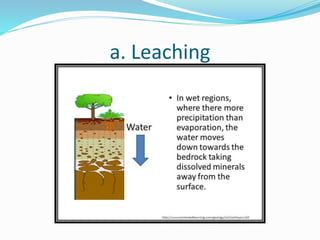
a. Leaching
b. Eluviation
c. Illuviation
d. Calcification
e. Salinisation
a. Leaching
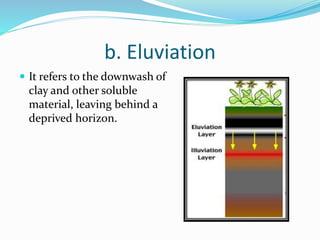
b. Eluviation
 It refers to the downwash of
clay and other soluble
material, leaving behind a
deprived horizon.
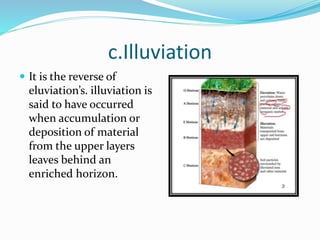
c.Illuviation
 It is the reverse of
eluviation’s. illuviation is
said to have occurred
when accumulation or
deposition of material
from the upper layers
leaves behind an
enriched horizon.
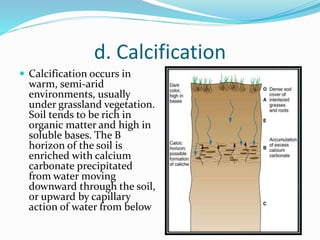
d. Calcification
 Calcification occurs in
warm, semi-arid
environments, usually
under grassland vegetation.
Soil tends to be rich in
organic matter and high in
soluble bases. The B
horizon of the soil is
enriched with calcium
carbonate precipitated
from water moving
downward through the soil,
or upward by capillary
action of water from below
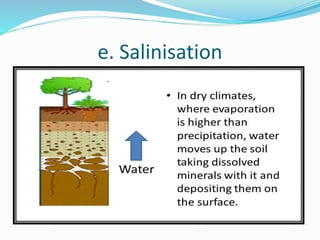
e. Salinisation
2. Oraganic changes
 These changes occur mainly on the surface and follow
a specific sequence. Degrading or break down of the
organic material by algae, fungi, insects and worms
causes humification which leaves behind a dark,
amorphous humus.
 Extreme wetness may leave behind a peaty layer. On
further decay, the humus releases nitrogenous
compounds into the soil. This stage is called
mineralisation. The organic changes, thus, refer to the
accumulated effect produced by these processes.
 Degrading → Humification → Mineralisation
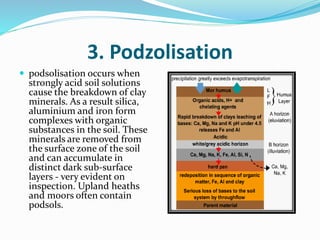
3. Podzolisation
 podsolisation occurs when
strongly acid soil solutions
cause the breakdown of clay
minerals. As a result silica,
aluminium and iron form
complexes with organic
substances in the soil. These
minerals are removed from
the surface zone of the soil
and can accumulate in
distinct dark sub-surface
layers - very evident on
inspection. Upland heaths
and moors often contain
podsols.
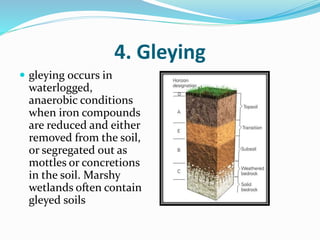
4. Gleying
 gleying occurs in
waterlogged,
anaerobic conditions
when iron compounds
are reduced and either
removed from the soil,
or segregated out as
mottles or concretions
in the soil. Marshy
wetlands often contain
gleyed soils
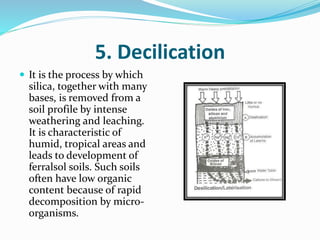
5. Decilication
 It is the process by which
silica, together with many
bases, is removed from a
soil profile by intense
weathering and leaching.
It is characteristic of
humid, tropical areas and
leads to development of
ferralsol soils. Such soils
often have low organic
content because of rapid
decomposition by micro-
organisms.
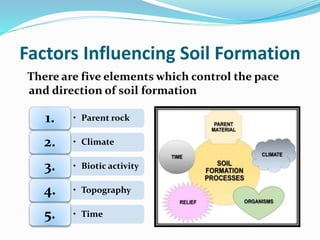
Factors Influencing Soil Formation
There are five elements which control the pace
and direction of soil formation
• Parent rock1.
• Climate2.
• Biotic activity3.
• Topography4.
• Time5.
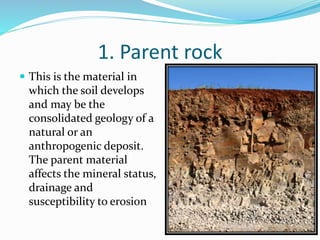
1. Parent rock
 This is the material in
which the soil develops
and may be the
consolidated geology of a
natural or an
anthropogenic deposit.
The parent material
affects the mineral status,
drainage and
susceptibility to erosion
2. Climate
 Temperature, rainfall, humidity and
evapotranspiration. These influence the net movement
of particulates and dissolved solids in the soil water.
Temperature and rainfall also influence the rate of
weathering processes.
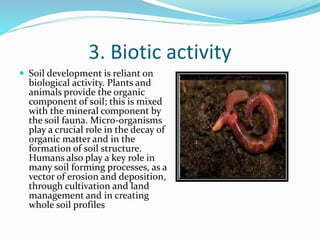
3. Biotic activity
 Soil development is reliant on
biological activity. Plants and
animals provide the organic
component of soil; this is mixed
with the mineral component by
the soil fauna. Micro-organisms
play a crucial role in the decay of
organic matter and in the
formation of soil structure.
Humans also play a key role in
many soil forming processes, as a
vector of erosion and deposition,
through cultivation and land
management and in creating
whole soil profiles
4. Topography
There are two topographic factors in soil formation. The
first is the steepness. All the soils around
the Earth are slowlysinking deeper and deeper as lower
levels of dirt turn into soil. At the same time, wind and
water carry the surface soil away through erosion.
1. Slope and Soil Formation
2. Drainage and Soil Formation
5. Time
 The passage of time allows soil features and horizons
to develop. When the soil is largely in equilibrium with
its environment it is considered to be mature. The
time this takes to happen varies according to the
environment and the parent material. Generally soils
develop more quickly on free-draining sandy soils,
than on slowly draining clay soils
References
Soil genesis & classification by
S. W. Boul
www.soil-net.com
www.yourarticlelibrary.com
Thank you !

SOIL GENESIS & PROFILE

  • 1.
    PRSENTED BY DENISH PRAJAPATI ROLLNO. :- 317 ENVIRONMENTAL SCIENCE SEM :- I GUIDED BY :- HARSH M. PATEL
  • 2.
    OUTLINES  INTRODUCTION  SOILFORMING PROCESS  FACTORS INFLUENCING SOIL FORMATION  REFERENCES
  • 3.
    INTRODUCTION SOIL GENESIS  Pedogenesisfrom the Greek word Pedon meaning soil and genesis meaning origin or birth.  Soil genesis is the process of Soil formation as regulated by the effects of place, environment, and history.
  • 4.
    SOIL FORMING PROCESS Basedon the specific physical conditions prevailing and the physical, chemical or biological activities involved, the following processes involved in the process of soil formation. 1. Translocation 2. Organic changes 3. Podzolisation 4. Gleying 5. Desilication
  • 5.
    1. Translocation  Itinvolves several kinds of physical movements which are predominantly in the downward direction. The processes which can be categorized under translocation include the following. a. Leaching b. Eluviation c. Illuviation d. Calcification e. Salinisation
  • 6.
  • 7.
    b. Eluviation  Itrefers to the downwash of clay and other soluble material, leaving behind a deprived horizon.
  • 8.
    c.Illuviation  It isthe reverse of eluviation’s. illuviation is said to have occurred when accumulation or deposition of material from the upper layers leaves behind an enriched horizon.
  • 9.
    d. Calcification  Calcificationoccurs in warm, semi-arid environments, usually under grassland vegetation. Soil tends to be rich in organic matter and high in soluble bases. The B horizon of the soil is enriched with calcium carbonate precipitated from water moving downward through the soil, or upward by capillary action of water from below
  • 10.
  • 11.
    2. Oraganic changes These changes occur mainly on the surface and follow a specific sequence. Degrading or break down of the organic material by algae, fungi, insects and worms causes humification which leaves behind a dark, amorphous humus.  Extreme wetness may leave behind a peaty layer. On further decay, the humus releases nitrogenous compounds into the soil. This stage is called mineralisation. The organic changes, thus, refer to the accumulated effect produced by these processes.  Degrading → Humification → Mineralisation
  • 12.
    3. Podzolisation  podsolisationoccurs when strongly acid soil solutions cause the breakdown of clay minerals. As a result silica, aluminium and iron form complexes with organic substances in the soil. These minerals are removed from the surface zone of the soil and can accumulate in distinct dark sub-surface layers - very evident on inspection. Upland heaths and moors often contain podsols.
  • 13.
    4. Gleying  gleyingoccurs in waterlogged, anaerobic conditions when iron compounds are reduced and either removed from the soil, or segregated out as mottles or concretions in the soil. Marshy wetlands often contain gleyed soils
  • 14.
    5. Decilication  Itis the process by which silica, together with many bases, is removed from a soil profile by intense weathering and leaching. It is characteristic of humid, tropical areas and leads to development of ferralsol soils. Such soils often have low organic content because of rapid decomposition by micro- organisms.
  • 15.
    Factors Influencing SoilFormation There are five elements which control the pace and direction of soil formation • Parent rock1. • Climate2. • Biotic activity3. • Topography4. • Time5.
  • 16.
    1. Parent rock This is the material in which the soil develops and may be the consolidated geology of a natural or an anthropogenic deposit. The parent material affects the mineral status, drainage and susceptibility to erosion
  • 17.
    2. Climate  Temperature,rainfall, humidity and evapotranspiration. These influence the net movement of particulates and dissolved solids in the soil water. Temperature and rainfall also influence the rate of weathering processes.
  • 18.
    3. Biotic activity Soil development is reliant on biological activity. Plants and animals provide the organic component of soil; this is mixed with the mineral component by the soil fauna. Micro-organisms play a crucial role in the decay of organic matter and in the formation of soil structure. Humans also play a key role in many soil forming processes, as a vector of erosion and deposition, through cultivation and land management and in creating whole soil profiles
  • 19.
    4. Topography There aretwo topographic factors in soil formation. The first is the steepness. All the soils around the Earth are slowlysinking deeper and deeper as lower levels of dirt turn into soil. At the same time, wind and water carry the surface soil away through erosion. 1. Slope and Soil Formation 2. Drainage and Soil Formation
  • 20.
    5. Time  Thepassage of time allows soil features and horizons to develop. When the soil is largely in equilibrium with its environment it is considered to be mature. The time this takes to happen varies according to the environment and the parent material. Generally soils develop more quickly on free-draining sandy soils, than on slowly draining clay soils
  • 21.
    References Soil genesis &classification by S. W. Boul www.soil-net.com www.yourarticlelibrary.com
  • 22.