Submitted By: Abhishek Gupta, Abhinav Sharma, Yash Raj Arora,
Dheeraj Gupta, Tarun Jain &Samarth Tripathi
LEARNING OUTCOME
In this presentation you will learn the following things :
 Meaning of Motivation
 Maslow needs theory of motivation
 A reference with an organization
 Importance of motivation in the organisation
DEFINATIONS OF MOTIVATION
Motivation is the process of arousing the action, sustaining the activity in process
and regulating the pattern of activity.
- YOUNG
Motivation refers to the states within a person or animal that drives behavior
toward some goals.
- MORGAN AND KING
CONTD.
Motivation means the classes of operations used to produce and measure changes in
performance and changes in energy output.
- UNDERWOOD
Motivation refers to all the internal conditions that stir up activity and sustain
activity of an individual.
- GUILFORD
WHAT IS MOTIVATION?
Motivation refers to the
internal process that
directs, energizes and
sustain a person’s
behavior
CREATING MOTIVATING CLIMATE
The manager should apply techniques, skills and knowledge of
motivational theory to help nurses to achieve what they want out of
work.
The manager’s role is to influence each individual’s behavior and
action towards achievement of some objectives. The manager’s role
is to influence each individual’s behavior and action towards
achievement of common organizational objectives
CONTD.
For proper motivation among employees, the manager has to create:
 Conditions where workers energies are not extended totally in meeting
their basic needs.
 A climate for inter-dependent work rather than dependency.
 A competitive climate through recognition of good work.
 A productive climate through personal example
 A climate approach and problem-solving rather than avoidance, and
 Motivate individually through guidance and counseling.
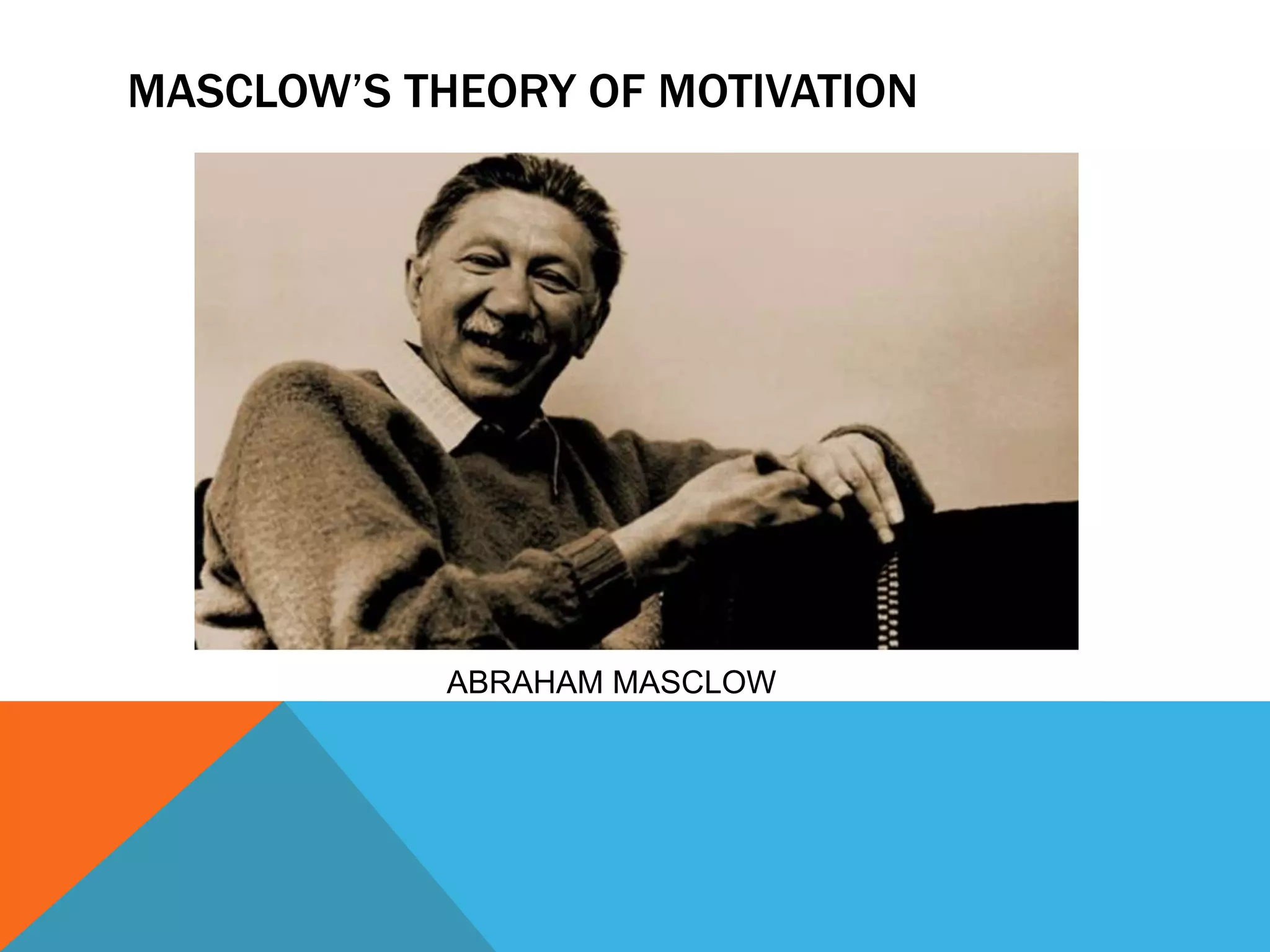
MASCLOW’S THEORY OF MOTIVATION
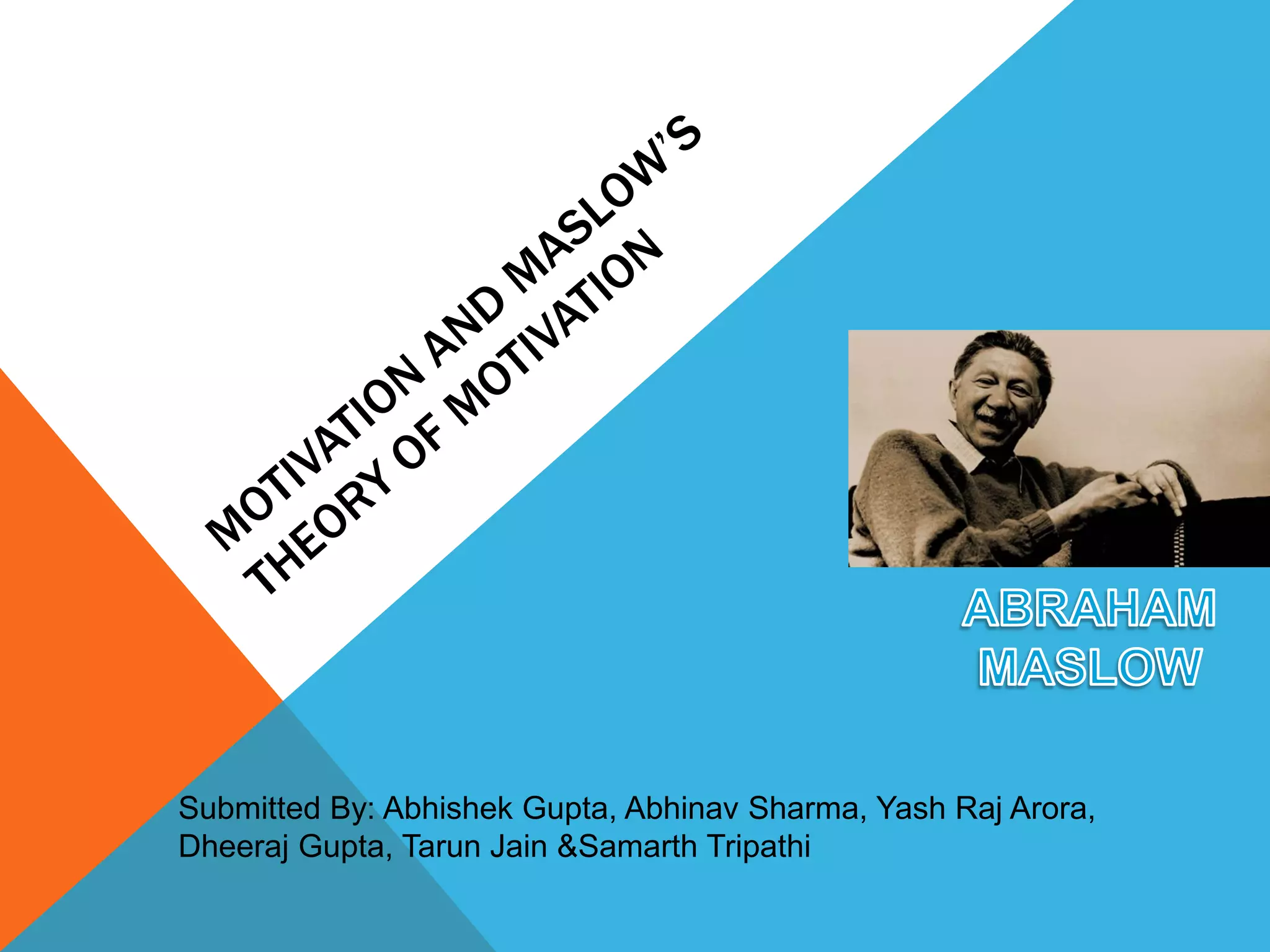
ABRAHAM MASCLOW
MASLOW’S THEORY OF MOTIVATION
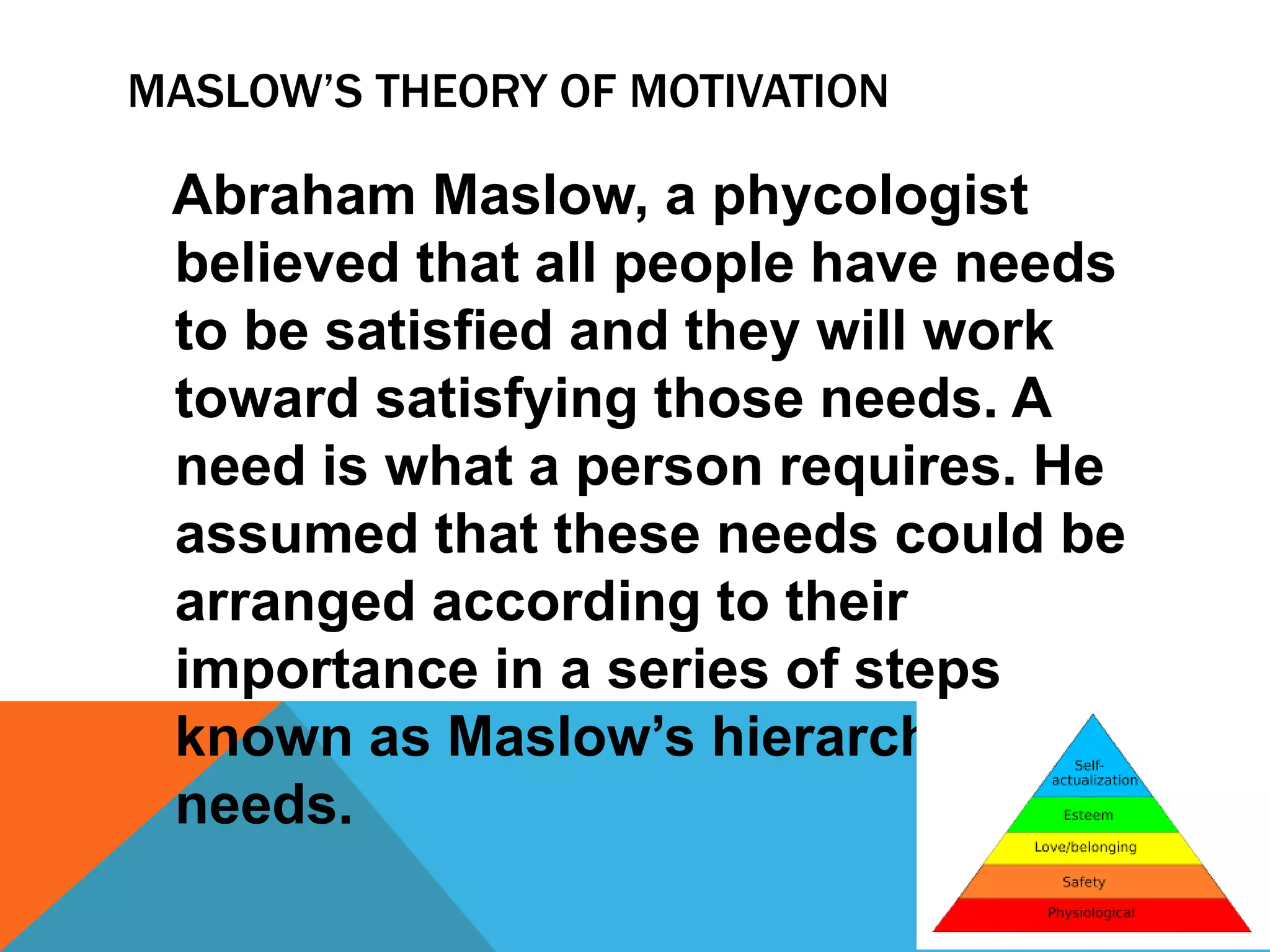
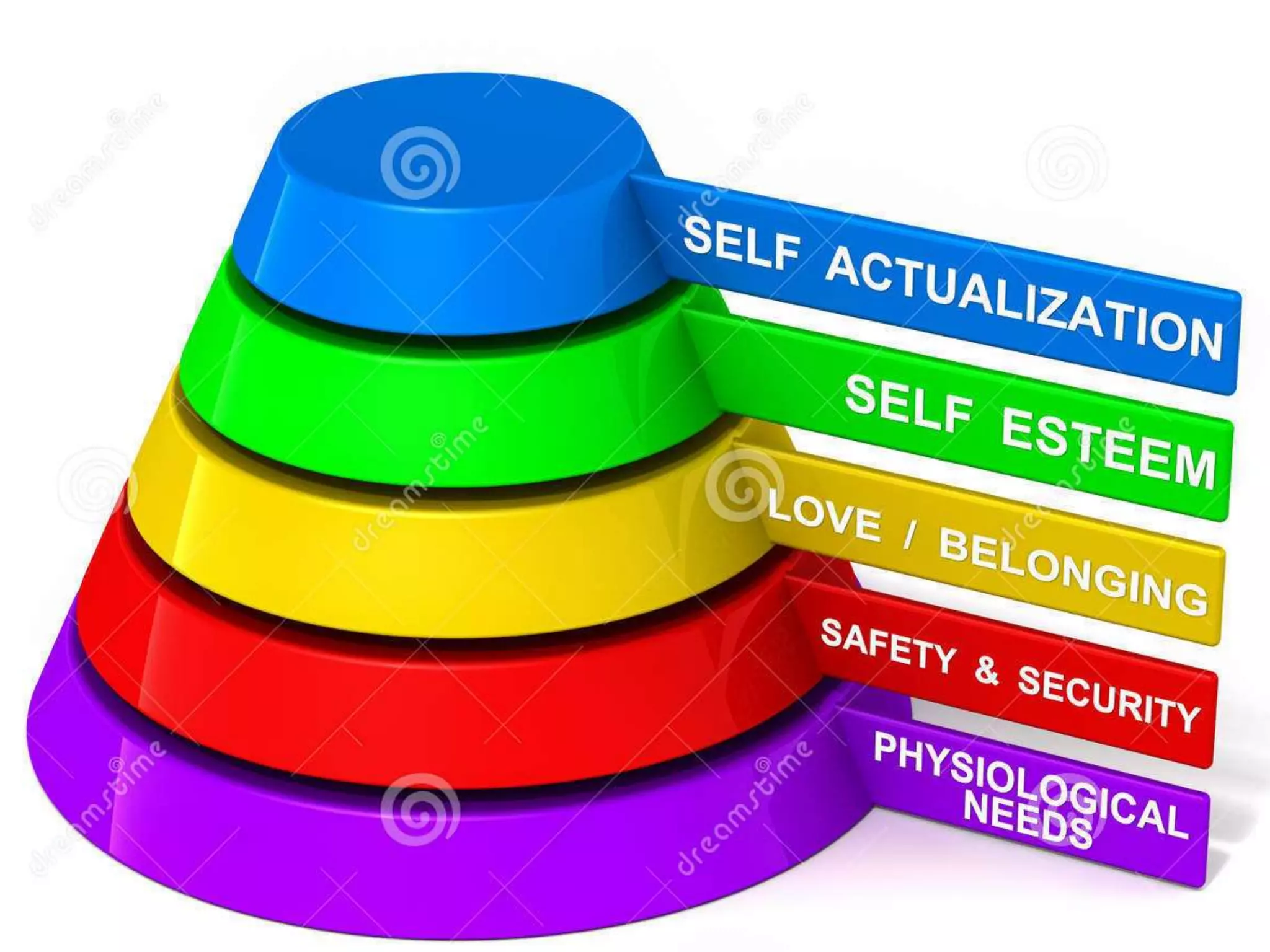
Abraham Maslow, a phycologist
believed that all people have needs
to be satisfied and they will work
toward satisfying those needs. A
need is what a person requires. He
assumed that these needs could be
arranged according to their
importance in a series of steps
known as Maslow’s hierarchy of
needs.
PHYSIOLOGICAL NEEDS
Physiological needs are those required to sustain life, such as:
 Air
 Water
 Food
 Rest
 Exercise
SAFETY NEEDS
Once physiological needs are met, one's
attention turns to safety and security in
order to be free from the threat of
physical and emotional harm. Such
needs might be fulfilled by:
 Living in a safe area
 Medical insurance
 Job security
 Financial reserves
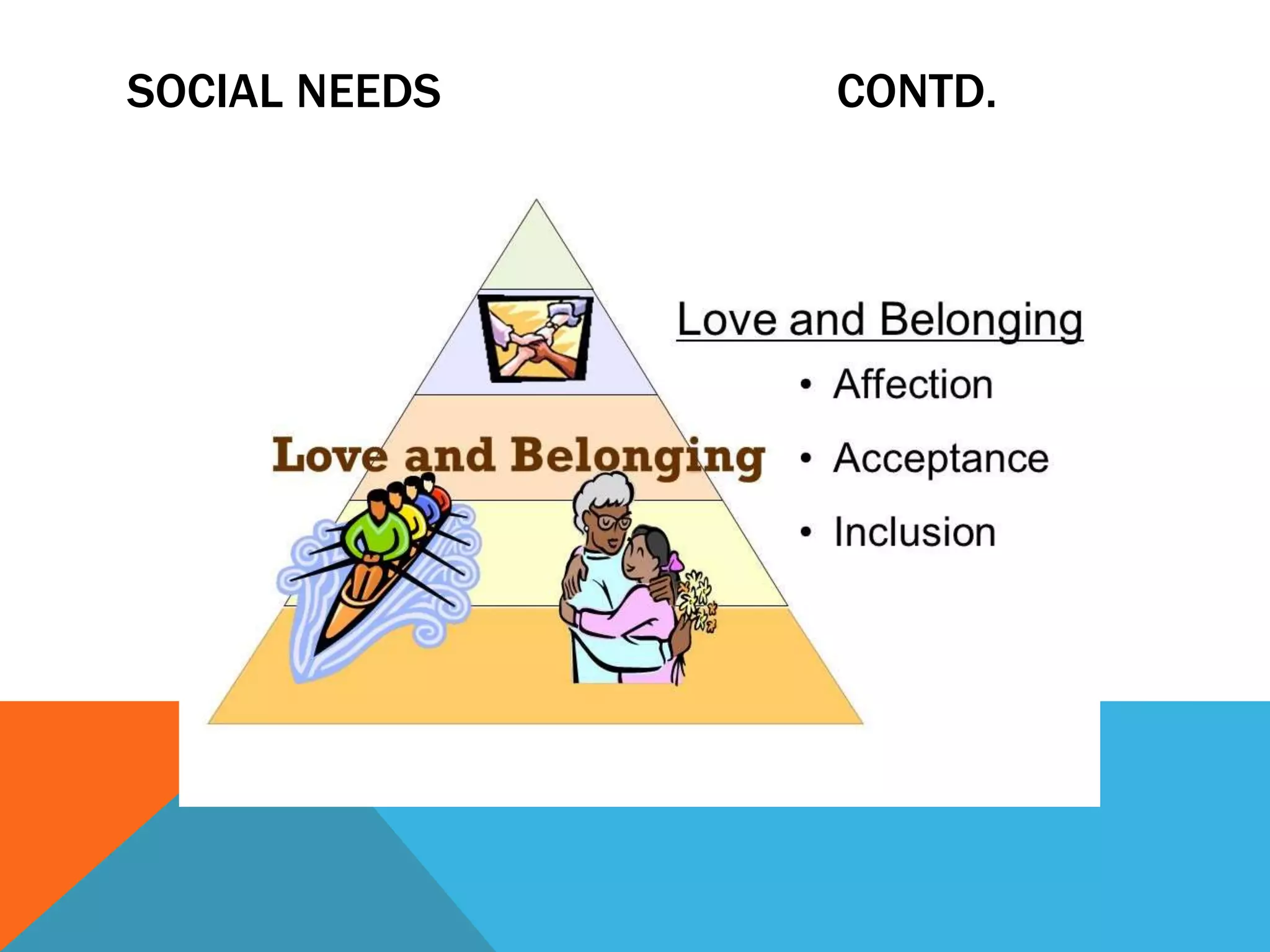
SOCIAL NEEDS
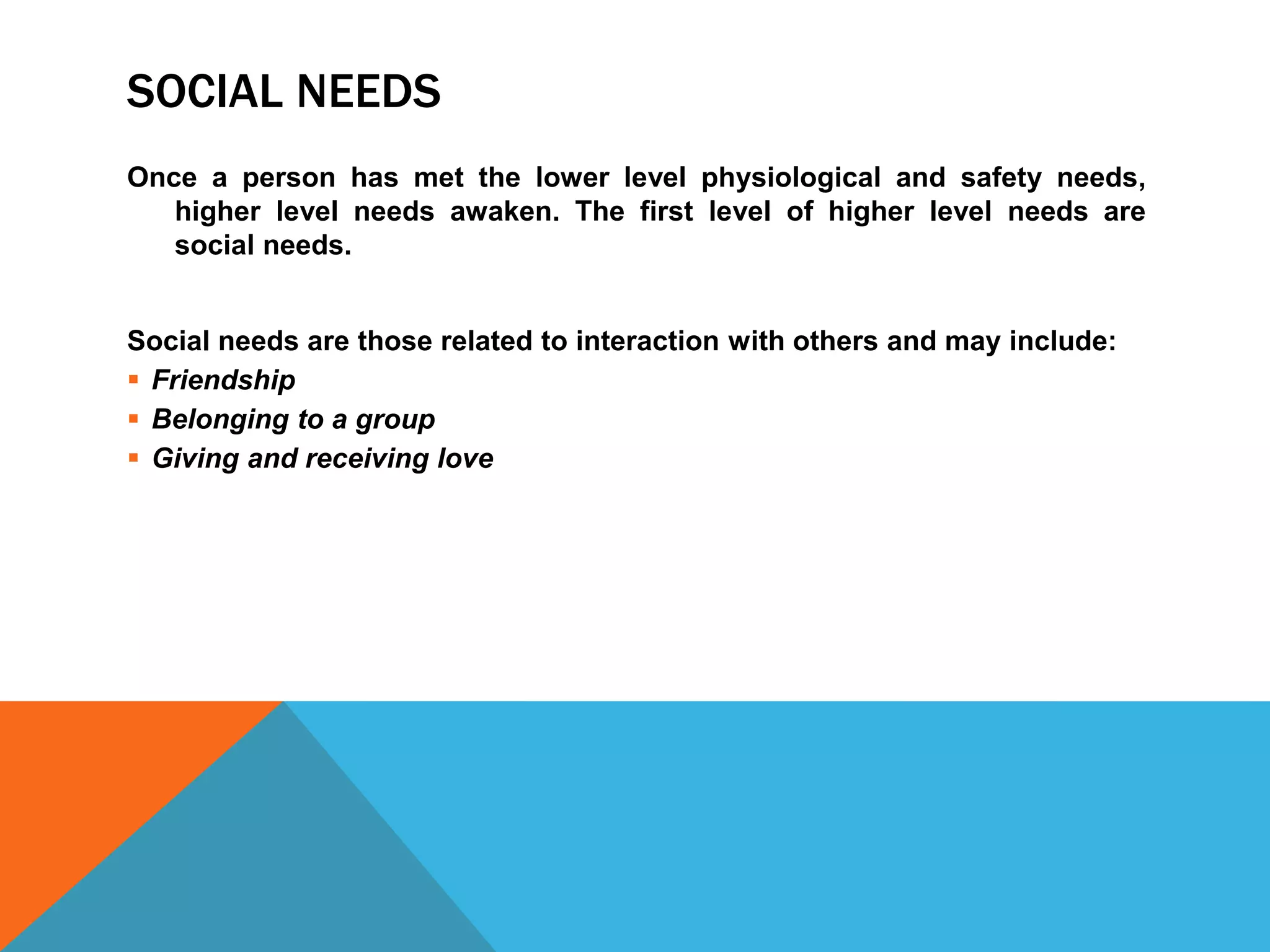
Once a person has met the lower level physiological and safety needs,
higher level needs awaken. The first level of higher level needs are
social needs.
Social needs are those related to interaction with others and may include:
 Friendship
 Belonging to a group
 Giving and receiving love
SOCIAL NEEDS CONTD.
ESTEEM NEEDS
Once a person feels a sense of "belonging", the
need to feel important arises. Esteem needs
may be classified as internal or external.
Internal esteem needs are those related to self-
esteem such as self respect and achievement
External esteem needs are those such as social
status and recognition. Some esteem needs
are:
 Self-respect
 Achievement
 Attention
 Recognition
 Reputation
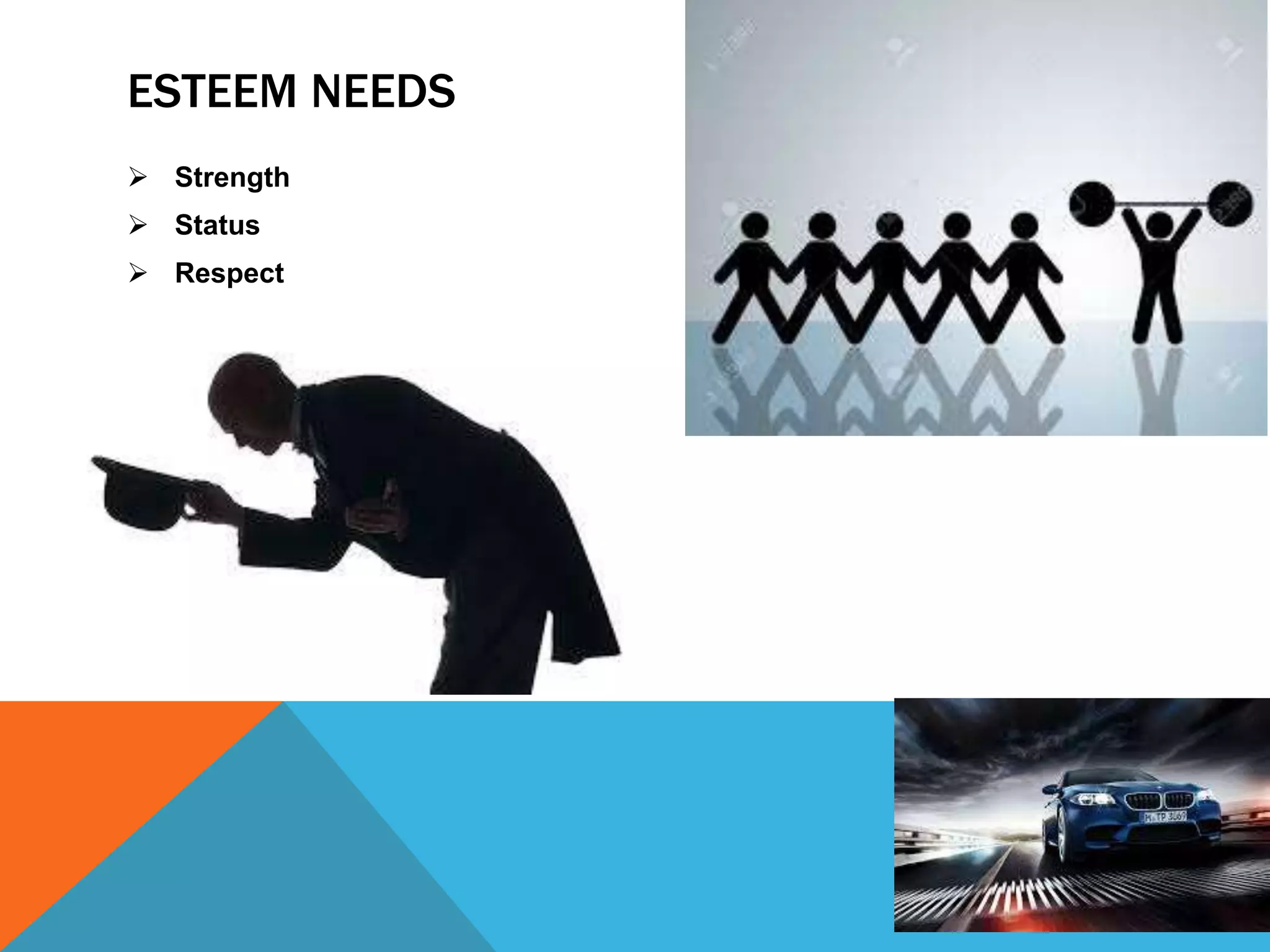
ESTEEM NEEDS
 Strength
 Status
 Respect
SELF ACTUALIZATION NEEDS
Once a person feels a sense of "belonging", the
need to feel important arises. Esteem needs
may be classified as internal or external.
Internal esteem needs are those related to self-
esteem such as self respect and achievement
External esteem needs are those such as social
status and recognition. Some esteem needs
are:
 Self-respect
 Achievement
 Attention
 Recognition
 Reputation
SELF ACTUALIZATION NEEDS CONTD.
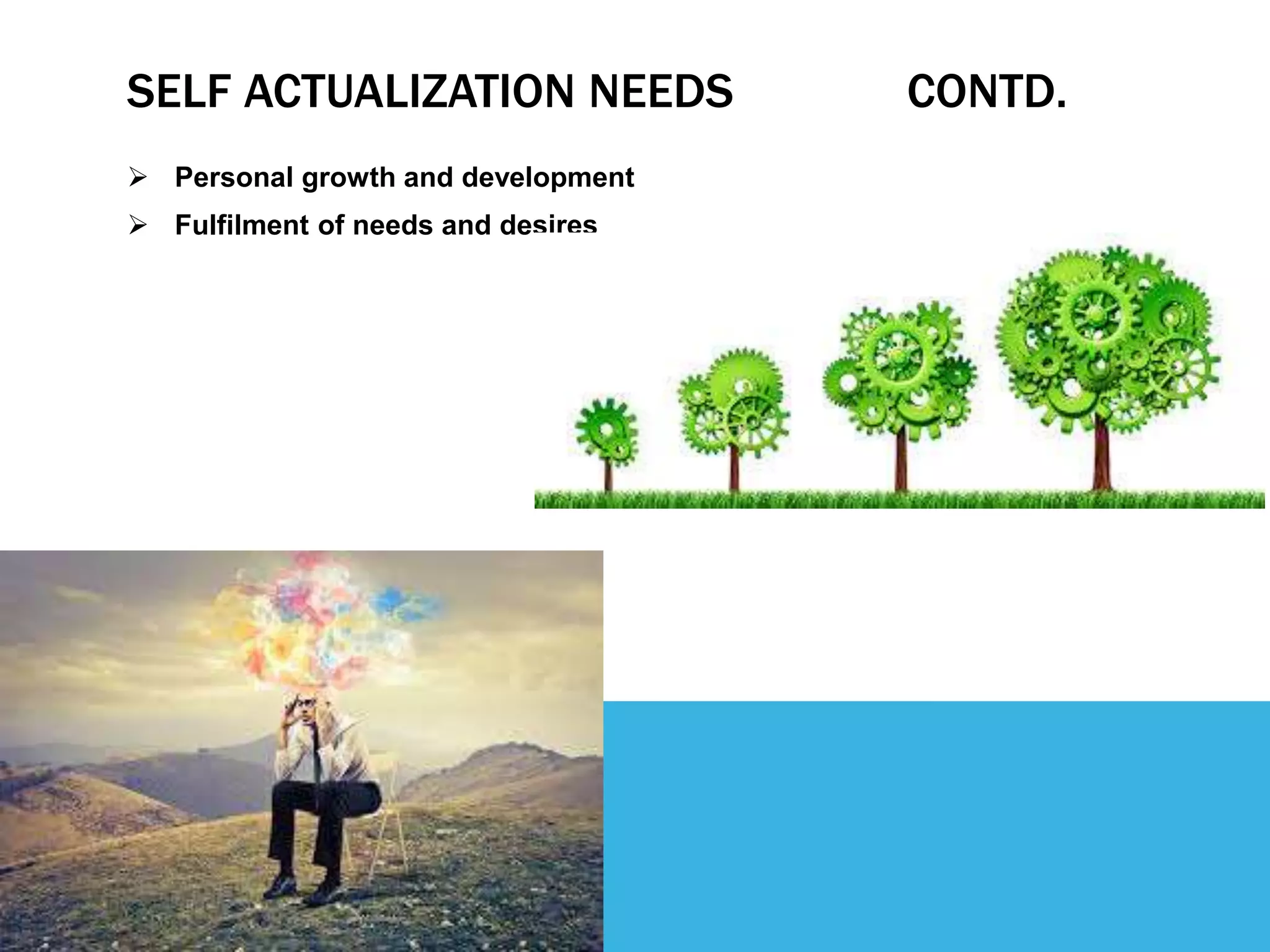
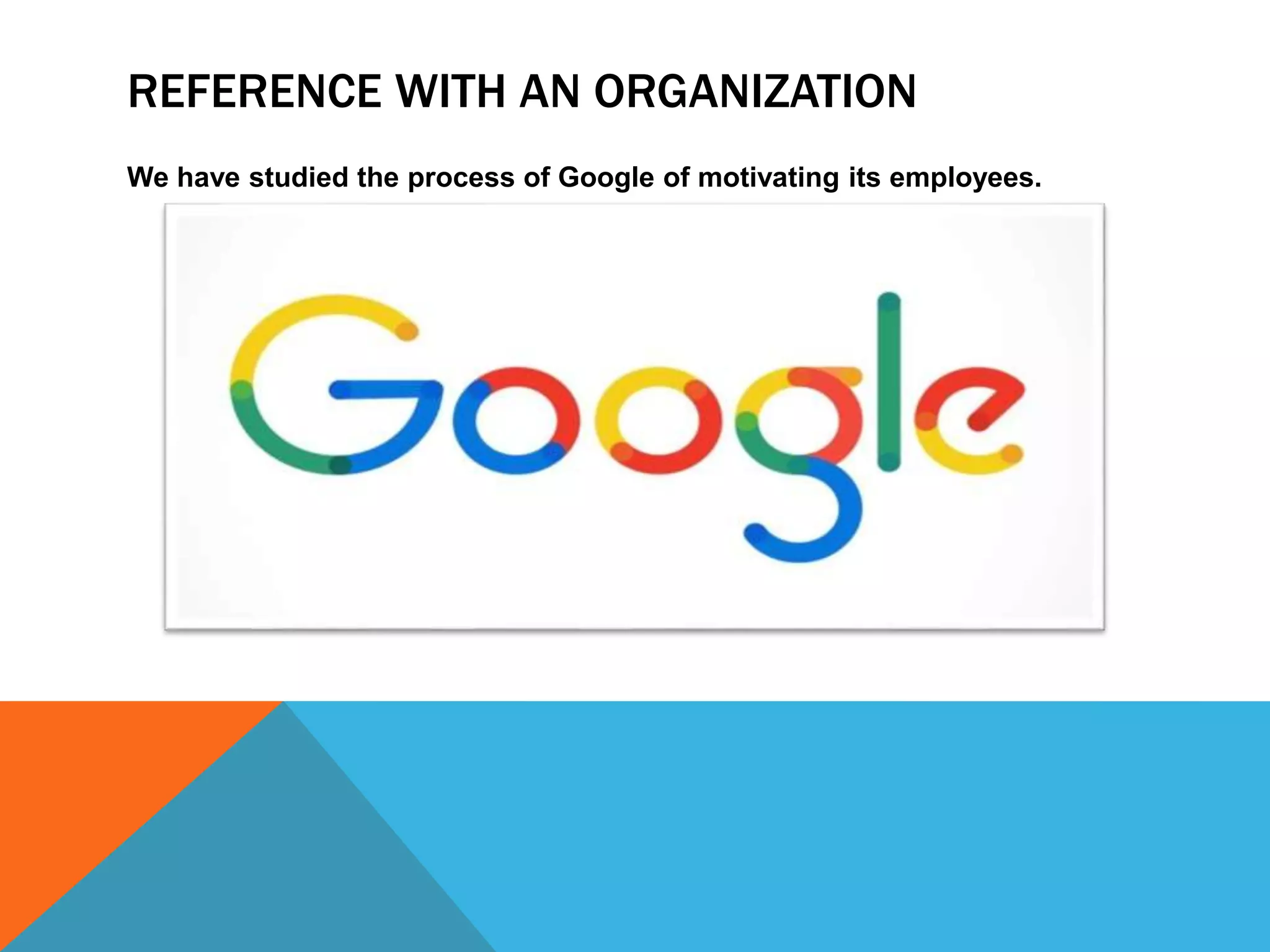
 Personal growth and development
 Fulfilment of needs and desires
REFERENCE WITH AN ORGANIZATION
We have studied the process of Google of motivating its employees.
ABOUT GOOGLE
When it comes to motivating their employees, it can be said without question that Google
stands out from the rest. Google was named the 2014 “Best Company to Work For” by
the Great Place to Work Institute and
Fortune Magazine. The organization topped the list for the fifth time. True, in its short
lifespan, Google has acquired for itself a huge and bright workforce (over 50,000
employees spread throughout the world) that serves millions of people all over the globe.
However, what is even more exemplary is how Google heavily pampers its employees
while still being able to extract one-of-a-kind and outstanding ideas and products from
them.
EMPLOYEE MOTIVATION THE GOOGLE WAY
 Uncommon Yet Affordable, Amazing Perks and Benefits
 Voice and Value
 Transparency
 Freedom over How and When Work is Completed
 Flexibility
 inspiring Work
 Fun is a Regular Aspect of Work
 Food is Pretty Easy to Get – 150 Feet from Food Rule
 Unconventional Office Designs
BENEFITS TO GOOGLE OF EMPLOYEES
MOTIVATION
 Employees Become More Entrepreneurial (Hence More Productive)
 Less Company Risk
EXAMPLES OF GOOGLE PRODUCTS CREATED BY
ITS EMPLOYEES WITHIN 20% OF “FREE TIME”
 Gmail
 Google Suggest
Importance of Motivation and Maslow theory in the organisation

Importance of Motivation and Maslow theory in the organisation

  • 1.
    Submitted By: AbhishekGupta, Abhinav Sharma, Yash Raj Arora, Dheeraj Gupta, Tarun Jain &Samarth Tripathi
  • 3.
    LEARNING OUTCOME In thispresentation you will learn the following things :  Meaning of Motivation  Maslow needs theory of motivation  A reference with an organization  Importance of motivation in the organisation
  • 4.
    DEFINATIONS OF MOTIVATION Motivationis the process of arousing the action, sustaining the activity in process and regulating the pattern of activity. - YOUNG Motivation refers to the states within a person or animal that drives behavior toward some goals. - MORGAN AND KING
  • 5.
    CONTD. Motivation means theclasses of operations used to produce and measure changes in performance and changes in energy output. - UNDERWOOD Motivation refers to all the internal conditions that stir up activity and sustain activity of an individual. - GUILFORD
  • 6.
    WHAT IS MOTIVATION? Motivationrefers to the internal process that directs, energizes and sustain a person’s behavior
  • 7.
    CREATING MOTIVATING CLIMATE Themanager should apply techniques, skills and knowledge of motivational theory to help nurses to achieve what they want out of work. The manager’s role is to influence each individual’s behavior and action towards achievement of some objectives. The manager’s role is to influence each individual’s behavior and action towards achievement of common organizational objectives
  • 8.
    CONTD. For proper motivationamong employees, the manager has to create:  Conditions where workers energies are not extended totally in meeting their basic needs.  A climate for inter-dependent work rather than dependency.  A competitive climate through recognition of good work.  A productive climate through personal example  A climate approach and problem-solving rather than avoidance, and  Motivate individually through guidance and counseling.
  • 9.
    MASCLOW’S THEORY OFMOTIVATION ABRAHAM MASCLOW
  • 10.
    MASLOW’S THEORY OFMOTIVATION Abraham Maslow, a phycologist believed that all people have needs to be satisfied and they will work toward satisfying those needs. A need is what a person requires. He assumed that these needs could be arranged according to their importance in a series of steps known as Maslow’s hierarchy of needs.
  • 12.
    PHYSIOLOGICAL NEEDS Physiological needsare those required to sustain life, such as:  Air  Water  Food  Rest  Exercise
  • 13.
    SAFETY NEEDS Once physiologicalneeds are met, one's attention turns to safety and security in order to be free from the threat of physical and emotional harm. Such needs might be fulfilled by:  Living in a safe area  Medical insurance  Job security  Financial reserves
  • 14.
    SOCIAL NEEDS Once aperson has met the lower level physiological and safety needs, higher level needs awaken. The first level of higher level needs are social needs. Social needs are those related to interaction with others and may include:  Friendship  Belonging to a group  Giving and receiving love
  • 15.
  • 16.
    ESTEEM NEEDS Once aperson feels a sense of "belonging", the need to feel important arises. Esteem needs may be classified as internal or external. Internal esteem needs are those related to self- esteem such as self respect and achievement External esteem needs are those such as social status and recognition. Some esteem needs are:  Self-respect  Achievement  Attention  Recognition  Reputation
  • 17.
  • 18.
    SELF ACTUALIZATION NEEDS Oncea person feels a sense of "belonging", the need to feel important arises. Esteem needs may be classified as internal or external. Internal esteem needs are those related to self- esteem such as self respect and achievement External esteem needs are those such as social status and recognition. Some esteem needs are:  Self-respect  Achievement  Attention  Recognition  Reputation
  • 19.
    SELF ACTUALIZATION NEEDSCONTD.  Personal growth and development  Fulfilment of needs and desires
  • 20.
    REFERENCE WITH ANORGANIZATION We have studied the process of Google of motivating its employees.
  • 21.
    ABOUT GOOGLE When itcomes to motivating their employees, it can be said without question that Google stands out from the rest. Google was named the 2014 “Best Company to Work For” by the Great Place to Work Institute and Fortune Magazine. The organization topped the list for the fifth time. True, in its short lifespan, Google has acquired for itself a huge and bright workforce (over 50,000 employees spread throughout the world) that serves millions of people all over the globe. However, what is even more exemplary is how Google heavily pampers its employees while still being able to extract one-of-a-kind and outstanding ideas and products from them.
  • 22.
    EMPLOYEE MOTIVATION THEGOOGLE WAY  Uncommon Yet Affordable, Amazing Perks and Benefits  Voice and Value  Transparency  Freedom over How and When Work is Completed  Flexibility  inspiring Work  Fun is a Regular Aspect of Work  Food is Pretty Easy to Get – 150 Feet from Food Rule  Unconventional Office Designs
  • 23.
    BENEFITS TO GOOGLEOF EMPLOYEES MOTIVATION  Employees Become More Entrepreneurial (Hence More Productive)  Less Company Risk
  • 24.
    EXAMPLES OF GOOGLEPRODUCTS CREATED BY ITS EMPLOYEES WITHIN 20% OF “FREE TIME”  Gmail  Google Suggest