IMPORTANCE OF INTERPROXIMAL
HYGIENE
DENTAID MEDICAL DEPARTMENT
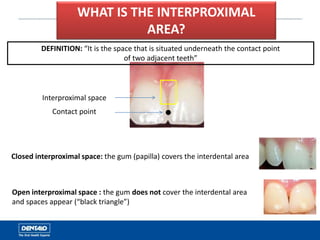
Interproximal space
Contact point
WHAT IS THE INTERPROXIMAL
AREA?
DEFINITION: “It is the space that is situated underneath the contact point
of two adjacent teeth”
Closed interproximal space: the gum (papilla) covers the interdental area
Open interproximal space : the gum does not cover the interdental area
and spaces appear (“black triangle”)
IMPORTANCE OF
INTERPROXIMAL HYGIENE
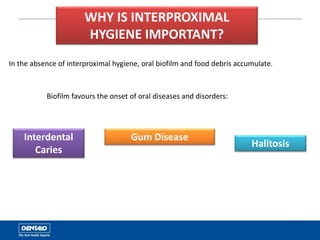
In the absence of interproximal hygiene, oral biofilm and food debris accumulate.
Biofilm favours the onset of oral diseases and disorders:
Interdental
Caries
Gum Disease
Halitosis
WHY IS INTERPROXIMAL
HYGIENE IMPORTANT?
INTERDENTAL CARIES
Absence of interproximal hygiene
Interdental biofilm build-up
Acid production Enamel Demineralisation
INTERPROXIMAL CARIES
77.5% of caries are of
interproximal origin
Susceptible patient:
Acidic oral
environment, non-
buffering saliva
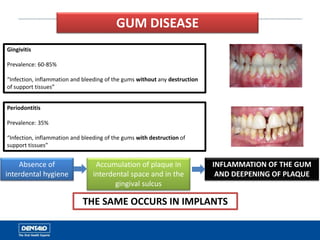
GUM DISEASE
Gingivitis
Prevalence: 60-85%
“Infection, inflammation and bleeding of the gums without any destruction
of support tissues”
Periodontitis
Prevalence: 35%
“Infection, inflammation and bleeding of the gums with destruction of
support tissues”
Absence of
interdental hygiene
Accumulation of plaque in
interdental space and in the
gingival sulcus
INFLAMMATION OF THE GUM
AND DEEPENING OF PLAQUE
THE SAME OCCURS IN IMPLANTS
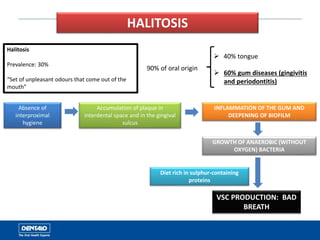
HALITOSIS
Halitosis
Prevalence: 30%
“Set of unpleasant odours that come out of the
mouth”
90% of oral origin
 40% tongue
 60% gum diseases (gingivitis
and periodontitis)
Absence of
interproximal
hygiene
Accumulation of plaque in
interdental space and in the gingival
sulcus
INFLAMMATION OF THE GUM AND
DEEPENING OF BIOFILM
GROWTH OF ANAEROBIC (WITHOUT
OXYGEN) BACTERIA
VSC PRODUCTION: BAD
BREATH
Diet rich in sulphur-containing
proteins
 Unknown
 Lack of motivation
 Fear
 Difficulty
WHY INTERDENTAL HYGIENE IS NOT
PERFORMED
INTERDENTAL HYGIENE
TOOLS
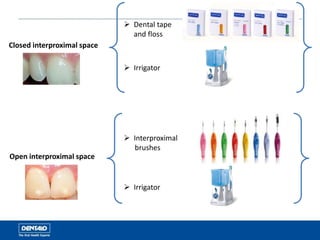
Closed interproximal space
Open interproximal space
 Dental tape
and floss
 Interproximal
brushes
 Irrigator
 Irrigator
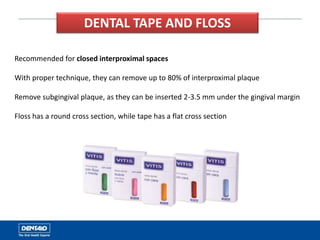
Recommended for closed interproximal spaces
With proper technique, they can remove up to 80% of interproximal plaque
Remove subgingival plaque, as they can be inserted 2-3.5 mm under the gingival margin
Floss has a round cross section, while tape has a flat cross section
DENTAL TAPE AND FLOSS
DENTAL TAPE AND FLOSS – INSTRUCTIONS FOR USE
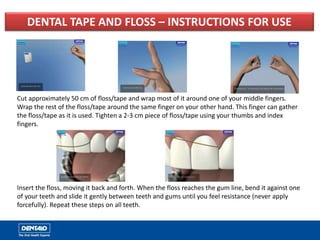
Cut approximately 50 cm of floss/tape and wrap most of it around one of your middle fingers.
Wrap the rest of the floss/tape around the same finger on your other hand. This finger can gather
the floss/tape as it is used. Tighten a 2-3 cm piece of floss/tape using your thumbs and index
fingers.
Insert the floss, moving it back and forth. When the floss reaches the gum line, bend it against one
of your teeth and slide it gently between teeth and gums until you feel resistance (never apply
forcefully). Repeat these steps on all teeth.
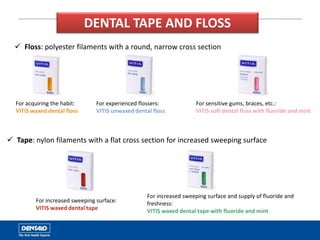
 Floss: polyester filaments with a round, narrow cross section
For acquiring the habit:
VITIS waxed dental floss
For experienced flossers:
VITIS unwaxed dental floss
For sensitive gums, braces, etc.:
VITIS soft dental floss with fluoride and mint
 Tape: nylon filaments with a flat cross section for increased sweeping surface
For increased sweeping surface and supply of fluoride and
freshness:
VITIS waxed dental tape with fluoride and mint
For increased sweeping surface:
VITIS waxed dental tape
DENTAL TAPE AND FLOSS
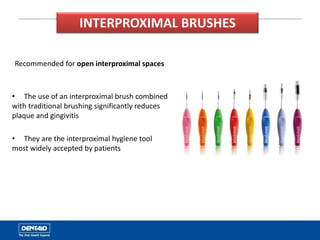
INTERPROXIMAL BRUSHES
Recommended for open interproximal spaces
• The use of an interproximal brush combined
with traditional brushing significantly reduces
plaque and gingivitis
• They are the interproximal hygiene tool
most widely accepted by patients
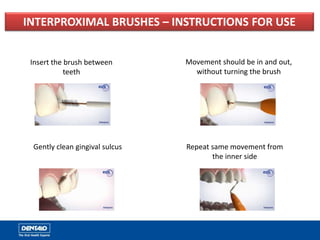
INTERPROXIMAL BRUSHES – INSTRUCTIONS FOR USE
Insert the brush between
teeth
Movement should be in and out,
without turning the brush
Gently clean gingival sulcus Repeat same movement from
the inner side
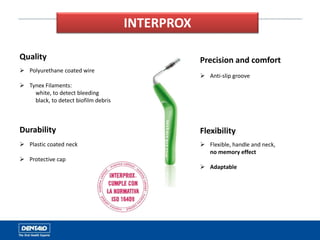
Quality
 Polyurethane coated wire
 Tynex Filaments:
white, to detect bleeding
black, to detect biofilm debris
Durability
 Plastic coated neck
 Protective cap
Precision and comfort
 Anti-slip groove
Flexibility
 Flexible, handle and neck,
no memory effect
 Adaptable
INTERPROX
INTERPROX PLUS AND ACCESS
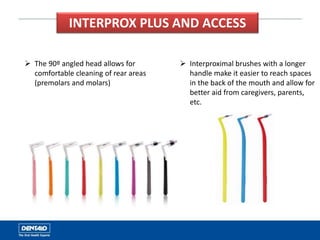
 The 90º angled head allows for
comfortable cleaning of rear areas
(premolars and molars)
 Interproximal brushes with a longer
handle make it easier to reach spaces
in the back of the mouth and allow for
better aid from caregivers, parents,
etc.
INTERPROX GEL
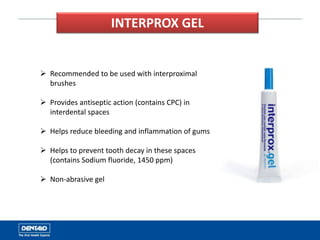
 Recommended to be used with interproximal
brushes
 Provides antiseptic action (contains CPC) in
interdental spaces
 Helps reduce bleeding and inflammation of gums
 Helps to prevent tooth decay in these spaces
(contains Sodium fluoride, 1450 ppm)
 Non-abrasive gel
IRRIGATOR
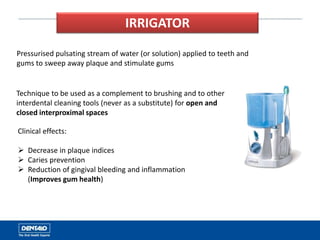
Pressurised pulsating stream of water (or solution) applied to teeth and
gums to sweep away plaque and stimulate gums
Technique to be used as a complement to brushing and to other
interdental cleaning tools (never as a substitute) for open and
closed interproximal spaces
Clinical effects:
 Decrease in plaque indices
 Caries prevention
 Reduction of gingival bleeding and inflammation
(Improves gum health)
IRRIGATOR
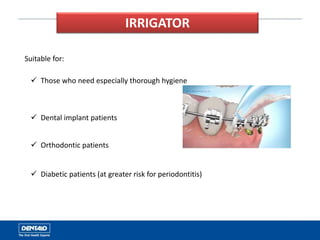
Suitable for:
 Those who need especially thorough hygiene
 Dental implant patients
 Orthodontic patients
 Diabetic patients (at greater risk for periodontitis)
Importance of Interproximal Hygiene

Importance of Interproximal Hygiene

  • 1.
  • 2.
    Interproximal space Contact point WHATIS THE INTERPROXIMAL AREA? DEFINITION: “It is the space that is situated underneath the contact point of two adjacent teeth” Closed interproximal space: the gum (papilla) covers the interdental area Open interproximal space : the gum does not cover the interdental area and spaces appear (“black triangle”)
  • 3.
  • 4.
    In the absenceof interproximal hygiene, oral biofilm and food debris accumulate. Biofilm favours the onset of oral diseases and disorders: Interdental Caries Gum Disease Halitosis WHY IS INTERPROXIMAL HYGIENE IMPORTANT?
  • 5.
    INTERDENTAL CARIES Absence ofinterproximal hygiene Interdental biofilm build-up Acid production Enamel Demineralisation INTERPROXIMAL CARIES 77.5% of caries are of interproximal origin Susceptible patient: Acidic oral environment, non- buffering saliva
  • 6.
    GUM DISEASE Gingivitis Prevalence: 60-85% “Infection,inflammation and bleeding of the gums without any destruction of support tissues” Periodontitis Prevalence: 35% “Infection, inflammation and bleeding of the gums with destruction of support tissues” Absence of interdental hygiene Accumulation of plaque in interdental space and in the gingival sulcus INFLAMMATION OF THE GUM AND DEEPENING OF PLAQUE THE SAME OCCURS IN IMPLANTS
  • 7.
    HALITOSIS Halitosis Prevalence: 30% “Set ofunpleasant odours that come out of the mouth” 90% of oral origin  40% tongue  60% gum diseases (gingivitis and periodontitis) Absence of interproximal hygiene Accumulation of plaque in interdental space and in the gingival sulcus INFLAMMATION OF THE GUM AND DEEPENING OF BIOFILM GROWTH OF ANAEROBIC (WITHOUT OXYGEN) BACTERIA VSC PRODUCTION: BAD BREATH Diet rich in sulphur-containing proteins
  • 8.
     Unknown  Lackof motivation  Fear  Difficulty WHY INTERDENTAL HYGIENE IS NOT PERFORMED
  • 9.
  • 10.
    Closed interproximal space Openinterproximal space  Dental tape and floss  Interproximal brushes  Irrigator  Irrigator
  • 11.
    Recommended for closedinterproximal spaces With proper technique, they can remove up to 80% of interproximal plaque Remove subgingival plaque, as they can be inserted 2-3.5 mm under the gingival margin Floss has a round cross section, while tape has a flat cross section DENTAL TAPE AND FLOSS
  • 12.
    DENTAL TAPE ANDFLOSS – INSTRUCTIONS FOR USE Cut approximately 50 cm of floss/tape and wrap most of it around one of your middle fingers. Wrap the rest of the floss/tape around the same finger on your other hand. This finger can gather the floss/tape as it is used. Tighten a 2-3 cm piece of floss/tape using your thumbs and index fingers. Insert the floss, moving it back and forth. When the floss reaches the gum line, bend it against one of your teeth and slide it gently between teeth and gums until you feel resistance (never apply forcefully). Repeat these steps on all teeth.
  • 13.
     Floss: polyesterfilaments with a round, narrow cross section For acquiring the habit: VITIS waxed dental floss For experienced flossers: VITIS unwaxed dental floss For sensitive gums, braces, etc.: VITIS soft dental floss with fluoride and mint  Tape: nylon filaments with a flat cross section for increased sweeping surface For increased sweeping surface and supply of fluoride and freshness: VITIS waxed dental tape with fluoride and mint For increased sweeping surface: VITIS waxed dental tape DENTAL TAPE AND FLOSS
  • 14.
    INTERPROXIMAL BRUSHES Recommended foropen interproximal spaces • The use of an interproximal brush combined with traditional brushing significantly reduces plaque and gingivitis • They are the interproximal hygiene tool most widely accepted by patients
  • 15.
    INTERPROXIMAL BRUSHES –INSTRUCTIONS FOR USE Insert the brush between teeth Movement should be in and out, without turning the brush Gently clean gingival sulcus Repeat same movement from the inner side
  • 16.
    Quality  Polyurethane coatedwire  Tynex Filaments: white, to detect bleeding black, to detect biofilm debris Durability  Plastic coated neck  Protective cap Precision and comfort  Anti-slip groove Flexibility  Flexible, handle and neck, no memory effect  Adaptable INTERPROX
  • 17.
    INTERPROX PLUS ANDACCESS  The 90º angled head allows for comfortable cleaning of rear areas (premolars and molars)  Interproximal brushes with a longer handle make it easier to reach spaces in the back of the mouth and allow for better aid from caregivers, parents, etc.
  • 18.
    INTERPROX GEL  Recommendedto be used with interproximal brushes  Provides antiseptic action (contains CPC) in interdental spaces  Helps reduce bleeding and inflammation of gums  Helps to prevent tooth decay in these spaces (contains Sodium fluoride, 1450 ppm)  Non-abrasive gel
  • 19.
    IRRIGATOR Pressurised pulsating streamof water (or solution) applied to teeth and gums to sweep away plaque and stimulate gums Technique to be used as a complement to brushing and to other interdental cleaning tools (never as a substitute) for open and closed interproximal spaces Clinical effects:  Decrease in plaque indices  Caries prevention  Reduction of gingival bleeding and inflammation (Improves gum health)
  • 20.
    IRRIGATOR Suitable for:  Thosewho need especially thorough hygiene  Dental implant patients  Orthodontic patients  Diabetic patients (at greater risk for periodontitis)