WATER
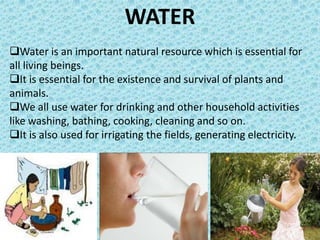
Water is an important natural resource which is essential for
all living beings.
It is essential for the existence and survival of plants and
animals.
We all use water for drinking and other household activities
like washing, bathing, cooking, cleaning and so on.
It is also used for irrigating the fields, generating electricity.
IMPORTANCE OF WATER FOR ANIMALS


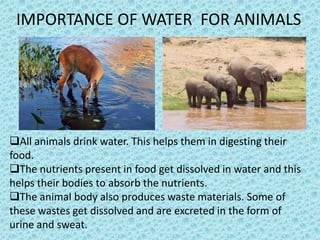
All animals drink water. This helps them in digesting their
food.
The nutrients present in food get dissolved in water and this
helps their bodies to absorb the nutrients.
The animal body also produces waste materials. Some of
these wastes get dissolved and are excreted in the form of
urine and sweat.
AQUATIC ANIMALS
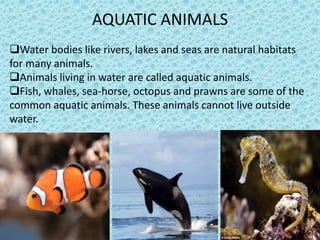
Water bodies like rivers, lakes and seas are natural habitats
for many animals.
Animals living in water are called aquatic animals.
Fish, whales, sea-horse, octopus and prawns are some of the
common aquatic animals. These animals cannot live outside
water.
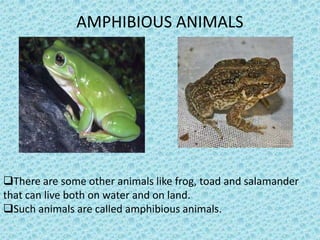
AMPHIBIOUS ANIMALS


There are some other animals like frog, toad and salamander
that can live both on water and on land.
Such animals are called amphibious animals.
IMPORTANCE OF WATER FOR PLANTS
Plants require various nutrients for their proper growth.
These nutrients get dissolved in water present in the soil.
Plants absorb water from the soil with the help of their roots.
This water, then, transports these nutrients to various parts of
the plant.
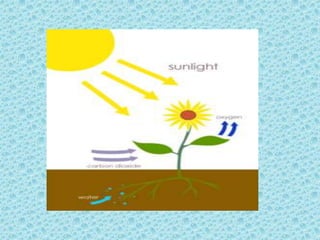
Plants also use water for preparing their own food by the
process of photosynthesis.
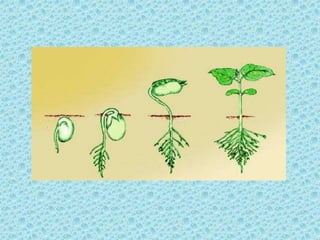
Plants require water for germination of seeds.
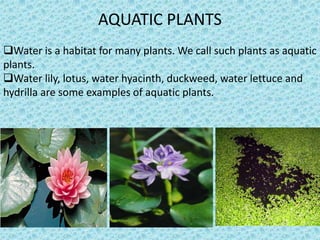
AQUATIC PLANTS
Water is a habitat for many plants. We call such plants as aquatic
plants.
Water lily, lotus, water hyacinth, duckweed, water lettuce and
hydrilla are some examples of aquatic plants.
GROUND WATER
About 97% of water is present in seas and oceans. The
remaining 3% water is present in rivers, ponds, lands, streams and
glaciers.
A small part of water, from earth’s surface, seeps into the
ground and is trapped between underground rocks. This is called
ground water.
Earlier, people used to fetch water for their daily needs from
rivers, lakes or wells.
Even now, in some areas, where there is no system of supplying
water through pipes, people depend on natural sources of water
like rivers or ponds.
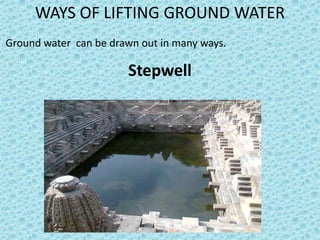
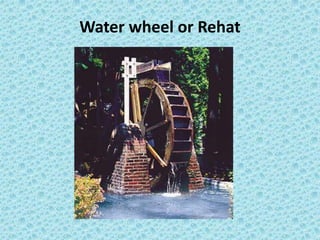
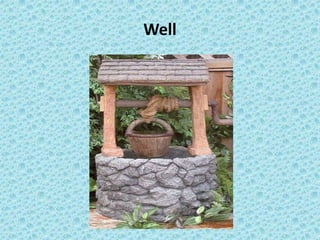
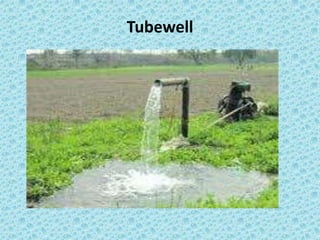
WAYS OF LIFTING GROUND WATER
Ground water can be drawn out in many ways.

                       Stepwell
Water wheel or Rehat
Well
Tubewell
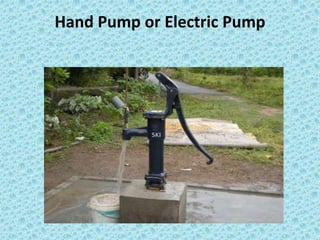
Hand Pump or Electric Pump
WATER SUPPLY
Nowadays, there is a well-planned water supply system that
supplies water to homes and offices in the cities,
Such a system is also in use in m any villages.
In such a system, it is the river water which is usually purified by
a series of processes to make it fit for drinking.
This purified water is then sent to homes and offices through a
network of pumps and pipes.
All About Amphibians
The word amphibian means two-lives. Amphibians spend
their lives in the water and on land


All amphibians begin their life in water with gills and tails.
As they grow, they develop lungs and legs for their life on
land.

Imp of water

  • 2.
    WATER Water is animportant natural resource which is essential for all living beings. It is essential for the existence and survival of plants and animals. We all use water for drinking and other household activities like washing, bathing, cooking, cleaning and so on. It is also used for irrigating the fields, generating electricity.
  • 3.
    IMPORTANCE OF WATERFOR ANIMALS All animals drink water. This helps them in digesting their food. The nutrients present in food get dissolved in water and this helps their bodies to absorb the nutrients. The animal body also produces waste materials. Some of these wastes get dissolved and are excreted in the form of urine and sweat.
  • 4.
    AQUATIC ANIMALS Water bodieslike rivers, lakes and seas are natural habitats for many animals. Animals living in water are called aquatic animals. Fish, whales, sea-horse, octopus and prawns are some of the common aquatic animals. These animals cannot live outside water.
  • 5.
    AMPHIBIOUS ANIMALS There aresome other animals like frog, toad and salamander that can live both on water and on land. Such animals are called amphibious animals.
  • 6.
    IMPORTANCE OF WATERFOR PLANTS Plants require various nutrients for their proper growth. These nutrients get dissolved in water present in the soil. Plants absorb water from the soil with the help of their roots. This water, then, transports these nutrients to various parts of the plant. Plants also use water for preparing their own food by the process of photosynthesis. Plants require water for germination of seeds.
  • 7.
    AQUATIC PLANTS Water isa habitat for many plants. We call such plants as aquatic plants. Water lily, lotus, water hyacinth, duckweed, water lettuce and hydrilla are some examples of aquatic plants.
  • 8.
    GROUND WATER About 97%of water is present in seas and oceans. The remaining 3% water is present in rivers, ponds, lands, streams and glaciers. A small part of water, from earth’s surface, seeps into the ground and is trapped between underground rocks. This is called ground water. Earlier, people used to fetch water for their daily needs from rivers, lakes or wells. Even now, in some areas, where there is no system of supplying water through pipes, people depend on natural sources of water like rivers or ponds.
  • 9.
    WAYS OF LIFTINGGROUND WATER Ground water can be drawn out in many ways. Stepwell
  • 10.
  • 11.
  • 12.
  • 13.
    Hand Pump orElectric Pump
  • 14.
    WATER SUPPLY Nowadays, thereis a well-planned water supply system that supplies water to homes and offices in the cities, Such a system is also in use in m any villages. In such a system, it is the river water which is usually purified by a series of processes to make it fit for drinking. This purified water is then sent to homes and offices through a network of pumps and pipes.
  • 17.
    All About Amphibians Theword amphibian means two-lives. Amphibians spend their lives in the water and on land All amphibians begin their life in water with gills and tails. As they grow, they develop lungs and legs for their life on land.