WATER,  CONSERVATION & MANAGEMENT PRESENTED BY RAVI DHANDE Assitt. Professor Shri Shivaji Science College, Akot, MS, India
What is the need of water? Water is, literally, the source of life on earth. PLANTS, ANIMALS & MICROBES. All metabolic activities required water The human body is 70% water, People begin to feel thirst after a loss of only 1% of bodily fluids and risk death if fluid loss nears 10% Concept of leaf senescence…Teak
Water need for other activities Domestic Activities  ( personal, household, and municipal ) Basic water requirement of 50 liters per person per day" as a minimum standard to meet four basic needs—for drinking, sanitation, bathing, and cooking   Agriculture Industries Constructions
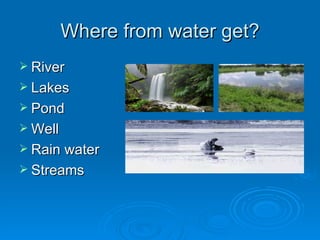
Where from water get? River Lakes Pond Well Rain water Streams
Water Availability and Use 70% of the earth's surface is water, 30% in Land  3% of all water on earth is fresh-water  most of this is largely unavailable in the form of ice caps and glaciers  1% is accessible surface freshwater.
 
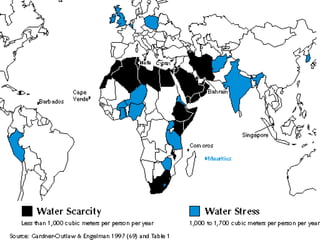
Factors regarding stress of water Population The world's population is expanding rapidly. Yet there is no more freshwater on earth now than there was 2,000 years ago, when the population was less than 3% of its current size  The demand for freshwater has been rising in response to industrial development, increased reliance on irrigated agriculture, massive urbanization, and rising living standards Inappropriate agricultural Industrialization Urbanization leaky municipal pipes  Improper pricing of municipal water Poor watershed management Other imprudent practices  Pollution  Due to untreated municipal sewage, toxic industrial effluents, and harmful chemicals from agricultural activities
 
 
Spending of fresh water Globally, agriculture- 69%; industry- 23%; domestic, about 8% In Africa, agriculture- 88%; industry- 5%; domestic 7%. In Asia, agriculture- 86%; industry- 8%; domestic 6%. In Europe, agriculture- 33%; industry- 54%; domestic 13%. In India agriculture- 90%; industry- 7%; domestic 3%.
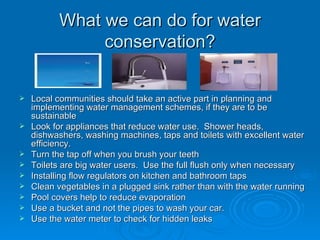
What we can do for water conservation? Local communities should take an active part in planning and implementing water management schemes, if they are to be sustainable Look for appliances that reduce water use.  Shower heads, dishwashers, washing machines, taps and toilets with excellent water efficiency. Turn the tap off when you brush your teeth Toilets are big water users.  Use the full flush only when necessary  Installing flow regulators on kitchen and bathroom taps  Clean vegetables in a plugged sink rather than with the water running  Pool covers help to reduce evaporation  Use a bucket and not the pipes to wash your car.  Use the water meter to check for hidden leaks
Wars over Water? controversy for water, between Israel and Jordan (Jordian killed 7 Israeli school girls for water agreement.1994) Israel already has used its military power to maintain access to the Jordan River. Egypt has threatened Ethiopia with war if it carries out plans to divert more water from the Blue Nile for agricultural use. India & Bagladesh Ganga water problem In india, Rajasthan and Gujarat problem for sabarmati river basin Karnataka and Andhra pradesh Krishna water problem Many more problem related to water….globally
Water Conservation and Management How much water do we need and where do we get it?" Rather, it is "how much water is there and how can we best benefit from it?“ India as a whole is expected to enter the water-stress category by 2025.  Proper domestic use Efficient agricultural use Water harvesting Desalination of marine water Forest conservation. Forests are important water regulators Their root structures act as nature's sponges, soaking up water and releasing it slowly throughout the year, thus contributing to reliable river flow, replenishing groundwater supplies, reducing soil erosion, and releasing moisture into the atmosphere. Recycling of industrial water Waste water treatment to avoid water pollution & save the aquatic and our life.
Management watershed or river-basin management especially in water-short regions  Instituting a workable water infrastructure  Enacting and enforcing water legislation and regulations Valuing freshwater resources   Creating competent administrative and legal structures Making institutions more responsive and effective  Training senior water managers Establishing closer ties to universities and research institutes Connecting water management to the needs of agriculture, industry, and municipalities, and meeting public health requirements for proper sanitation and disease prevention
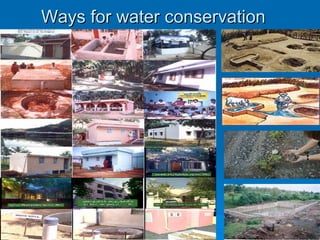
Ways for water conservation
Save water and save life
Thanking you

Water, Conservation & Management

  • 1.
    WATER, CONSERVATION& MANAGEMENT PRESENTED BY RAVI DHANDE Assitt. Professor Shri Shivaji Science College, Akot, MS, India
  • 2.
    What is theneed of water? Water is, literally, the source of life on earth. PLANTS, ANIMALS & MICROBES. All metabolic activities required water The human body is 70% water, People begin to feel thirst after a loss of only 1% of bodily fluids and risk death if fluid loss nears 10% Concept of leaf senescence…Teak
  • 3.
    Water need forother activities Domestic Activities ( personal, household, and municipal ) Basic water requirement of 50 liters per person per day" as a minimum standard to meet four basic needs—for drinking, sanitation, bathing, and cooking Agriculture Industries Constructions
  • 4.
    Where from waterget? River Lakes Pond Well Rain water Streams
  • 5.
    Water Availability andUse 70% of the earth's surface is water, 30% in Land 3% of all water on earth is fresh-water most of this is largely unavailable in the form of ice caps and glaciers 1% is accessible surface freshwater.
  • 6.
  • 7.
    Factors regarding stressof water Population The world's population is expanding rapidly. Yet there is no more freshwater on earth now than there was 2,000 years ago, when the population was less than 3% of its current size The demand for freshwater has been rising in response to industrial development, increased reliance on irrigated agriculture, massive urbanization, and rising living standards Inappropriate agricultural Industrialization Urbanization leaky municipal pipes Improper pricing of municipal water Poor watershed management Other imprudent practices Pollution Due to untreated municipal sewage, toxic industrial effluents, and harmful chemicals from agricultural activities
  • 8.
  • 9.
  • 10.
    Spending of freshwater Globally, agriculture- 69%; industry- 23%; domestic, about 8% In Africa, agriculture- 88%; industry- 5%; domestic 7%. In Asia, agriculture- 86%; industry- 8%; domestic 6%. In Europe, agriculture- 33%; industry- 54%; domestic 13%. In India agriculture- 90%; industry- 7%; domestic 3%.
  • 11.
    What we cando for water conservation? Local communities should take an active part in planning and implementing water management schemes, if they are to be sustainable Look for appliances that reduce water use.  Shower heads, dishwashers, washing machines, taps and toilets with excellent water efficiency. Turn the tap off when you brush your teeth Toilets are big water users.  Use the full flush only when necessary Installing flow regulators on kitchen and bathroom taps Clean vegetables in a plugged sink rather than with the water running Pool covers help to reduce evaporation Use a bucket and not the pipes to wash your car. Use the water meter to check for hidden leaks
  • 12.
    Wars over Water?controversy for water, between Israel and Jordan (Jordian killed 7 Israeli school girls for water agreement.1994) Israel already has used its military power to maintain access to the Jordan River. Egypt has threatened Ethiopia with war if it carries out plans to divert more water from the Blue Nile for agricultural use. India & Bagladesh Ganga water problem In india, Rajasthan and Gujarat problem for sabarmati river basin Karnataka and Andhra pradesh Krishna water problem Many more problem related to water….globally
  • 13.
    Water Conservation andManagement How much water do we need and where do we get it?" Rather, it is "how much water is there and how can we best benefit from it?“ India as a whole is expected to enter the water-stress category by 2025. Proper domestic use Efficient agricultural use Water harvesting Desalination of marine water Forest conservation. Forests are important water regulators Their root structures act as nature's sponges, soaking up water and releasing it slowly throughout the year, thus contributing to reliable river flow, replenishing groundwater supplies, reducing soil erosion, and releasing moisture into the atmosphere. Recycling of industrial water Waste water treatment to avoid water pollution & save the aquatic and our life.
  • 14.
    Management watershed orriver-basin management especially in water-short regions Instituting a workable water infrastructure Enacting and enforcing water legislation and regulations Valuing freshwater resources Creating competent administrative and legal structures Making institutions more responsive and effective Training senior water managers Establishing closer ties to universities and research institutes Connecting water management to the needs of agriculture, industry, and municipalities, and meeting public health requirements for proper sanitation and disease prevention
  • 15.
    Ways for waterconservation
  • 16.
    Save water andsave life
  • 17.