MUHAMMED ANEES.K
Definition 
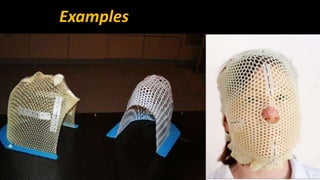
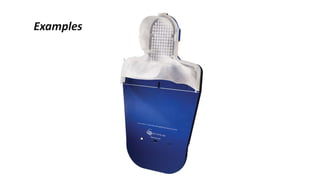
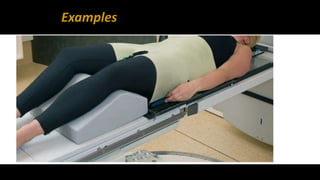
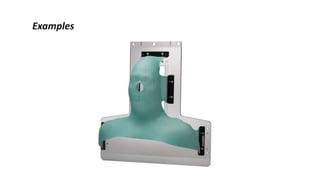
Any device that helps to maintain the patient in a fixed position 
Immobilization devices 
 Prevent the patient movement from treatment to 
treatment over a course of radiotherapy
Examples
Examples
Examples
Examples
Examples
Examples
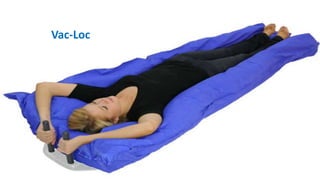
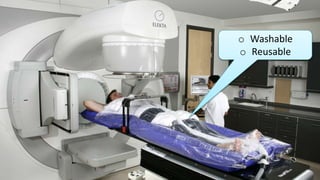
Vac-Loc
Vac Lock 
Main: 
 To limit the patient movement 
 To reduce the probability of positioning errors 
Incidental benefits: 
 Radiation in daily set up time 
 Radiation in patient’s fear and worry 
 No need for patient to be awake, alert & co-operate 
 Conversion into a rigid body
Characteristics of Vac-Lock 
 Easy to use 
 Easy to constructing the device 
 Patient Comfort: Fully comfortable and relaxed position 
 All movements be constrained 
 Device conforms to the patient’s external surface contours 
 The device be appropriate to the particular patient (e.g. obese) 
and anatomy(e.g. abdomen) under treatment.
o Washable 
o Reusable
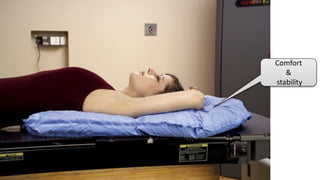
Comfort 
& 
stability
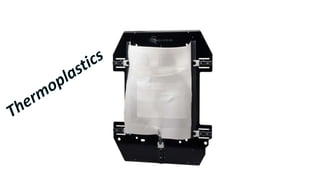
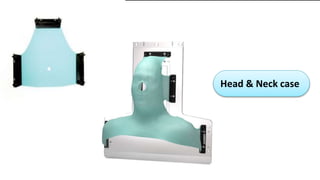
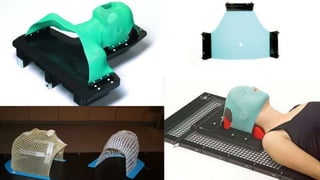
Thermoplastics 
 It is a soft & flexible material, almost like a Cloth 
 When it soaked in a warm water, It becomes soft & flexible state 
 Plastic can be stretched around any part of the patient’s body 
 Once it cools, It becomes rigid again & maintain its new shape
Head & Neck case
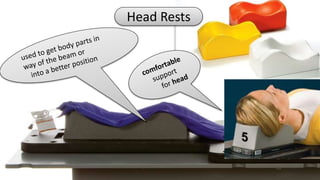
Head Rests
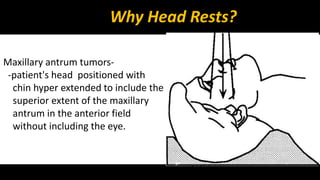
Why Head Rests? 
Maxillary antrum tumors- 
-patient's head positioned with 
chin hyper extended to include the 
superior extent of the maxillary 
antrum in the anterior field 
without including the eye.
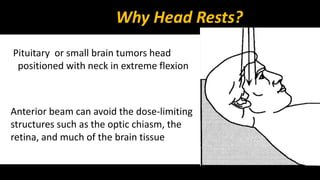
Why Head Rests? 
Pituitary or small brain tumors head 
positioned with neck in extreme flexion 
Anterior beam can avoid the dose-limiting 
structures such as the optic chiasm, the 
retina, and much of the brain tissue
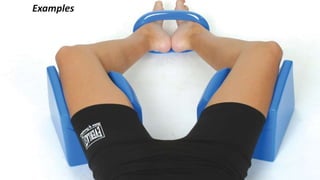
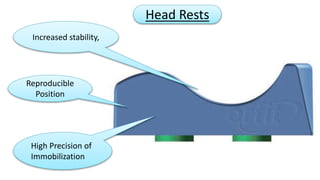
Increased stability, 
Reproducible 
Position 
High Precision of 
Immobilization 
Head Rests
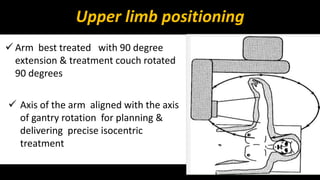
Upper limb positioning 
 Arm best treated with 90 degree 
extension & treatment couch rotated 
90 degrees 
 Axis of the arm aligned with the axis 
of gantry rotation for planning & 
delivering precise isocentric 
treatment
Patient elevation systems
Patient Elevation Systems 
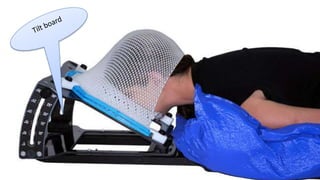
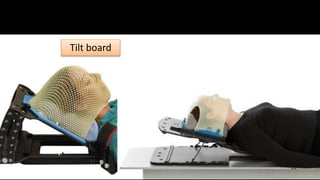
1. Tilt board 
 Severe obesity 
 lung disease 
 Built-in hand grips or arm supports that provide 
comfortable and reproducible arms-up support. 
 Used for treating lung cancer 
 through lateral fields without the interference of arms or 
shoulders.
Tilt board
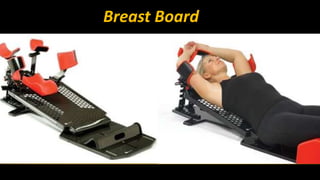
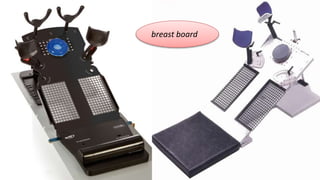
Breast Board
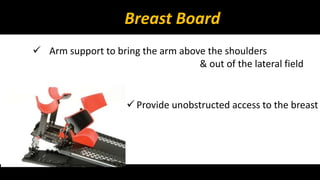
Breast Board 
 Arm support to bring the arm above the shoulders 
& out of the lateral field 
 Provide unobstructed access to the breast
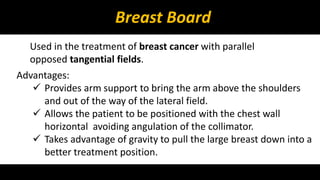
Breast Board 
Used in the treatment of breast cancer with parallel 
opposed tangential fields. 
Advantages: 
 Provides arm support to bring the arm above the shoulders 
and out of the way of the lateral field. 
 Allows the patient to be positioned with the chest wall 
horizontal avoiding angulation of the collimator. 
 Takes advantage of gravity to pull the large breast down into a 
better treatment position.
breast board
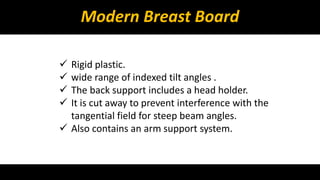
Modern Breast Board 
 Rigid plastic. 
 wide range of indexed tilt angles . 
 The back support includes a head holder. 
 It is cut away to prevent interference with the 
tangential field for steep beam angles. 
 Also contains an arm support system.
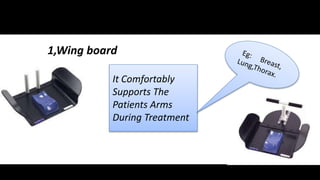
1,Wing board 
It Comfortably 
Supports The 
Patients Arms 
During Treatment
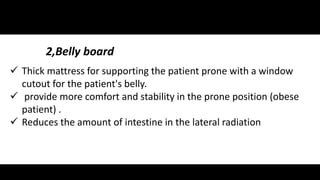
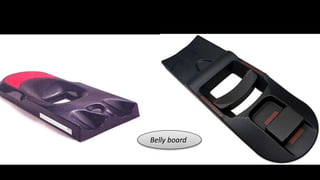
2,Belly board 
 Thick mattress for supporting the patient prone with a window 
cutout for the patient's belly. 
 provide more comfort and stability in the prone position (obese 
patient) . 
 Reduces the amount of intestine in the lateral radiation
Belly board
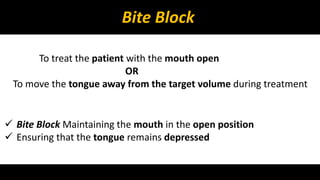
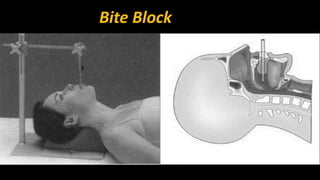
Bite Block 
To treat the patient with the mouth open 
OR 
To move the tongue away from the target volume during treatment 
 Bite Block Maintaining the mouth in the open position 
 Ensuring that the tongue remains depressed
Bite Block
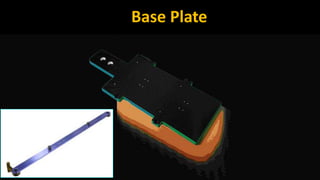
Base Plate
Base Plate 
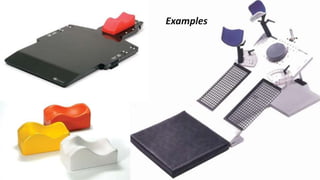
 Base plate for a reproducible positioning of all body regions 
 Made of a low density carbon fibre laminate sandwich structure 
 Excellent dosimetric properties (minimum attenuate the beam) 
 Indexing bar-the two pin indexing bar is designed for reproducible 
positioning & stable fixation of base plates on the treatment couch
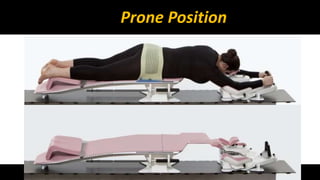
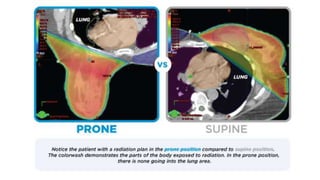
Prone Position
Goal of Immobilization Devices 
1. PRECISION/ACCURACY 
Limit patient movement 
2. REPRODUCIBILITY 
Reduce daily shifts 
3. PATIENT COMFORT 
Increase acceptance
Imobilazation Device

Imobilazation Device

  • 1.
  • 2.
    Definition Any devicethat helps to maintain the patient in a fixed position Immobilization devices  Prevent the patient movement from treatment to treatment over a course of radiotherapy
  • 3.
  • 4.
  • 5.
  • 6.
  • 8.
  • 9.
  • 10.
  • 11.
    Vac Lock Main:  To limit the patient movement  To reduce the probability of positioning errors Incidental benefits:  Radiation in daily set up time  Radiation in patient’s fear and worry  No need for patient to be awake, alert & co-operate  Conversion into a rigid body
  • 12.
    Characteristics of Vac-Lock  Easy to use  Easy to constructing the device  Patient Comfort: Fully comfortable and relaxed position  All movements be constrained  Device conforms to the patient’s external surface contours  The device be appropriate to the particular patient (e.g. obese) and anatomy(e.g. abdomen) under treatment.
  • 13.
    o Washable oReusable
  • 14.
  • 16.
    Thermoplastics  Itis a soft & flexible material, almost like a Cloth  When it soaked in a warm water, It becomes soft & flexible state  Plastic can be stretched around any part of the patient’s body  Once it cools, It becomes rigid again & maintain its new shape
  • 17.
  • 19.
  • 20.
    Why Head Rests? Maxillary antrum tumors- -patient's head positioned with chin hyper extended to include the superior extent of the maxillary antrum in the anterior field without including the eye.
  • 21.
    Why Head Rests? Pituitary or small brain tumors head positioned with neck in extreme flexion Anterior beam can avoid the dose-limiting structures such as the optic chiasm, the retina, and much of the brain tissue
  • 22.
    Increased stability, Reproducible Position High Precision of Immobilization Head Rests
  • 23.
    Upper limb positioning  Arm best treated with 90 degree extension & treatment couch rotated 90 degrees  Axis of the arm aligned with the axis of gantry rotation for planning & delivering precise isocentric treatment
  • 24.
  • 25.
    Patient Elevation Systems 1. Tilt board  Severe obesity  lung disease  Built-in hand grips or arm supports that provide comfortable and reproducible arms-up support.  Used for treating lung cancer  through lateral fields without the interference of arms or shoulders.
  • 26.
  • 27.
  • 28.
    Breast Board Arm support to bring the arm above the shoulders & out of the lateral field  Provide unobstructed access to the breast
  • 29.
    Breast Board Usedin the treatment of breast cancer with parallel opposed tangential fields. Advantages:  Provides arm support to bring the arm above the shoulders and out of the way of the lateral field.  Allows the patient to be positioned with the chest wall horizontal avoiding angulation of the collimator.  Takes advantage of gravity to pull the large breast down into a better treatment position.
  • 30.
  • 31.
    Modern Breast Board  Rigid plastic.  wide range of indexed tilt angles .  The back support includes a head holder.  It is cut away to prevent interference with the tangential field for steep beam angles.  Also contains an arm support system.
  • 32.
    1,Wing board ItComfortably Supports The Patients Arms During Treatment
  • 33.
    2,Belly board Thick mattress for supporting the patient prone with a window cutout for the patient's belly.  provide more comfort and stability in the prone position (obese patient) .  Reduces the amount of intestine in the lateral radiation
  • 34.
  • 35.
    Bite Block Totreat the patient with the mouth open OR To move the tongue away from the target volume during treatment  Bite Block Maintaining the mouth in the open position  Ensuring that the tongue remains depressed
  • 36.
  • 37.
  • 38.
    Base Plate Base plate for a reproducible positioning of all body regions  Made of a low density carbon fibre laminate sandwich structure  Excellent dosimetric properties (minimum attenuate the beam)  Indexing bar-the two pin indexing bar is designed for reproducible positioning & stable fixation of base plates on the treatment couch
  • 39.
  • 41.
    Goal of ImmobilizationDevices 1. PRECISION/ACCURACY Limit patient movement 2. REPRODUCIBILITY Reduce daily shifts 3. PATIENT COMFORT Increase acceptance