Download as PDF, PPTX


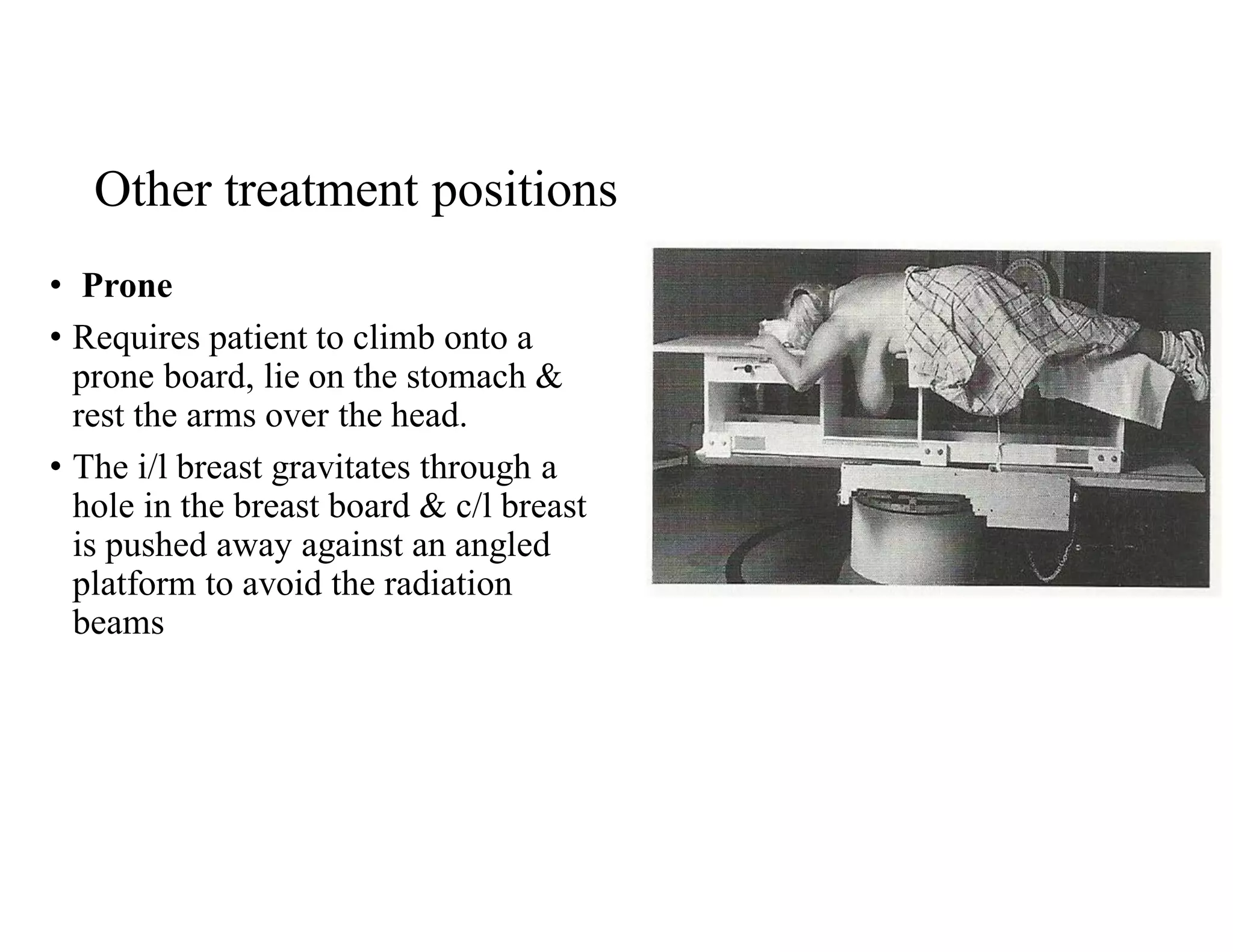


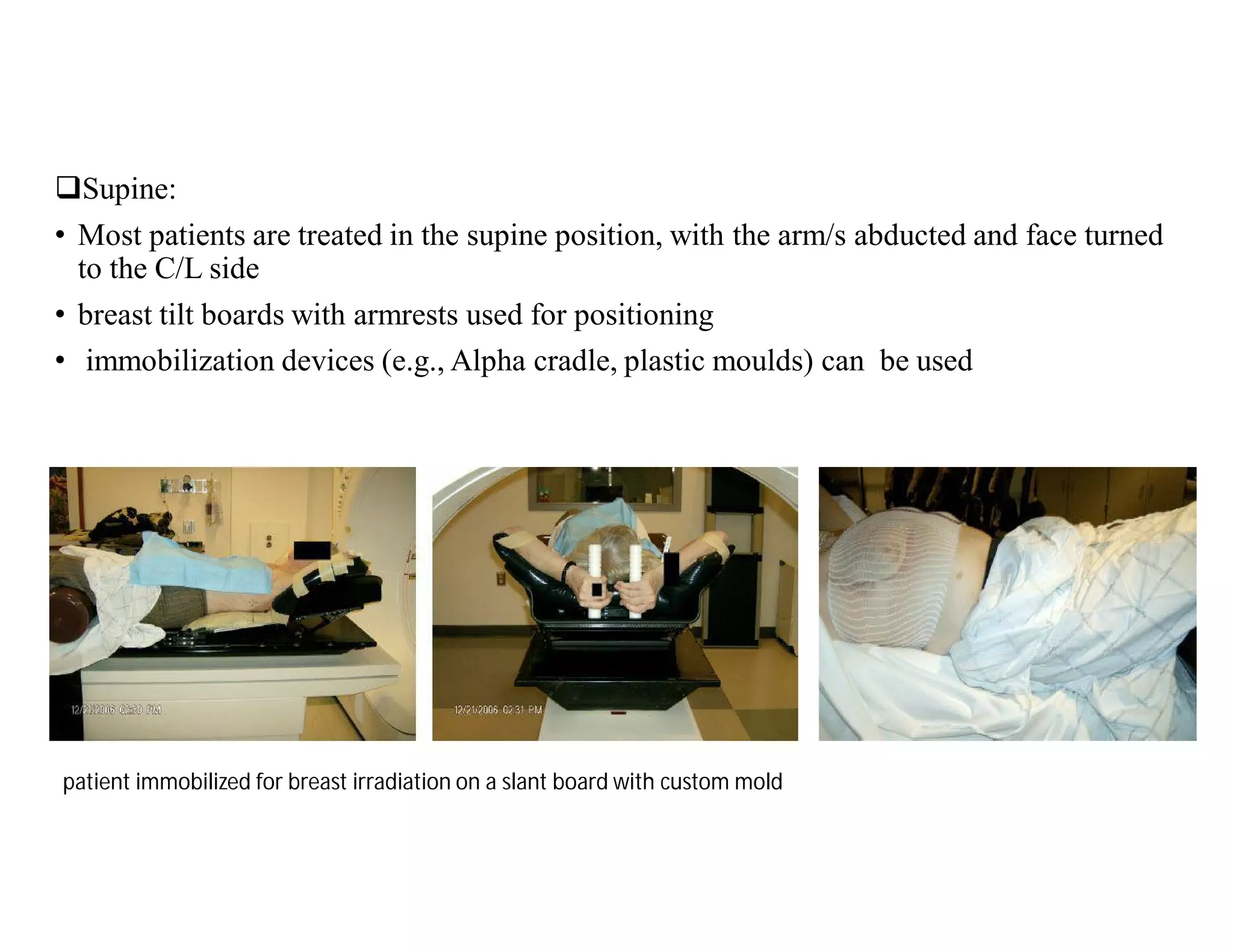




Radiotherapy is commonly used to treat breast cancer. Proper patient positioning and immobilization are crucial to accurately deliver the prescribed radiation dose while sparing surrounding healthy tissues. Treatment typically involves two tangential photon beams shaped to the breast tissue. Three-dimensional conformal radiotherapy may improve dose uniformity in the breast and reduce radiation exposure to the heart and lungs. Intensity-modulated radiation therapy provides further dosimetric advantages such as enhanced dose homogeneity and organ sparing, though it may also increase low-dose exposure. Forward-planned IMRT techniques like field-in-field are commonly used for breast radiotherapy due to benefits such as improved dosimetry and reduced planning/treatment time compared to inverse planning.


![Arc therapy [autosaved] [autosaved]](https://cdn.slidesharecdn.com/ss_thumbnails/arctherapyautosavedautosaved-150423125828-conversion-gate01-thumbnail.jpg?width=640&height=640&fit=bounds)


