INTEGRATED
MANAGEMENT
OF CHILDHOOD
ILLNESSES
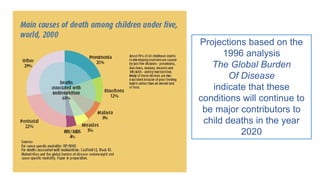
Projections based on the
1996 analysis
The Global Burden
Of Disease
indicate that these
conditions will continue to
be major contributors to
child deaths in the year
2020
A strategy develop by the WHO and UNICEF in response to the serious
challenge of high mortality rates among children. This strategy combines
improved management of
childhood illness with aspects of nutrition, immunization, and other
important diseases.
COMPONENTS OF IMCI
Improvements in the case-management skills of health
staff through the provision of locally adapted guidelines
on IMCI and through activities to promote their us
Improvements in the health system required for effective
management of childhood Illness
Improvements in family and community practices
ELEMENTS OF IMCI
CASE MANAGEMENT
Assessment
Assess the child by checking first for danger signs (or
possible bacterial infection in a young infant), asking
questions about common conditions, examining the child, and
checking nutrition and immunization status. Assessment
includes checking the child for other health problems.
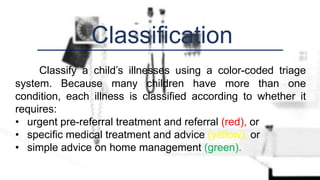
Classification
Classify a child’s illnesses using a color-coded triage
system. Because many children have more than one
condition, each illness is classified according to whether it
requires:
• urgent pre-referral treatment and referral (red), or
• specific medical treatment and advice (yellow), or
• simple advice on home management (green).
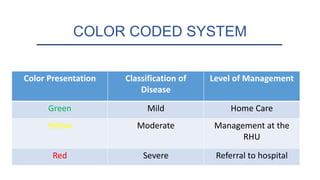
COLOR CODED SYSTEM
Color Presentation Classification of
Disease
Level of Management
Green Mild Home Care
Yellow Moderate Management at the
RHU
Red Severe Referral to hospital
Identification
Identify specific treatments for the child. If a children
quires urgent referral, give essential treatment before the
patient is transferred (Hospital). If a child needs treatment at
home, develop an integrated treatment plan for the child and
give the first dose of drugs in the clinic (Home). If a child
should be immunized, give immunization(RHU).
Treatment
Treatment instructions, including teaching the caretaker how
to give oral drugs, how to feed and give fluids during illness, and
how to treat local infections at home. Ask the caretaker to return
for follow-up on a specific date, and teach her how to recognize
signs that indicate the child should return immediately to the
health facility.
Counsel
Assess feeding, including assessment of breastfeeding
practices, and counsel to solve any feeding problems found. Then
counsel the mother about her own health.
Give Follow up Care
When a child is brought back to the clinic as requested, give
follow-up care, if necessary, reassess the child for new problems.
THE INTEGRATED
CASE
MANAGEMENT
PROCESS
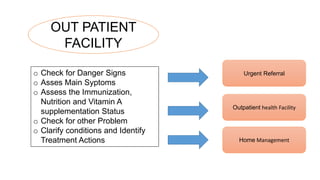
OUT PATIENT
FACILITY
o Check for Danger Signs
o Asses Main Syptoms
o Assess the Immunization,
Nutrition and Vitamin A
supplementation Status
o Check for other Problem
o Clarify conditions and Identify
Treatment Actions
Urgent Referral
Outpatient health Facility
Home Management

IMCI

  • 1.
  • 2.
    Projections based onthe 1996 analysis The Global Burden Of Disease indicate that these conditions will continue to be major contributors to child deaths in the year 2020
  • 3.
    A strategy developby the WHO and UNICEF in response to the serious challenge of high mortality rates among children. This strategy combines improved management of childhood illness with aspects of nutrition, immunization, and other important diseases.
  • 4.
    COMPONENTS OF IMCI Improvementsin the case-management skills of health staff through the provision of locally adapted guidelines on IMCI and through activities to promote their us Improvements in the health system required for effective management of childhood Illness Improvements in family and community practices
  • 5.
  • 6.
    Assessment Assess the childby checking first for danger signs (or possible bacterial infection in a young infant), asking questions about common conditions, examining the child, and checking nutrition and immunization status. Assessment includes checking the child for other health problems.
  • 7.
    Classification Classify a child’sillnesses using a color-coded triage system. Because many children have more than one condition, each illness is classified according to whether it requires: • urgent pre-referral treatment and referral (red), or • specific medical treatment and advice (yellow), or • simple advice on home management (green).
  • 8.
    COLOR CODED SYSTEM ColorPresentation Classification of Disease Level of Management Green Mild Home Care Yellow Moderate Management at the RHU Red Severe Referral to hospital
  • 9.
    Identification Identify specific treatmentsfor the child. If a children quires urgent referral, give essential treatment before the patient is transferred (Hospital). If a child needs treatment at home, develop an integrated treatment plan for the child and give the first dose of drugs in the clinic (Home). If a child should be immunized, give immunization(RHU).
  • 10.
    Treatment Treatment instructions, includingteaching the caretaker how to give oral drugs, how to feed and give fluids during illness, and how to treat local infections at home. Ask the caretaker to return for follow-up on a specific date, and teach her how to recognize signs that indicate the child should return immediately to the health facility.
  • 11.
    Counsel Assess feeding, includingassessment of breastfeeding practices, and counsel to solve any feeding problems found. Then counsel the mother about her own health.
  • 12.
    Give Follow upCare When a child is brought back to the clinic as requested, give follow-up care, if necessary, reassess the child for new problems.
  • 13.
  • 14.
    OUT PATIENT FACILITY o Checkfor Danger Signs o Asses Main Syptoms o Assess the Immunization, Nutrition and Vitamin A supplementation Status o Check for other Problem o Clarify conditions and Identify Treatment Actions Urgent Referral Outpatient health Facility Home Management