Psychological Schools Of
                                          Thought

Tuesday, April 27, 2010
School of Thoughts in
                              Psychology
          ๏Structuralism
          ๏Functionalism
          ๏Behaviorism
          ๏Cognitivism
          ๏Gestalt
          ๏Humanism
          ๏Psychoanalytic
Tuesday, April 27, 2010
Structuralism

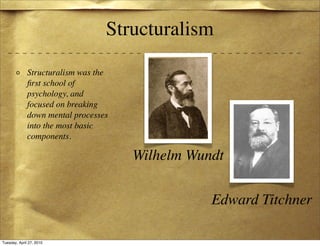
              Structuralism was the
              rst school of
              psychology, and
              focused on breaking
              down mental processes
              into the most basic
              components.

                                      Wilhelm Wundt

                                                 Edward Titchner

Tuesday, April 27, 2010
Functionalism
   • Functionalism
     formed as a reaction      William James
     to the theories of the
     structuralist school of
     thought and was
     heavily influenced by
     the work of William
     James. Major
     functionalist thinkers
     included John
     Dewey and Harvey
     Carr.


                                John Dewey Harvey Carr
Tuesday, April 27, 2010
Behaviorism
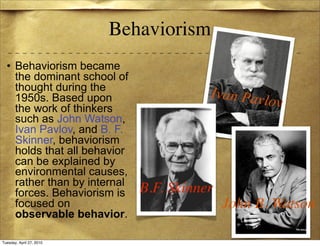
  • Behaviorism became
    the dominant school of
    thought during the
    1950s. Based upon                    Ivan Pavl
    the work of thinkers
                                                  ov
    such as John Watson,
    Ivan Pavlov, and B. F.
    Skinner, behaviorism
    holds that all behavior
    can be explained by
    environmental causes,
    rather than by internal
    forces. Behaviorism is    B.F. Skinner
    focused on                               John B. Watson
    observable behavior.

Tuesday, April 27, 2010
Cognitivism

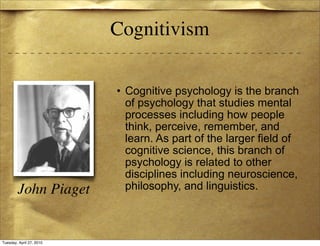
                          • Cognitive psychology is the branch
                            of psychology that studies mental
                            processes including how people
                            think, perceive, remember, and
                            learn. As part of the larger field of
                            cognitive science, this branch of
                            psychology is related to other
                            disciplines including neuroscience,
        John Piaget         philosophy, and linguistics.


Tuesday, April 27, 2010
Gestalt

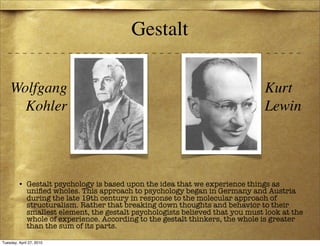
    Wolfgang                                                                  Kurt
      Kohler                                                                  Lewin


         • Gestalt psychology is based upon the idea that we experience things as
           unied wholes. This approach to psychology began in Germany and Austria
           during the late 19th century in response to the molecular approach of
           structuralism. Rather that breaking down thoughts and behavior to their
           smallest element, the gestalt psychologists believed that you must look at the
           whole of experience. According to the gestalt thinkers, the whole is greater
           than the sum of its parts.

Tuesday, April 27, 2010
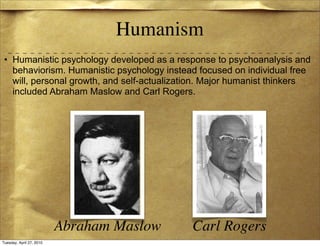
Humanism
 • Humanistic psychology developed as a response to psychoanalysis and
   behaviorism. Humanistic psychology instead focused on individual free
   will, personal growth, and self-actualization. Major humanist thinkers
   included Abraham Maslow and Carl Rogers.


                          Abraham Maslow     Carl Rogers
Tuesday, April 27, 2010
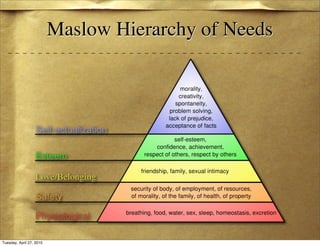
Maslow Hierarchy of Needs


Tuesday, April 27, 2010
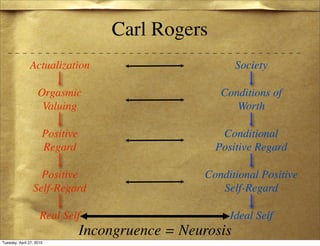
Carl Rogers
               Actualization                               Society

                    Orgasmic                           Conditions of
                     Valuing                              Worth

                      Positive                         Conditional
                      Regard                          Positive Regard

                   Positive                         Conditional Positive
                 Self-Regard                           Self-Regard

                     Real Self                           Ideal Self
                                 Incongruence = Neurosis
Tuesday, April 27, 2010
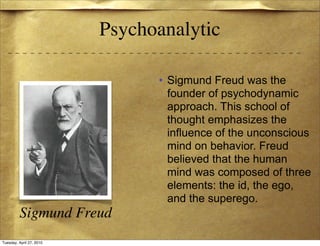
Psychoanalytic

                                • Sigmund Freud was the
                                  founder of psychodynamic
                                  approach. This school of
                                  thought emphasizes the
                                  influence of the unconscious
                                  mind on behavior. Freud
                                  believed that the human
                                  mind was composed of three
                                  elements: the id, the ego,
                                  and the superego.
         Sigmund Freud
Tuesday, April 27, 2010

School of thoughts

  • 1.
    Psychological Schools Of Thought Tuesday, April 27, 2010
  • 2.
    School of Thoughtsin Psychology ๏Structuralism ๏Functionalism ๏Behaviorism ๏Cognitivism ๏Gestalt ๏Humanism ๏Psychoanalytic Tuesday, April 27, 2010
  • 3.
    Structuralism Structuralism was the rst school of psychology, and focused on breaking down mental processes into the most basic components. Wilhelm Wundt Edward Titchner Tuesday, April 27, 2010
  • 4.
    Functionalism • Functionalism formed as a reaction William James to the theories of the structuralist school of thought and was heavily influenced by the work of William James. Major functionalist thinkers included John Dewey and Harvey Carr. John Dewey Harvey Carr Tuesday, April 27, 2010
  • 5.
    Behaviorism •Behaviorism became the dominant school of thought during the 1950s. Based upon Ivan Pavl the work of thinkers ov such as John Watson, Ivan Pavlov, and B. F. Skinner, behaviorism holds that all behavior can be explained by environmental causes, rather than by internal forces. Behaviorism is B.F. Skinner focused on John B. Watson observable behavior. Tuesday, April 27, 2010
  • 6.
    Cognitivism • Cognitive psychology is the branch of psychology that studies mental processes including how people think, perceive, remember, and learn. As part of the larger field of cognitive science, this branch of psychology is related to other disciplines including neuroscience, John Piaget philosophy, and linguistics. Tuesday, April 27, 2010
  • 7.
    Gestalt Wolfgang Kurt Kohler Lewin • Gestalt psychology is based upon the idea that we experience things as unified wholes. This approach to psychology began in Germany and Austria during the late 19th century in response to the molecular approach of structuralism. Rather that breaking down thoughts and behavior to their smallest element, the gestalt psychologists believed that you must look at the whole of experience. According to the gestalt thinkers, the whole is greater than the sum of its parts. Tuesday, April 27, 2010
  • 8.
    Humanism • Humanisticpsychology developed as a response to psychoanalysis and behaviorism. Humanistic psychology instead focused on individual free will, personal growth, and self-actualization. Major humanist thinkers included Abraham Maslow and Carl Rogers. Abraham Maslow Carl Rogers Tuesday, April 27, 2010
  • 9.
    Maslow Hierarchy ofNeeds Tuesday, April 27, 2010
  • 10.
    Carl Rogers Actualization Society Orgasmic Conditions of Valuing Worth Positive Conditional Regard Positive Regard Positive Conditional Positive Self-Regard Self-Regard Real Self Ideal Self Incongruence = Neurosis Tuesday, April 27, 2010
  • 11.
    Psychoanalytic • Sigmund Freud was the founder of psychodynamic approach. This school of thought emphasizes the influence of the unconscious mind on behavior. Freud believed that the human mind was composed of three elements: the id, the ego, and the superego. Sigmund Freud Tuesday, April 27, 2010