Download to read offline
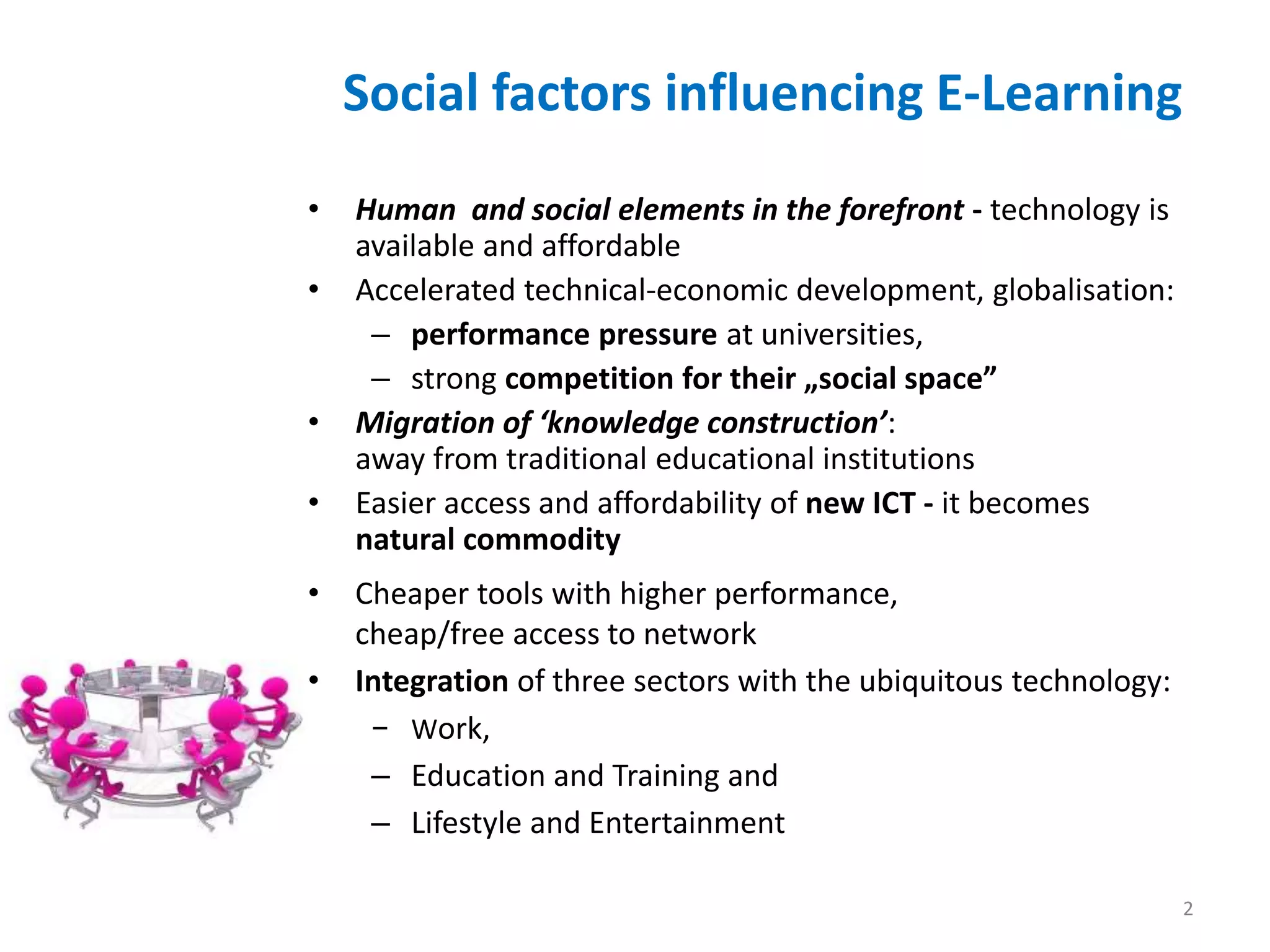

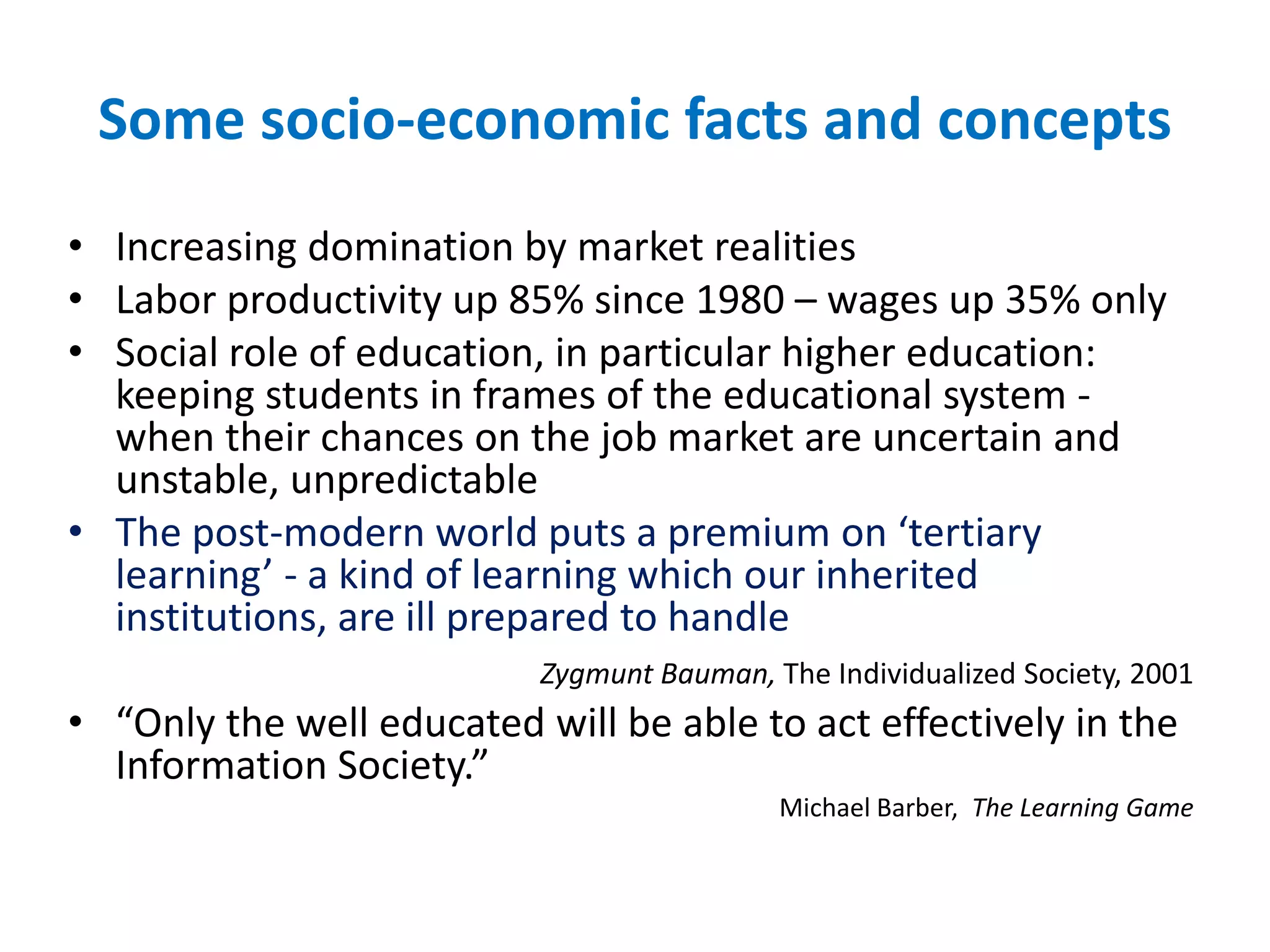

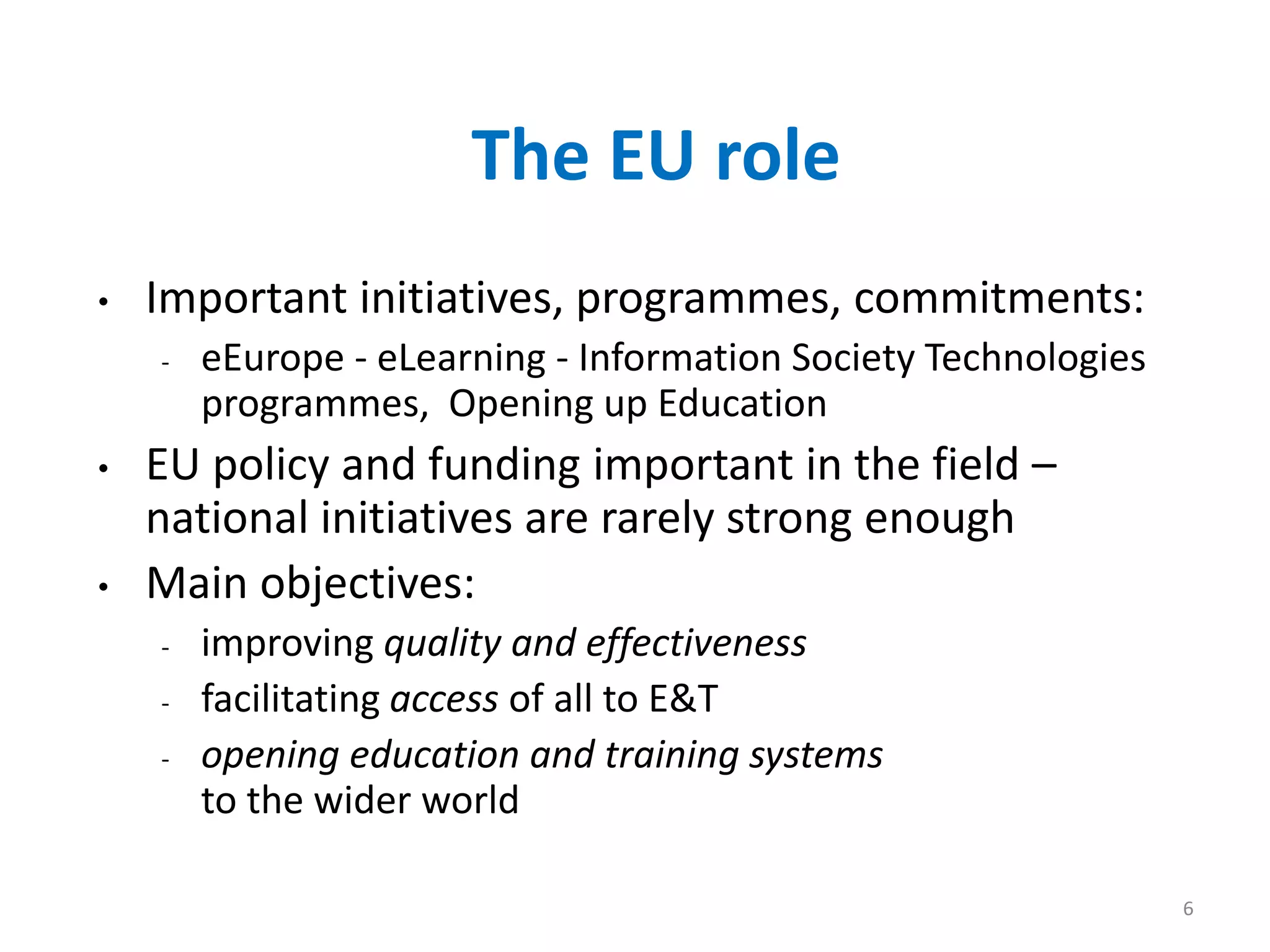



This document summarizes key social factors influencing e-learning and trends in learning with information and communication technologies (ICTs). It discusses how ICT has accelerated competition for universities and migration of knowledge away from traditional institutions. Other trends include unemployment, rapid changes in user habits/expectations, and the spontaneous growth of online informal learning. The document also notes the EU's role in funding e-learning initiatives and criticisms around gaps in digital competence and effective implementation of e-learning. It introduces concepts like "rhizomatic learning" through proliferating informal online contexts and discusses distortive effects of open online models on learners and educational systems.


