E-COMPETENCES FOR LIFE, EMPLOYMENT AND INNOVATION  Vienna 14-17 June 2006   e-learning for innovative lifelong learning Maruja Gutierrez Diaz DG Education and Culture
2006-2010: Stepping up a gear The revised Lisbon Agenda: the triangle of knowledge Innovation as a key process Innovation in EU policies Innovation in education and training ICT as an enabler for innovation
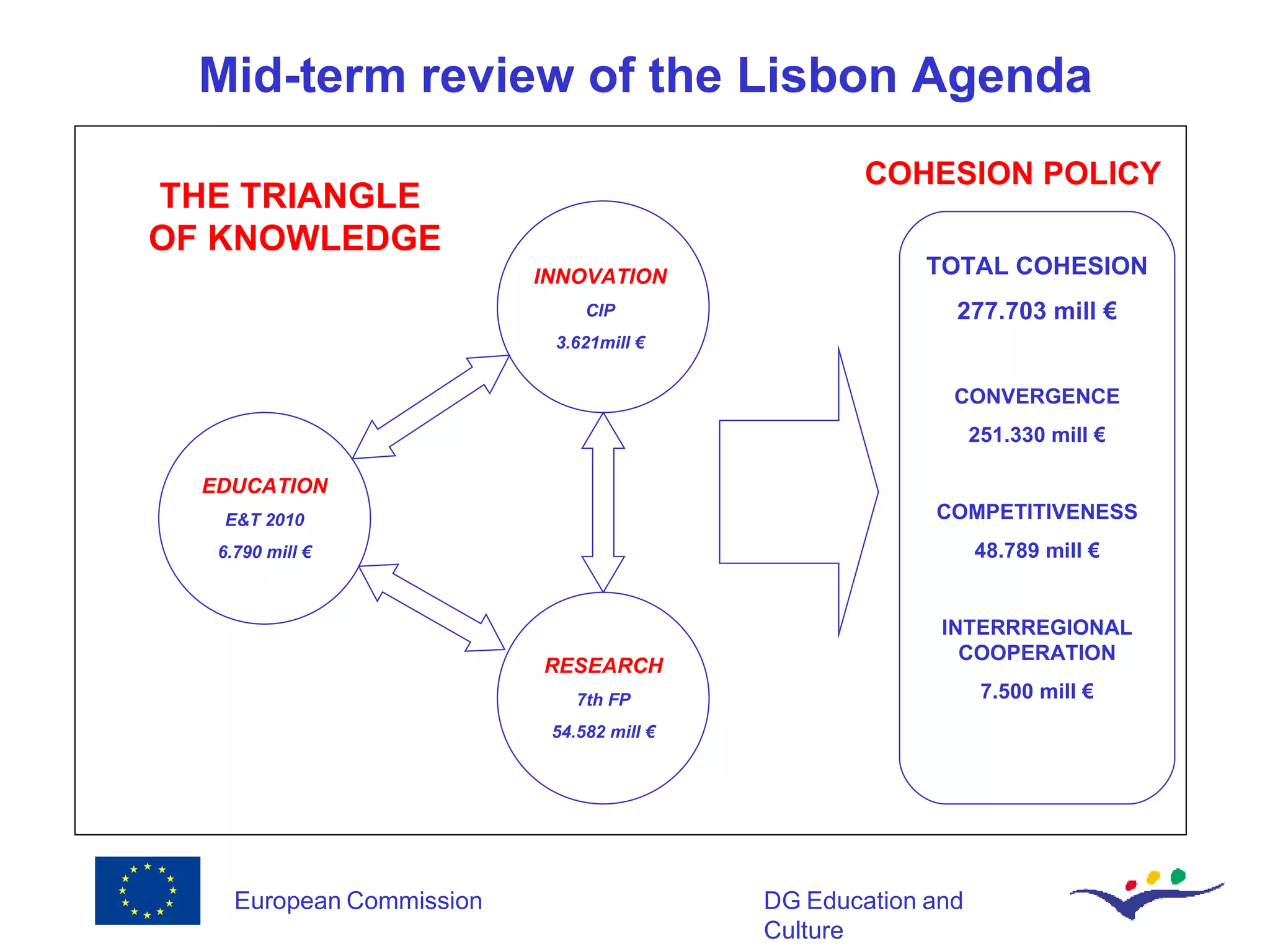
INNOVATION CIP 3.621mill € RESEARCH 7th FP 54.582 mill € EDUCATION E&T 2010 6.790 mill € TOTAL COHESION 277.703 mill € CONVERGENCE 251.330 mill € COMPETITIVENESS 48.789 mill € INTERRREGIONAL COOPERATION 7.500 mill € THE TRIANGLE  OF KNOWLEDGE COHESION POLICY Mid-term review of the Lisbon Agenda
ICT as a key component of innovation: important presence in all major EU instruments 7th Framework programme Competitiveness and Innovation Programme i2010 Structural Funds European Regional Development Fund European Social Fund Integrated Lifelong Learning Programme ?
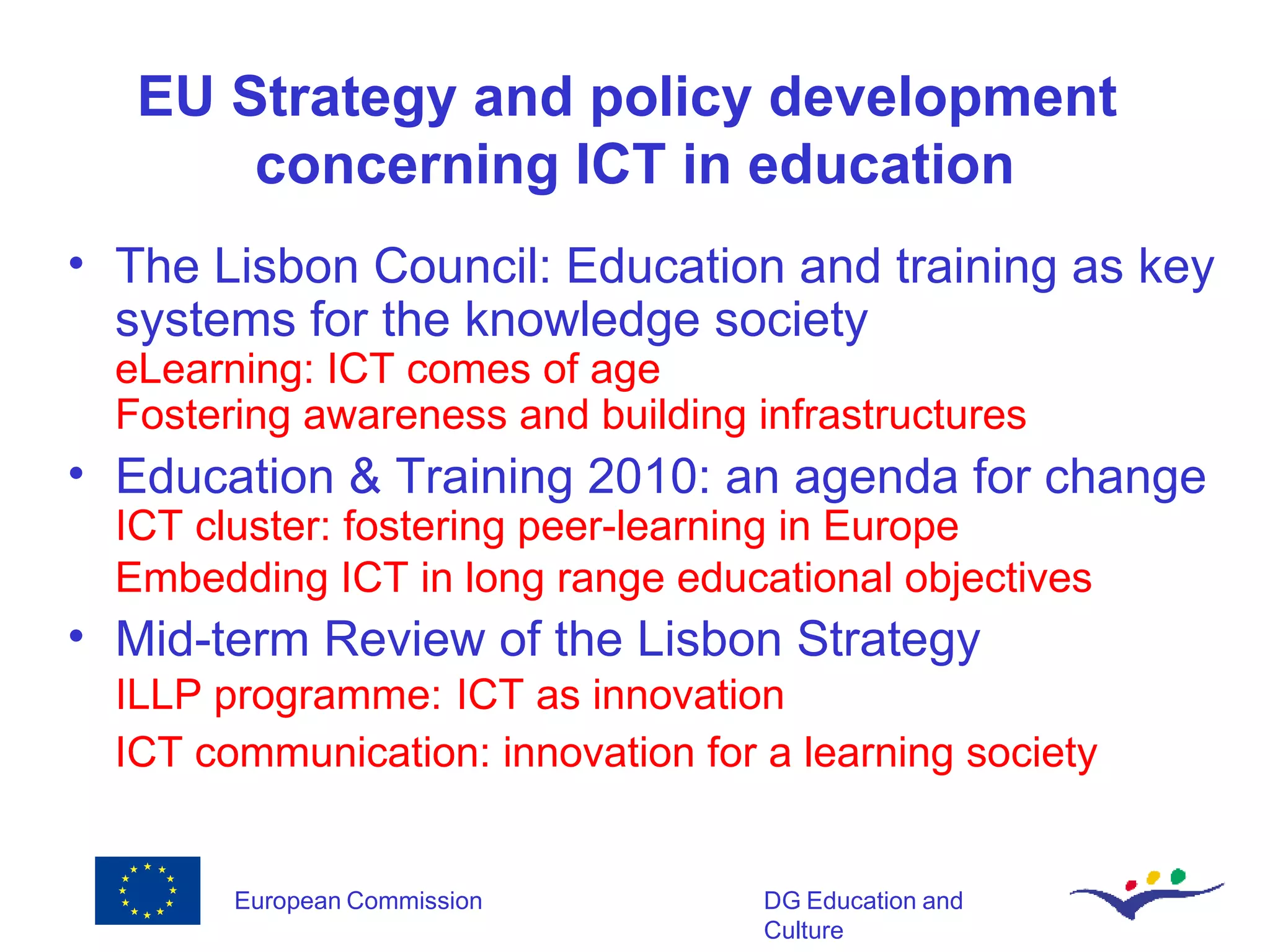
EU Strategy and policy development  concerning ICT in education The Lisbon Council: Education and training as key systems for the knowledge society  eLearning: ICT comes of age Fostering awareness and building infrastructures Education & Training 2010: an agenda for change  ICT cluster: fostering peer-learning in Europe Embedding ICT in long range educational objectives   Mid-term Review of the Lisbon Strategy ILLP programme:   ICT as innovation ICT communication: innovation for a learning society
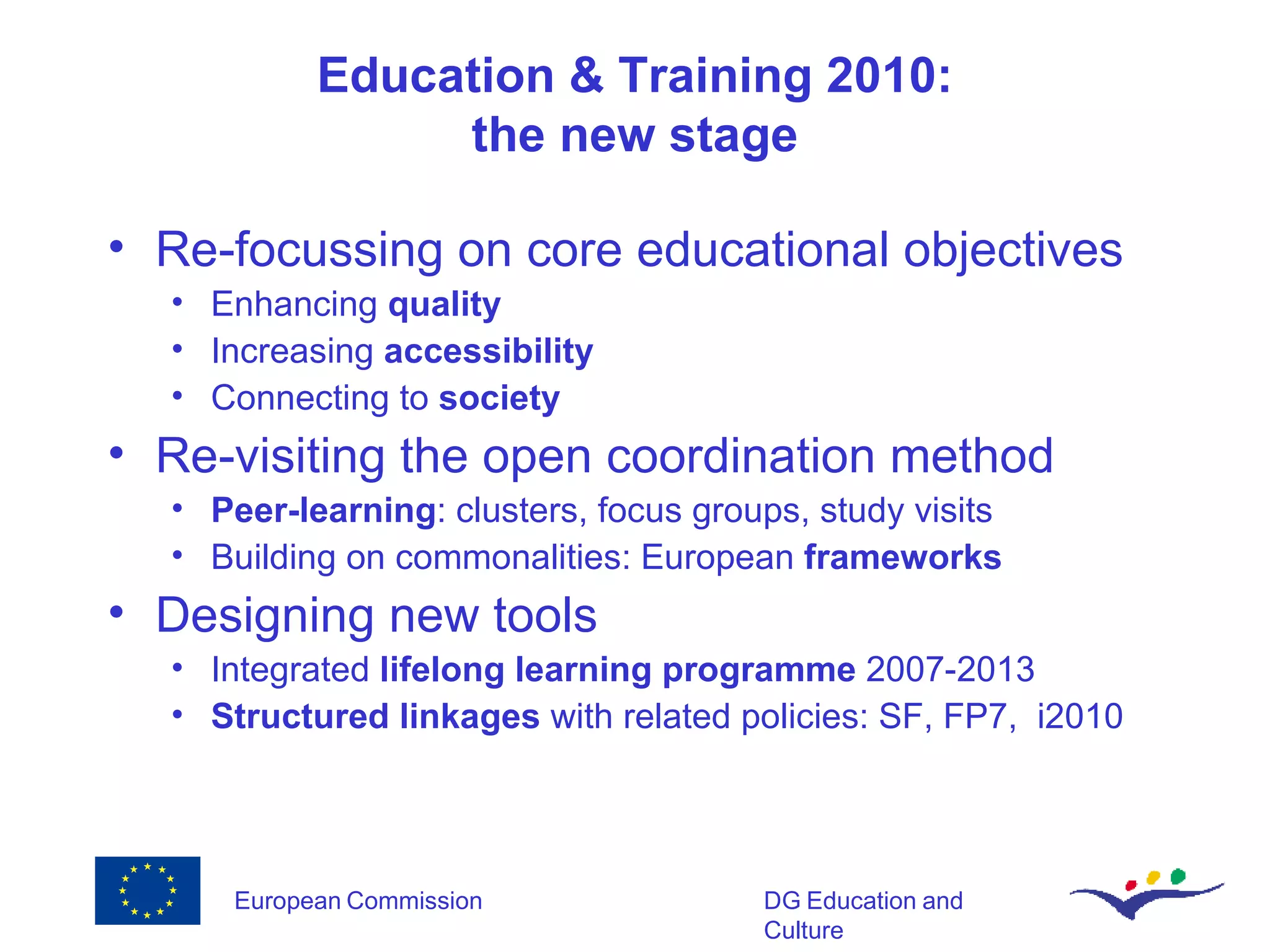
Education & Training 2010: the new stage Re-focussing on core educational objectives Enhancing  quality Increasing  accessibility Connecting to  society Re-visiting the open coordination method Peer-learning : clusters, focus groups, study visits Building on commonalities: European  frameworks Designing new tools Integrated  lifelong learning programme  2007-2013 Structured linkages  with related policies: SF, FP7,  i2010
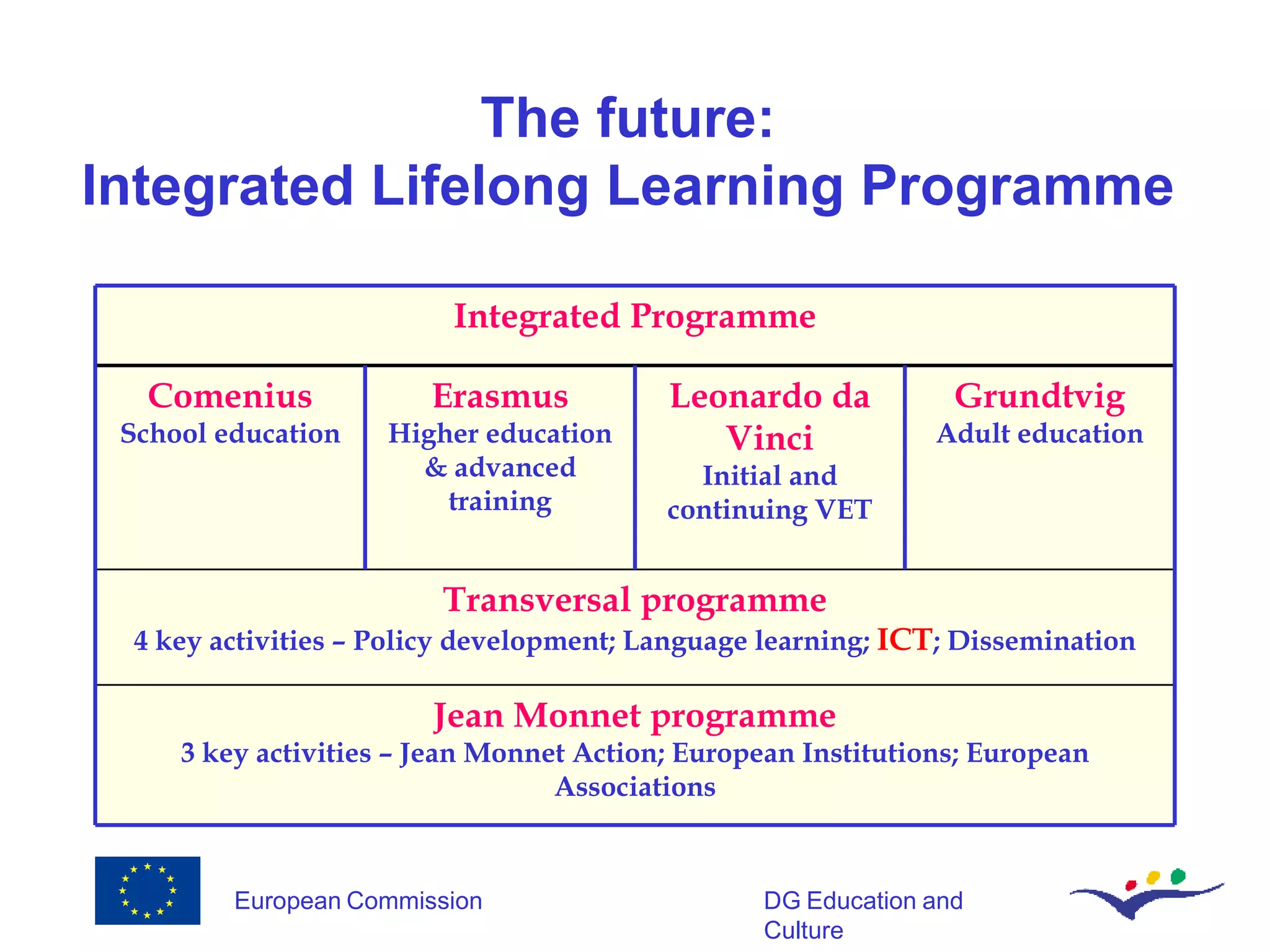
The future:  Integrated Lifelong Learning Programme  Jean Monnet programme 3 key  activities  – Jean Monnet Action; European Institutions; European Associations Transversal programme 4 key activities – Policy development; Language learning;   ICT ; Dissemination Grundtvig Adult education Leonardo da Vinci Initial and continuing VET Erasmus Higher education & advanced training Comenius School education Integrated Programme
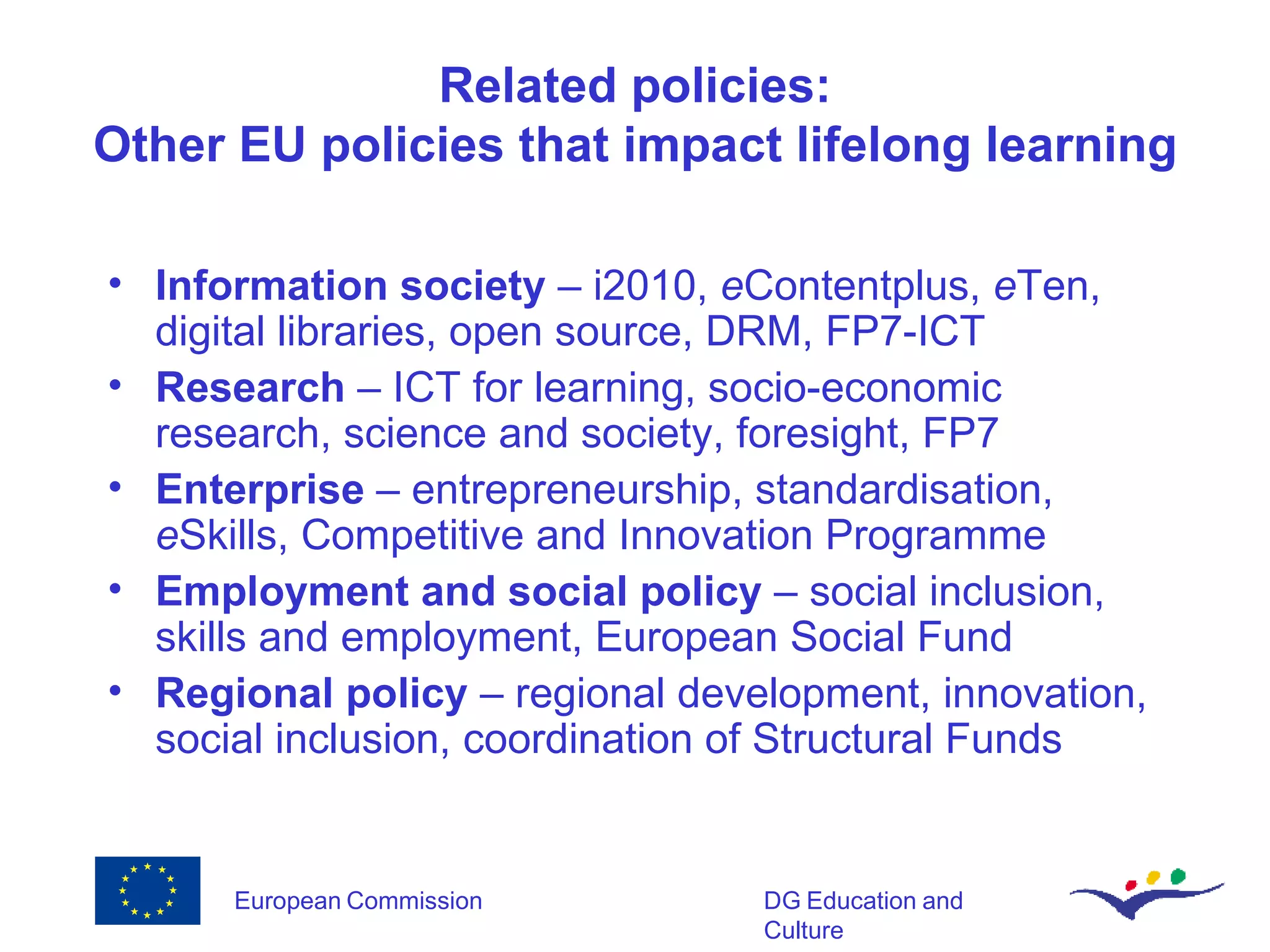
Related policies: Other EU policies that impact lifelong learning Information society  – i2010,  e Contentplus,  e Ten, digital libraries, open source, DRM, FP7-ICT Research  – ICT for learning, socio-economic research, science and society, foresight, FP7 Enterprise  – entrepreneurship, standardisation,  e Skills, Competitive and Innovation Programme Employment and social policy  – social inclusion, skills and employment, European Social Fund Regional policy  – regional development, innovation, social inclusion, coordination of Structural Funds
ICT for innovation in education Comparative analysis and intelligence Understanding innovation: an informed debate Policy development The role of education in innovation policies Innovation within education and training systems Promoting a culture of innovation Using ICT for teaching and learning innovation Innovative methods, tools and services ICT as a catalyst for innovation
Understanding i nnovation   T he successful exploitation of new ideas Innovative results are those which represent some new and distinctive features,   adding value in relation to  existing  solutions Innovative  process es  ha ve  the objective of answering the needs of new target groups and users The aim of  the  innovation transfer process is the adaptation and/or further development of  new ideas and  results  in view of their  integration into public and/or private systems , at any level Beyond all possible definitions,  innovation is an attitude
The role of education and training in innovation systems  Innovation research identify E&T systems as consistent factors of successful innovation systems and policies A distinctive feature of countries sustaining competitive and innovative firms is E&T systems providing a flow of people with the requisite knowledge, attitude and skills E&T systems have core societal roles for building successful innovation systems
The societal roles of education and training systems in innovation  Education and training systems have three fundamental roles for innovation: Teaching and valuing innovation Spotting and nurturing innovative talent Spreading a culture of innovation
ICT as an innovation enabler ICT have a potential for inducing change, they provide a reason and a time for change The basics are all in place – it is time to move ahead, to shift ICT from a goal to an engine ICT for collaborative learning and teaching, for connecting learning communities ICT for creativity, for designing new contents, methods, tools and spaces for learning ICT for supporting institutional innovation in education
Lifelong learning as innovation Lifelong learning requires re-thinking teaching and learning, considering new learning demands, contents, tools, and approaches Lifelong learning embodies and amplifies core educational tensions: quantity vs quality, structured teaching vs self-directed learning, established knowledge vs “contrary” thinking The lifelong learning paradigm is probably the most innovative concept, calling for a true transformation of  education systems Innovation can be risky and uncomfortable – but it is the only way ahead
Thank you for your attention ! e-mail  : maruja.gutierrez-diaz @ec.europa.eu

eLearning for Innovative Lifelong Learning

  • 1.
    E-COMPETENCES FOR LIFE,EMPLOYMENT AND INNOVATION Vienna 14-17 June 2006 e-learning for innovative lifelong learning Maruja Gutierrez Diaz DG Education and Culture
  • 2.
    2006-2010: Stepping upa gear The revised Lisbon Agenda: the triangle of knowledge Innovation as a key process Innovation in EU policies Innovation in education and training ICT as an enabler for innovation
  • 3.
    INNOVATION CIP 3.621mill€ RESEARCH 7th FP 54.582 mill € EDUCATION E&T 2010 6.790 mill € TOTAL COHESION 277.703 mill € CONVERGENCE 251.330 mill € COMPETITIVENESS 48.789 mill € INTERRREGIONAL COOPERATION 7.500 mill € THE TRIANGLE OF KNOWLEDGE COHESION POLICY Mid-term review of the Lisbon Agenda
  • 4.
    ICT as akey component of innovation: important presence in all major EU instruments 7th Framework programme Competitiveness and Innovation Programme i2010 Structural Funds European Regional Development Fund European Social Fund Integrated Lifelong Learning Programme ?
  • 5.
    EU Strategy andpolicy development concerning ICT in education The Lisbon Council: Education and training as key systems for the knowledge society eLearning: ICT comes of age Fostering awareness and building infrastructures Education & Training 2010: an agenda for change ICT cluster: fostering peer-learning in Europe Embedding ICT in long range educational objectives Mid-term Review of the Lisbon Strategy ILLP programme: ICT as innovation ICT communication: innovation for a learning society
  • 6.
    Education & Training2010: the new stage Re-focussing on core educational objectives Enhancing quality Increasing accessibility Connecting to society Re-visiting the open coordination method Peer-learning : clusters, focus groups, study visits Building on commonalities: European frameworks Designing new tools Integrated lifelong learning programme 2007-2013 Structured linkages with related policies: SF, FP7, i2010
  • 7.
    The future: Integrated Lifelong Learning Programme Jean Monnet programme 3 key activities – Jean Monnet Action; European Institutions; European Associations Transversal programme 4 key activities – Policy development; Language learning; ICT ; Dissemination Grundtvig Adult education Leonardo da Vinci Initial and continuing VET Erasmus Higher education & advanced training Comenius School education Integrated Programme
  • 8.
    Related policies: OtherEU policies that impact lifelong learning Information society – i2010, e Contentplus, e Ten, digital libraries, open source, DRM, FP7-ICT Research – ICT for learning, socio-economic research, science and society, foresight, FP7 Enterprise – entrepreneurship, standardisation, e Skills, Competitive and Innovation Programme Employment and social policy – social inclusion, skills and employment, European Social Fund Regional policy – regional development, innovation, social inclusion, coordination of Structural Funds
  • 9.
    ICT for innovationin education Comparative analysis and intelligence Understanding innovation: an informed debate Policy development The role of education in innovation policies Innovation within education and training systems Promoting a culture of innovation Using ICT for teaching and learning innovation Innovative methods, tools and services ICT as a catalyst for innovation
  • 10.
    Understanding i nnovation T he successful exploitation of new ideas Innovative results are those which represent some new and distinctive features, adding value in relation to existing solutions Innovative process es ha ve the objective of answering the needs of new target groups and users The aim of the innovation transfer process is the adaptation and/or further development of new ideas and results in view of their integration into public and/or private systems , at any level Beyond all possible definitions, innovation is an attitude
  • 11.
    The role ofeducation and training in innovation systems Innovation research identify E&T systems as consistent factors of successful innovation systems and policies A distinctive feature of countries sustaining competitive and innovative firms is E&T systems providing a flow of people with the requisite knowledge, attitude and skills E&T systems have core societal roles for building successful innovation systems
  • 12.
    The societal rolesof education and training systems in innovation Education and training systems have three fundamental roles for innovation: Teaching and valuing innovation Spotting and nurturing innovative talent Spreading a culture of innovation
  • 13.
    ICT as aninnovation enabler ICT have a potential for inducing change, they provide a reason and a time for change The basics are all in place – it is time to move ahead, to shift ICT from a goal to an engine ICT for collaborative learning and teaching, for connecting learning communities ICT for creativity, for designing new contents, methods, tools and spaces for learning ICT for supporting institutional innovation in education
  • 14.
    Lifelong learning asinnovation Lifelong learning requires re-thinking teaching and learning, considering new learning demands, contents, tools, and approaches Lifelong learning embodies and amplifies core educational tensions: quantity vs quality, structured teaching vs self-directed learning, established knowledge vs “contrary” thinking The lifelong learning paradigm is probably the most innovative concept, calling for a true transformation of education systems Innovation can be risky and uncomfortable – but it is the only way ahead
  • 15.
    Thank you foryour attention ! e-mail : maruja.gutierrez-diaz @ec.europa.eu

Editor's Notes

  • #16 I hope you found this presentation useful and that you are now better informed about what we are doing at a Community level to support e-learning A lot has been done , but there is still much more to be done the focus has shifted from experimentation with technology , to practice and the impact on learning Thank you!