International
Baccalaureate
Made by group 751
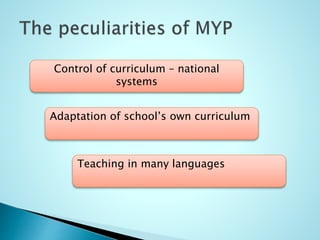
Control of curriculum – national
systems
Adaptation of school’s own curriculum
Teaching in many languages
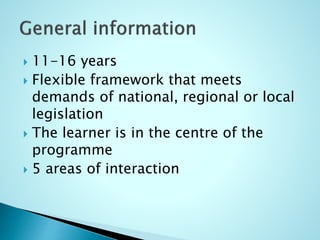
 11-16 years
 Flexible framework that meets
demands of national, regional or local
legislation
 The learner is in the centre of the
programme
 5 areas of interaction
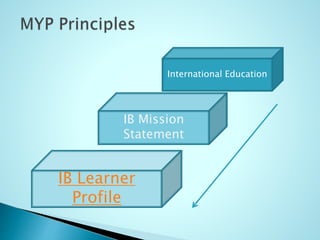
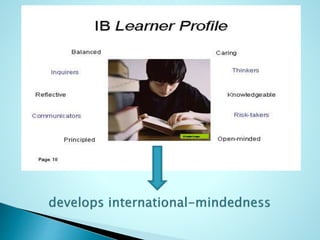
IB Learner
Profile
IB Mission
Statement
International Education
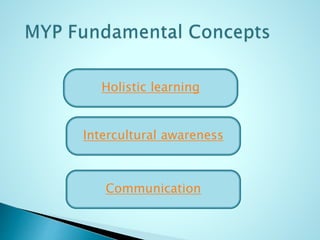
Holistic learning
Intercultural awareness
Communication
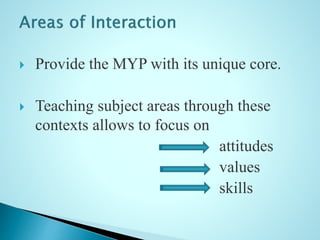
 Provide the MYP with its unique core.
 Teaching subject areas through these
contexts allows to focus on
attitudes
values
skills
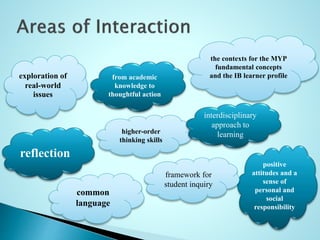
exploration of
real-world
issues
higher-order
thinking skills
from academic
knowledge to
thoughtful action
interdisciplinary
approach to
learning
the contexts for the MYP
fundamental concepts
and the IB learner profile
positive
attitudes and a
sense of
personal and
social
responsibility
reflection
common
language
framework for
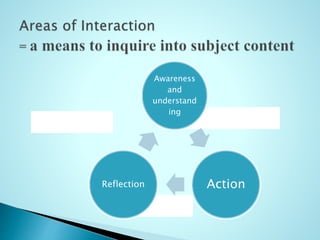
student inquiry
Awareness
and
understand
ing
ActionReflection
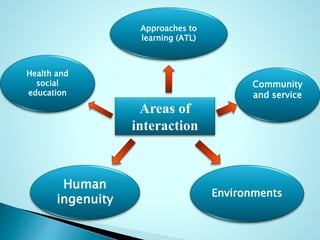
Areas of
interaction
Health and
social
education
Approaches to
learning (ATL)
Human
ingenuity
Community
and service
Environments
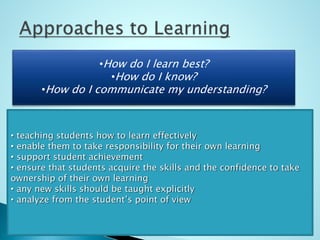
• How do I learn best?
• How do I know?
• How do I communicate my understanding?
•How do I learn best?
•How do I know?
•How do I communicate my understanding?
• teaching students how to learn effectively
• enable them to take responsibility for their own learning
• support student achievement
• ensure that students acquire the skills and the confidence to take
ownership of their own learning
• any new skills should be taught explicitly
• analyze from the student’s point of view
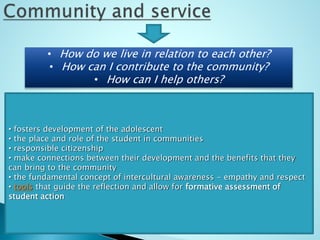
• How do we live in relation to each other?
• How can I contribute to the community?
• How can I help others?
• fosters development of the adolescent
• the place and role of the student in communities
• responsible citizenship
• make connections between their development and the benefits that they
can bring to the community
• the fundamental concept of intercultural awareness - empathy and respect
• tools that guide the reflection and allow for formative assessment of
student action
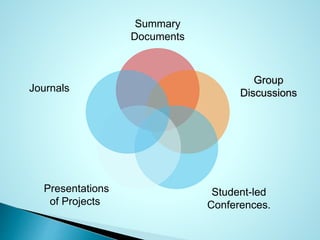
Summary
Documents
Group
Discussions
Student-led
Conferences.
Presentations
of Projects
Journals
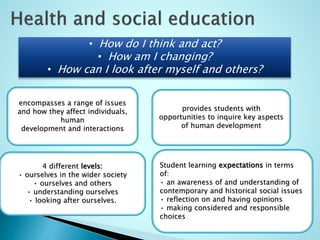
encompasses a range of issues
and how they affect individuals,
human
development and interactions
provides students with
opportunities to inquire key aspects
of human development
4 different levels:
• ourselves in the wider society
• ourselves and others
• understanding ourselves
• looking after ourselves.
Student learning expectations in terms
of:
• an awareness of and understanding of
contemporary and historical social issues
• reflection on and having opinions
• making considered and responsible
choices
• How do I think and act?
• How am I changing?
• How can I look after myself and others?
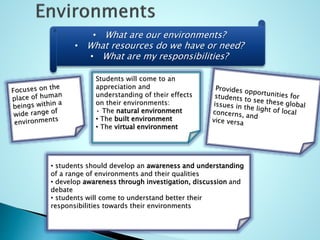
• What are our environments?
• What resources do we have or need?
• What are my responsibilities?
Students will come to an
appreciation and
understanding of their effects
on their environments:
• The natural environment
• The built environment
• The virtual environment
• students should develop an awareness and understanding
of a range of environments and their qualities
• develop awareness through investigation, discussion and
debate
• students will come to understand better their
responsibilities towards their environments
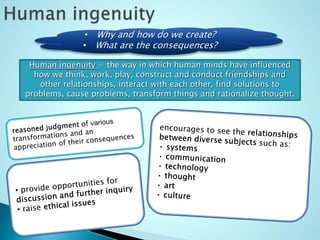
• Why and how do we create?
• What are the consequences?
Human ingenuity = the way in which human minds have influenced
how we think, work, play, construct and conduct friendships and
other relationships, interact with each other, find solutions to
problems, cause problems, transform things and rationalize thought.
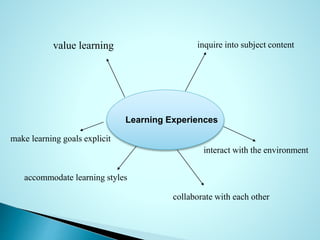
Learning Experiences
value learning
make learning goals explicit
accommodate learning styles
collaborate with each other
inquire into subject content
interact with the environment
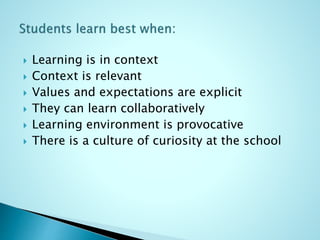
 Learning is in context
 Context is relevant
 Values and expectations are explicit
 They can learn collaboratively
 Learning environment is provocative
 There is a culture of curiosity at the school
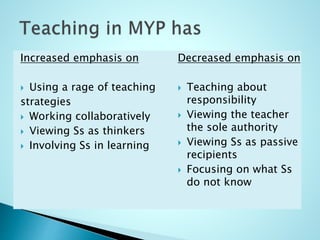
Increased emphasis on
 Using a rage of teaching
strategies
 Working collaboratively
 Viewing Ss as thinkers
 Involving Ss in learning
Decreased emphasis on
 Teaching about
responsibility
 Viewing the teacher
the sole authority
 Viewing Ss as passive
recipients
 Focusing on what Ss
do not know
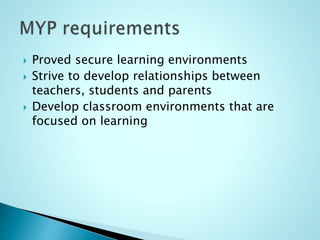
 Proved secure learning environments
 Strive to develop relationships between
teachers, students and parents
 Develop classroom environments that are
focused on learning
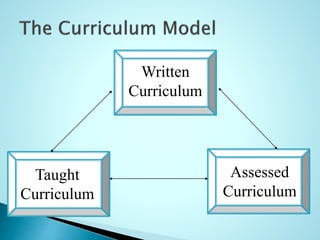
Written
Curriculum
Taught
Curriculum
Assessed
Curriculum
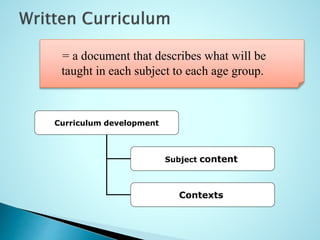
= a document that describes what will be
taught in each subject to each age group.
Curriculum development
Subject content
Contexts
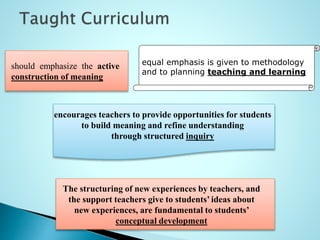
equal emphasis is given to methodology
and to planning teaching and learning
should emphasize the active
construction of meaning
encourages teachers to provide opportunities for students
to build meaning and refine understanding
through structured inquiry
The structuring of new experiences by teachers, and
the support teachers give to students’ ideas about
new experiences, are fundamental to students’
conceptual development
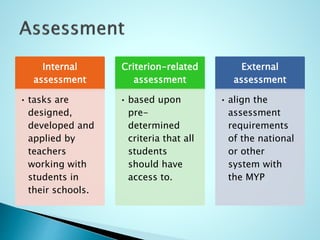
Internal
assessment
• tasks are
designed,
developed and
applied by
teachers
working with
students in
their schools.
Criterion-related
assessment
• based upon
pre-
determined
criteria that all
students
should have
access to.
External
assessment
• align the
assessment
requirements
of the national
or other
system with
the MYP
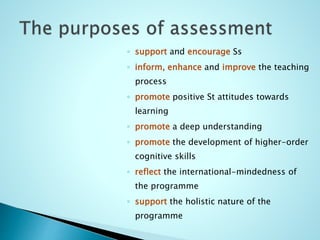
◦ support and encourage Ss
◦ inform, enhance and improve the teaching
process
◦ promote positive St attitudes towards
learning
◦ promote a deep understanding
◦ promote the development of higher-order
cognitive skills
◦ reflect the international-mindedness of
the programme
◦ support the holistic nature of the
programme
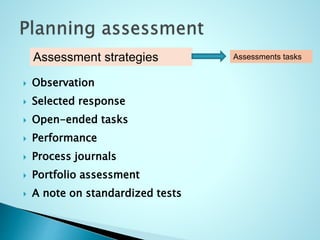
 Observation
 Selected response
 Open-ended tasks
 Performance
 Process journals
 Portfolio assessment
 A note on standardized tests
Assessment strategies Assessments tasks
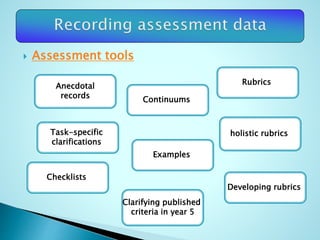
 Assessment tools
Anecdotal
records
Task-specific
clarifications
Checklists
Continuums
Rubrics
Examples
holistic rubrics
Developing rubrics
Clarifying published
criteria in year 5
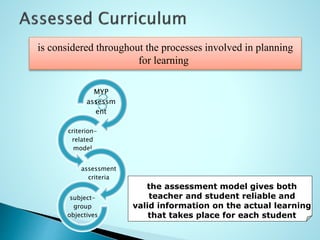
is considered throughout the processes involved in planning
for learning
the assessment model gives both
teacher and student reliable and
valid information on the actual learning
that takes place for each student
MYP
assessm
ent
criterion-
related
model
assessment
criteria
subject-
group
objectives
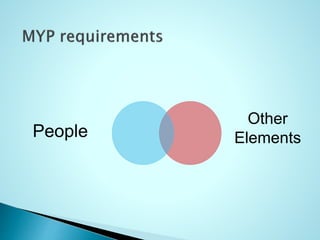
Other
ElementsPeople
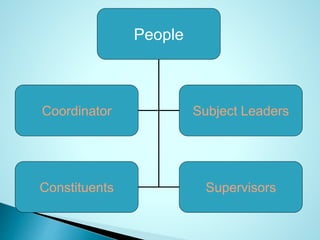
People
Coordinator Subject Leaders
Constituents Supervisors
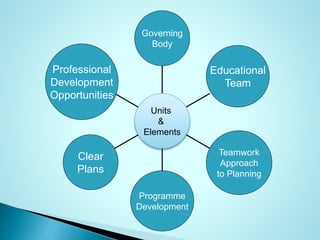
Professional
Development
Opportunities
Clear
Plans
Programme
Development
Teamwork
Approach
to Planning
Educational
Team
Governing
Body
Units
&
Elements
IB Middle Years Programme

IB Middle Years Programme

  • 1.
  • 2.
    Control of curriculum– national systems Adaptation of school’s own curriculum Teaching in many languages
  • 3.
     11-16 years Flexible framework that meets demands of national, regional or local legislation  The learner is in the centre of the programme  5 areas of interaction
  • 4.
  • 6.
  • 7.
     Provide theMYP with its unique core.  Teaching subject areas through these contexts allows to focus on attitudes values skills
  • 8.
    exploration of real-world issues higher-order thinking skills fromacademic knowledge to thoughtful action interdisciplinary approach to learning the contexts for the MYP fundamental concepts and the IB learner profile positive attitudes and a sense of personal and social responsibility reflection common language framework for student inquiry
  • 9.
  • 10.
    Areas of interaction Health and social education Approachesto learning (ATL) Human ingenuity Community and service Environments
  • 11.
    • How doI learn best? • How do I know? • How do I communicate my understanding? •How do I learn best? •How do I know? •How do I communicate my understanding? • teaching students how to learn effectively • enable them to take responsibility for their own learning • support student achievement • ensure that students acquire the skills and the confidence to take ownership of their own learning • any new skills should be taught explicitly • analyze from the student’s point of view
  • 12.
    • How dowe live in relation to each other? • How can I contribute to the community? • How can I help others? • fosters development of the adolescent • the place and role of the student in communities • responsible citizenship • make connections between their development and the benefits that they can bring to the community • the fundamental concept of intercultural awareness - empathy and respect • tools that guide the reflection and allow for formative assessment of student action
  • 13.
  • 14.
    encompasses a rangeof issues and how they affect individuals, human development and interactions provides students with opportunities to inquire key aspects of human development 4 different levels: • ourselves in the wider society • ourselves and others • understanding ourselves • looking after ourselves. Student learning expectations in terms of: • an awareness of and understanding of contemporary and historical social issues • reflection on and having opinions • making considered and responsible choices • How do I think and act? • How am I changing? • How can I look after myself and others?
  • 15.
    • What areour environments? • What resources do we have or need? • What are my responsibilities? Students will come to an appreciation and understanding of their effects on their environments: • The natural environment • The built environment • The virtual environment • students should develop an awareness and understanding of a range of environments and their qualities • develop awareness through investigation, discussion and debate • students will come to understand better their responsibilities towards their environments
  • 16.
    • Why andhow do we create? • What are the consequences? Human ingenuity = the way in which human minds have influenced how we think, work, play, construct and conduct friendships and other relationships, interact with each other, find solutions to problems, cause problems, transform things and rationalize thought.
  • 17.
    Learning Experiences value learning makelearning goals explicit accommodate learning styles collaborate with each other inquire into subject content interact with the environment
  • 18.
     Learning isin context  Context is relevant  Values and expectations are explicit  They can learn collaboratively  Learning environment is provocative  There is a culture of curiosity at the school
  • 19.
    Increased emphasis on Using a rage of teaching strategies  Working collaboratively  Viewing Ss as thinkers  Involving Ss in learning Decreased emphasis on  Teaching about responsibility  Viewing the teacher the sole authority  Viewing Ss as passive recipients  Focusing on what Ss do not know
  • 20.
     Proved securelearning environments  Strive to develop relationships between teachers, students and parents  Develop classroom environments that are focused on learning
  • 22.
  • 23.
    = a documentthat describes what will be taught in each subject to each age group. Curriculum development Subject content Contexts
  • 24.
    equal emphasis isgiven to methodology and to planning teaching and learning should emphasize the active construction of meaning encourages teachers to provide opportunities for students to build meaning and refine understanding through structured inquiry The structuring of new experiences by teachers, and the support teachers give to students’ ideas about new experiences, are fundamental to students’ conceptual development
  • 25.
    Internal assessment • tasks are designed, developedand applied by teachers working with students in their schools. Criterion-related assessment • based upon pre- determined criteria that all students should have access to. External assessment • align the assessment requirements of the national or other system with the MYP
  • 26.
    ◦ support andencourage Ss ◦ inform, enhance and improve the teaching process ◦ promote positive St attitudes towards learning ◦ promote a deep understanding ◦ promote the development of higher-order cognitive skills ◦ reflect the international-mindedness of the programme ◦ support the holistic nature of the programme
  • 27.
     Observation  Selectedresponse  Open-ended tasks  Performance  Process journals  Portfolio assessment  A note on standardized tests Assessment strategies Assessments tasks
  • 28.
  • 29.
    is considered throughoutthe processes involved in planning for learning the assessment model gives both teacher and student reliable and valid information on the actual learning that takes place for each student MYP assessm ent criterion- related model assessment criteria subject- group objectives
  • 30.
  • 31.
  • 32.