Primary Years
 Programme
International Baccalaureate


      General
     Regulations
Scope
The International Baccalaureate Organization
 is a foundation that has developed and offers
 three programmes of international
 education:
 “Primary Years Programme” (PYP)
 the “Middle Years Programme” (MYP)
 “Diploma Programme”
An “IB World
  School”
• school, that has been authorized
 by the IB Organization to offer
 one or more of its programmes.
The purposes of the PYP
   scope and sequence
    documents are to:
 provide a tool to inform the whole school
 community about teaching and learning
 in each subject area
 make transparent the essential elements
 of the PYP in the context of the subject
 areas
 clarify the role of the subject areas in a
 transdisciplinary programme
What it means to be an
  IB World School
 The importance of the learner is
  in the centre of educational
  process
 The schools curriculum includes
  all student activities
 The outward and forward
  thinking school
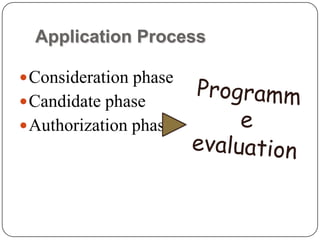
Application Process

 Consideration phase
 Candidate phase
 Authorization phase
Does the Role of the Pedagogical
Leadership Team Change over
Time?
     Time-consuming
     Dread, inertia, fatigue, cynicism,
     of insight, enthusiasm need to be
     managed


       To meet all the
     requirements of the
         programme
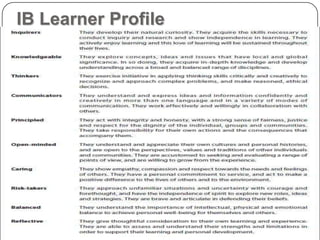
IB Learner Profile
Role and Responsibilities of
         Schools
Role and Responsibilities of
Schools
 Conform to the Rules for IB World Schools:
  PYP
 Follow the Education Programme aimed at
  Ss in the 3-12 age group.
 Schools are self-sustained for quality of
  teaching of the PYP.
 Schools should inform the trustees of the
  PYP and how the school realizes it.
 The IB organization does not guarantee that
  a school will remain capable to implement
  the PYP.
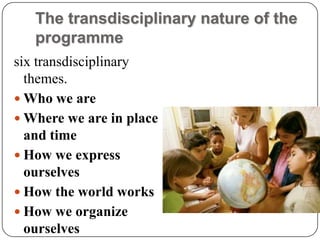
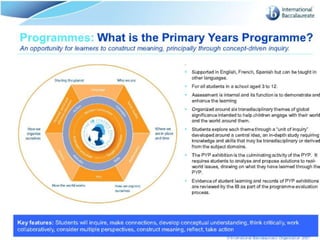
The transdisciplinary nature of the
   programme
six transdisciplinary
  themes.
 Who we are
 Where we are in place
  and time
 How we express
  ourselves
 How the world works
 How we organize
  ourselves
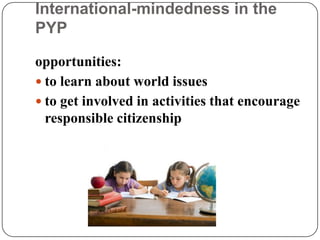
International-mindedness in the
PYP

opportunities:
 to learn about world issues
 to get involved in activities that encourage
  responsible citizenship
How do we choose to
communicate information about
assessment?
 Assessment without feedback is merely
  judgment
 Feedback is the component of assessment
  that lets us interpret the judgment and
  improve our work.
Assessment as feedback
The teacher needs to consider:
 if the nature of students’ inquiry develops over
  nature
 if students are becoming aware that real
  problems require solutions based on the
  integration of knowledge that spans and connects
  many subject areas
 if students are demonstrating mastery of skills
  and an accumulation of a comprehensive
  knowledge base to enable them to conduct their
  inquiries successfully, find solutions and solve
  problems
 if students are demonstrating both independence
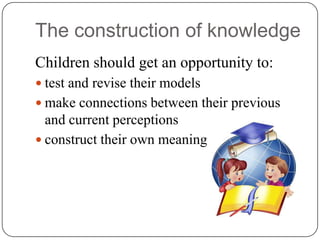
The construction of knowledge
Children should get an opportunity to:
 test and revise their models
 make connections between their previous
  and current perceptions
 construct their own meaning
Inquiry as a pedagogical approach

 exploring, wondering and questioning
 experimenting and playing with possibilities
 making connections between previous learning and
  current learning
 making predictions and acting purposefully to see
  what happens
 collecting data and reporting findings
 clarifying existing ideas and reappraising
  perceptions of events
 deepening understanding through the application
  of a concept
 making and testing theories
 researching and seeking information
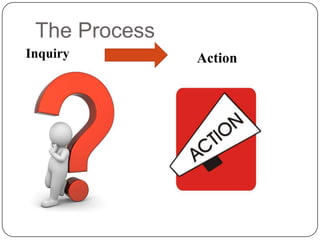
The Process
Inquiry        Action
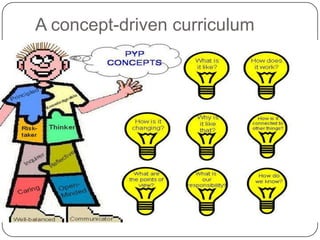
A concept-driven curriculum
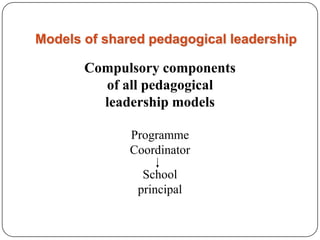
Models of shared pedagogical leadership

       Compulsory components
         of all pedagogical
         leadership models

              Programme
              Coordinator
                School
               principal
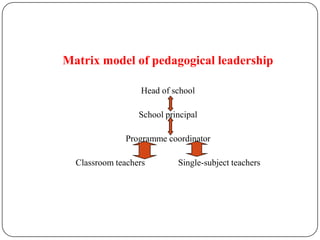
Matrix model of pedagogical leadership

                  Head of school

                  School principal

               Programme coordinator

  Classroom teachers        Single-subject teachers
Responsibilities of the pedagogical leadership
                      team
                  The school should:
 identify and train teachers to take on
  responsibilities for pedagogical leadership
 develop, in collaboration with specific interest
  groups, a clear, long-term strategic plan, with
  actions and a timeline for its implementation
 develop and implement the school language policy
 develop and implement the school assessment
  policy.
To support the students,the school should:
 ensure that the curriculum promotes students
  making connections, thinking conceptually
  and
 critically, and reflecting on their own
  learning
 ensure support is available for students with
  diagnosed special needs
 ensure the balance between
  transdisciplinary and disciplinary learning
 ensure that the knowledge component of the
  school curriculum is worth knowing
PYP
(Primary Years Programme)
    A Curriculum Framework for
       International Primary
             Education,
      created by International
           Baccalaureate
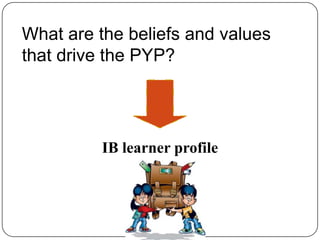
What are the beliefs and values
that drive the PYP?


         IB learner profile
What is curriculum?
 all students should be supported to
  participate in the programme to the fullest
  extent possible
 the school’s curriculum includes all those
  student activities, academic and non-
  academic, for which the school takes
  responsibility, since they all have an impact
  on student learning
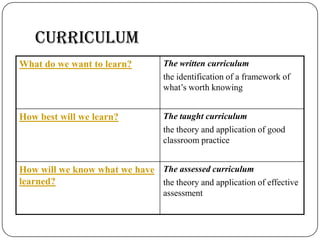
Curriculum
What do we want to learn?          The written curriculum
                                   the identification of a framework of
                                   what’s worth knowing


How best will we learn?            The taught curriculum
                                   the theory and application of good
                                   classroom practice


How will we know what we have The assessed curriculum
learned?                      the theory and application of effective
                                   assessment
What do we want to learn?
Essential elements of the written curriculum


   Knowledge
   Concepts
   Skills
   Attitudes
   Action
How best will we learn?


                 Inquiry
   Planning (list of learning objectives)
   ICT (information and communication
               technologies)
How will we know what we have
learned?


                Assessment
     ! feedback on the learning process
Points for consideration
 if the nature of students’ inquiry develops over
  time—if they are asking questions of more depth
 if students are becoming aware that real problems
  require solutions based on the integration of
  knowledge that spans and connects many areas
 if students are demonstrating mastery of skills
 if students are accumulating a comprehensive
  knowledge base and can apply their understanding
  to further their inquiries successfully
 if students are demonstrating both independence
  and an ability to work collaboratively
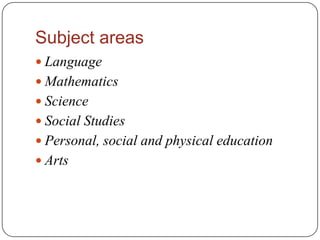
Subject areas
 Language
 Mathematics
 Science
 Social Studies
 Personal, social and physical education
 Arts
Pyp

Pyp

  • 1.
  • 2.
    International Baccalaureate General Regulations
  • 3.
    Scope The International BaccalaureateOrganization is a foundation that has developed and offers three programmes of international education:  “Primary Years Programme” (PYP)  the “Middle Years Programme” (MYP)  “Diploma Programme”
  • 4.
    An “IB World School” • school, that has been authorized by the IB Organization to offer one or more of its programmes.
  • 5.
    The purposes ofthe PYP scope and sequence documents are to:  provide a tool to inform the whole school community about teaching and learning in each subject area  make transparent the essential elements of the PYP in the context of the subject areas  clarify the role of the subject areas in a transdisciplinary programme
  • 6.
    What it meansto be an IB World School
  • 7.
     The importanceof the learner is in the centre of educational process  The schools curriculum includes all student activities  The outward and forward thinking school
  • 8.
    Application Process  Considerationphase  Candidate phase  Authorization phase
  • 9.
    Does the Roleof the Pedagogical Leadership Team Change over Time?  Time-consuming  Dread, inertia, fatigue, cynicism, of insight, enthusiasm need to be managed To meet all the requirements of the programme
  • 10.
  • 11.
  • 12.
    Role and Responsibilitiesof Schools  Conform to the Rules for IB World Schools: PYP  Follow the Education Programme aimed at Ss in the 3-12 age group.  Schools are self-sustained for quality of teaching of the PYP.  Schools should inform the trustees of the PYP and how the school realizes it.  The IB organization does not guarantee that a school will remain capable to implement the PYP.
  • 13.
    The transdisciplinary natureof the programme six transdisciplinary themes.  Who we are  Where we are in place and time  How we express ourselves  How the world works  How we organize ourselves
  • 14.
    International-mindedness in the PYP opportunities: to learn about world issues  to get involved in activities that encourage responsible citizenship
  • 15.
    How do wechoose to communicate information about assessment?  Assessment without feedback is merely judgment  Feedback is the component of assessment that lets us interpret the judgment and improve our work.
  • 16.
    Assessment as feedback Theteacher needs to consider:  if the nature of students’ inquiry develops over nature  if students are becoming aware that real problems require solutions based on the integration of knowledge that spans and connects many subject areas  if students are demonstrating mastery of skills and an accumulation of a comprehensive knowledge base to enable them to conduct their inquiries successfully, find solutions and solve problems  if students are demonstrating both independence
  • 17.
    The construction ofknowledge Children should get an opportunity to:  test and revise their models  make connections between their previous and current perceptions  construct their own meaning
  • 18.
    Inquiry as apedagogical approach  exploring, wondering and questioning  experimenting and playing with possibilities  making connections between previous learning and current learning  making predictions and acting purposefully to see what happens  collecting data and reporting findings  clarifying existing ideas and reappraising perceptions of events  deepening understanding through the application of a concept  making and testing theories  researching and seeking information
  • 19.
  • 20.
  • 21.
    Models of sharedpedagogical leadership Compulsory components of all pedagogical leadership models Programme Coordinator School principal
  • 22.
    Matrix model ofpedagogical leadership Head of school School principal Programme coordinator Classroom teachers Single-subject teachers
  • 23.
    Responsibilities of thepedagogical leadership team The school should:  identify and train teachers to take on responsibilities for pedagogical leadership  develop, in collaboration with specific interest groups, a clear, long-term strategic plan, with actions and a timeline for its implementation  develop and implement the school language policy  develop and implement the school assessment policy.
  • 24.
    To support thestudents,the school should:  ensure that the curriculum promotes students making connections, thinking conceptually and  critically, and reflecting on their own learning  ensure support is available for students with diagnosed special needs  ensure the balance between transdisciplinary and disciplinary learning  ensure that the knowledge component of the school curriculum is worth knowing
  • 25.
    PYP (Primary Years Programme) A Curriculum Framework for International Primary Education, created by International Baccalaureate
  • 26.
    What are thebeliefs and values that drive the PYP? IB learner profile
  • 27.
    What is curriculum? all students should be supported to participate in the programme to the fullest extent possible  the school’s curriculum includes all those student activities, academic and non- academic, for which the school takes responsibility, since they all have an impact on student learning
  • 28.
    Curriculum What do wewant to learn? The written curriculum the identification of a framework of what’s worth knowing How best will we learn? The taught curriculum the theory and application of good classroom practice How will we know what we have The assessed curriculum learned? the theory and application of effective assessment
  • 29.
    What do wewant to learn? Essential elements of the written curriculum  Knowledge  Concepts  Skills  Attitudes  Action
  • 30.
    How best willwe learn? Inquiry Planning (list of learning objectives) ICT (information and communication technologies)
  • 31.
    How will weknow what we have learned? Assessment ! feedback on the learning process
  • 32.
    Points for consideration if the nature of students’ inquiry develops over time—if they are asking questions of more depth  if students are becoming aware that real problems require solutions based on the integration of knowledge that spans and connects many areas  if students are demonstrating mastery of skills  if students are accumulating a comprehensive knowledge base and can apply their understanding to further their inquiries successfully  if students are demonstrating both independence and an ability to work collaboratively
  • 33.
    Subject areas  Language Mathematics  Science  Social Studies  Personal, social and physical education  Arts