Classroom Management for Substitute Teachers Presented by: Steven Vitto, M.A. Behavior Specialist
What makes a good substitute teacher? Patience Planning Realistic Relatedness Dynamic Bringing your own Bag of Tricks Transition Planning Identification of Strengths Patience
Self-Control vs.  External Control   The peanut butter sandwich punishment An awareness of why your presence will be problematic for some kids An awareness of triggers or setting events An aware of diffusion and de-escalation techniques
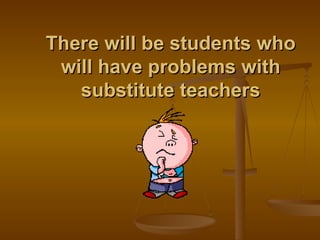
There will be students who will have problems with substitute teachers
ATTACHMENT DISORDER OPPOSITIONAL DEFIANCE DISORDER CONDUCT DISORDER ATTENTION DEFICIT HYPERACTIVITY DISORDER EMOTIONAL IMPAIRMENT ANXIETY DISORDERS FETAL ALCOHOL SYNDROME ASPERGERS SYNDROME Conditions Effecting Behavior
The 1-7% We take them home with us every day. Our family knows them without ever having met them. We dream about them. They learn how to push our buttons. They can take us down a road we don’t want to travel. They make us think that maybe we should have gone into marketing or real estate. They are extremely difficult to like at times…
Our most challenging children May not respond to traditional consequences Will require more support and change on our part Will need a significant positive relationship at school Will need another way to find acceptance in the school environment May be resistant to strategies to develop self control
To Reach the 1-7%  Abandon ineffective practices. Resist inclination to exclude. Separate what the child deserves and what he needs. Realize that he/she needs our support and forgiveness the most. Reframe who they are. Think “outside the box.” Abandon expectation of a quick fix Need a 7:1 reinforcement ratio, with meaningful incentives Need peer support. Need to undermine harmful mentors
Best Practice Supports for Challenging Students Building Relationships/Connecting Building Trust Building self-control Absence of threat Building Community Consistency and Predictability Diffusion Strategies Knowing Setting Events Individualizing
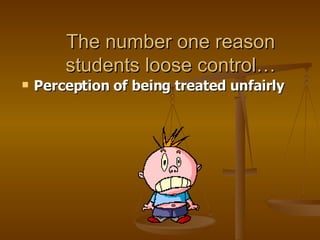
The number one reason students loose control… Perception of being treated unfairly
Stages of Crisis Development Anxiety Defensive Acting Out Tension Reduction
Setting Limits Simple and Concise Reasonable Enforceable
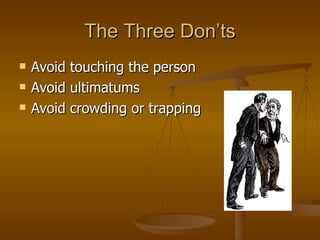
The Three Don’ts Avoid touching the person Avoid ultimatums Avoid crowding or trapping
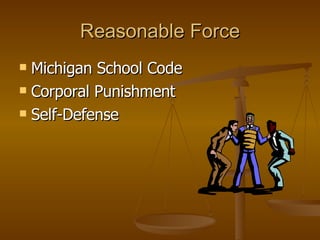
Reasonable Force Michigan School Code Corporal Punishment Self-Defense
What is Oppositional Defiance Disorder? ODD is a persistent pattern (lasting for at least six months) of negativistic, hostile, disobedient, and defiant behavior in a child or teen without serious violation of the basic rights of others.
Students with conduct disorder engage in deliberate acts of self-interest to gain attention or to intimidate others.  They experience no distress or self-devaluation or internalized distress.
Emotional Impairment MET Form Continued The problem result in behaviors manifested by 1 or more of the following: (A) An inability to build or maintain satisfactory interpersonal relationships with peers and teachers. (B) Inappropriate types of behavior or feelings under normal circumstances. (C) A general pervasive mood of unhappiness or depression. (D) A tendency to develop physical symptoms or fears associated with personal or school problems.
For the child with an Emotional Impairment, diffusing a crisis will often involve reducing anxiety.  For the child with Conduct Disorder and effective response should increase anxiety
Our Need for Power and Control
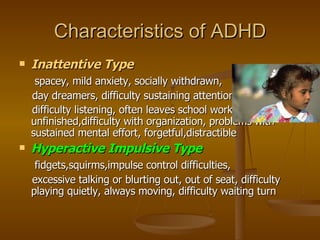
Characteristics of ADHD Inattentive Type spacey, mild anxiety, socially withdrawn,  day dreamers, difficulty sustaining attention, difficulty listening, often leaves school work unfinished,difficulty with organization, problems with sustained mental effort, forgetful,distractible Hyperactive Impulsive Type fidgets,squirms,impulse control difficulties, excessive talking or blurting out, out of seat, difficulty playing quietly, always moving, difficulty waiting turn
ADHD “ That energy which makes the child hard to manage, is the energy, which makes him a manager of life.” “ Just when I thought about not doing something, I already did it.” Logo seen on T-shirt for ADHD adult “ They say I have ADHD, did you see that  chicken go by?”
“ If you know why, you can figure out how….” W. Edward Deming
 
“ Just the facts, mam.”
Needs Attention  Escape/Avoidance Power and Control Seeking Anger/Frustration Sensory Stimulation Tangible
Behavior Plan Proactive Strategies Reinforcement Strategies Reactive Strategies Method for taking Data
Preventative Strategies Bag of Tricks Transition and Quieting Strategies Always follow the teachers lesson plans Try to review material that is unfamiliar Make a discipline plan Develop procedures and expectations Stay calm and positive Be informative and inviting rather than authoritarian and confrontive
General Approach Strategies for the Oppositional Student Avoid Ultimatums Avoid drawing the line in the sand Avoid social disapproval and negative reprimands Avoid Warning and Counting Prompts Avoid rules that challenge (“ Don’t spit on the side walk”) Avoid reverse psychology Avoid punishment and exclusion Avoid emotional  reactions Avoid bullying or external control strategies Avoid arbitrary or inconsistent consequences between staff
Recommended General Strategies for the oppositional student Provide choices Provide adequate response time Provide consistency and predictability Provide a calm, neutral approach Encourage ownership in development of plan Provide appropriate opportunities for control Work at building relationships Work at breaking down the walls Provide meaningful incentives Provide consistent and reasonable consequences
Reactive Strategies What to do when the behavior occurs. Should be: Effective at reducing the behavior Supportive and therapeutic Respectful and never degrade or humiliate Typically addresses staff behavior
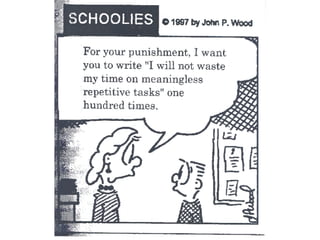
Problems with Punishment Punishment focuses on external control  but does little to teach internal control. Punishment does not teach the child how to meet needs previously being served by the target behavior. Punishment backfires with students who are oppositional and defiant. Punishment often triggers an escalation of behavior and may elicit tantrums and aggression. Punishment models a type of authority that resolves conflict by power and inflicting discomfort or pain. Punishment is a quick term-fix that takes much less time than to teach the child betters ways of behaving. Research has shown that punishment strategies have poor transferability. Punishment is inconsistent with the concept of mutual respect. Punishment often excludes and isolates a child when teaching and support is needed most.
 
Consequences Decrease the efficiency of the target behavior while maintaining dignity and an atmosphere of caring Never degrade or humiliate Logically relate to the target behavior Do not cause more of a problem than the problem they are addressing Establishes conditions for learning alternative skills Decreases the frequency, duration, and/or intensity of the target behavior
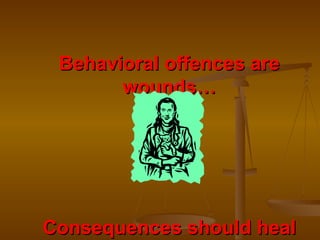
Behavioral offences are wounds… Consequences should heal
“ If you treat an individual as he is, he will stay as he is, but if you treat him as if he were what he ought to be and could be he will become what he ought to be and could be.”   Wolfgang Goethe
For More Information on Positive Approaches for challenging behavior or having Steve present at your school, Write Steve Vitto at  [email_address] Or call him at 231-767-7279 Or send for Steve’s Book,  In Search of a Heart, Creating Caring, Conscience, and Character in All Kid  (A text in using positive a relationship driven approaches for all children), Copyright, 2007 This 450 page text contains researched based methods for implementing positive classroom management  strategies and treating children with severe behavior challenges (Cost: $30.00) This book is also available on audio tape and Audio CD

Classroom Management For Substitute Teachers by SVitto

  • 1.
    Classroom Management forSubstitute Teachers Presented by: Steven Vitto, M.A. Behavior Specialist
  • 2.
    What makes agood substitute teacher? Patience Planning Realistic Relatedness Dynamic Bringing your own Bag of Tricks Transition Planning Identification of Strengths Patience
  • 3.
    Self-Control vs. External Control The peanut butter sandwich punishment An awareness of why your presence will be problematic for some kids An awareness of triggers or setting events An aware of diffusion and de-escalation techniques
  • 4.
    There will bestudents who will have problems with substitute teachers
  • 5.
    ATTACHMENT DISORDER OPPOSITIONALDEFIANCE DISORDER CONDUCT DISORDER ATTENTION DEFICIT HYPERACTIVITY DISORDER EMOTIONAL IMPAIRMENT ANXIETY DISORDERS FETAL ALCOHOL SYNDROME ASPERGERS SYNDROME Conditions Effecting Behavior
  • 6.
    The 1-7% Wetake them home with us every day. Our family knows them without ever having met them. We dream about them. They learn how to push our buttons. They can take us down a road we don’t want to travel. They make us think that maybe we should have gone into marketing or real estate. They are extremely difficult to like at times…
  • 7.
    Our most challengingchildren May not respond to traditional consequences Will require more support and change on our part Will need a significant positive relationship at school Will need another way to find acceptance in the school environment May be resistant to strategies to develop self control
  • 8.
    To Reach the1-7% Abandon ineffective practices. Resist inclination to exclude. Separate what the child deserves and what he needs. Realize that he/she needs our support and forgiveness the most. Reframe who they are. Think “outside the box.” Abandon expectation of a quick fix Need a 7:1 reinforcement ratio, with meaningful incentives Need peer support. Need to undermine harmful mentors
  • 9.
    Best Practice Supportsfor Challenging Students Building Relationships/Connecting Building Trust Building self-control Absence of threat Building Community Consistency and Predictability Diffusion Strategies Knowing Setting Events Individualizing
  • 10.
    The number onereason students loose control… Perception of being treated unfairly
  • 11.
    Stages of CrisisDevelopment Anxiety Defensive Acting Out Tension Reduction
  • 12.
    Setting Limits Simpleand Concise Reasonable Enforceable
  • 13.
    The Three Don’tsAvoid touching the person Avoid ultimatums Avoid crowding or trapping
  • 14.
    Reasonable Force MichiganSchool Code Corporal Punishment Self-Defense
  • 15.
    What is OppositionalDefiance Disorder? ODD is a persistent pattern (lasting for at least six months) of negativistic, hostile, disobedient, and defiant behavior in a child or teen without serious violation of the basic rights of others.
  • 16.
    Students with conductdisorder engage in deliberate acts of self-interest to gain attention or to intimidate others. They experience no distress or self-devaluation or internalized distress.
  • 17.
    Emotional Impairment METForm Continued The problem result in behaviors manifested by 1 or more of the following: (A) An inability to build or maintain satisfactory interpersonal relationships with peers and teachers. (B) Inappropriate types of behavior or feelings under normal circumstances. (C) A general pervasive mood of unhappiness or depression. (D) A tendency to develop physical symptoms or fears associated with personal or school problems.
  • 18.
    For the childwith an Emotional Impairment, diffusing a crisis will often involve reducing anxiety. For the child with Conduct Disorder and effective response should increase anxiety
  • 19.
    Our Need forPower and Control
  • 20.
    Characteristics of ADHDInattentive Type spacey, mild anxiety, socially withdrawn, day dreamers, difficulty sustaining attention, difficulty listening, often leaves school work unfinished,difficulty with organization, problems with sustained mental effort, forgetful,distractible Hyperactive Impulsive Type fidgets,squirms,impulse control difficulties, excessive talking or blurting out, out of seat, difficulty playing quietly, always moving, difficulty waiting turn
  • 21.
    ADHD “ Thatenergy which makes the child hard to manage, is the energy, which makes him a manager of life.” “ Just when I thought about not doing something, I already did it.” Logo seen on T-shirt for ADHD adult “ They say I have ADHD, did you see that chicken go by?”
  • 22.
    “ If youknow why, you can figure out how….” W. Edward Deming
  • 23.
  • 24.
    “ Just thefacts, mam.”
  • 25.
    Needs Attention Escape/Avoidance Power and Control Seeking Anger/Frustration Sensory Stimulation Tangible
  • 26.
    Behavior Plan ProactiveStrategies Reinforcement Strategies Reactive Strategies Method for taking Data
  • 27.
    Preventative Strategies Bagof Tricks Transition and Quieting Strategies Always follow the teachers lesson plans Try to review material that is unfamiliar Make a discipline plan Develop procedures and expectations Stay calm and positive Be informative and inviting rather than authoritarian and confrontive
  • 28.
    General Approach Strategiesfor the Oppositional Student Avoid Ultimatums Avoid drawing the line in the sand Avoid social disapproval and negative reprimands Avoid Warning and Counting Prompts Avoid rules that challenge (“ Don’t spit on the side walk”) Avoid reverse psychology Avoid punishment and exclusion Avoid emotional reactions Avoid bullying or external control strategies Avoid arbitrary or inconsistent consequences between staff
  • 29.
    Recommended General Strategiesfor the oppositional student Provide choices Provide adequate response time Provide consistency and predictability Provide a calm, neutral approach Encourage ownership in development of plan Provide appropriate opportunities for control Work at building relationships Work at breaking down the walls Provide meaningful incentives Provide consistent and reasonable consequences
  • 30.
    Reactive Strategies Whatto do when the behavior occurs. Should be: Effective at reducing the behavior Supportive and therapeutic Respectful and never degrade or humiliate Typically addresses staff behavior
  • 31.
    Problems with PunishmentPunishment focuses on external control but does little to teach internal control. Punishment does not teach the child how to meet needs previously being served by the target behavior. Punishment backfires with students who are oppositional and defiant. Punishment often triggers an escalation of behavior and may elicit tantrums and aggression. Punishment models a type of authority that resolves conflict by power and inflicting discomfort or pain. Punishment is a quick term-fix that takes much less time than to teach the child betters ways of behaving. Research has shown that punishment strategies have poor transferability. Punishment is inconsistent with the concept of mutual respect. Punishment often excludes and isolates a child when teaching and support is needed most.
  • 32.
  • 33.
    Consequences Decrease theefficiency of the target behavior while maintaining dignity and an atmosphere of caring Never degrade or humiliate Logically relate to the target behavior Do not cause more of a problem than the problem they are addressing Establishes conditions for learning alternative skills Decreases the frequency, duration, and/or intensity of the target behavior
  • 34.
    Behavioral offences arewounds… Consequences should heal
  • 35.
    “ If youtreat an individual as he is, he will stay as he is, but if you treat him as if he were what he ought to be and could be he will become what he ought to be and could be.” Wolfgang Goethe
  • 36.
    For More Informationon Positive Approaches for challenging behavior or having Steve present at your school, Write Steve Vitto at [email_address] Or call him at 231-767-7279 Or send for Steve’s Book, In Search of a Heart, Creating Caring, Conscience, and Character in All Kid (A text in using positive a relationship driven approaches for all children), Copyright, 2007 This 450 page text contains researched based methods for implementing positive classroom management strategies and treating children with severe behavior challenges (Cost: $30.00) This book is also available on audio tape and Audio CD