IAF 605 - International Business Management


Country Evaluation and Selection


                                       Week 9
Agenda


                      Review Chapter 11

         Chapter 12 – Country Evaluation and Selection

            Burger King Beefs Up Global Operations
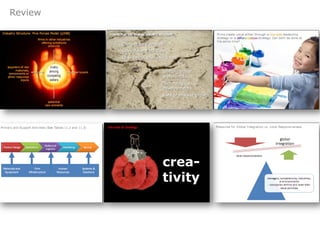
Review
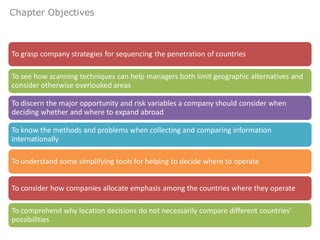
Chapter Objectives


To grasp company strategies for sequencing the penetration of countries

To see how scanning techniques can help managers both limit geographic alternatives and
consider otherwise overlooked areas

To discern the major opportunity and risk variables a company should consider when
deciding whether and where to expand abroad

To know the methods and problems when collecting and comparing information
internationally

To understand some simplifying tools for helping to decide where to operate


To consider how companies allocate emphasis among the countries where they operate

To comprehend why location decisions do not necessarily compare different countries’
possibilities
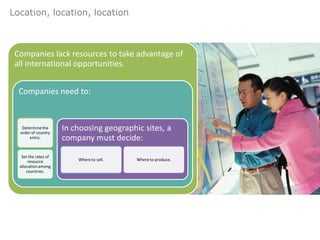
Location, location, location


 Companies lack resources to take advantage of
 all international opportunities.


  Companies need to:


   Determine the
  order of country
                      In choosing geographic sites, a
       entry.         company must decide:
   Set the rates of
       resource           Where to sell.   Where to produce.
  allocation among
      countries.
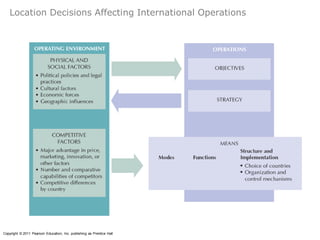
Location Decisions Affecting International Operations


Copyright © 2011 Pearson Education, Inc. publishing as Prentice Hall
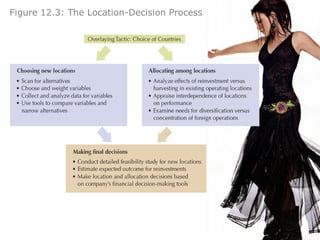
Figure 12.3: The Location-Decision Process
Scanning


     aids managers in considering alternatives that might otherwise be
                                overlooked


          helps limit the final detailed feasibility studies to a manageable
                   number of those that appear most promising


Source: kltprc.net
Escalation of Commitment


Source: jnrphotography.com
Scanning for Opportunities


    Sales expansion - Economic and Demographic Variables


Source: zastavki.com
Scanning for Opportunities

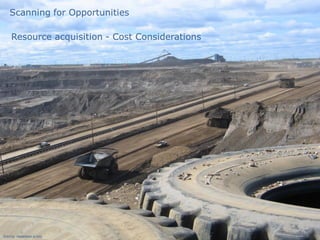
    Resource acquisition - Cost Considerations


Source: newsdesk.si.edu
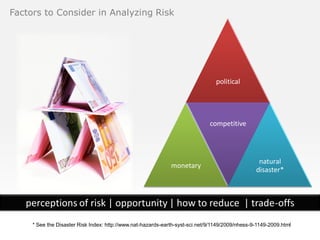
Factors to Consider in Analyzing Risk


                                                                                 political


                                                                              competitive


                                                                                                  natural
                                                              monetary
                                                                                                 disaster*


   perceptions of risk | opportunity | how to reduce | trade-offs
     * See the Disaster Risk Index: http://www.nat-hazards-earth-syst-sci.net/9/1149/2009/nhess-9-1149-2009.html
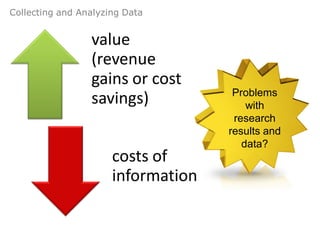
Collecting and Analyzing Data


                 value
                 (revenue
                 gains or cost
                                     Problems
                 savings)               with
                                     research
                                    results and
                                       data?
                      costs of
                      information
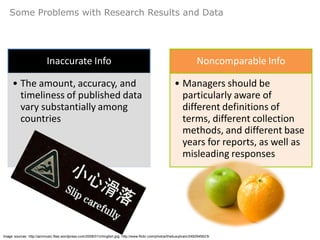
Some Problems with Research Results and Data


                           Inaccurate Info                                                                              Noncomparable Info

     • The amount, accuracy, and                                                                          • Managers should be
       timeliness of published data                                                                         particularly aware of
       vary substantially among                                                                             different definitions of
       countries                                                                                            terms, different collection
                                                                                                            methods, and different base
                                                                                                            years for reports, as well as
                                                                                                            misleading responses


Image sources: http://aznmusic.files.wordpress.com/2008/01/chinglish.jpg; http://www.flickr.com/photos/thebusybrain/249294562 5/
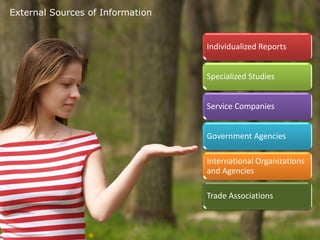
External Sources of Information


                                  Individualized Reports


                                  Specialized Studies


                                  Service Companies


                                  Government Agencies

                                  International Organizations
                                  and Agencies

                                  Trade Associations
Reminder


           July   27th


              group
           assignment
               due
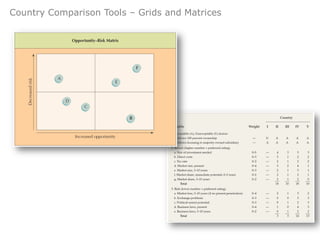
Country Comparison Tools – Grids and Matrices
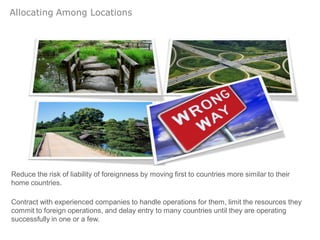
Allocating Among Locations


Reduce the risk of liability of foreignness by moving first to countries more similar to their
home countries.

Contract with experienced companies to handle operations for them, limit the resources they
commit to foreign operations, and delay entry to many countries until they are operating
successfully in one or a few.
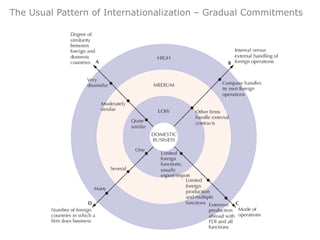
The Usual Pattern of Internationalization – Gradual Commitments
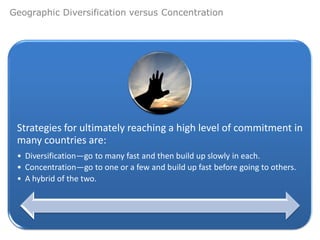
Geographic Diversification versus Concentration


 Strategies for ultimately reaching a high level of commitment in
 many countries are:
 • Diversification—go to many fast and then build up slowly in each.
 • Concentration—go to one or a few and build up fast before going to others.
 • A hybrid of the two.
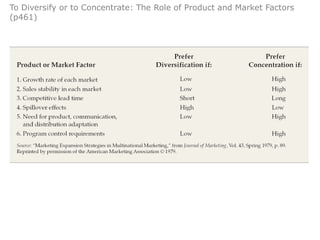
To Diversify or to Concentrate: The Role of Product and Market Factors
(p461)
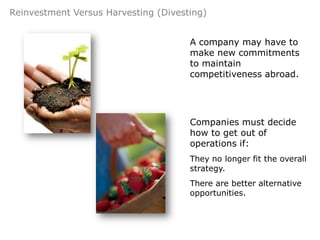
Reinvestment Versus Harvesting (Divesting)


                                      A company may have to
                                      make new commitments
                                      to maintain
                                      competitiveness abroad.


                                      Companies must decide
                                      how to get out of
                                      operations if:
                                      They no longer fit the overall
                                      strategy.
                                      There are better alternative
                                      opportunities.
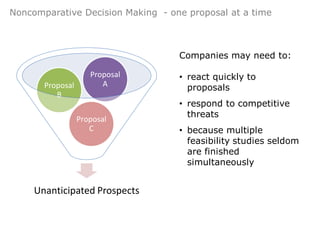
Noncomparative Decision Making - one proposal at a time


                                   Companies may need to:

                     Proposal      • react quickly to
       Proposal         A            proposals
          B
                                   • respond to competitive
                                     threats
                  Proposal
                     C             • because multiple
                                     feasibility studies seldom
                                     are finished
                                     simultaneously


     Unanticipated Prospects
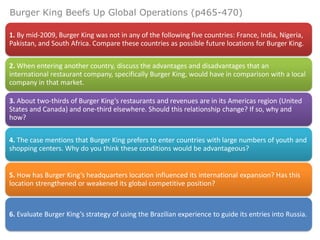
Burger King Beefs Up Global Operations (p465-470)

1. By mid-2009, Burger King was not in any of the following five countries: France, India, Nigeria,
Pakistan, and South Africa. Compare these countries as possible future locations for Burger King.

2. When entering another country, discuss the advantages and disadvantages that an
international restaurant company, specifically Burger King, would have in comparison with a local
company in that market.

3. About two-thirds of Burger King’s restaurants and revenues are in its Americas region (United
States and Canada) and one-third elsewhere. Should this relationship change? If so, why and
how?

4. The case mentions that Burger King prefers to enter countries with large numbers of youth and
shopping centers. Why do you think these conditions would be advantageous?


5. How has Burger King’s headquarters location influenced its international expansion? Has this
location strengthened or weakened its global competitive position?


6. Evaluate Burger King’s strategy of using the Brazilian experience to guide its entries into Russia.
Homework


           review Chapter 12

           do quiz (Blackboard)

           read Chapter 13 – Export/Import
           strategies

           read/be prepared to discuss p499-
           500
           A Dirty Dilemma: Exporting
           Hazardous Waste
IAF605 week 9 chapter 12 country evaluation and selection

IAF605 week 9 chapter 12 country evaluation and selection

  • 1.
    IAF 605 -International Business Management Country Evaluation and Selection Week 9
  • 2.
    Agenda Review Chapter 11 Chapter 12 – Country Evaluation and Selection Burger King Beefs Up Global Operations
  • 3.
  • 4.
    Chapter Objectives To graspcompany strategies for sequencing the penetration of countries To see how scanning techniques can help managers both limit geographic alternatives and consider otherwise overlooked areas To discern the major opportunity and risk variables a company should consider when deciding whether and where to expand abroad To know the methods and problems when collecting and comparing information internationally To understand some simplifying tools for helping to decide where to operate To consider how companies allocate emphasis among the countries where they operate To comprehend why location decisions do not necessarily compare different countries’ possibilities
  • 5.
    Location, location, location Companies lack resources to take advantage of all international opportunities. Companies need to: Determine the order of country In choosing geographic sites, a entry. company must decide: Set the rates of resource Where to sell. Where to produce. allocation among countries.
  • 6.
    Location Decisions AffectingInternational Operations Copyright © 2011 Pearson Education, Inc. publishing as Prentice Hall
  • 7.
    Figure 12.3: TheLocation-Decision Process
  • 8.
    Scanning aids managers in considering alternatives that might otherwise be overlooked helps limit the final detailed feasibility studies to a manageable number of those that appear most promising Source: kltprc.net
  • 9.
  • 10.
    Scanning for Opportunities Sales expansion - Economic and Demographic Variables Source: zastavki.com
  • 11.
    Scanning for Opportunities Resource acquisition - Cost Considerations Source: newsdesk.si.edu
  • 12.
    Factors to Considerin Analyzing Risk political competitive natural monetary disaster* perceptions of risk | opportunity | how to reduce | trade-offs * See the Disaster Risk Index: http://www.nat-hazards-earth-syst-sci.net/9/1149/2009/nhess-9-1149-2009.html
  • 13.
    Collecting and AnalyzingData value (revenue gains or cost Problems savings) with research results and data? costs of information
  • 14.
    Some Problems withResearch Results and Data Inaccurate Info Noncomparable Info • The amount, accuracy, and • Managers should be timeliness of published data particularly aware of vary substantially among different definitions of countries terms, different collection methods, and different base years for reports, as well as misleading responses Image sources: http://aznmusic.files.wordpress.com/2008/01/chinglish.jpg; http://www.flickr.com/photos/thebusybrain/249294562 5/
  • 15.
    External Sources ofInformation Individualized Reports Specialized Studies Service Companies Government Agencies International Organizations and Agencies Trade Associations
  • 16.
    Reminder July 27th group assignment due
  • 17.
    Country Comparison Tools– Grids and Matrices
  • 18.
    Allocating Among Locations Reducethe risk of liability of foreignness by moving first to countries more similar to their home countries. Contract with experienced companies to handle operations for them, limit the resources they commit to foreign operations, and delay entry to many countries until they are operating successfully in one or a few.
  • 19.
    The Usual Patternof Internationalization – Gradual Commitments
  • 20.
    Geographic Diversification versusConcentration Strategies for ultimately reaching a high level of commitment in many countries are: • Diversification—go to many fast and then build up slowly in each. • Concentration—go to one or a few and build up fast before going to others. • A hybrid of the two.
  • 21.
    To Diversify orto Concentrate: The Role of Product and Market Factors (p461)
  • 22.
    Reinvestment Versus Harvesting(Divesting) A company may have to make new commitments to maintain competitiveness abroad. Companies must decide how to get out of operations if: They no longer fit the overall strategy. There are better alternative opportunities.
  • 23.
    Noncomparative Decision Making- one proposal at a time Companies may need to: Proposal • react quickly to Proposal A proposals B • respond to competitive threats Proposal C • because multiple feasibility studies seldom are finished simultaneously Unanticipated Prospects
  • 24.
    Burger King BeefsUp Global Operations (p465-470) 1. By mid-2009, Burger King was not in any of the following five countries: France, India, Nigeria, Pakistan, and South Africa. Compare these countries as possible future locations for Burger King. 2. When entering another country, discuss the advantages and disadvantages that an international restaurant company, specifically Burger King, would have in comparison with a local company in that market. 3. About two-thirds of Burger King’s restaurants and revenues are in its Americas region (United States and Canada) and one-third elsewhere. Should this relationship change? If so, why and how? 4. The case mentions that Burger King prefers to enter countries with large numbers of youth and shopping centers. Why do you think these conditions would be advantageous? 5. How has Burger King’s headquarters location influenced its international expansion? Has this location strengthened or weakened its global competitive position? 6. Evaluate Burger King’s strategy of using the Brazilian experience to guide its entries into Russia.
  • 25.
    Homework review Chapter 12 do quiz (Blackboard) read Chapter 13 – Export/Import strategies read/be prepared to discuss p499- 500 A Dirty Dilemma: Exporting Hazardous Waste