IAF 605 - International Business Management


 Export and Import Strategies


                                       Week 10
Reminder
Agenda


           Review Chapter 12

         Chapter 13 – Export and
            Import Strategies
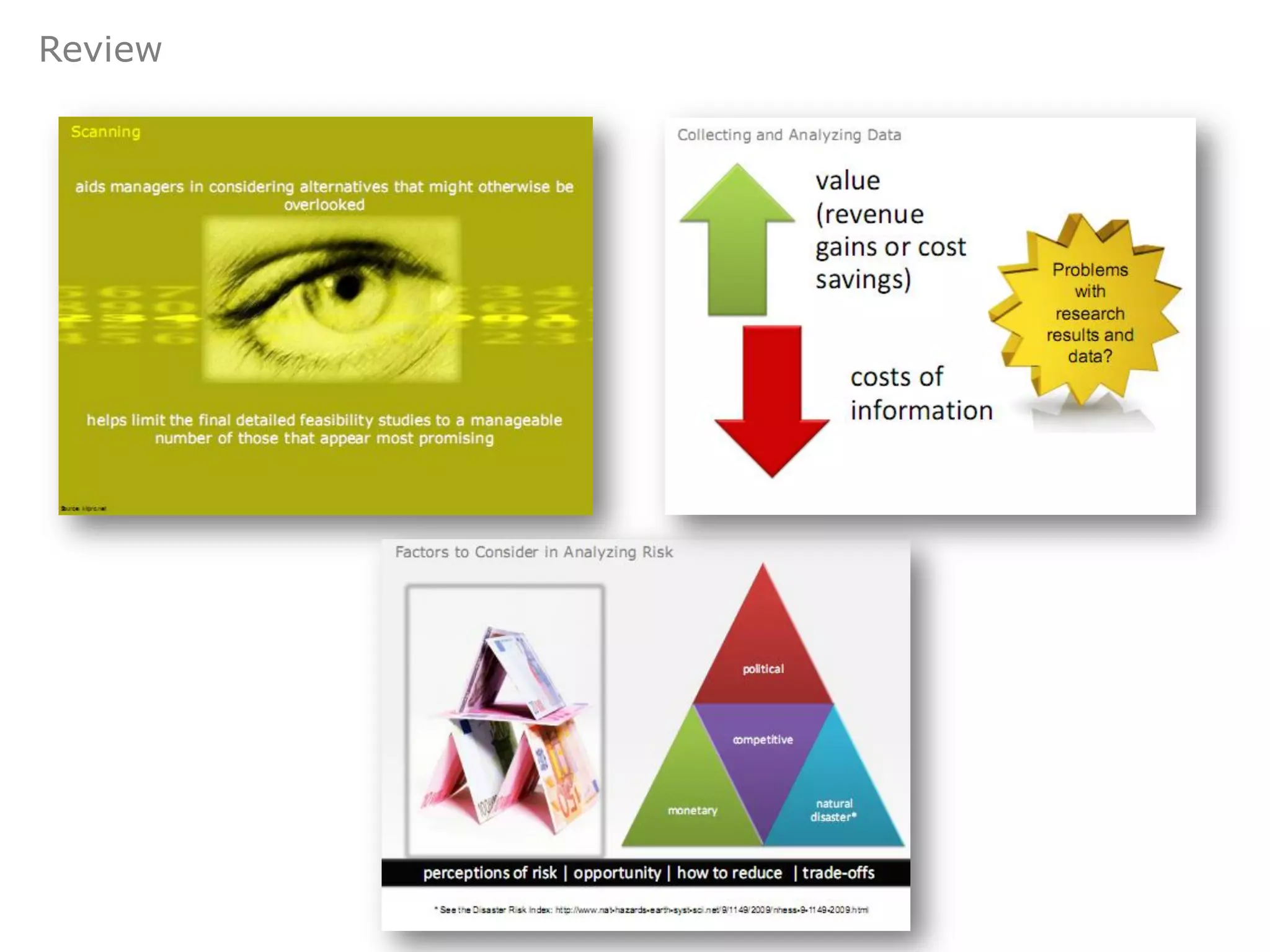
Review
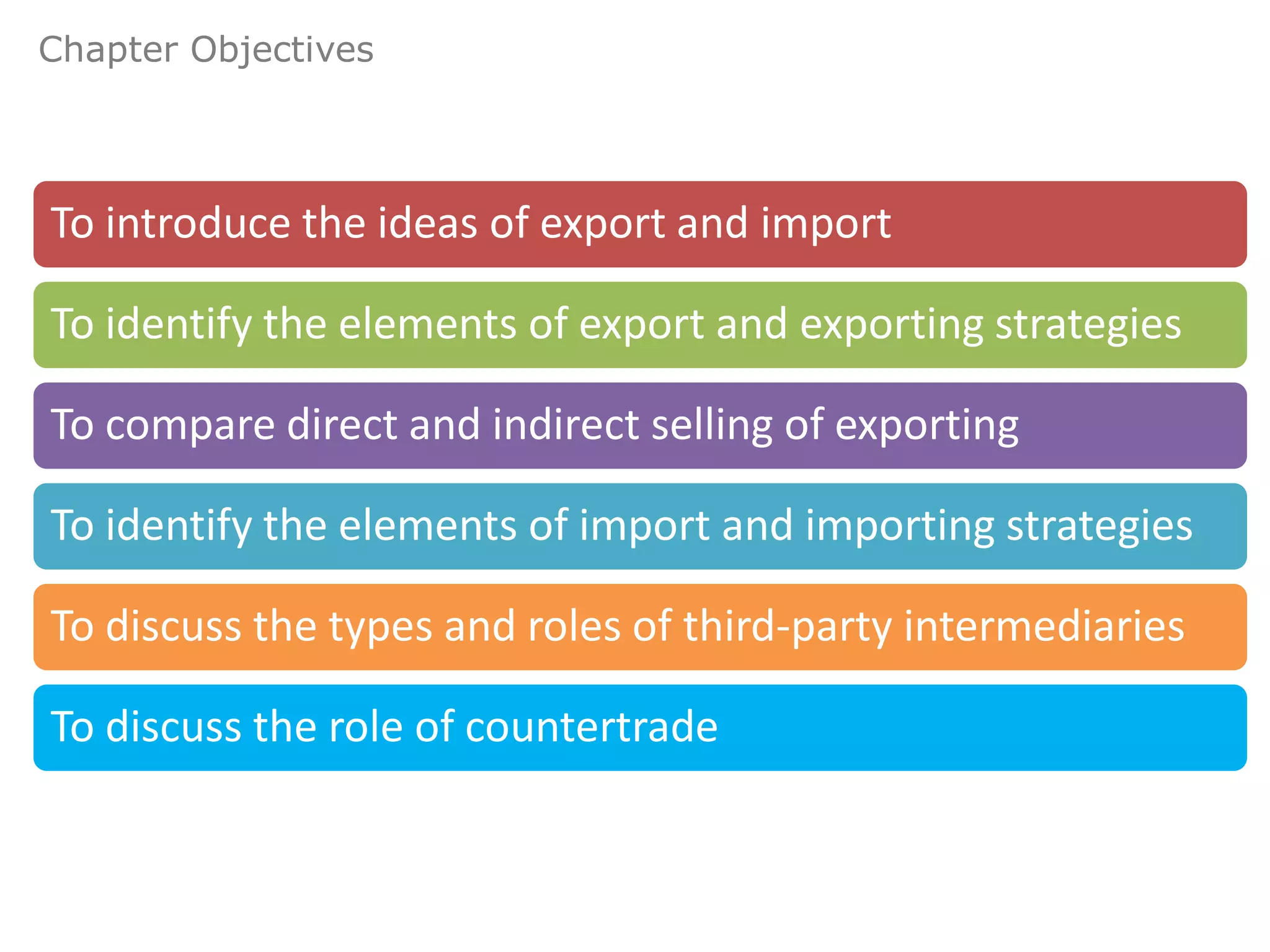
Chapter Objectives


To introduce the ideas of export and import

To identify the elements of export and exporting strategies

To compare direct and indirect selling of exporting

To identify the elements of import and importing strategies

To discuss the types and roles of third-party intermediaries

To discuss the role of countertrade
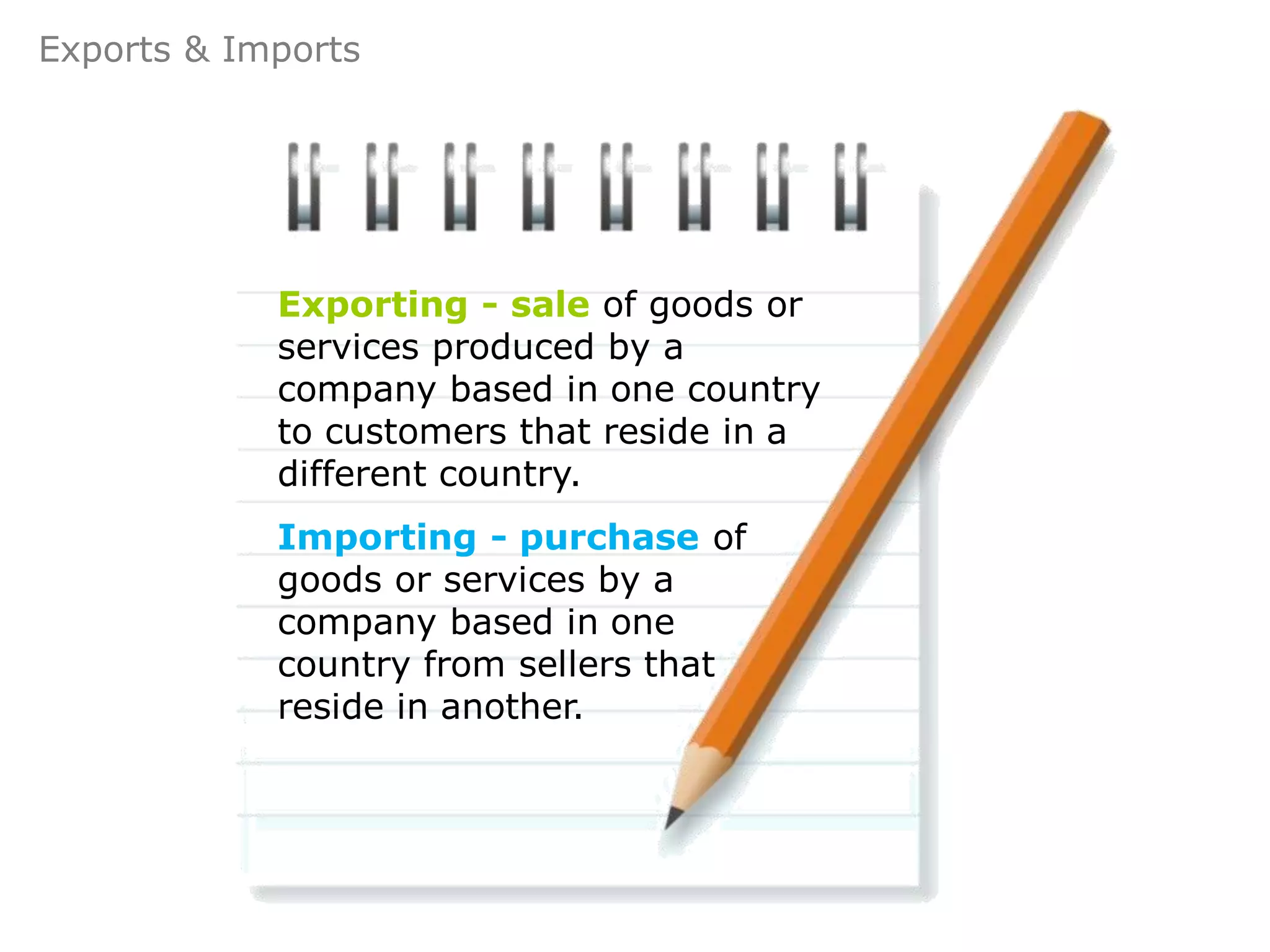
Exports & Imports


            Exporting - sale of goods or
            services produced by a
            company based in one country
            to customers that reside in a
            different country.
            Importing - purchase of
            goods or services by a
            company based in one
            country from sellers that
            reside in another.
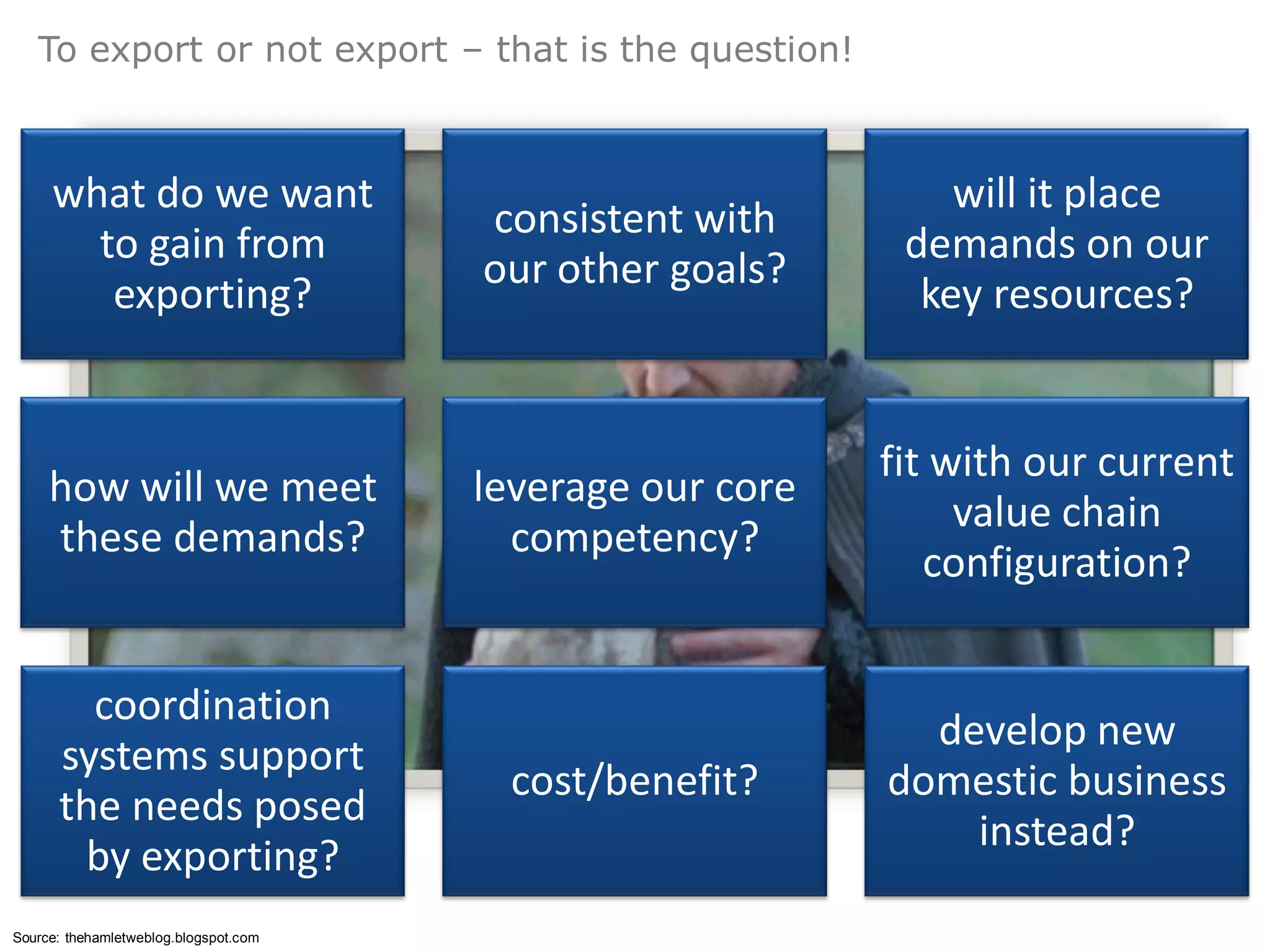
To export or not export – that is the question!


     what do we want                                           will it place
                                       consistent with
       to gain from                                         demands on our
                                       our other goals?
        exporting?                                           key resources?


                                                           fit with our current
     how will we meet                  leverage our core
                                                                value chain
     these demands?                      competency?
                                                              configuration?


        coordination
                                                             develop new
      systems support
                                        cost/benefit?      domestic business
      the needs posed
                                                               instead?
       by exporting?
Source: thehamletweblog.blogspot.com
Strategic Advantages of Exporting


                             Lower investment way to enter
                             foreign markets

                             Lower risk way to enter
                             foreign markets but lower return on
                             sales

                             E x p     a   n    d   s   sales

                             Achieves economie$ of scale


                             Profit Potential
Size doesn’t matter


                                          export intensity
                                          of a firm is
                                          related to and
                                          often
                                          determined by
                                          firm-specific
                                          feature that are
                                          independent of
                                          its size


Image source: http://i.dailymail.co.uk/
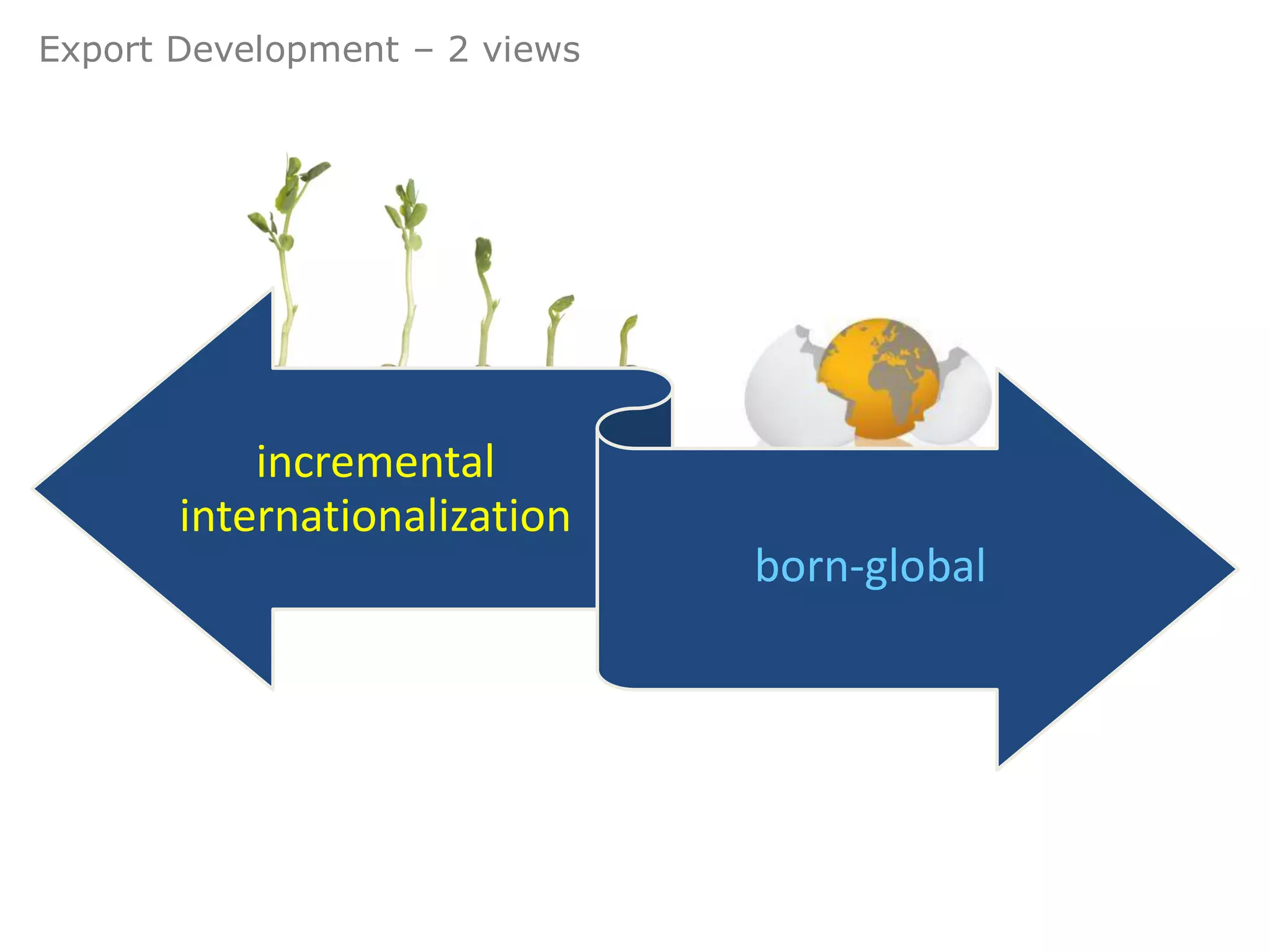
Export Development – 2 views


           incremental
       internationalization
                               born-global
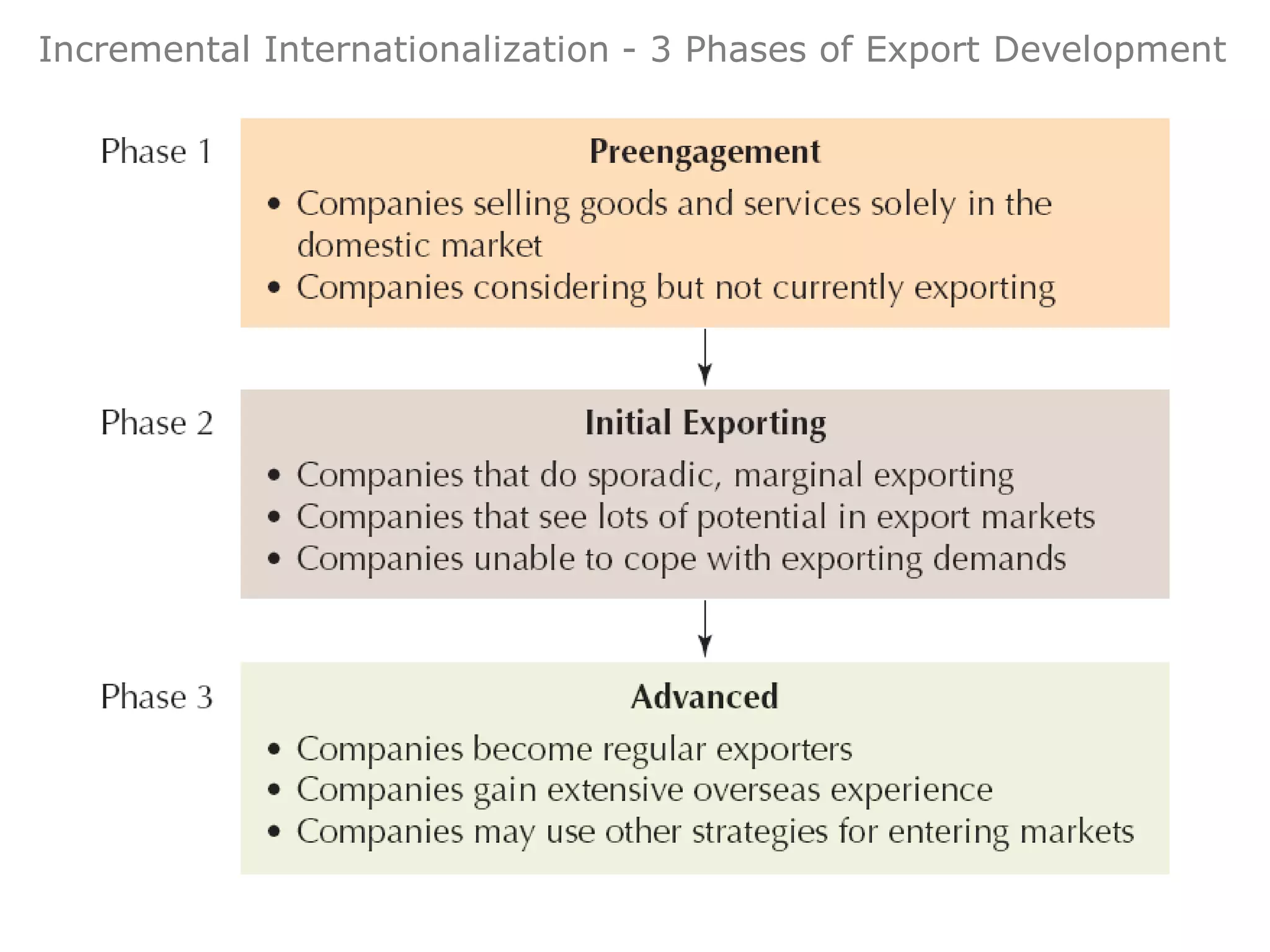
Incremental Internationalization - 3 Phases of Export Development
Pitfalls of Exporting


                        adjusting financial management


                        customer demand for greater
                        range of services; competition =
                        less negotiating power


                        technology = instant
                        communication…no time to deal
                        with issues


                        see p484-485 for 12 additional
                        stumbling blocks
Designing an Export Strategy to Avoid Making Mistakes


 assess export potential
 obtain expert counseling (banks, lawyers, EDC, agents..)
 select a market or markets where you will focus your exports
 formulate and implement your strategy
 (see Table 13.2 – page 488)
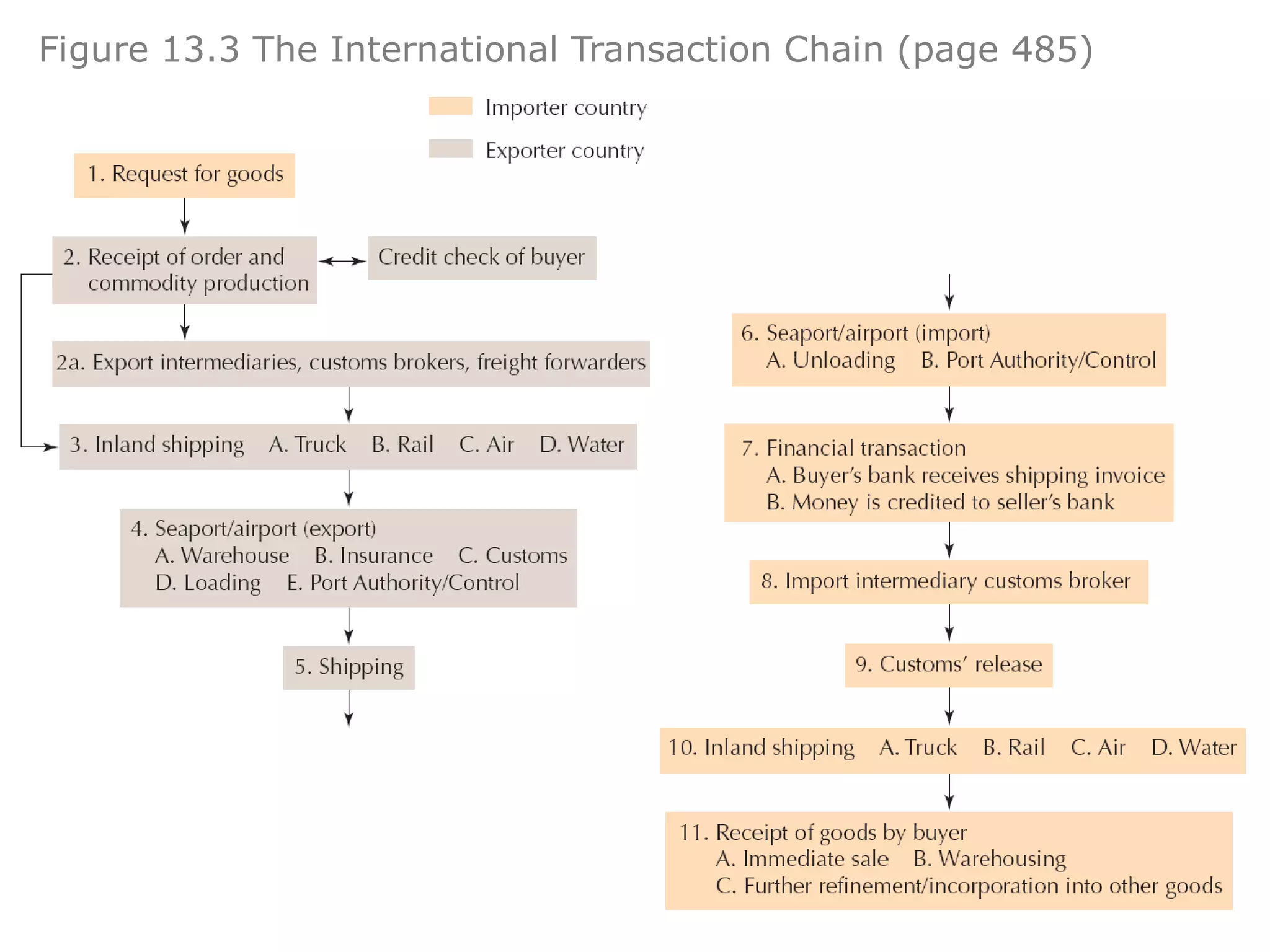
Figure 13.3 The International Transaction Chain (page 485)
Types of Importers


 Those looking for any product around the
 world to import and sell.

 Those looking for foreign sourcing to get
 highest quality products at the cheapest
 price.

 Those using foreign sourcing as part of
 their global supply chain.
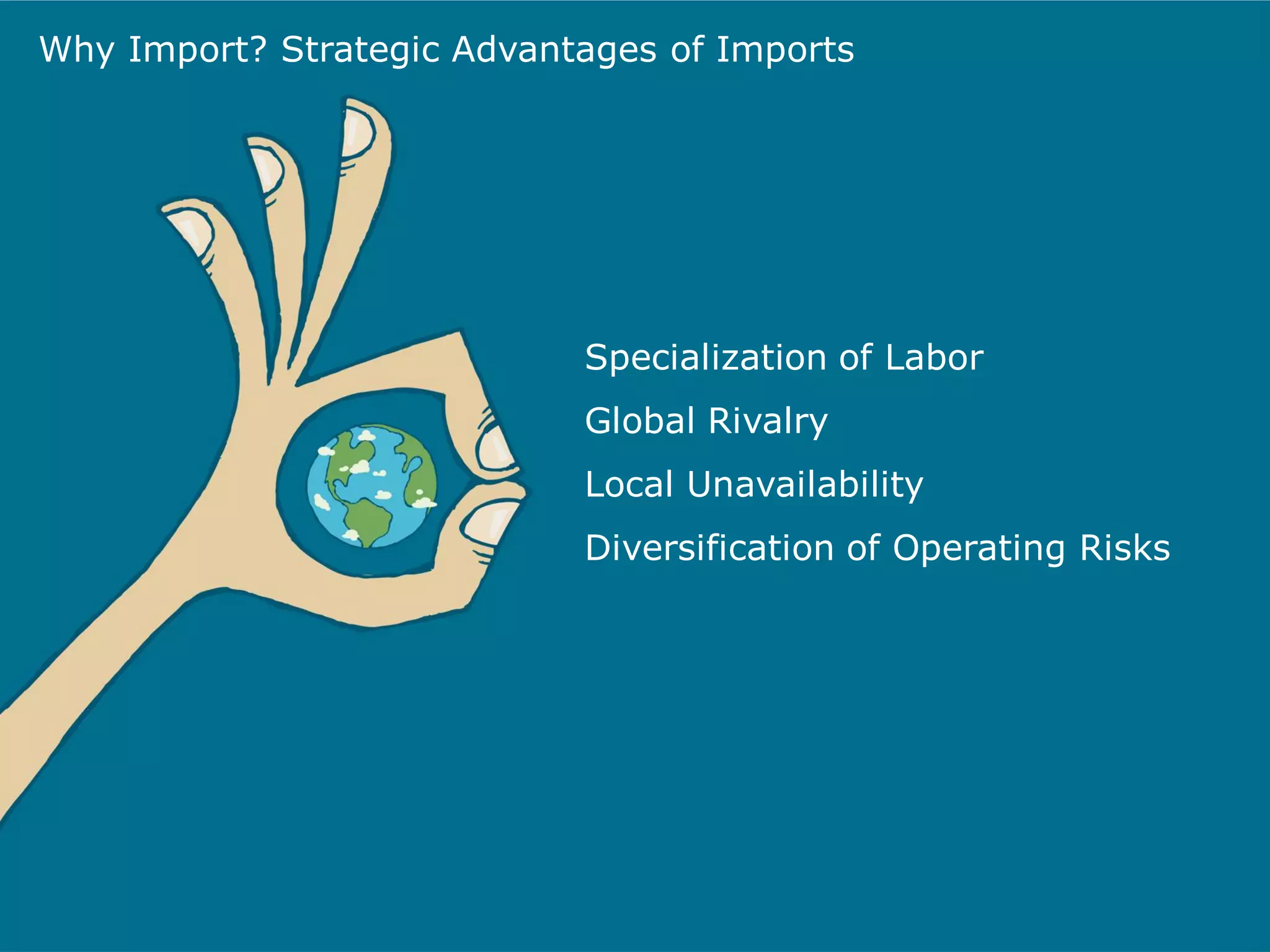
Why Import? Strategic Advantages of Imports


                            Specialization of Labor
                            Global Rivalry
                            Local Unavailability
                            Diversification of Operating Risks
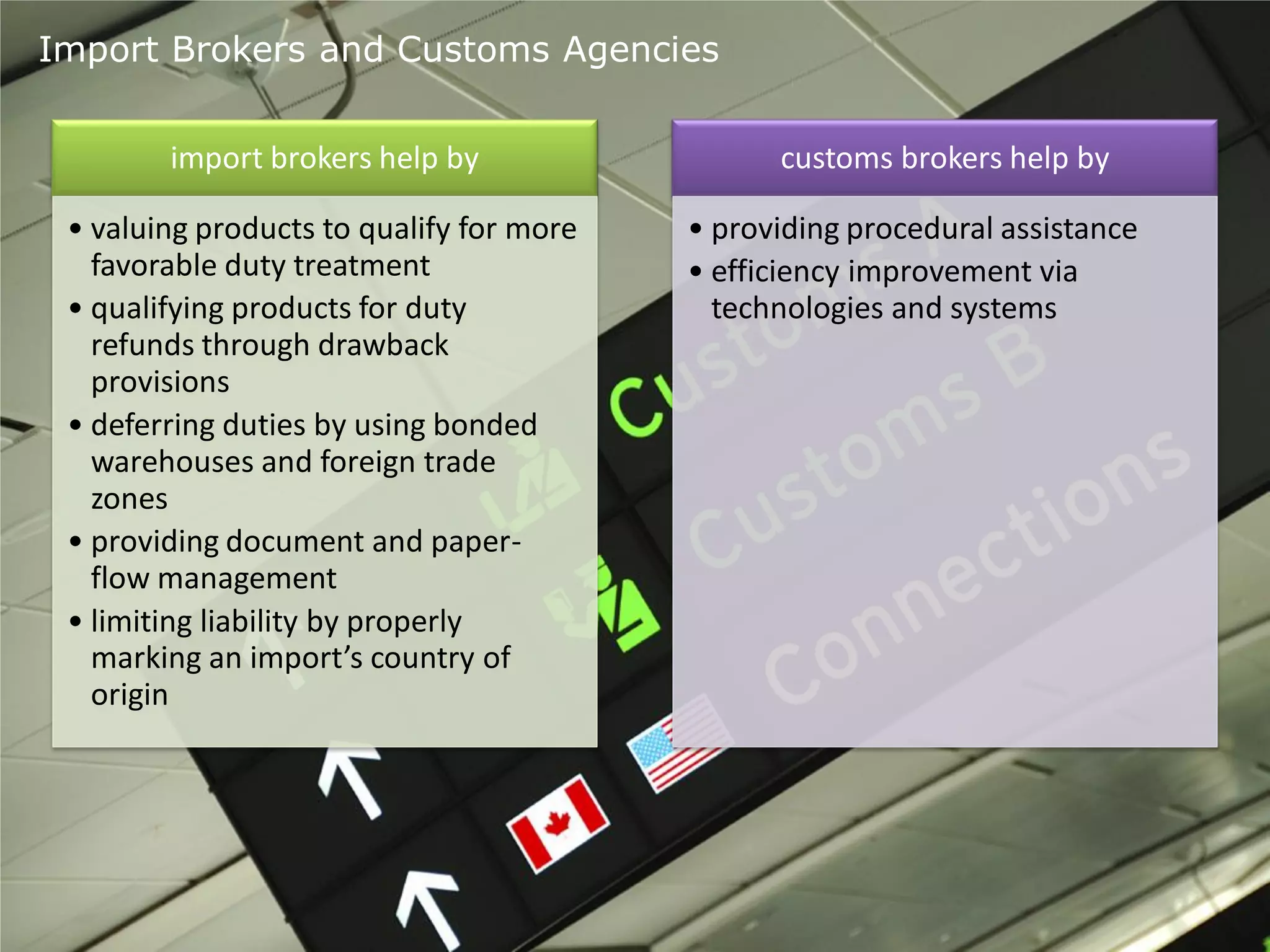
Import Brokers and Customs Agencies


        import brokers help by                  customs brokers help by

 • valuing products to qualify for more   • providing procedural assistance
   favorable duty treatment               • efficiency improvement via
 • qualifying products for duty             technologies and systems
   refunds through drawback
   provisions
 • deferring duties by using bonded
   warehouses and foreign trade
   zones
 • providing document and paper-
   flow management
 • limiting liability by properly
   marking an import’s country of
   origin
Import Documentation

                          documents to
                           determine if
                       customs will release
                          the shipment


                       documents for duty
                         and statistical
                           purposes


                        usually include an
                         entry manifest,
                       commercial invoice
                        and a packing list
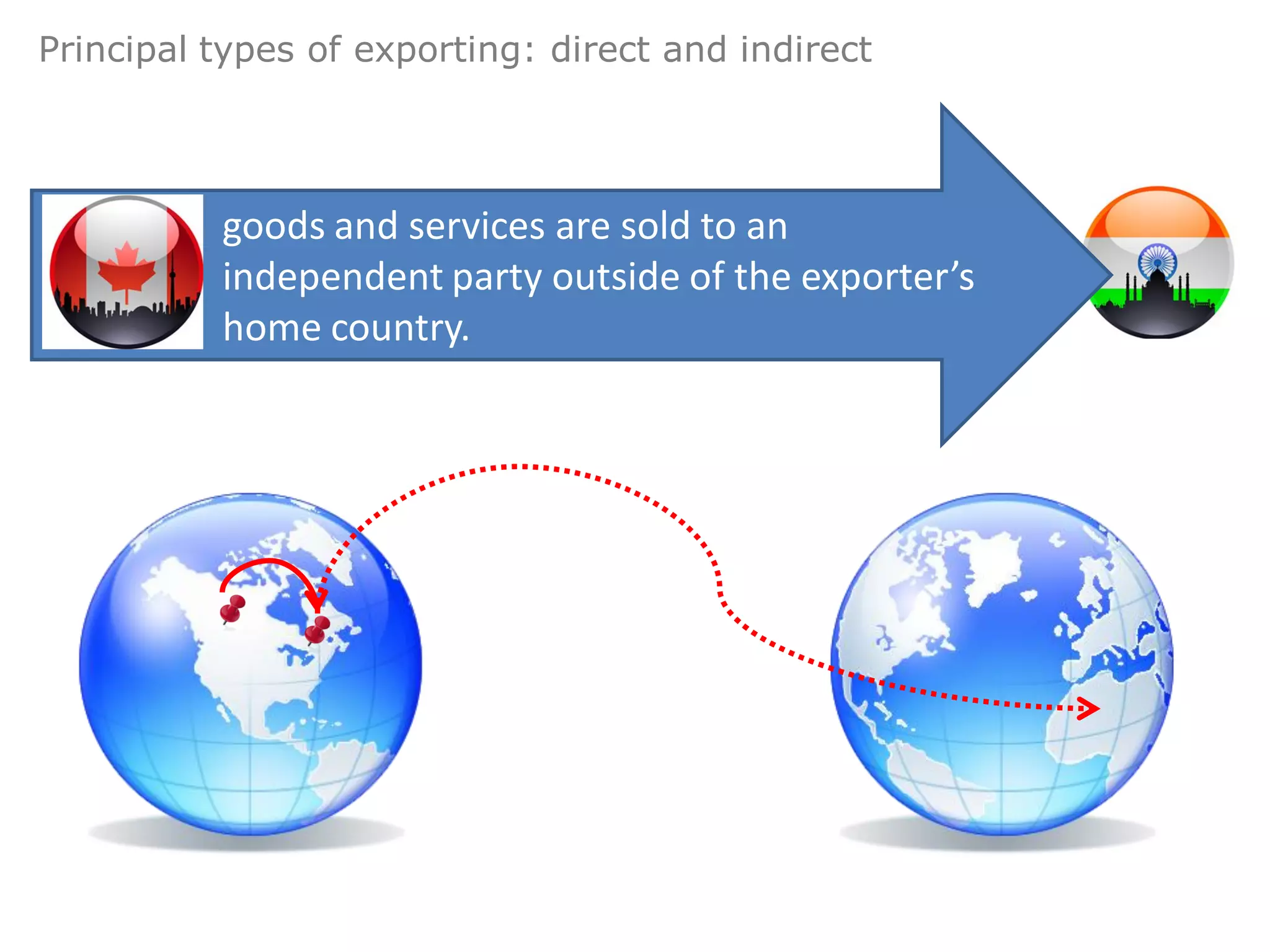
Principal types of exporting: direct and indirect


          goods and services are sold to an
          independent party outside of the exporter’s
          home country.
Indirect Selling


          Exporters may deal directly with:
                            indirectly through third-
agents or distributors in                               other types of trading
                              party intermediaries,
   a foreign country                                         companies
                             such as EMC’s or ETC’s
Direct Selling


                                                  Internet marketing -
  Through distributors                            allowing many small-
    who usually deal       To foreign retailers    and medium-sized
  with retailers instead     and end users        companies to access
      of end users                                  export markets as
                                                      never before
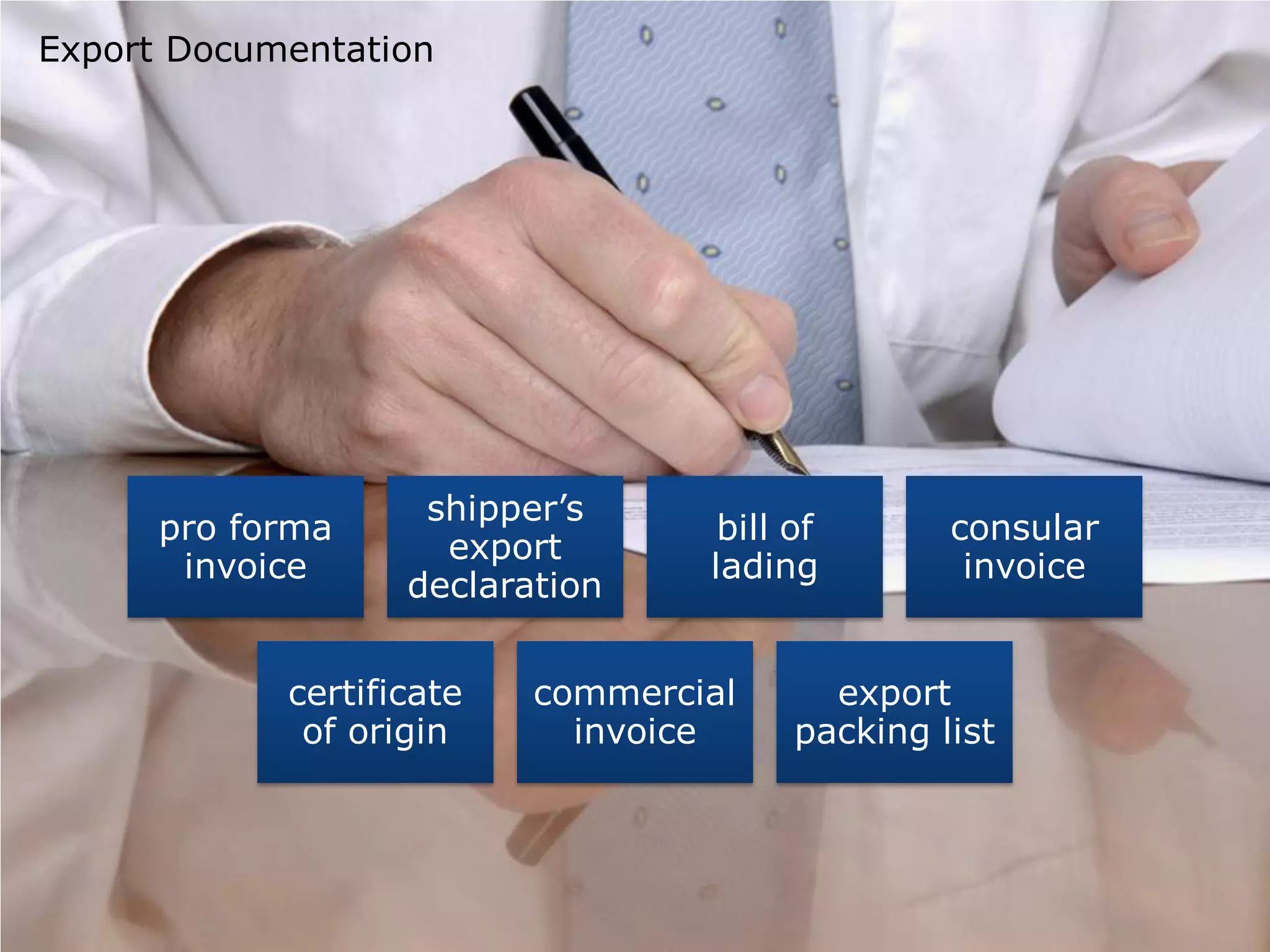
Export Documentation


                    shipper’s
      pro forma                    bill of       consular
                     export
       invoice                    lading          invoice
                   declaration


            certificate   commercial      export
             of origin      invoice     packing list
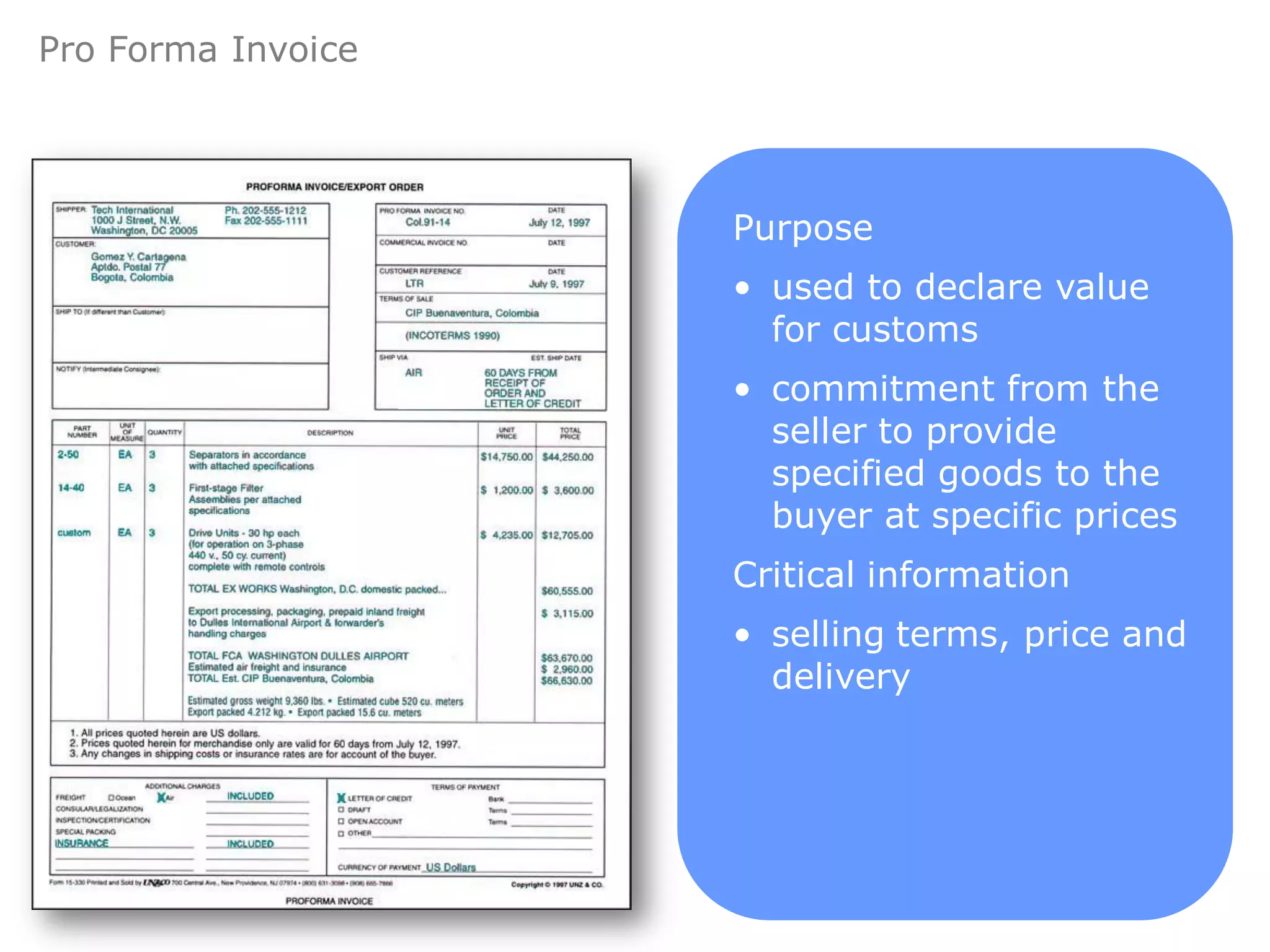
Pro Forma Invoice


                    Purpose
                    • used to declare value
                      for customs
                    • commitment from the
                      seller to provide
                      specified goods to the
                      buyer at specific prices
                    Critical information
                    • selling terms, price and
                      delivery
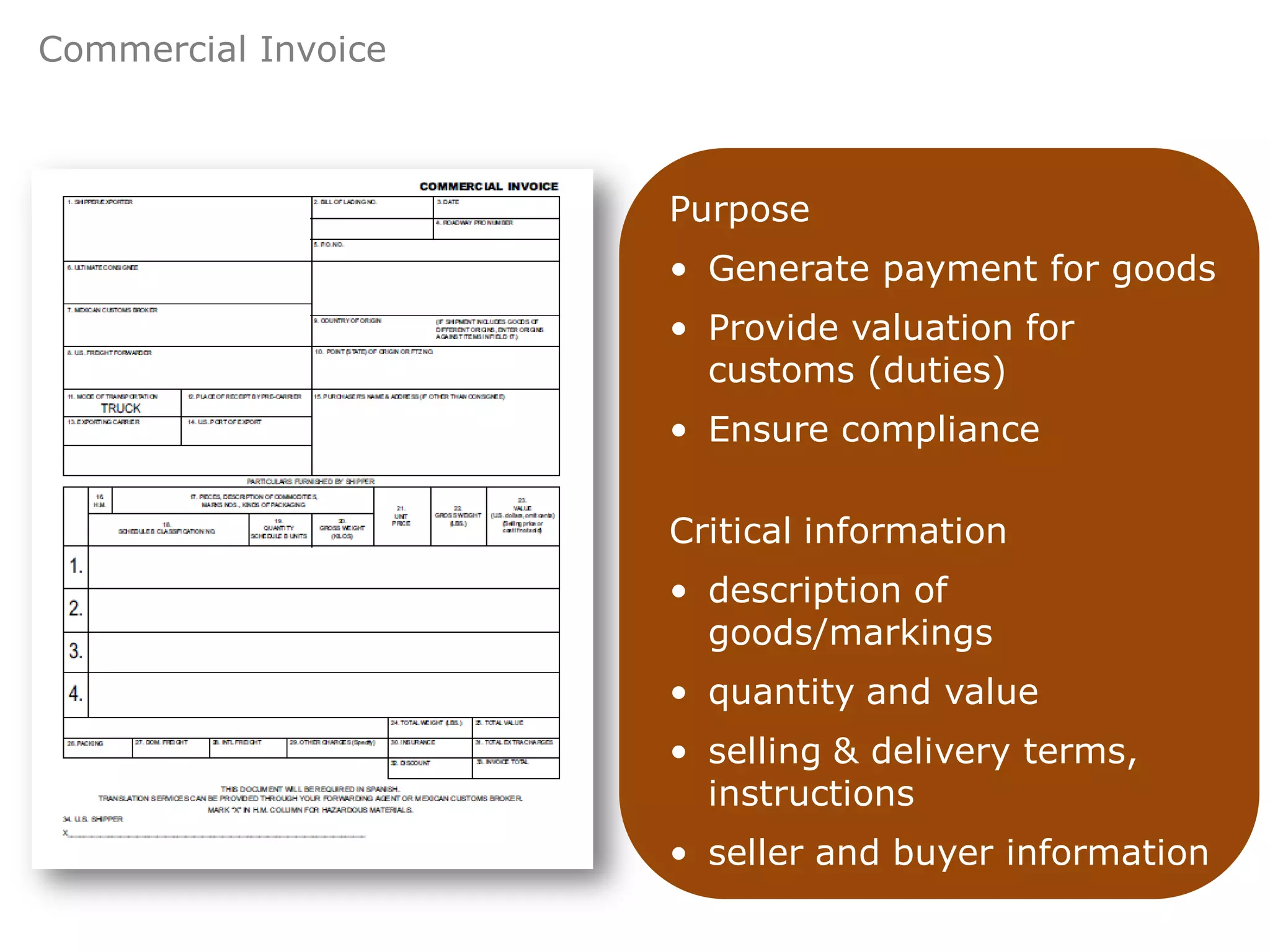
Commercial Invoice


                     Purpose
                     • Generate payment for goods
                     • Provide valuation for
                       customs (duties)
                     • Ensure compliance

                     Critical information
                     • description of
                       goods/markings
                     • quantity and value
                     • selling & delivery terms,
                       instructions
                     • seller and buyer information
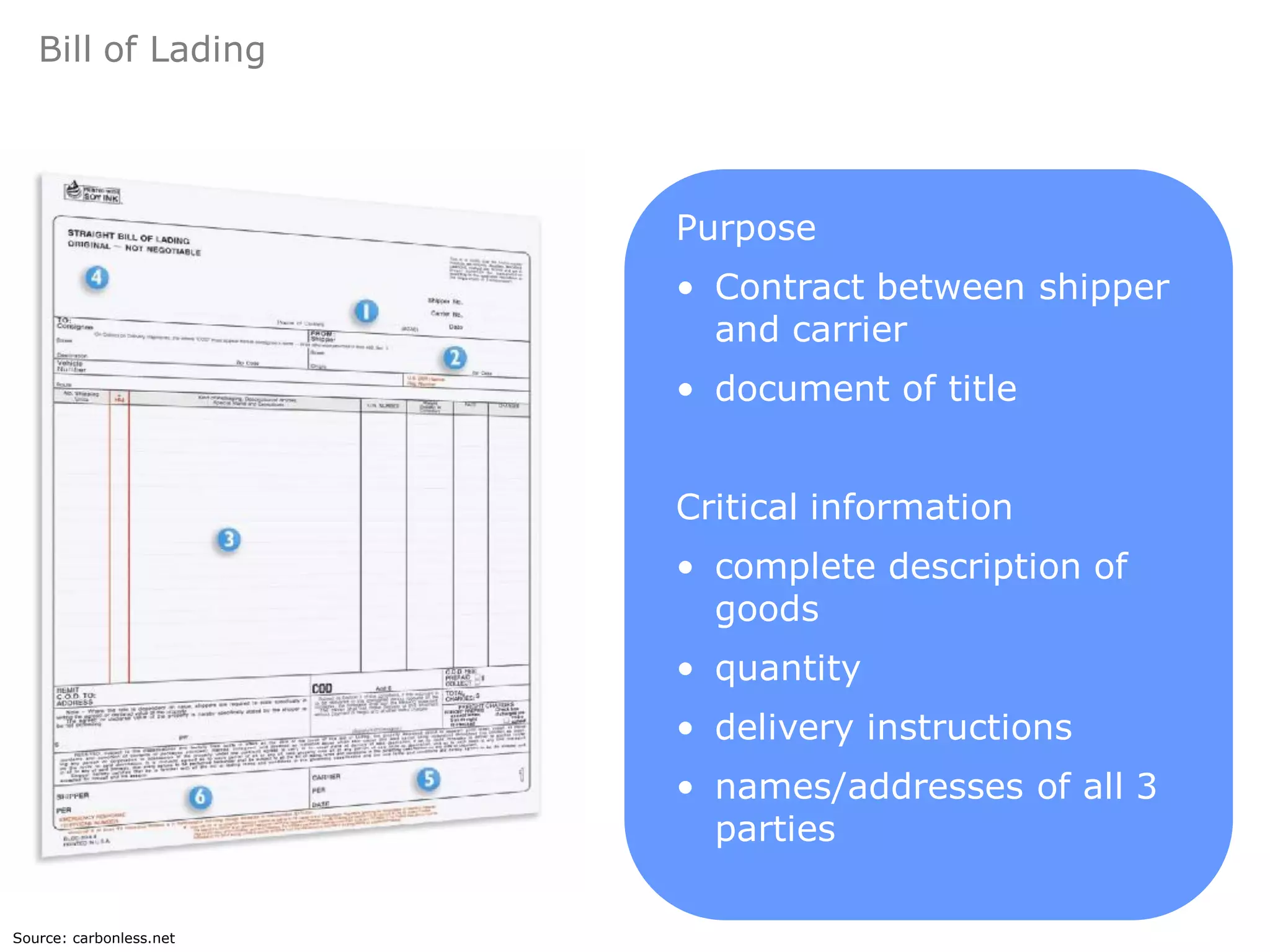
Bill of Lading


                         Purpose
                         • Contract between shipper
                           and carrier
                         • document of title


                         Critical information
                         • complete description of
                           goods
                         • quantity
                         • delivery instructions
                         • names/addresses of all 3
                           parties

Source: carbonless.net
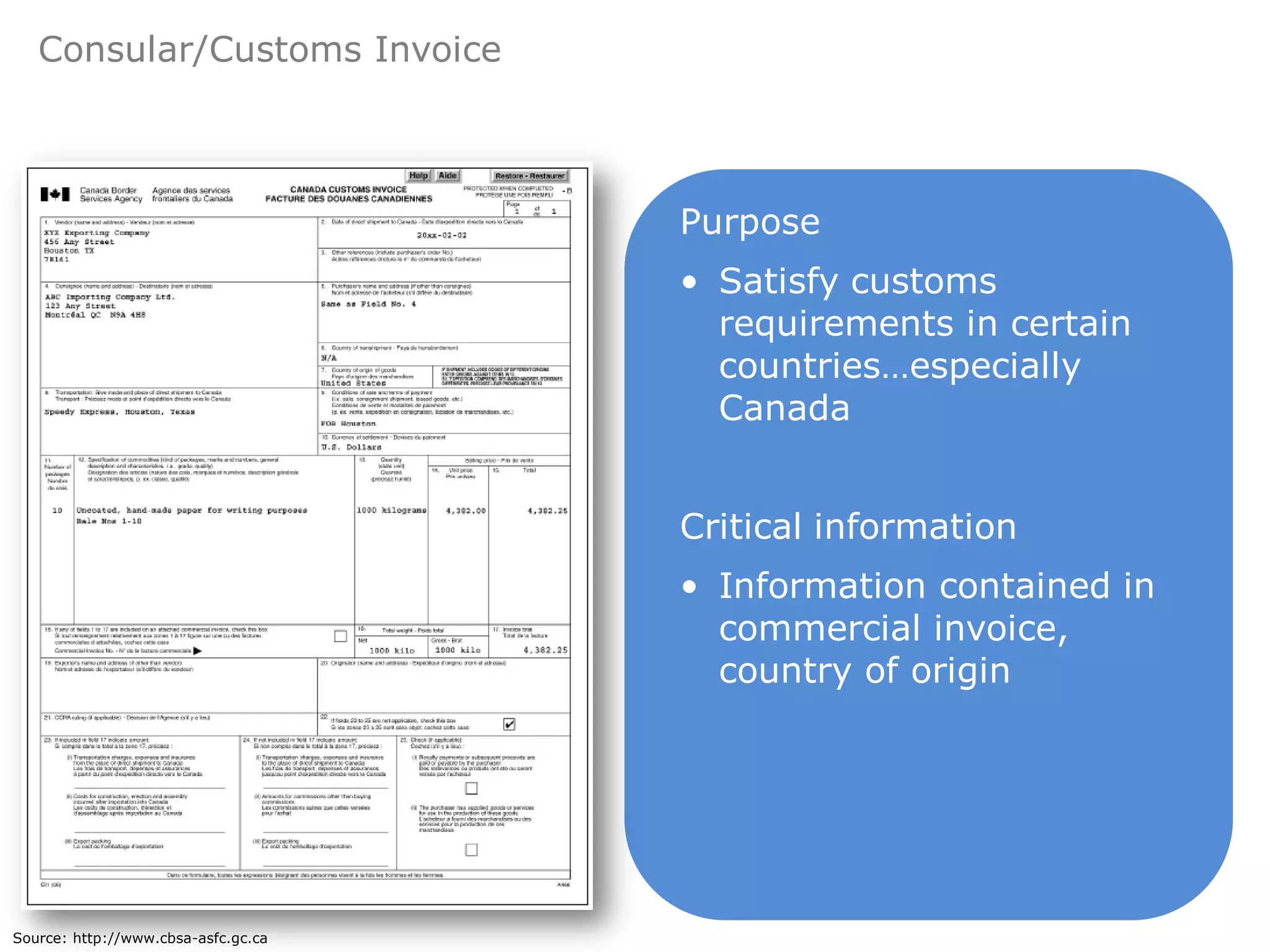
Consular/Customs Invoice


                                     Purpose
                                     • Satisfy customs
                                       requirements in certain
                                       countries…especially
                                       Canada


                                     Critical information
                                     • Information contained in
                                       commercial invoice,
                                       country of origin


Source: http://www.cbsa-asfc.gc.ca
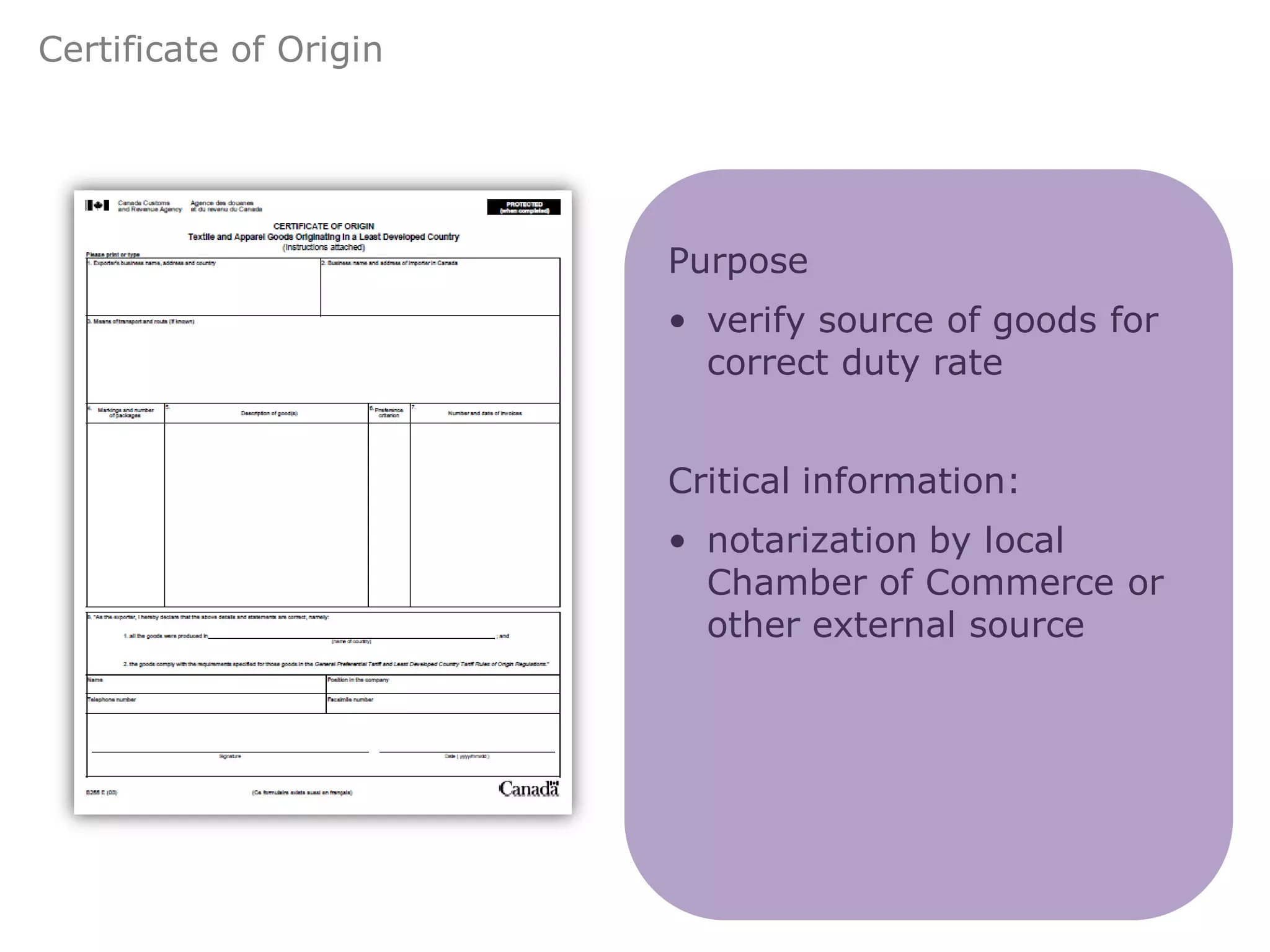
Certificate of Origin


                        Purpose
                        • verify source of goods for
                          correct duty rate


                        Critical information:
                        • notarization by local
                          Chamber of Commerce or
                          other external source
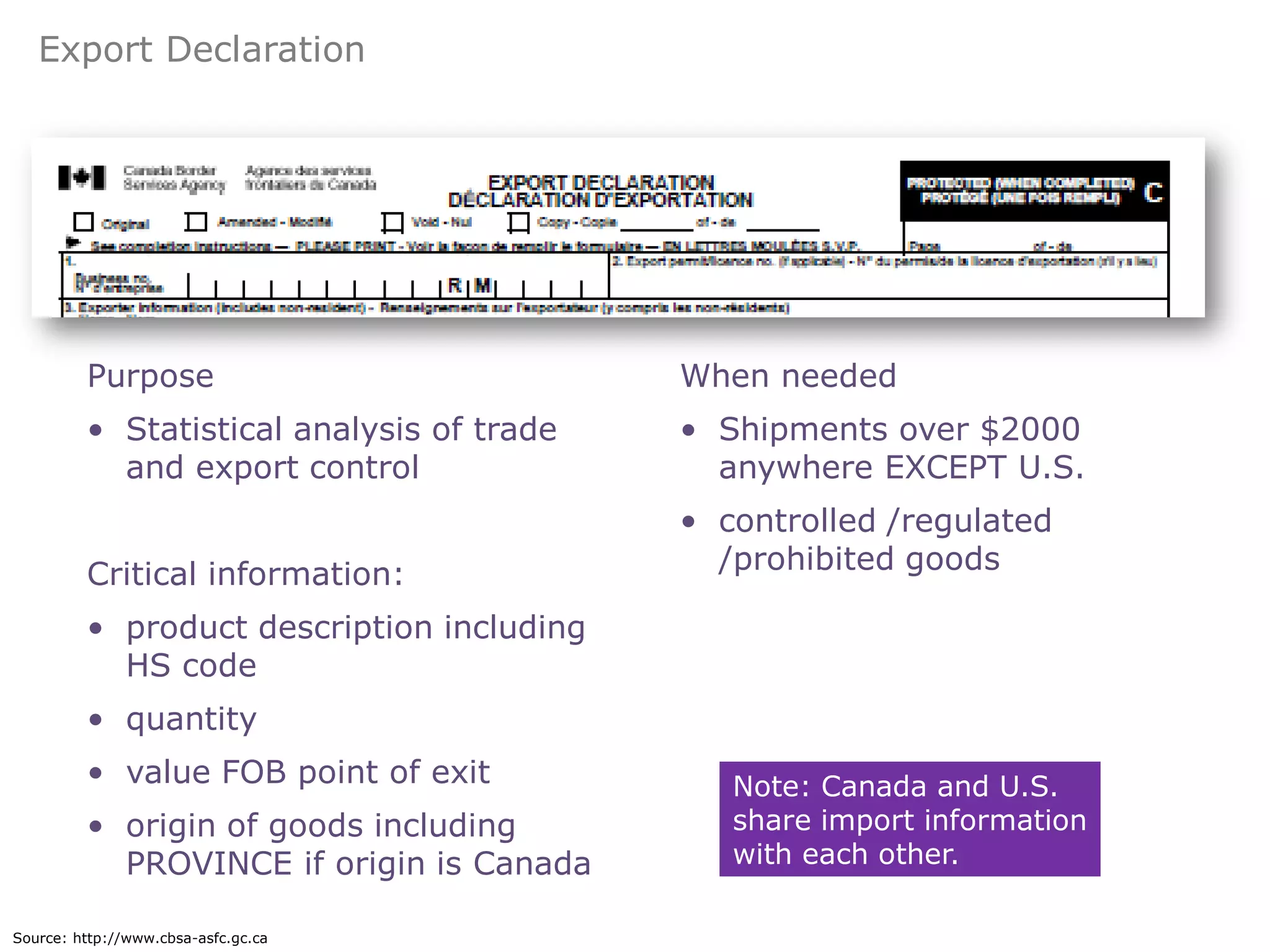
Export Declaration


         Purpose                           When needed
         • Statistical analysis of trade   • Shipments over $2000
           and export control                anywhere EXCEPT U.S.
                                           • controlled /regulated
         Critical information:               /prohibited goods

         • product description including
           HS code
         • quantity
         • value FOB point of exit            Note: Canada and U.S.
         • origin of goods including          share import information
           PROVINCE if origin is Canada       with each other.

Source: http://www.cbsa-asfc.gc.ca
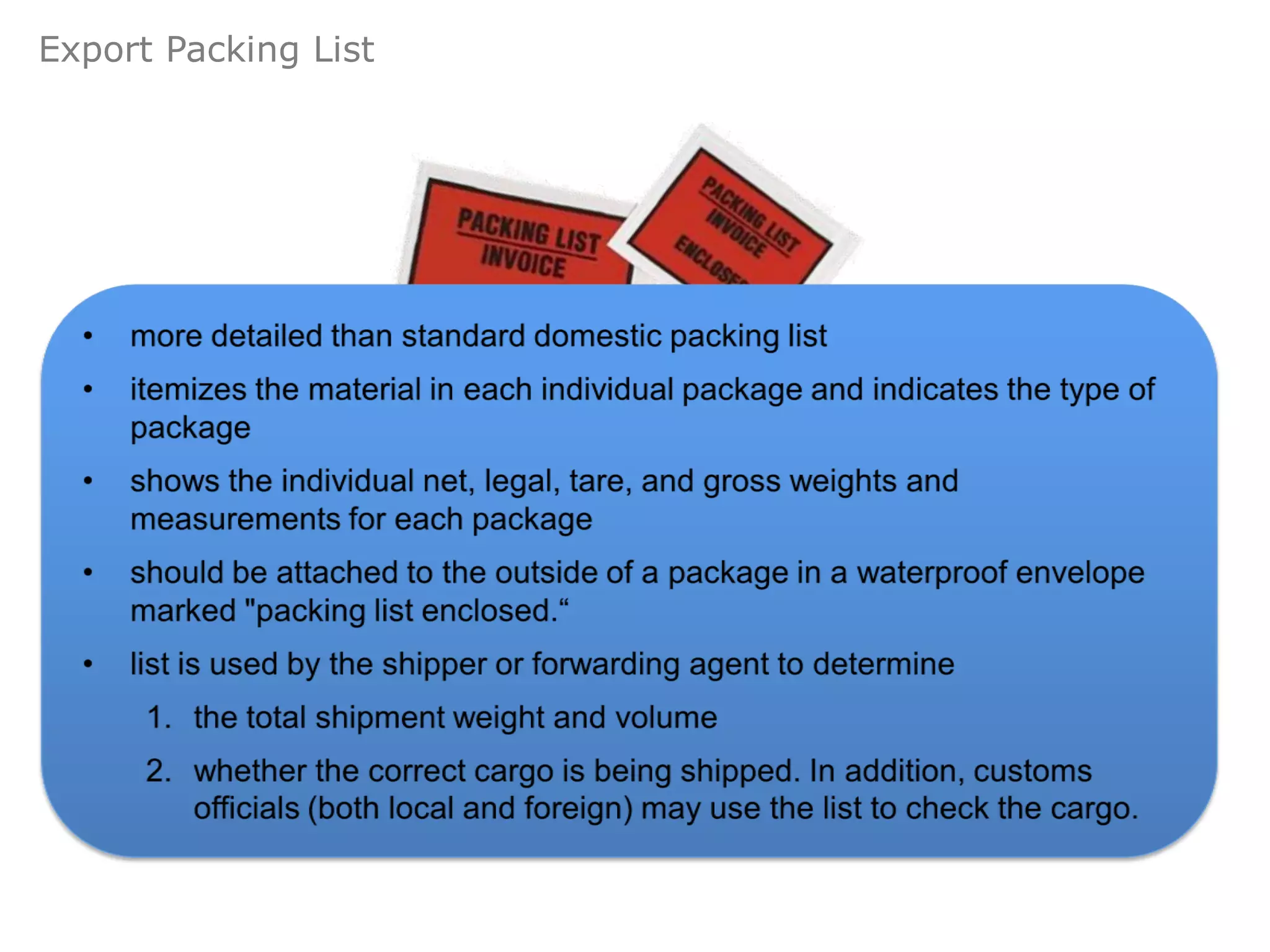
Export Packing List
Regulatory Assistance


                        national/provincial/local trade offices
                        freight forwarders
                        international banks
                        trade consultants
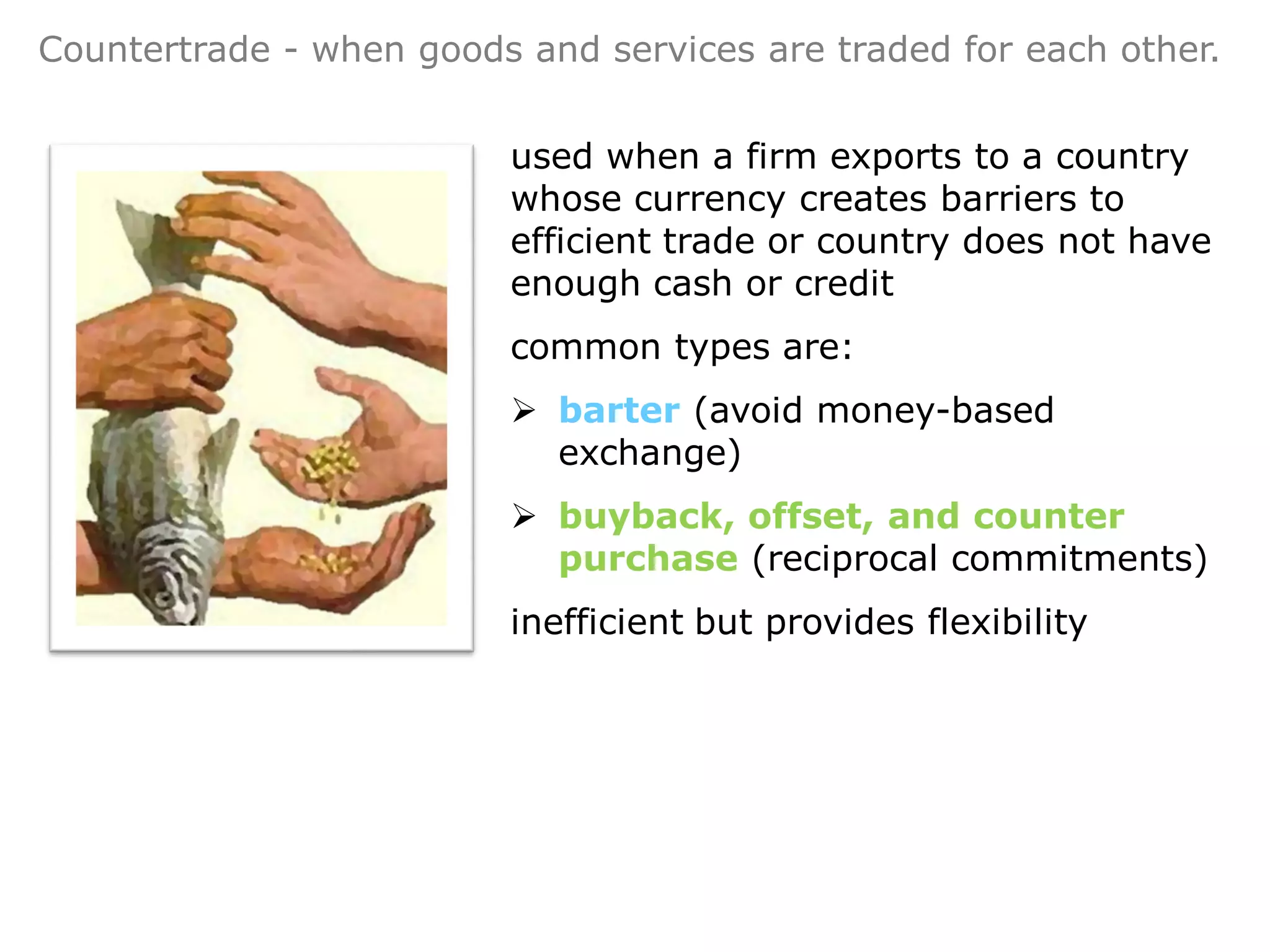
Countertrade - when goods and services are traded for each other.


                         used when a firm exports to a country
                         whose currency creates barriers to
                         efficient trade or country does not have
                         enough cash or credit
                         common types are:
                          barter (avoid money-based
                           exchange)
                          buyback, offset, and counter
                           purchase (reciprocal commitments)
                         inefficient but provides flexibility
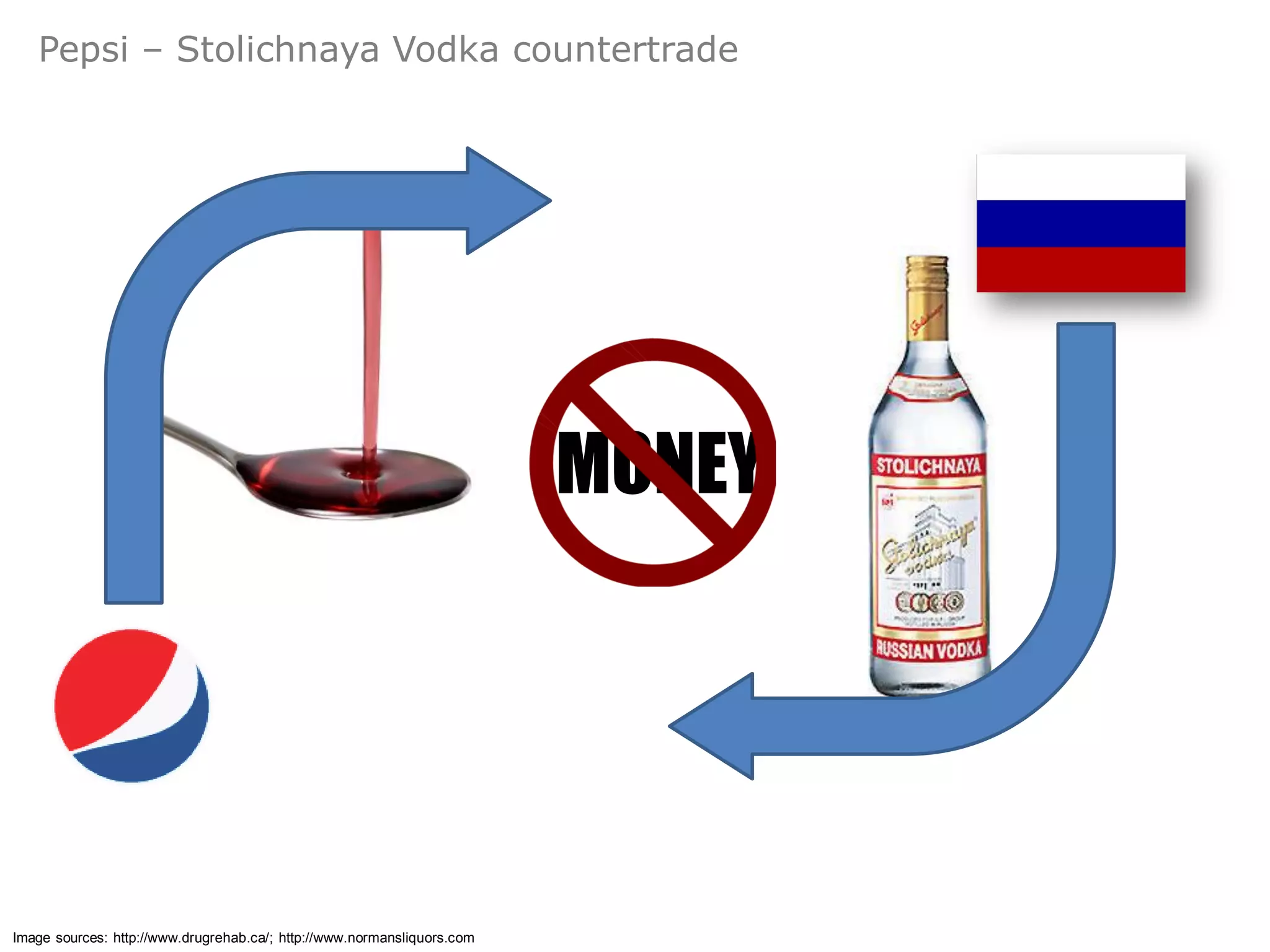
Pepsi – Stolichnaya Vodka countertrade


                                                                         MONEY


Image sources: http://www.drugrehab.ca/; http://www.normansliquors.com
Homework


           review Chapter 13

           do quiz (Blackboard)

           read Chapter 14 – Direct
           Investment and Collaborative
           Strategies

           CASE: be prepared to discuss
           Getting Airline Alliances off the
           Ground
IAF605 week 10 chapter 13 export and import strategies

IAF605 week 10 chapter 13 export and import strategies

  • 1.
    IAF 605 -International Business Management Export and Import Strategies Week 10
  • 2.
  • 3.
    Agenda Review Chapter 12 Chapter 13 – Export and Import Strategies
  • 4.
  • 5.
    Chapter Objectives To introducethe ideas of export and import To identify the elements of export and exporting strategies To compare direct and indirect selling of exporting To identify the elements of import and importing strategies To discuss the types and roles of third-party intermediaries To discuss the role of countertrade
  • 6.
    Exports & Imports Exporting - sale of goods or services produced by a company based in one country to customers that reside in a different country. Importing - purchase of goods or services by a company based in one country from sellers that reside in another.
  • 7.
    To export ornot export – that is the question! what do we want will it place consistent with to gain from demands on our our other goals? exporting? key resources? fit with our current how will we meet leverage our core value chain these demands? competency? configuration? coordination develop new systems support cost/benefit? domestic business the needs posed instead? by exporting? Source: thehamletweblog.blogspot.com
  • 8.
    Strategic Advantages ofExporting Lower investment way to enter foreign markets Lower risk way to enter foreign markets but lower return on sales E x p a n d s sales Achieves economie$ of scale Profit Potential
  • 9.
    Size doesn’t matter export intensity of a firm is related to and often determined by firm-specific feature that are independent of its size Image source: http://i.dailymail.co.uk/
  • 10.
    Export Development –2 views incremental internationalization born-global
  • 11.
    Incremental Internationalization -3 Phases of Export Development
  • 12.
    Pitfalls of Exporting adjusting financial management customer demand for greater range of services; competition = less negotiating power technology = instant communication…no time to deal with issues see p484-485 for 12 additional stumbling blocks
  • 13.
    Designing an ExportStrategy to Avoid Making Mistakes assess export potential obtain expert counseling (banks, lawyers, EDC, agents..) select a market or markets where you will focus your exports formulate and implement your strategy (see Table 13.2 – page 488)
  • 14.
    Figure 13.3 TheInternational Transaction Chain (page 485)
  • 15.
    Types of Importers Those looking for any product around the world to import and sell. Those looking for foreign sourcing to get highest quality products at the cheapest price. Those using foreign sourcing as part of their global supply chain.
  • 16.
    Why Import? StrategicAdvantages of Imports Specialization of Labor Global Rivalry Local Unavailability Diversification of Operating Risks
  • 17.
    Import Brokers andCustoms Agencies import brokers help by customs brokers help by • valuing products to qualify for more • providing procedural assistance favorable duty treatment • efficiency improvement via • qualifying products for duty technologies and systems refunds through drawback provisions • deferring duties by using bonded warehouses and foreign trade zones • providing document and paper- flow management • limiting liability by properly marking an import’s country of origin
  • 18.
    Import Documentation documents to determine if customs will release the shipment documents for duty and statistical purposes usually include an entry manifest, commercial invoice and a packing list
  • 19.
    Principal types ofexporting: direct and indirect goods and services are sold to an independent party outside of the exporter’s home country.
  • 20.
    Indirect Selling Exporters may deal directly with: indirectly through third- agents or distributors in other types of trading party intermediaries, a foreign country companies such as EMC’s or ETC’s
  • 21.
    Direct Selling Internet marketing - Through distributors allowing many small- who usually deal To foreign retailers and medium-sized with retailers instead and end users companies to access of end users export markets as never before
  • 22.
    Export Documentation shipper’s pro forma bill of consular export invoice lading invoice declaration certificate commercial export of origin invoice packing list
  • 23.
    Pro Forma Invoice Purpose • used to declare value for customs • commitment from the seller to provide specified goods to the buyer at specific prices Critical information • selling terms, price and delivery
  • 24.
    Commercial Invoice Purpose • Generate payment for goods • Provide valuation for customs (duties) • Ensure compliance Critical information • description of goods/markings • quantity and value • selling & delivery terms, instructions • seller and buyer information
  • 25.
    Bill of Lading Purpose • Contract between shipper and carrier • document of title Critical information • complete description of goods • quantity • delivery instructions • names/addresses of all 3 parties Source: carbonless.net
  • 26.
    Consular/Customs Invoice Purpose • Satisfy customs requirements in certain countries…especially Canada Critical information • Information contained in commercial invoice, country of origin Source: http://www.cbsa-asfc.gc.ca
  • 27.
    Certificate of Origin Purpose • verify source of goods for correct duty rate Critical information: • notarization by local Chamber of Commerce or other external source
  • 28.
    Export Declaration Purpose When needed • Statistical analysis of trade • Shipments over $2000 and export control anywhere EXCEPT U.S. • controlled /regulated Critical information: /prohibited goods • product description including HS code • quantity • value FOB point of exit Note: Canada and U.S. • origin of goods including share import information PROVINCE if origin is Canada with each other. Source: http://www.cbsa-asfc.gc.ca
  • 29.
  • 30.
    Regulatory Assistance national/provincial/local trade offices freight forwarders international banks trade consultants
  • 31.
    Countertrade - whengoods and services are traded for each other. used when a firm exports to a country whose currency creates barriers to efficient trade or country does not have enough cash or credit common types are:  barter (avoid money-based exchange)  buyback, offset, and counter purchase (reciprocal commitments) inefficient but provides flexibility
  • 32.
    Pepsi – StolichnayaVodka countertrade MONEY Image sources: http://www.drugrehab.ca/; http://www.normansliquors.com
  • 33.
    Homework review Chapter 13 do quiz (Blackboard) read Chapter 14 – Direct Investment and Collaborative Strategies CASE: be prepared to discuss Getting Airline Alliances off the Ground