Hypothermia
   David Caro, MD
   University of Florida
   Emergency Medicine
Introduction
   Definition
   Etiology
   Epidemiology
   Physiology
   Impact on organ systems
Introduction (cont’d)
   Response of organ systems
   Identification
   Treatment modalities
   Sequelae
   Review
Physiology
   The hypothalamus is your
    temperature control center
   Core and peripheral receptors
    provide temperature information
   Various responses help maintain
    temperature homeostasis
       Cut heat loss; generate heat!
Physiology – Heat
Generation
   Basal Metabolic Rate = 40-60
    Kcal/m2
   Movement, shivering can increase
    the BMR 2 to 5 x normal
Physiology: The physics
of temperature
homeostasis
   4 ways heat is lost
     Radiation (65%)
     Evaporation (25%)

     Convection (5-10%)

     Conduction (2-5%) (except in
      immersion; cold water conductivity
      32 times that of air)
Physiology
   Our body responds to decreased
    temperature by attempting to:
       Decrease heat loss
          Vasoconstriction

          Behavior    modification
       Increase heat production
          Shivering

       Am J Physiol 1997 Feb;272(2 Pt
        2):R557-62
Hypothermia-Definition
   A core body temperature below
    96.8oF
   Mild hypothermia = 92 – 96.8oF
   Moderate = 88 – 92oF
   Severe = < 88oF
   “They’re not dead until they’re
    warm and dead.” One case report
    of recovery after accidental 15.2oC
    (59.4F) hypothermia.
Hypothermia –
Morbidity/Mortality
   Mild hypothermia – very little
   Moderate – one study showed a
    mortality rate of 21% for moderate
    hypothermia
Clinical features
   Mild: shivering, loss of fine motor
    control
   Moderate: lethargy, confusion
   Severe: pupillary dilation, coma,
    cardiovascular irritability and
    eventual collapse
Hypothermia
Etiology Overview
   Increase in heat loss
   Decrease in heat production
   Thermoregulatory failure
Etiology
Increased Heat Loss
   Exposure to ambient temperature
    drop
     Trauma
     Alcohol/drugs
         Cutaneous  vasodilation, impaired
         shivering, decreased awareness of
         environment , Wernicke’s
         encephalopathy (Eur J Appl
         Physiol 1996;74(3):293-5. Also,
         Ann Neurol 1981 Oct;
         10(4):384-7)
Etiology
Increased Heat Loss
   Exposure (cont’d)
     Sports
     Altitude
Etiology
    Increased Heat Loss
   Exposure (cont’d)
        Immersion
             Significant risk begins in water colder than
              25 C (72 F). The water temperature of
              Lake Huron is approximately 4.6 C (40 F)
              in May and is highest in August at 19 C
              (66 F).
             Hypothermia can occur rapidly during
              cold-water immersion (one hour or less
              when water temperature is below 45oF).

             Core temp drops 0.3C in 20 min when
              immersed in 22C (Am J Phys Med
              Rehabil 1999 Jan-Feb; 78(1):33-8.
Etiology
Decreased Heat Production
   Acute Illness
       Metabolic abnormalities
          DKA

          Hypoglycemia

          Myxedema  coma
          Hypoadrenalism
Etiology
Impaired Thermoregulation
     Sepsis
       ↓  lymphocyte activation
        ↓ IL-1,2,6 (Anesthesiology 1998
         Nov; 89(5):1133-40. J
         Neurotrauma 1999 Mar; 16(3):
         225-32)
   CVA
   Autonomic dysfunction
Impact on Organ
Systems
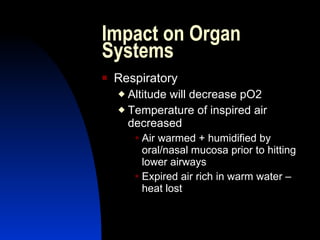
   Respiratory
     Altitude will decrease pO2
     Temperature of inspired air
      decreased
         Airwarmed + humidified by
          oral/nasal mucosa prior to hitting
          lower airways
         Expired air rich in warm water –
          heat lost
Impact on organ
systems
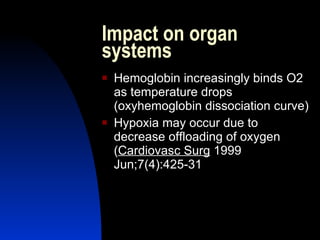
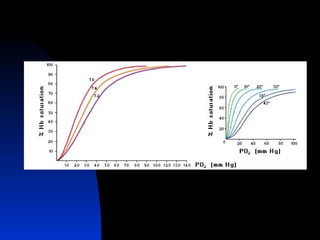
   Hemoglobin increasingly binds O2
    as temperature drops
    (oxyhemoglobin dissociation curve)
   Hypoxia may occur due to
    decrease offloading of oxygen
    (Cardiovasc Surg 1999
    Jun;7(4):425-31
Organ System Response
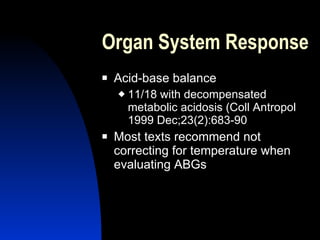
   Acid-base balance
       11/18 with decompensated
        metabolic acidosis (Coll Antropol
        1999 Dec;23(2):683-90
   Most texts recommend not
    correcting for temperature when
    evaluating ABGs
Impact on Organ
Systems
   Cardiac
       Repolarization becomes abnormal
        with decreasing temperature
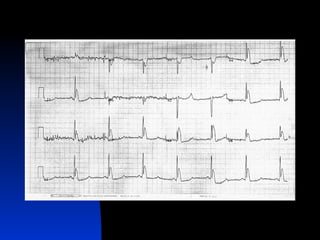
          Osborn   Wave – lead V3 or V4
     Increasing cardiac irritability with
      decreasing temperature
     QT prolongation (0.45-0.688 vs.
      0.343-0.444; Coll Antropol 1999
      Dec; 23(2):683-90)
Osborn Wave
   86% of hypothermic patients (Acad
    Emerg Med 1999 Nov;
    6(11):1121-6)
   Voltage gradient due to action
    potential notch in epicardium;
    epicardium activated later, which
    manifests as notching or J-point
    elevation (Circulation 1996 Jan
    15;93(2):372-9)
Impact on Organ
systems
   Cardiac
     Mild: Tachycardia, hypertension,
      increased CO
     Moderate: Bradycardia,
      Arrhythmias
     Severe: Arrhythmias, hypotension,
      decreased cardiac output
     Below 30C, ventricular fibrillation
      risk increases
Impact on Organ
Systems
   Neurologic
     Decreasing metabolic activity of
      neurons; therefore, decreased O2
      requirement
     Linear decrease in CNS function
      as temperature decreases
     Neuron function stops below 20C
Organ System Response
   Neurologic
       Decline in mental status
          Mild confusion
          Delirium

          Coma

     Peripheral anesthesia
     Ataxia
Impact on Organ
Systems
   Renal
     Hypothermia impairs renal
      concentrating abilities
     “Cold-induced diuresis”

     Potential rhabdomyolysis → ATN
Impact on Organ
Systems
   Gastrointestinal
       Pancreatitis ± pancreatic necrosis
        can develop due to HT
Impact on Organ
Systems
   Hematologic
     Hemoconcentration
     Increased blood viscosity

     Decreased flow in capillaries

     Potential for thrombosis

     Potential for DIC
Impact on Organ
Systems
   Musculoskeletal
     Temperature extremes can cause
      crystallization of blood in
      capillaries of extremities
     Cutaneous vasoconstriction occurs
      in response to lower ambient
      temperature
Organ System Response
   Musculoskeletal
     Frostbite
     Gangrene
Frostbite
   Grade as burns
       1st degree
          Erythema,  edema, burning
          Swelling for ten days or more

          Desquamation

          Parathesias, aching, and necrosis
           of the pressure points of the foot
          Increased sensitivity to cold,
           hyperhydrosis
Frostbite
   Grading
       Second degree
         progresses to blister formation,
          anesthesia, and deep color change
Frostbite
    Third degree
       involvesfull skin thickness and
        extends into the subcutaneous
        tissue
       Subfascial pressure increases;
        compartment syndromes are
        common
Frostbite
   4th degree
     Destruction of entire thickness
     Cyanotic, insensitive; hemorrhagic
      blister formation.
     Severe pain on rewarming
     Dry gangrene can progress quickly
      with mummification.
     The line of demarcation becomes
      obvious at 20-36 days and extends
      into the bone in 60 or more days.
Trenchfoot
   Caused by prolonged exposure of the
    feet to cool, wet conditions.
   The skin is initially reddened with
    numbness, tingling pain, and itching then
    becomes pale and mottled and finally
    dark purple, grey or blue.
   If circulation is impaired for more than 6
    hours there will be permanent damage to
    tissue.
   If circulation is impaired for more than 24
    hours the victim may lose the entire foot.
Hypothermia
Identification
   Thermometry
     Most thermometers’ lower
      temperature limit is 93oF
     A special low-temperature-reading
      thermometer is necessary to read
      temperatures lower than 93
Evaluation
   ABCDEs are the priority
   Handle patients gently
   Begin passive rewarming
    immediately
   Cautious ACLS care (coming up)
Evaluation
   History is essential
     Environment/exposure
     PMH

     Medications

   Exam – be complete!
     Rectal temperature!
     Vital signs
Evaluation
   Head-to-toe secondary exam
   Neuro exam important – especially
    cranial nerves (Wernicke’s)
   CV exam
   Extremities/nose/ears/other end-
    arterial places
Evaluation
   Testing
     Cardiac monitor, EKG
     SaO2, ±ABG

     Electrolytes, CBC
     UA

   If severe:
       LFTS, PT/PTT, CK (rhabdo)
Treatment
   General Rx for various degrees of
    hypothermia
   Specific Rx for sequelae
     CV
     Respiratory

     ATN/Rhabdo

     Frostbite/gangrene
Treatment Modalities –
Mild hypothermia
   Warm room
   Cover with dry, warm blankets
   Radiant warming
   Warmed p.o. fluids
Treatment Modalities –
moderate hypothermia
   ABCs – every patient
     Airway, Breathing – warm,
      humidified air by ETT or NRBfm
     Circulation – IV access; warmed
      crystalloid
   All of the above
   Bear Hugger
Treatment Modalities –
Severe Hypothermia
   All of the above
   Invasive modalities
     NG, foley lavage
     Pleural, peritoneal lavage

     Dialysis or Cardiac bypass
Treatment Modalities
    How effective are they?
    Reflective Foil – 0.3C/hr Ann Emerg Med
     2000 Apr; 35(40):337-45
    Warmed IVF – 1.0C/hr J Clin Anesth
     1998 Aug;10(5):380-5.
    Warm IVF, Warm/humdified oxygen,
     blankets – 1.4 C/hr Ann Emerg Med
     1996 Apr;27(4):479-84
    Bear-Hugger – 0.7C/hr Ann Emerg Med
     2000 Apr; 35(40):337-45; IVF/humidified
     O2/BH – 2.4C/hr Ann Emerg Med 1996
     Apr 27(4):479-84
Treatment Ideas
   Aviat Space Environ Med 1992
    Dec;63(12):1070-6
       Total immersion in 42C bath – 10.2C/hr
       Blankets – 0.2C/hr
   J Appl Physiol 1998 Nov;85(5):867-8
       Subatmospheric pressure to limbs while
        applying warm-water blanket increased
        rewarming 10-fold over WWB alone
        (13.6C/hr vs. 1.4C/hr)
Treatment modalities-
Sequlae
   Ventricular Fibrillation; MI
   Renal Failure
   DIC
   Frostbite
   Gangrene
   Afterdrop
Afterdrop
   Paradoxical drop in core temp
    during rewarming
   Due to influx of cold blood from
    periphery
   Can precipitate arrhythmias
Treatment of sequelae
   Ventricular fibrillation
     Cold heart very irritable
     Will not respond to multiple rounds
      of drugs
     Shock – 3 times, then wait until
      warm
     Bretylium your drug of choice
      (ACLS Guidelines)
Treatment of sequelae
   Renal Failure
     Rhabdomyolysis : force fluids;
      alkalinization
     Cold-diuresis : fluids, watch
      electrolytes
Treatment of sequelae
   Frostbite
     Narcotics!
     Warm water immersion – warm,
      wet heat is best.
         Do NOT warm then allow to
         refreeze. Better to keep frozen
         until definitive care is available.
Treatment of sequelae -
Afterdrop
   Try to avoid – aggressive
    rewarming
   Expect arrhythmias, be prepared to
    treat
Hypothermia
Summary
   Physiology plays a HUGE role
     Etiology
     Treatment

   History is key
   Rectal temp with low-reading
    thermometer
   Treat temperature aggressively,
    but handle patient gently
   Watch for afterdrop!
Text References
   Ann Emerg Med 1993 Feb;22(2
    Pt 2):370-7
   Wilderness Medicine – Auerbach
   Rosen’s Principles of
    Emergency Medicine

Hypothermia

  • 1.
    Hypothermia David Caro, MD University of Florida Emergency Medicine
  • 2.
    Introduction  Definition  Etiology  Epidemiology  Physiology  Impact on organ systems
  • 3.
    Introduction (cont’d)  Response of organ systems  Identification  Treatment modalities  Sequelae  Review
  • 4.
    Physiology  The hypothalamus is your temperature control center  Core and peripheral receptors provide temperature information  Various responses help maintain temperature homeostasis  Cut heat loss; generate heat!
  • 5.
    Physiology – Heat Generation  Basal Metabolic Rate = 40-60 Kcal/m2  Movement, shivering can increase the BMR 2 to 5 x normal
  • 6.
    Physiology: The physics oftemperature homeostasis  4 ways heat is lost  Radiation (65%)  Evaporation (25%)  Convection (5-10%)  Conduction (2-5%) (except in immersion; cold water conductivity 32 times that of air)
  • 7.
    Physiology  Our body responds to decreased temperature by attempting to:  Decrease heat loss  Vasoconstriction  Behavior modification  Increase heat production  Shivering  Am J Physiol 1997 Feb;272(2 Pt 2):R557-62
  • 8.
    Hypothermia-Definition  A core body temperature below 96.8oF  Mild hypothermia = 92 – 96.8oF  Moderate = 88 – 92oF  Severe = < 88oF  “They’re not dead until they’re warm and dead.” One case report of recovery after accidental 15.2oC (59.4F) hypothermia.
  • 9.
    Hypothermia – Morbidity/Mortality  Mild hypothermia – very little  Moderate – one study showed a mortality rate of 21% for moderate hypothermia
  • 10.
    Clinical features  Mild: shivering, loss of fine motor control  Moderate: lethargy, confusion  Severe: pupillary dilation, coma, cardiovascular irritability and eventual collapse
  • 11.
    Hypothermia Etiology Overview  Increase in heat loss  Decrease in heat production  Thermoregulatory failure
  • 12.
    Etiology Increased Heat Loss  Exposure to ambient temperature drop  Trauma  Alcohol/drugs  Cutaneous vasodilation, impaired shivering, decreased awareness of environment , Wernicke’s encephalopathy (Eur J Appl Physiol 1996;74(3):293-5. Also, Ann Neurol 1981 Oct; 10(4):384-7)
  • 13.
    Etiology Increased Heat Loss  Exposure (cont’d)  Sports  Altitude
  • 14.
    Etiology Increased Heat Loss  Exposure (cont’d)  Immersion  Significant risk begins in water colder than 25 C (72 F). The water temperature of Lake Huron is approximately 4.6 C (40 F) in May and is highest in August at 19 C (66 F).  Hypothermia can occur rapidly during cold-water immersion (one hour or less when water temperature is below 45oF).  Core temp drops 0.3C in 20 min when immersed in 22C (Am J Phys Med Rehabil 1999 Jan-Feb; 78(1):33-8.
  • 15.
    Etiology Decreased Heat Production  Acute Illness  Metabolic abnormalities  DKA  Hypoglycemia  Myxedema coma  Hypoadrenalism
  • 16.
    Etiology Impaired Thermoregulation  Sepsis ↓ lymphocyte activation  ↓ IL-1,2,6 (Anesthesiology 1998 Nov; 89(5):1133-40. J Neurotrauma 1999 Mar; 16(3): 225-32)  CVA  Autonomic dysfunction
  • 17.
    Impact on Organ Systems  Respiratory  Altitude will decrease pO2  Temperature of inspired air decreased  Airwarmed + humidified by oral/nasal mucosa prior to hitting lower airways  Expired air rich in warm water – heat lost
  • 18.
    Impact on organ systems  Hemoglobin increasingly binds O2 as temperature drops (oxyhemoglobin dissociation curve)  Hypoxia may occur due to decrease offloading of oxygen (Cardiovasc Surg 1999 Jun;7(4):425-31
  • 19.
    Organ System Response  Acid-base balance  11/18 with decompensated metabolic acidosis (Coll Antropol 1999 Dec;23(2):683-90  Most texts recommend not correcting for temperature when evaluating ABGs
  • 21.
    Impact on Organ Systems  Cardiac  Repolarization becomes abnormal with decreasing temperature  Osborn Wave – lead V3 or V4  Increasing cardiac irritability with decreasing temperature  QT prolongation (0.45-0.688 vs. 0.343-0.444; Coll Antropol 1999 Dec; 23(2):683-90)
  • 22.
    Osborn Wave  86% of hypothermic patients (Acad Emerg Med 1999 Nov; 6(11):1121-6)  Voltage gradient due to action potential notch in epicardium; epicardium activated later, which manifests as notching or J-point elevation (Circulation 1996 Jan 15;93(2):372-9)
  • 24.
    Impact on Organ systems  Cardiac  Mild: Tachycardia, hypertension, increased CO  Moderate: Bradycardia, Arrhythmias  Severe: Arrhythmias, hypotension, decreased cardiac output  Below 30C, ventricular fibrillation risk increases
  • 25.
    Impact on Organ Systems  Neurologic  Decreasing metabolic activity of neurons; therefore, decreased O2 requirement  Linear decrease in CNS function as temperature decreases  Neuron function stops below 20C
  • 26.
    Organ System Response  Neurologic  Decline in mental status  Mild confusion  Delirium  Coma  Peripheral anesthesia  Ataxia
  • 27.
    Impact on Organ Systems  Renal  Hypothermia impairs renal concentrating abilities  “Cold-induced diuresis”  Potential rhabdomyolysis → ATN
  • 28.
    Impact on Organ Systems  Gastrointestinal  Pancreatitis ± pancreatic necrosis can develop due to HT
  • 29.
    Impact on Organ Systems  Hematologic  Hemoconcentration  Increased blood viscosity  Decreased flow in capillaries  Potential for thrombosis  Potential for DIC
  • 30.
    Impact on Organ Systems  Musculoskeletal  Temperature extremes can cause crystallization of blood in capillaries of extremities  Cutaneous vasoconstriction occurs in response to lower ambient temperature
  • 31.
    Organ System Response  Musculoskeletal  Frostbite  Gangrene
  • 32.
    Frostbite  Grade as burns  1st degree  Erythema, edema, burning  Swelling for ten days or more  Desquamation  Parathesias, aching, and necrosis of the pressure points of the foot  Increased sensitivity to cold, hyperhydrosis
  • 33.
    Frostbite  Grading  Second degree  progresses to blister formation, anesthesia, and deep color change
  • 34.
    Frostbite  Third degree  involvesfull skin thickness and extends into the subcutaneous tissue  Subfascial pressure increases; compartment syndromes are common
  • 35.
    Frostbite  4th degree  Destruction of entire thickness  Cyanotic, insensitive; hemorrhagic blister formation.  Severe pain on rewarming  Dry gangrene can progress quickly with mummification.  The line of demarcation becomes obvious at 20-36 days and extends into the bone in 60 or more days.
  • 36.
    Trenchfoot  Caused by prolonged exposure of the feet to cool, wet conditions.  The skin is initially reddened with numbness, tingling pain, and itching then becomes pale and mottled and finally dark purple, grey or blue.  If circulation is impaired for more than 6 hours there will be permanent damage to tissue.  If circulation is impaired for more than 24 hours the victim may lose the entire foot.
  • 37.
    Hypothermia Identification  Thermometry  Most thermometers’ lower temperature limit is 93oF  A special low-temperature-reading thermometer is necessary to read temperatures lower than 93
  • 38.
    Evaluation  ABCDEs are the priority  Handle patients gently  Begin passive rewarming immediately  Cautious ACLS care (coming up)
  • 39.
    Evaluation  History is essential  Environment/exposure  PMH  Medications  Exam – be complete!  Rectal temperature!  Vital signs
  • 40.
    Evaluation  Head-to-toe secondary exam  Neuro exam important – especially cranial nerves (Wernicke’s)  CV exam  Extremities/nose/ears/other end- arterial places
  • 41.
    Evaluation  Testing  Cardiac monitor, EKG  SaO2, ±ABG  Electrolytes, CBC  UA  If severe:  LFTS, PT/PTT, CK (rhabdo)
  • 42.
    Treatment  General Rx for various degrees of hypothermia  Specific Rx for sequelae  CV  Respiratory  ATN/Rhabdo  Frostbite/gangrene
  • 43.
    Treatment Modalities – Mildhypothermia  Warm room  Cover with dry, warm blankets  Radiant warming  Warmed p.o. fluids
  • 44.
    Treatment Modalities – moderatehypothermia  ABCs – every patient  Airway, Breathing – warm, humidified air by ETT or NRBfm  Circulation – IV access; warmed crystalloid  All of the above  Bear Hugger
  • 45.
    Treatment Modalities – SevereHypothermia  All of the above  Invasive modalities  NG, foley lavage  Pleural, peritoneal lavage  Dialysis or Cardiac bypass
  • 46.
    Treatment Modalities How effective are they?  Reflective Foil – 0.3C/hr Ann Emerg Med 2000 Apr; 35(40):337-45  Warmed IVF – 1.0C/hr J Clin Anesth 1998 Aug;10(5):380-5.  Warm IVF, Warm/humdified oxygen, blankets – 1.4 C/hr Ann Emerg Med 1996 Apr;27(4):479-84  Bear-Hugger – 0.7C/hr Ann Emerg Med 2000 Apr; 35(40):337-45; IVF/humidified O2/BH – 2.4C/hr Ann Emerg Med 1996 Apr 27(4):479-84
  • 47.
    Treatment Ideas  Aviat Space Environ Med 1992 Dec;63(12):1070-6  Total immersion in 42C bath – 10.2C/hr  Blankets – 0.2C/hr  J Appl Physiol 1998 Nov;85(5):867-8  Subatmospheric pressure to limbs while applying warm-water blanket increased rewarming 10-fold over WWB alone (13.6C/hr vs. 1.4C/hr)
  • 48.
    Treatment modalities- Sequlae  Ventricular Fibrillation; MI  Renal Failure  DIC  Frostbite  Gangrene  Afterdrop
  • 49.
    Afterdrop  Paradoxical drop in core temp during rewarming  Due to influx of cold blood from periphery  Can precipitate arrhythmias
  • 50.
    Treatment of sequelae  Ventricular fibrillation  Cold heart very irritable  Will not respond to multiple rounds of drugs  Shock – 3 times, then wait until warm  Bretylium your drug of choice (ACLS Guidelines)
  • 51.
    Treatment of sequelae  Renal Failure  Rhabdomyolysis : force fluids; alkalinization  Cold-diuresis : fluids, watch electrolytes
  • 52.
    Treatment of sequelae  Frostbite  Narcotics!  Warm water immersion – warm, wet heat is best.  Do NOT warm then allow to refreeze. Better to keep frozen until definitive care is available.
  • 53.
    Treatment of sequelae- Afterdrop  Try to avoid – aggressive rewarming  Expect arrhythmias, be prepared to treat
  • 54.
    Hypothermia Summary  Physiology plays a HUGE role  Etiology  Treatment  History is key  Rectal temp with low-reading thermometer  Treat temperature aggressively, but handle patient gently  Watch for afterdrop!
  • 55.
    Text References  Ann Emerg Med 1993 Feb;22(2 Pt 2):370-7  Wilderness Medicine – Auerbach  Rosen’s Principles of Emergency Medicine