HIGH ALTITUDE
ILLNESS
By:- ROHIT MISHRA
Definition
• High-altitude illness, or sickness, is a condition
that can occur when your body doesn’t get
enough oxygen.
• It is a common problem people have when
they go to the mountains.
• When you go from low to high altitudes, your
body has a hard time adjusting to the change
in oxygen levels.
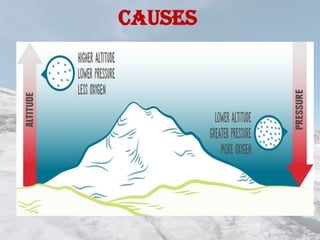
CAUSES
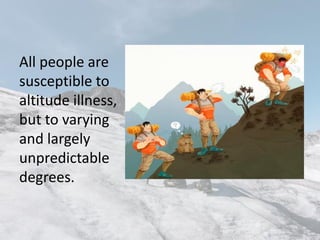
All people are
susceptible to
altitude illness,
but to varying
and largely
unpredictable
degrees.
WHERE??..
• Most cases are seen at
elevation above 8,000 ft.,
although it is observed as low
as 5,000 ft.
PHYSIOLOGY
• Increased in respiratory rate and
depth
• Increases blood pH
• Increase urination to buffer the
change
Physiology of altitude acclimatization
• Increase in red blood cell production
• Increase in the ability to efficiently
carry and use oxygen
PREVENTION
• Maintain hydration
• Maintain nutrition
• Climb high and sleep low
• Ascend gradually; 2,000 ft./day above 8,000 ft.
• Pay attention to past history of altitude illness.
• Consider prophylactic use of diamox
(acetazolamide).
• Maintain a high index of suspicion for any
changes in behaviour or ability to walk.
• Avoid alcohol and vigorous exercise.
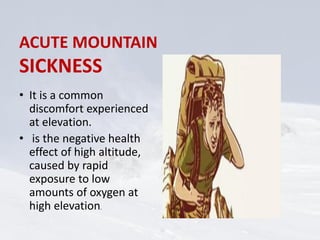
ACUTE MOUNTAIN
SICKNESS
• It is a common
discomfort experienced
at elevation.
• is the negative health
effect of high altitude,
caused by rapid
exposure to low
amounts of oxygen at
high elevation.
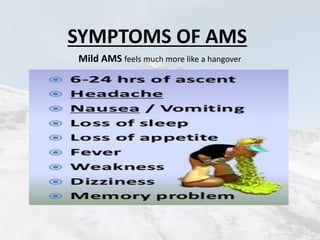
SYMPTOMS OF AMS
Mild AMS feels much more like a hangover
Severe AMS
• Altered LOR/ataxia
• Rales (fluid sounds in lungs)
• Cyanosis, shortness of breath at rest
• Poor overall impression (lassitude →
unresponsiveness →death)
HIGH-ALTITUDE CEREBRAL EDEMA
• High-altitude cerebral edema (HACE) is a
medical condition in which the brain swells
with fluid because of the physiological effects
of traveling to a high altitude.
PHYSIOLOGY
• Susceptible individuals have increased
cerebral blood flow and increased intracranial
pressure (ICP).
• Neurologic compromise results from
increasing ICP.
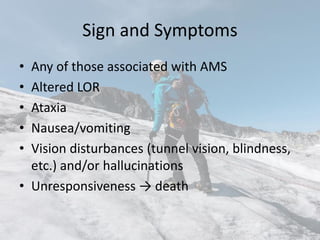
Sign and Symptoms
• Any of those associated with AMS
• Altered LOR
• Ataxia
• Nausea/vomiting
• Vision disturbances (tunnel vision, blindness,
etc.) and/or hallucinations
• Unresponsiveness → death
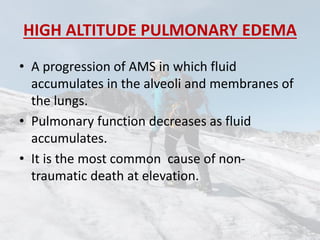
HIGH ALTITUDE PULMONARY EDEMA
• A progression of AMS in which fluid
accumulates in the alveoli and membranes of
the lungs.
• Pulmonary function decreases as fluid
accumulates.
• It is the most common cause of non-
traumatic death at elevation.
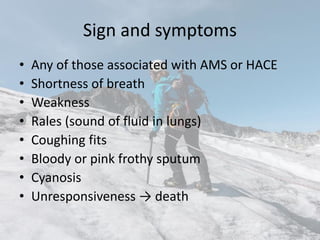
Sign and symptoms
• Any of those associated with AMS or HACE
• Shortness of breath
• Weakness
• Rales (sound of fluid in lungs)
• Coughing fits
• Bloody or pink frothy sputum
• Cyanosis
• Unresponsiveness → death
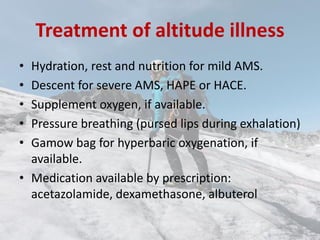
Treatment of altitude illness
• Hydration, rest and nutrition for mild AMS.
• Descent for severe AMS, HAPE or HACE.
• Supplement oxygen, if available.
• Pressure breathing (pursed lips during exhalation)
• Gamow bag for hyperbaric oxygenation, if
available.
• Medication available by prescription:
acetazolamide, dexamethasone, albuterol
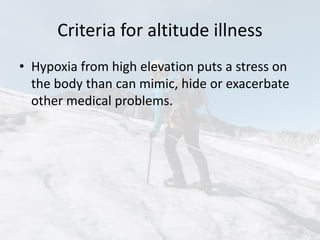
Criteria for altitude illness
• Hypoxia from high elevation puts a stress on
the body than can mimic, hide or exacerbate
other medical problems.
THANK YOU

High altitude illness

  • 1.
  • 2.
    Definition • High-altitude illness,or sickness, is a condition that can occur when your body doesn’t get enough oxygen. • It is a common problem people have when they go to the mountains. • When you go from low to high altitudes, your body has a hard time adjusting to the change in oxygen levels.
  • 3.
  • 4.
    All people are susceptibleto altitude illness, but to varying and largely unpredictable degrees.
  • 5.
    WHERE??.. • Most casesare seen at elevation above 8,000 ft., although it is observed as low as 5,000 ft.
  • 6.
    PHYSIOLOGY • Increased inrespiratory rate and depth • Increases blood pH • Increase urination to buffer the change
  • 7.
    Physiology of altitudeacclimatization • Increase in red blood cell production • Increase in the ability to efficiently carry and use oxygen
  • 8.
    PREVENTION • Maintain hydration •Maintain nutrition • Climb high and sleep low • Ascend gradually; 2,000 ft./day above 8,000 ft. • Pay attention to past history of altitude illness. • Consider prophylactic use of diamox (acetazolamide). • Maintain a high index of suspicion for any changes in behaviour or ability to walk. • Avoid alcohol and vigorous exercise.
  • 9.
    ACUTE MOUNTAIN SICKNESS • Itis a common discomfort experienced at elevation. • is the negative health effect of high altitude, caused by rapid exposure to low amounts of oxygen at high elevation.
  • 10.
    SYMPTOMS OF AMS MildAMS feels much more like a hangover
  • 11.
    Severe AMS • AlteredLOR/ataxia • Rales (fluid sounds in lungs) • Cyanosis, shortness of breath at rest • Poor overall impression (lassitude → unresponsiveness →death)
  • 12.
    HIGH-ALTITUDE CEREBRAL EDEMA •High-altitude cerebral edema (HACE) is a medical condition in which the brain swells with fluid because of the physiological effects of traveling to a high altitude.
  • 13.
    PHYSIOLOGY • Susceptible individualshave increased cerebral blood flow and increased intracranial pressure (ICP). • Neurologic compromise results from increasing ICP.
  • 14.
    Sign and Symptoms •Any of those associated with AMS • Altered LOR • Ataxia • Nausea/vomiting • Vision disturbances (tunnel vision, blindness, etc.) and/or hallucinations • Unresponsiveness → death
  • 15.
    HIGH ALTITUDE PULMONARYEDEMA • A progression of AMS in which fluid accumulates in the alveoli and membranes of the lungs. • Pulmonary function decreases as fluid accumulates. • It is the most common cause of non- traumatic death at elevation.
  • 16.
    Sign and symptoms •Any of those associated with AMS or HACE • Shortness of breath • Weakness • Rales (sound of fluid in lungs) • Coughing fits • Bloody or pink frothy sputum • Cyanosis • Unresponsiveness → death
  • 17.
    Treatment of altitudeillness • Hydration, rest and nutrition for mild AMS. • Descent for severe AMS, HAPE or HACE. • Supplement oxygen, if available. • Pressure breathing (pursed lips during exhalation) • Gamow bag for hyperbaric oxygenation, if available. • Medication available by prescription: acetazolamide, dexamethasone, albuterol
  • 18.
    Criteria for altitudeillness • Hypoxia from high elevation puts a stress on the body than can mimic, hide or exacerbate other medical problems.
  • 19.