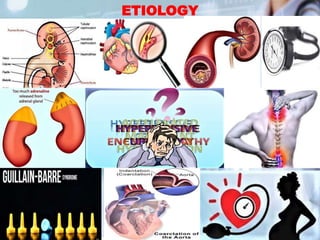
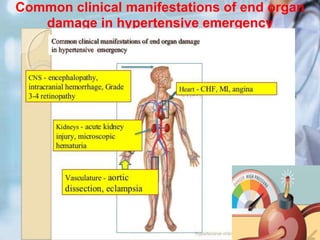
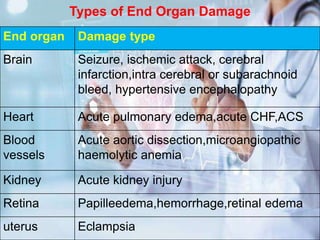
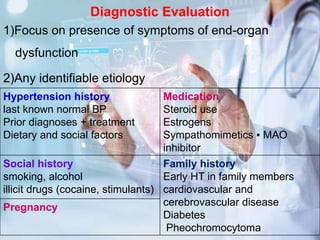
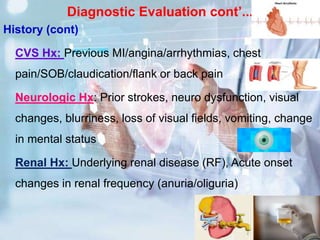
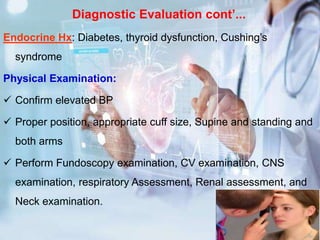
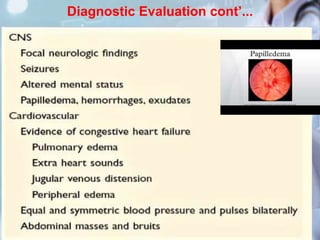
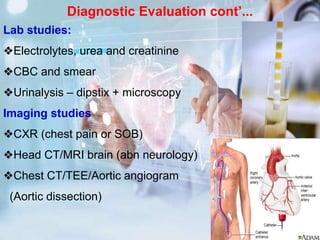
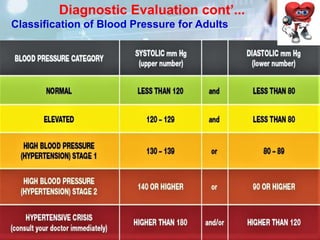
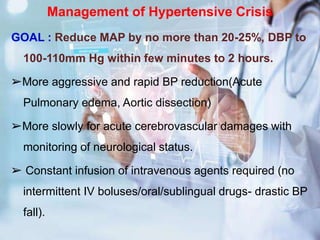
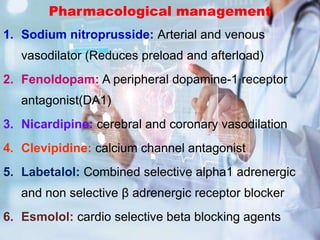
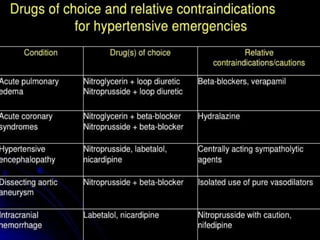
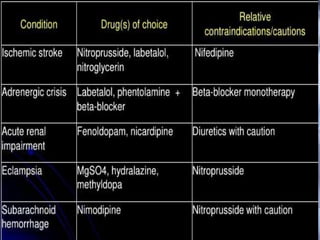
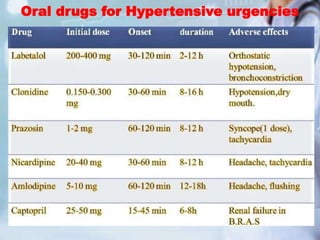
This document discusses hypertensive crisis, including its definition, causes, risk factors, clinical manifestations, diagnostic evaluation, and management. Hypertensive crisis is defined as a sudden severe elevation in blood pressure that can cause end organ damage if not promptly treated. The most common cause is poorly controlled essential hypertension. Clinical manifestations depend on the affected end organ and may include seizures, pulmonary edema, kidney injury, or retinal hemorrhage. Treatment involves rapidly lowering blood pressure by 20-25% using intravenous antihypertensive drugs to prevent further organ damage.











![Hypertensive Crisis diagnosis treatment [1].pptx](https://cdn.slidesharecdn.com/ss_thumbnails/hypertensivecrisis1-241128145637-9d731b1a-thumbnail.jpg?width=640&height=640&fit=bounds)


