Hygienic Poultry
Processing
Prepared by ;
JOSEPH P ALEX
COLLEGE OF AVIAN SCIENCE AND MANAGEMENT
Introduction
Poultry industry is growing faster
In India, poultry meat production ranks second to bovine meat
production
This growth of production directly reflects an increase in its
consumption
Hygiene in poultry processing -a major issue
Hygienic practices will - increase the quality and shelf life of meat
- reduce the contamination of the carcass
Hygienic poultry processing
Hygiene
According to the World Health Organization (WHO), "Hygiene
refers to conditions and practices that help to maintain health and
prevent the spread of diseases.
Poultry processing
Poultry processing is the term used by the poultry industry to
describe the conversion of live poultry into raw poultry products fit
for human consumption
Scalding
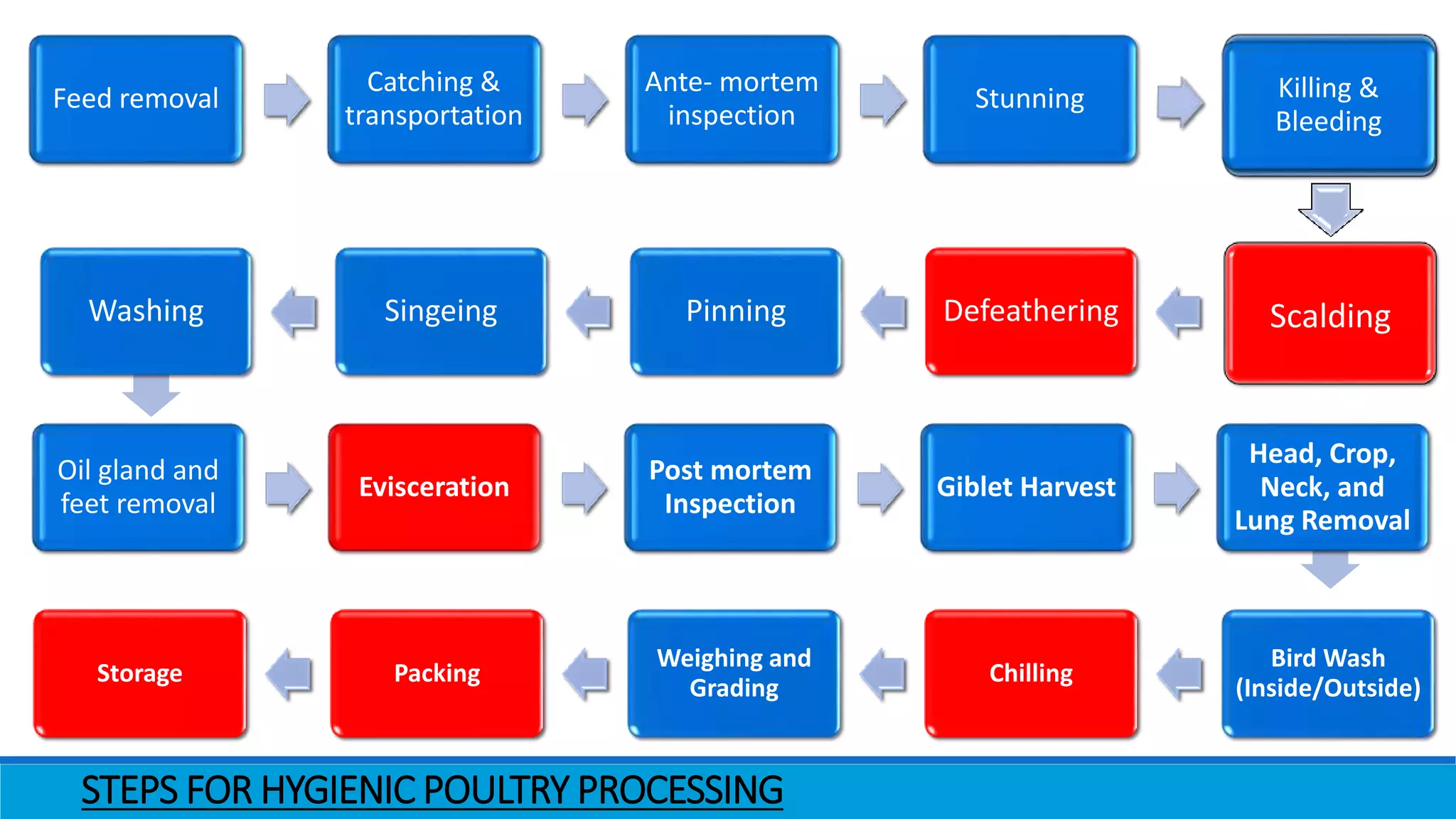
STEPS FOR HYGIENIC POULTRY PROCESSING
Feed removal
Catching &
transportation
Ante- mortem
inspection
Stunning Killing &
Bleeding
DefeatheringPinningSingeingWashing
Oil gland and
feet removal
Evisceration
Post mortem
Inspection
Giblet Harvest
Head, Crop,
Neck, and
Lung Removal
Bird Wash
(Inside/Outside)
Chilling
Weighing and
Grading
PackingStorage
Feed withdrawal
Feeders are raised above the reach of the bird
To reduce the extend of faecal contamination in processing
To avoid live shrinkage and decreased eviscerated yield
The optimum withdrawal time for feed is 12 hours prior to
processing
Catching
Equipment should be removed.
Caught at night or under dim light
Manually caught by shank and in large farms
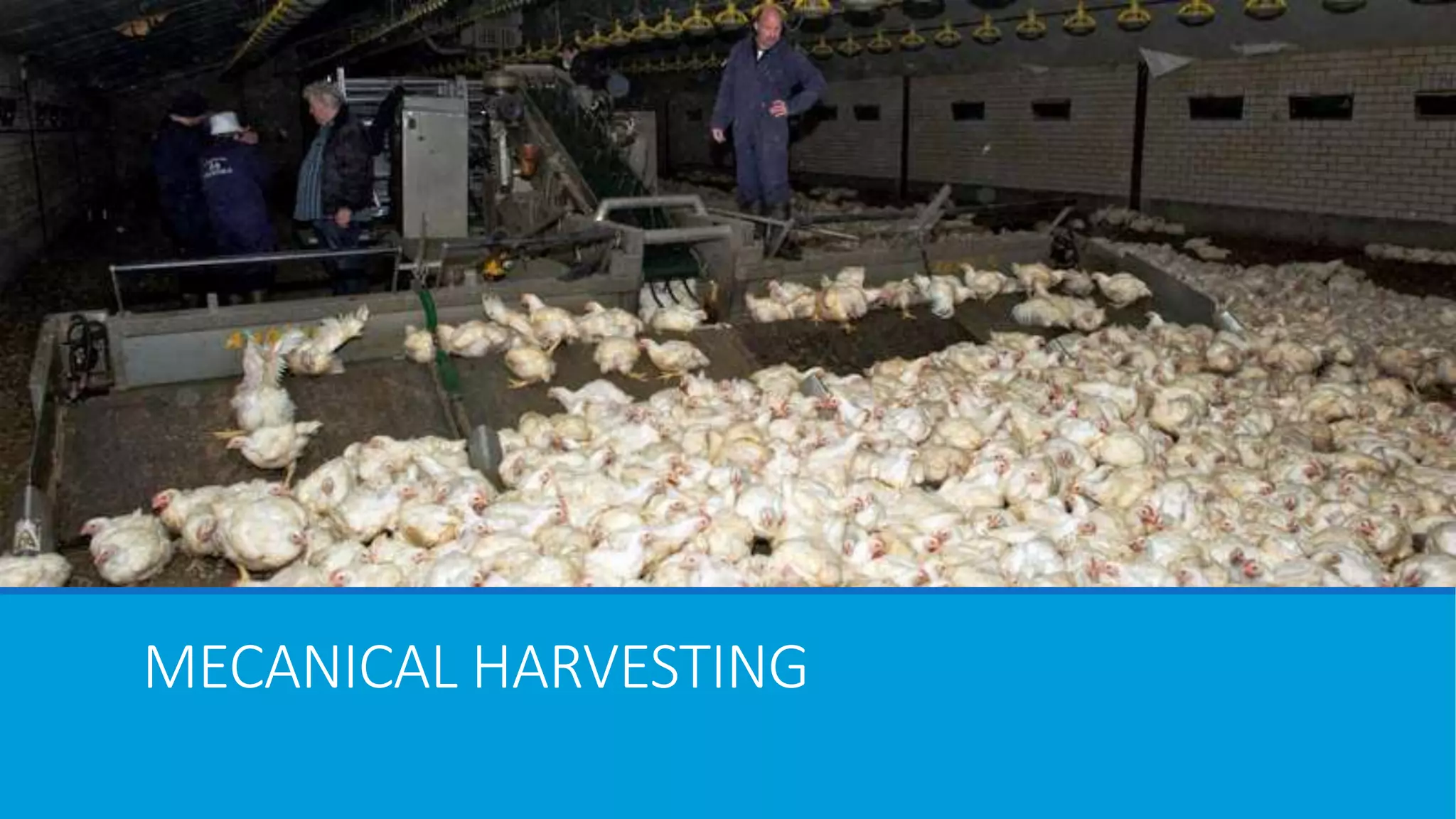
 Mechanical harvesters are used to reduce defects occurred while
manual catching
MECANICAL HARVESTING
Transportation – Live Birds
Usually transported at cooler hours
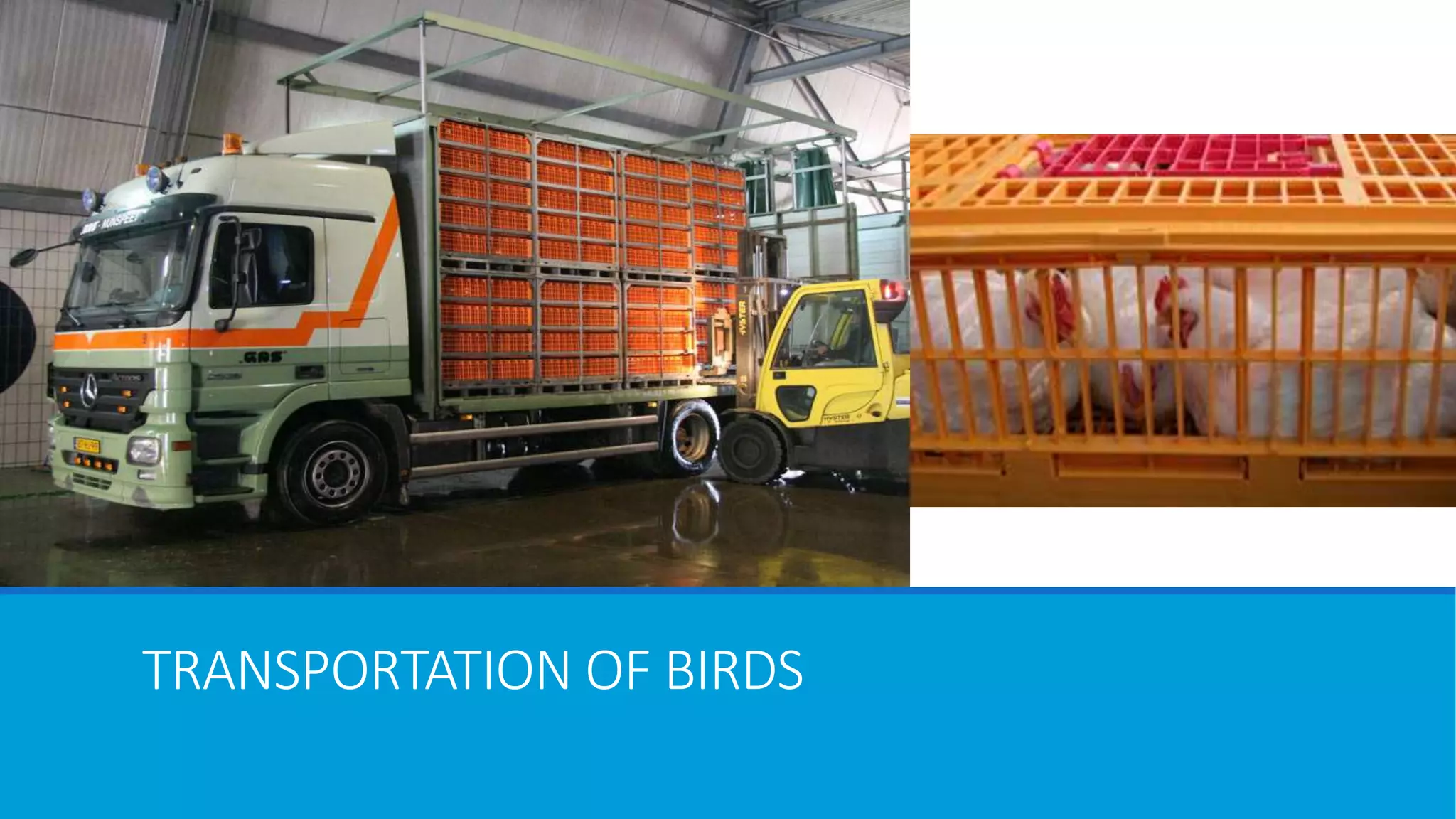
crates or cages are used
When the birds arrive allow them some rest time
Reducing their stress level
TRANSPORTATION OF BIRDS
Unloading
Unloading is gone manually
The crates can be unloaded onto a conveyer belt
The birds are then conveyed to the employee
Then they are place on a moving shackle line
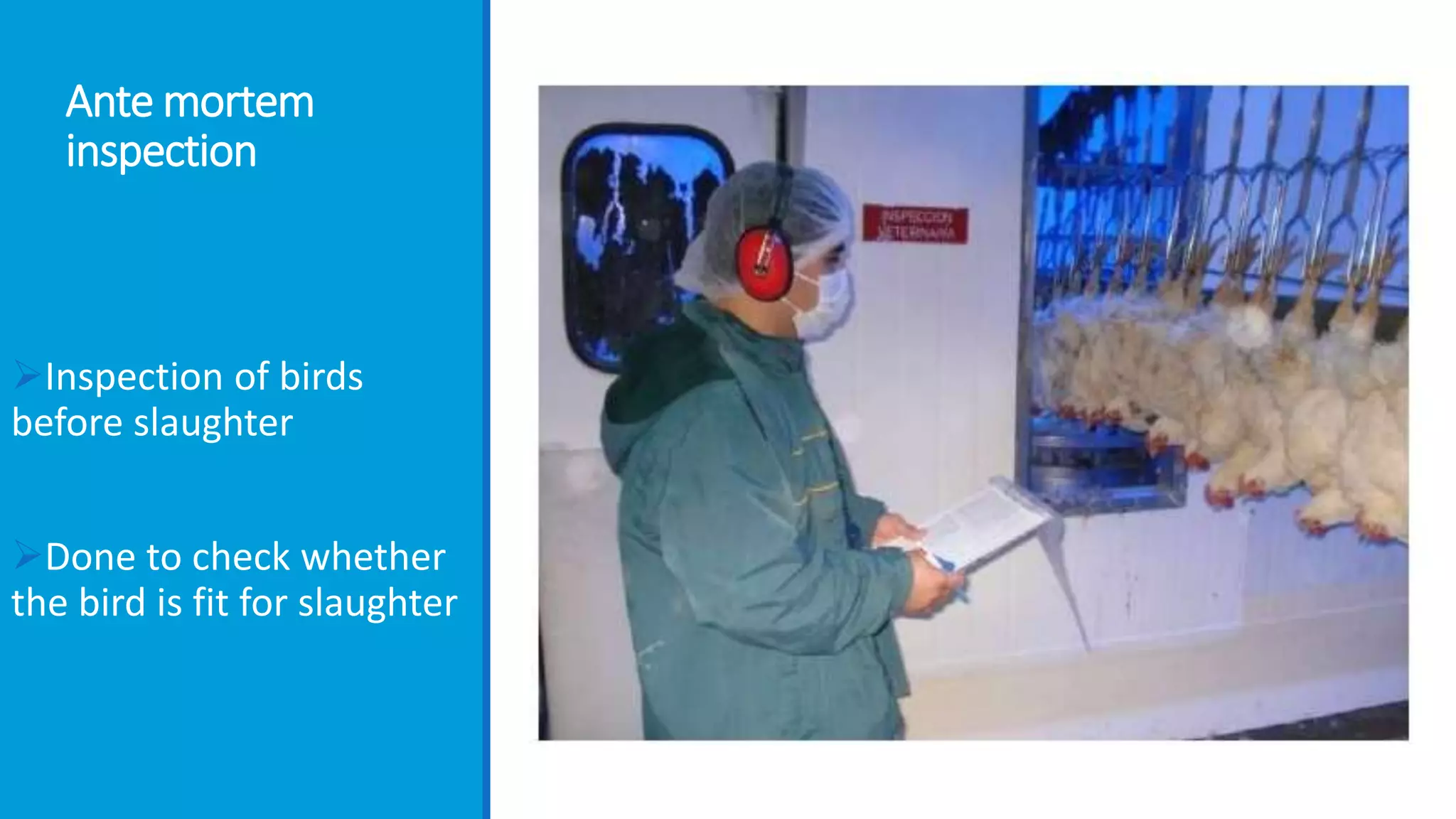
Ante mortem
inspection
Inspection of birds
before slaughter
Done to check whether
the bird is fit for slaughter
Stunning
Make the birds unconscious prior to slaughter.
Done to easier and safer handling
Types of stunning
A. Electrical
The birds head is dragged through a electrified brine solution at a
point immediately below the eye
Water can be sprayed on the feet to improve the stun
Not greater than 35-volt and 0.3amps - 8 second
B. Gas /modified atmosphere stun-kill
Carbon dioxide or argon gas is used.
The bird is exposed to a mixture of 80% carbon dioxide and less
than 5% oxygen
Killing and Bleeding
Bleeding is done by opening the blood vessels in the neck
There are several ways of cutting the blood vessels in poultry:
A. HALAL
Also known as modified kosher method
Traditionally manual cutting of the blood vessels is permitted
 Scientific method
 Cut both carotid
arteries and
jugular vein
Killing
B. JUTKHA method
Cutting and removing the head
 It is painful and unscientific method
The bleed out phase can take anywhere between 2-5 min
depending on bird size and type
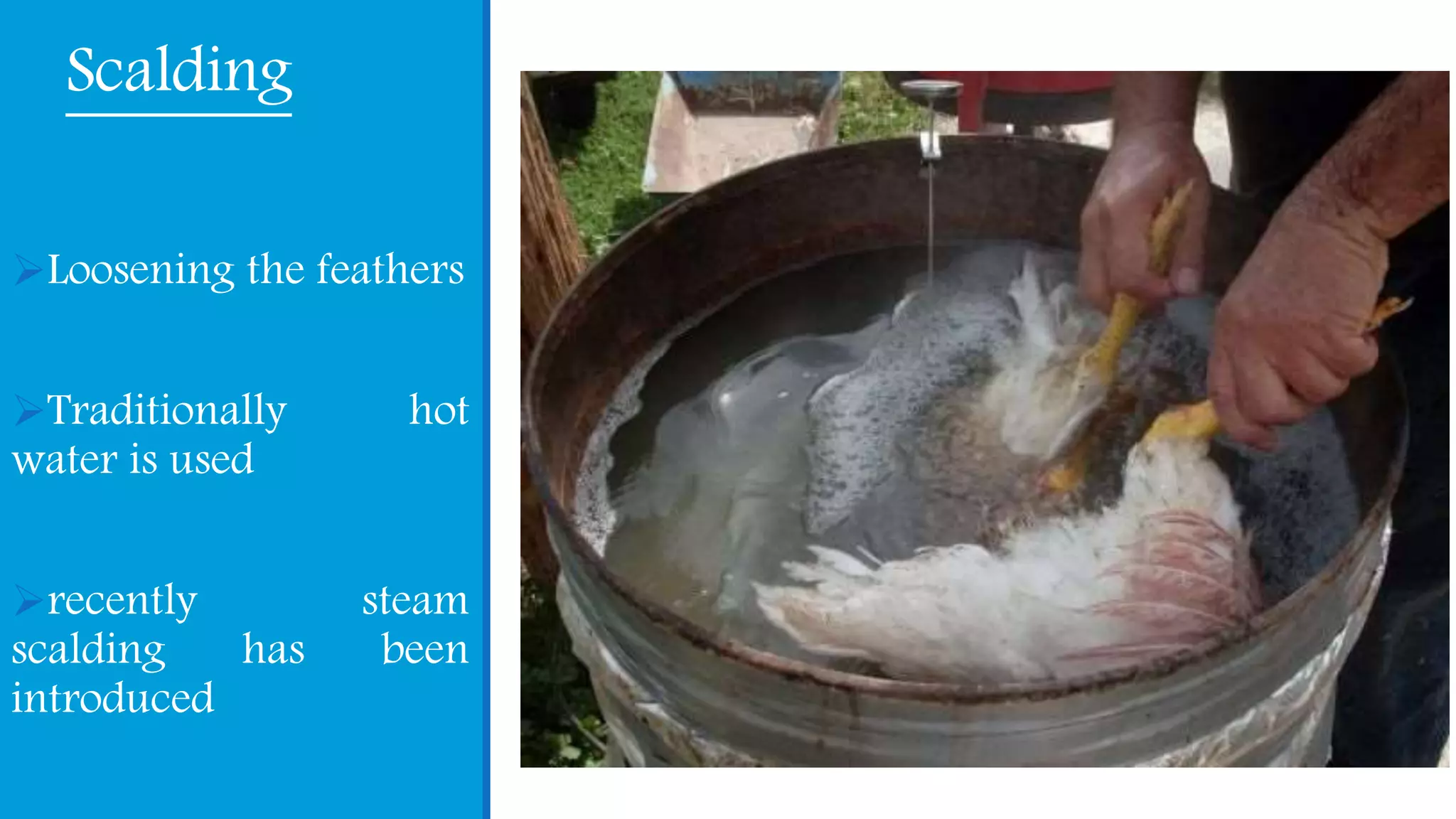
Scalding
Loosening the feathers
Traditionally hot
water is used
recently steam
scalding has been
introduced
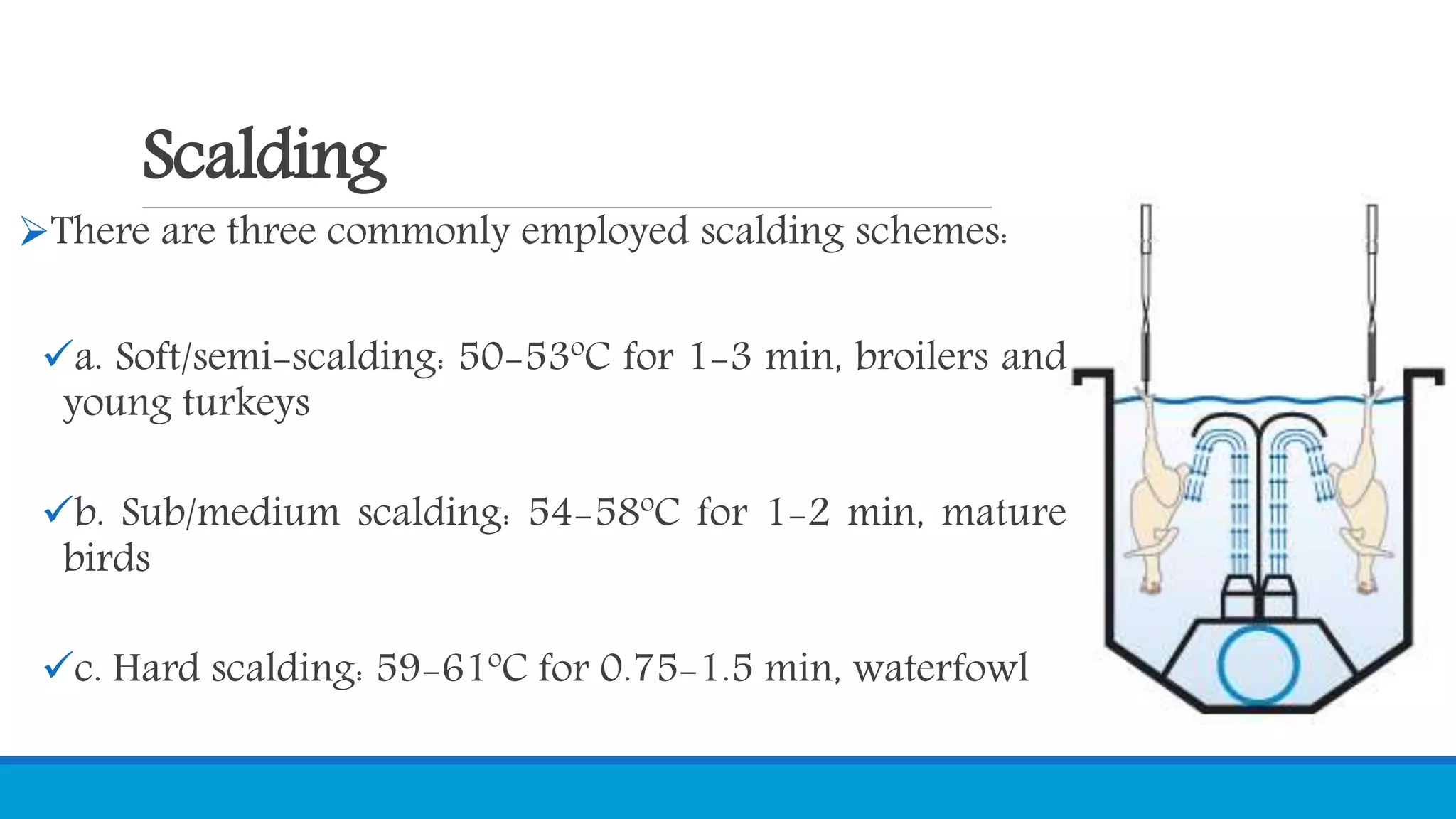
Scalding
There are three commonly employed scalding schemes:
a. Soft/semi-scalding: 50-53ºC for 1-3 min, broilers and
young turkeys
b. Sub/medium scalding: 54-58ºC for 1-2 min, mature
birds
c. Hard scalding: 59-61ºC for 0.75-1.5 min, waterfowl
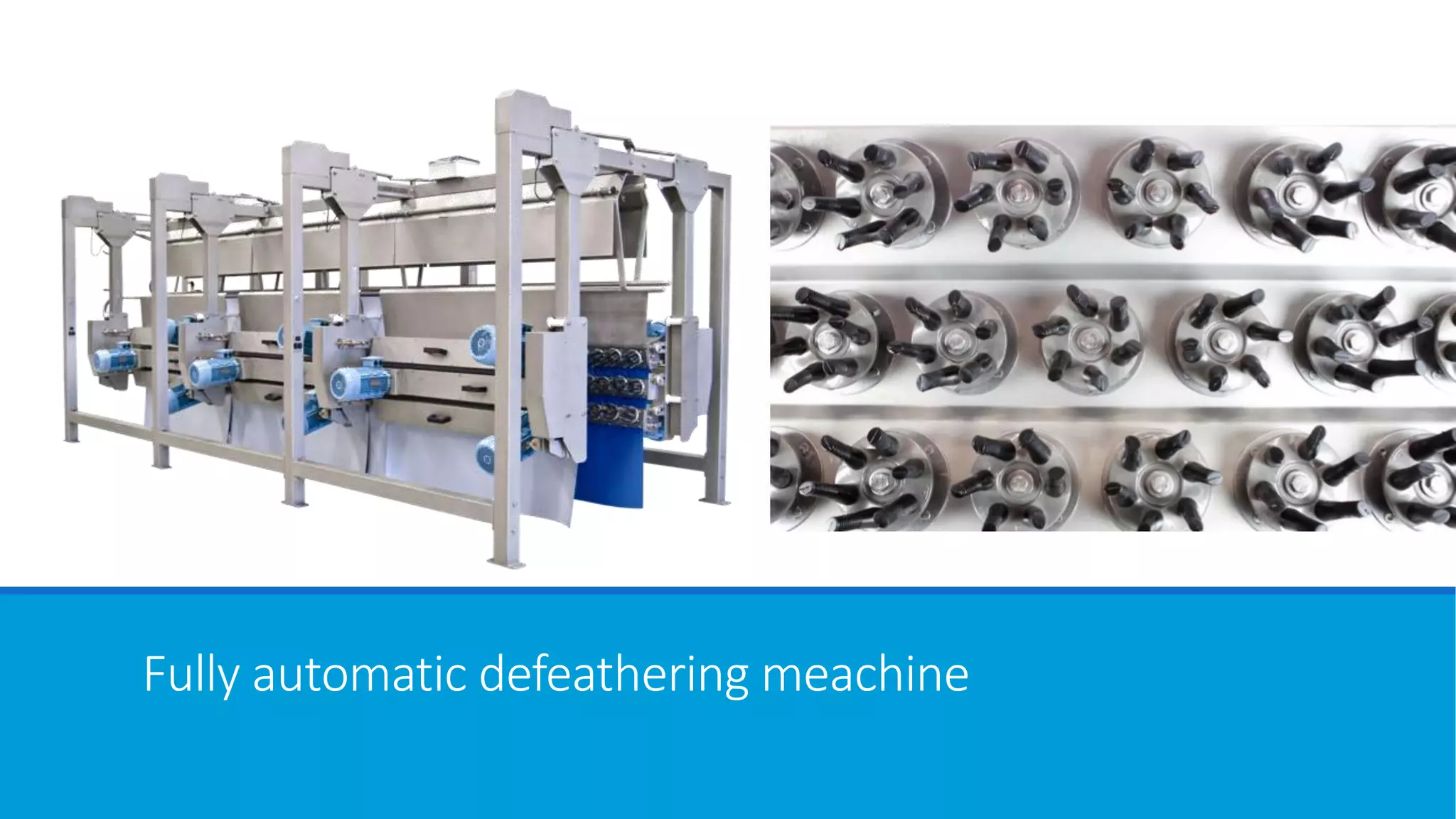
De-feathering
Feather removal
By mechanical pickers/pluckers
Equipped with rubber fingers
Rub the feathers off the carcass
Small scale
Defeathering
meachine
Fully automatic defeathering meachine
Pinning
Removal of remaining
feathers and pinfeathers.
Manually
A pinning knife is used
for this process.
Singeing
Flame is used to burn hairs off the carcass
 It is done with a gas burner
Washing
High-pressure rinse
Remove material such as blood, occasional feathers, and loose
epidermal skin
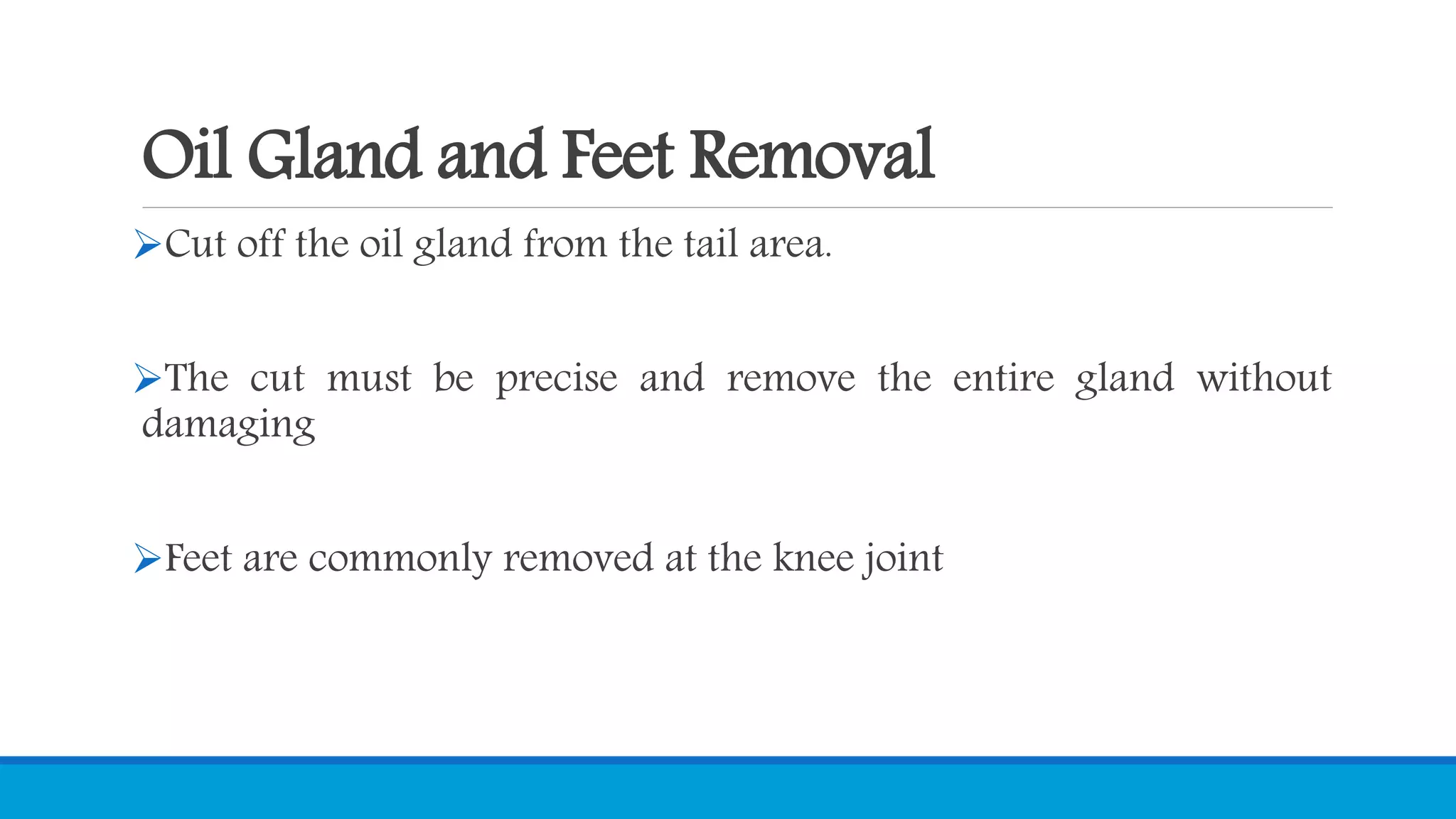
Oil Gland and Feet Removal
Cut off the oil gland from the tail area.
The cut must be precise and remove the entire gland without
damaging
Feet are commonly removed at the knee joint
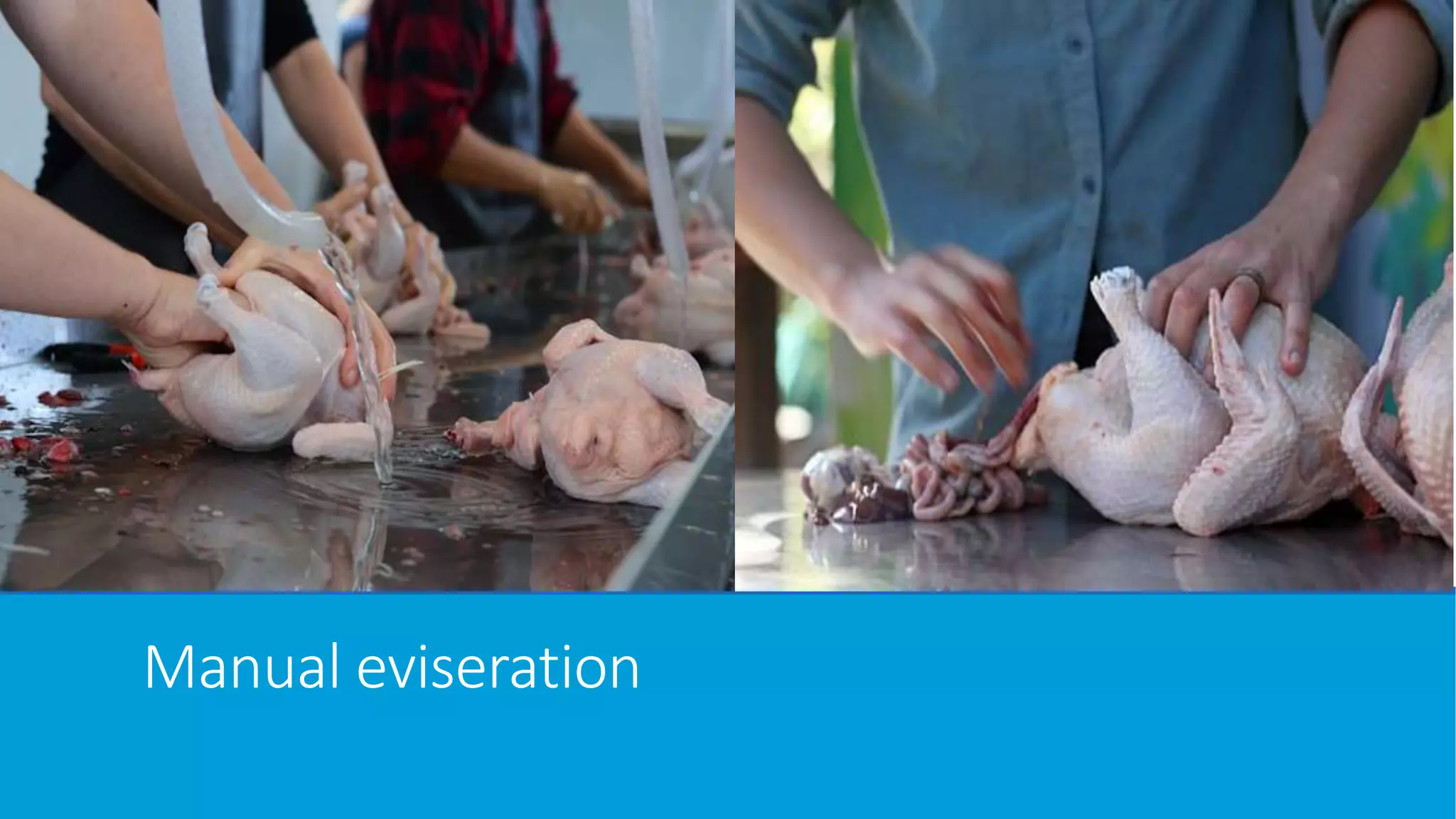
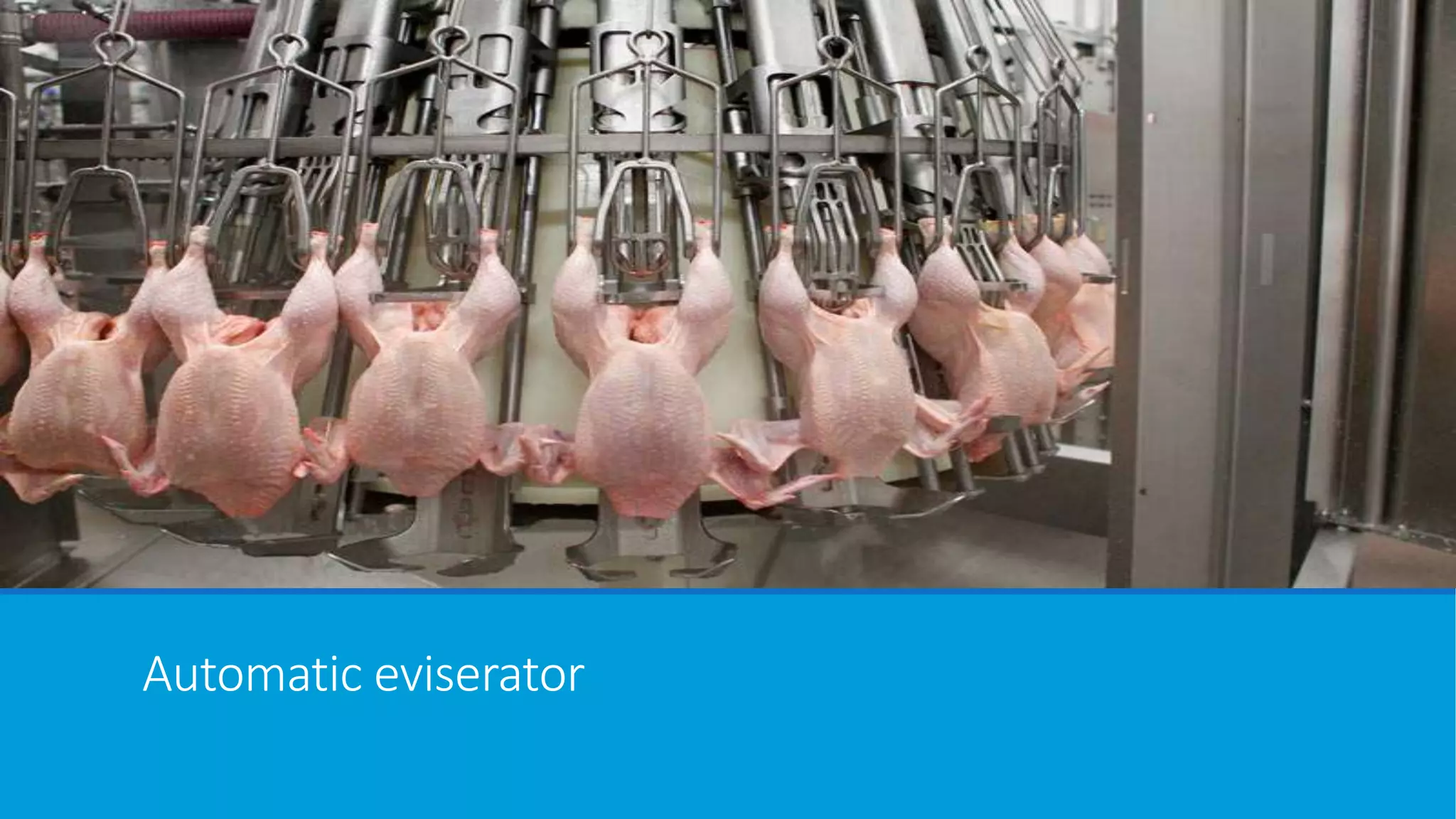
Evisceration
Opening the body cavity and withdrawing the viscera
Manually using a knife and scissors
Care should be taken not to pierce the viscera
Manual eviseration
Automatic eviserator
Post mortem Inspection
After evisceration
All parts are exposed at the same time.
Viscera can reveal diseases and other problems
Inspection is essential to ensure that only healthy birds reach the
market
Examinated for bruises, leukosis, septicaemia-toximia, synovitis,
tuberculosis, air sacculitis, tumors, melanosis, cadavers,
contamination, over scald etc
Giblet Harvest
After inspection
 The viscera are disconnected from
the carcass
Giblets are salvaged and washed
Head, Crop, Neck, and Lung Removal
The head and crop are commonly removed after inspection
If the lungs were not removed during evisceration
Lungs are removes by lung scope or vacuum guns
Bird Wash (Inside/Outside)
To clean the whole carcass
Both inside and outside of the carcass is cleaned
Chilling
Reduce the growth of microorganism
Carcass temperature - 4°C
A. Immerse chilling
It is common to employ long chillers
With crushed ice
Carcass temperatures to about 4 - 5°C within 30 - 75 min
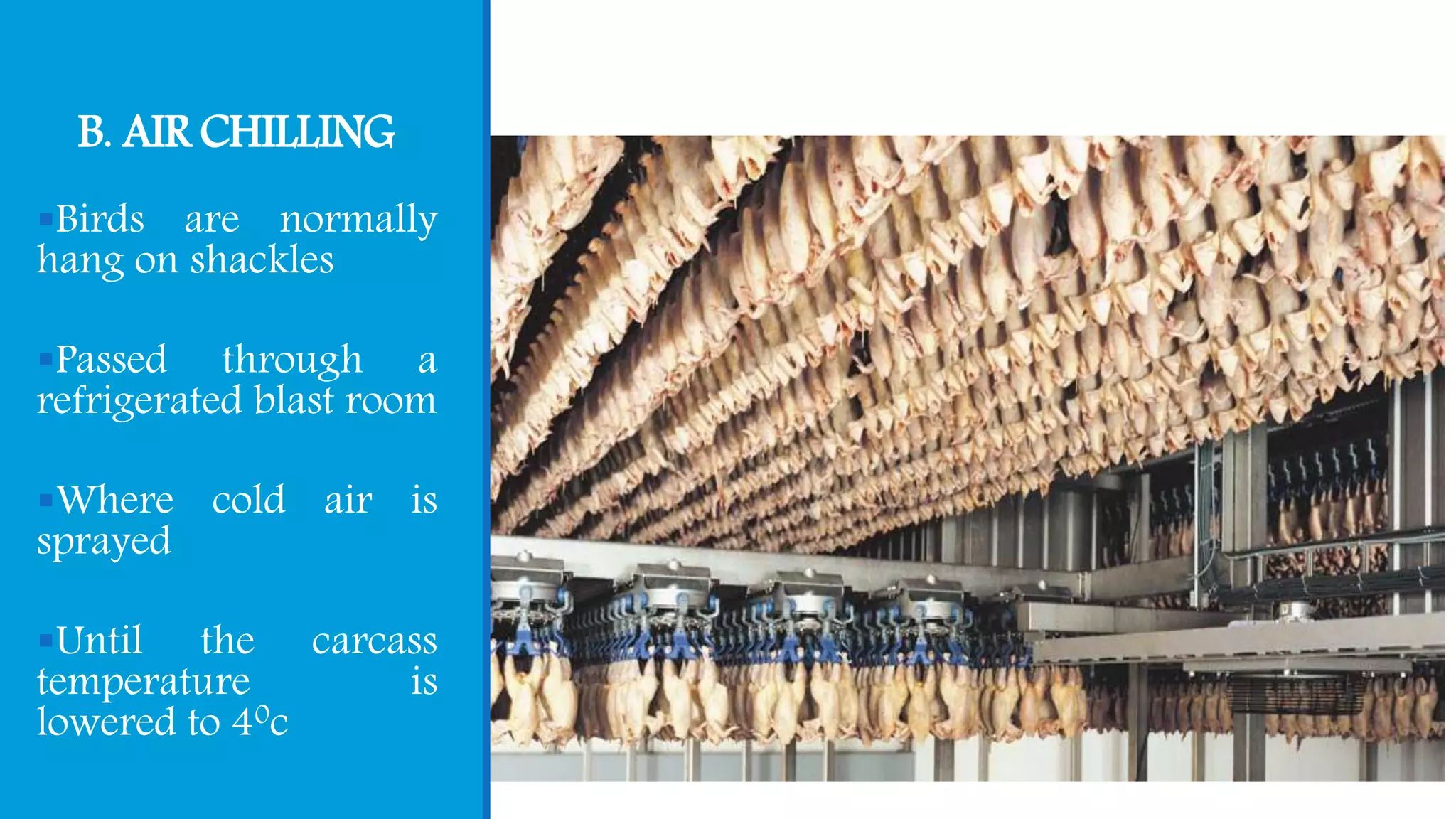
B. AIR CHILLING
Birds are normally
hang on shackles
Passed through a
refrigerated blast room
Where cold air is
sprayed
Until the carcass
temperature is
lowered to 40c
Weighing and Grading
After chilling, the birds are weighed
 Grading can be done by a qualified worker or a computerized
machine vision system
Packing
Packaging has been developed as a way to protect food from the
environment during handling, from transportation to preparation.
Storage
Mainly there are two types of storage;
A. Refrigerated/chilled:
At 20 to 40C
Up to 7 days
B. Frozen:
 at -180 to 200 C
Up to 6-8 months
Conclusion
Poultry processing is a complex combination of biology, chemistry,
engineering, marketing, and economics.
Human food is the main goal of poultry processing.
Hygiene in poultry processing is the major issue.
Proceeding with hygienic practices will increase the quality and shelf
life of meat.
Reference
Donald D Bell, William D Weaver, Commercial chicken meat and egg
production (5th edition)
Isabel Guerrero-Legarreta, Hand book of poultry science and
technology (primary processing)
Shai Barbut, The Science of Poultry and Meat Processing
G. C. Mead, Poultry meat processing and quality
Hygienic poultry processing

Hygienic poultry processing

  • 1.
    Hygienic Poultry Processing Prepared by; JOSEPH P ALEX COLLEGE OF AVIAN SCIENCE AND MANAGEMENT
  • 2.
    Introduction Poultry industry isgrowing faster In India, poultry meat production ranks second to bovine meat production This growth of production directly reflects an increase in its consumption Hygiene in poultry processing -a major issue Hygienic practices will - increase the quality and shelf life of meat - reduce the contamination of the carcass
  • 3.
    Hygienic poultry processing Hygiene Accordingto the World Health Organization (WHO), "Hygiene refers to conditions and practices that help to maintain health and prevent the spread of diseases. Poultry processing Poultry processing is the term used by the poultry industry to describe the conversion of live poultry into raw poultry products fit for human consumption
  • 4.
    Scalding STEPS FOR HYGIENICPOULTRY PROCESSING Feed removal Catching & transportation Ante- mortem inspection Stunning Killing & Bleeding DefeatheringPinningSingeingWashing Oil gland and feet removal Evisceration Post mortem Inspection Giblet Harvest Head, Crop, Neck, and Lung Removal Bird Wash (Inside/Outside) Chilling Weighing and Grading PackingStorage
  • 5.
    Feed withdrawal Feeders areraised above the reach of the bird To reduce the extend of faecal contamination in processing To avoid live shrinkage and decreased eviscerated yield The optimum withdrawal time for feed is 12 hours prior to processing
  • 6.
    Catching Equipment should beremoved. Caught at night or under dim light Manually caught by shank and in large farms  Mechanical harvesters are used to reduce defects occurred while manual catching
  • 7.
  • 8.
    Transportation – LiveBirds Usually transported at cooler hours crates or cages are used When the birds arrive allow them some rest time Reducing their stress level
  • 9.
  • 10.
    Unloading Unloading is gonemanually The crates can be unloaded onto a conveyer belt The birds are then conveyed to the employee Then they are place on a moving shackle line
  • 11.
    Ante mortem inspection Inspection ofbirds before slaughter Done to check whether the bird is fit for slaughter
  • 12.
    Stunning Make the birdsunconscious prior to slaughter. Done to easier and safer handling Types of stunning A. Electrical The birds head is dragged through a electrified brine solution at a point immediately below the eye Water can be sprayed on the feet to improve the stun Not greater than 35-volt and 0.3amps - 8 second
  • 13.
    B. Gas /modifiedatmosphere stun-kill Carbon dioxide or argon gas is used. The bird is exposed to a mixture of 80% carbon dioxide and less than 5% oxygen
  • 14.
    Killing and Bleeding Bleedingis done by opening the blood vessels in the neck There are several ways of cutting the blood vessels in poultry: A. HALAL Also known as modified kosher method Traditionally manual cutting of the blood vessels is permitted
  • 15.
     Scientific method Cut both carotid arteries and jugular vein
  • 16.
  • 17.
    B. JUTKHA method Cuttingand removing the head  It is painful and unscientific method The bleed out phase can take anywhere between 2-5 min depending on bird size and type
  • 18.
    Scalding Loosening the feathers Traditionallyhot water is used recently steam scalding has been introduced
  • 19.
    Scalding There are threecommonly employed scalding schemes: a. Soft/semi-scalding: 50-53ºC for 1-3 min, broilers and young turkeys b. Sub/medium scalding: 54-58ºC for 1-2 min, mature birds c. Hard scalding: 59-61ºC for 0.75-1.5 min, waterfowl
  • 20.
    De-feathering Feather removal By mechanicalpickers/pluckers Equipped with rubber fingers Rub the feathers off the carcass
  • 21.
  • 22.
  • 23.
    Pinning Removal of remaining feathersand pinfeathers. Manually A pinning knife is used for this process.
  • 24.
    Singeing Flame is usedto burn hairs off the carcass  It is done with a gas burner
  • 25.
    Washing High-pressure rinse Remove materialsuch as blood, occasional feathers, and loose epidermal skin
  • 26.
    Oil Gland andFeet Removal Cut off the oil gland from the tail area. The cut must be precise and remove the entire gland without damaging Feet are commonly removed at the knee joint
  • 27.
    Evisceration Opening the bodycavity and withdrawing the viscera Manually using a knife and scissors Care should be taken not to pierce the viscera
  • 28.
  • 29.
  • 30.
    Post mortem Inspection Afterevisceration All parts are exposed at the same time. Viscera can reveal diseases and other problems Inspection is essential to ensure that only healthy birds reach the market Examinated for bruises, leukosis, septicaemia-toximia, synovitis, tuberculosis, air sacculitis, tumors, melanosis, cadavers, contamination, over scald etc
  • 31.
    Giblet Harvest After inspection The viscera are disconnected from the carcass Giblets are salvaged and washed
  • 32.
    Head, Crop, Neck,and Lung Removal The head and crop are commonly removed after inspection If the lungs were not removed during evisceration Lungs are removes by lung scope or vacuum guns
  • 33.
    Bird Wash (Inside/Outside) Toclean the whole carcass Both inside and outside of the carcass is cleaned
  • 34.
    Chilling Reduce the growthof microorganism Carcass temperature - 4°C A. Immerse chilling It is common to employ long chillers With crushed ice Carcass temperatures to about 4 - 5°C within 30 - 75 min
  • 35.
    B. AIR CHILLING Birdsare normally hang on shackles Passed through a refrigerated blast room Where cold air is sprayed Until the carcass temperature is lowered to 40c
  • 36.
    Weighing and Grading Afterchilling, the birds are weighed  Grading can be done by a qualified worker or a computerized machine vision system
  • 37.
    Packing Packaging has beendeveloped as a way to protect food from the environment during handling, from transportation to preparation.
  • 38.
    Storage Mainly there aretwo types of storage; A. Refrigerated/chilled: At 20 to 40C Up to 7 days B. Frozen:  at -180 to 200 C Up to 6-8 months
  • 39.
    Conclusion Poultry processing isa complex combination of biology, chemistry, engineering, marketing, and economics. Human food is the main goal of poultry processing. Hygiene in poultry processing is the major issue. Proceeding with hygienic practices will increase the quality and shelf life of meat.
  • 40.
    Reference Donald D Bell,William D Weaver, Commercial chicken meat and egg production (5th edition) Isabel Guerrero-Legarreta, Hand book of poultry science and technology (primary processing) Shai Barbut, The Science of Poultry and Meat Processing G. C. Mead, Poultry meat processing and quality