BIOSECURITY IN HATCHERY
PREPARED BY;
JOSEPH P ALEX
BIOSECURITY
Biosecurity is the development and implementation of the
practices, procedures, and programs to protect poultry
production systems from unwanted microbes
Types of biosecurity
1. Conceptual biosecurity
2. Structural biosecurity
3. Operational biosecurity
4. Functional biosecurity
3 MAJOR COMPONENTS
ISOLATION
TRAFFIC CONTROL
SANITATION
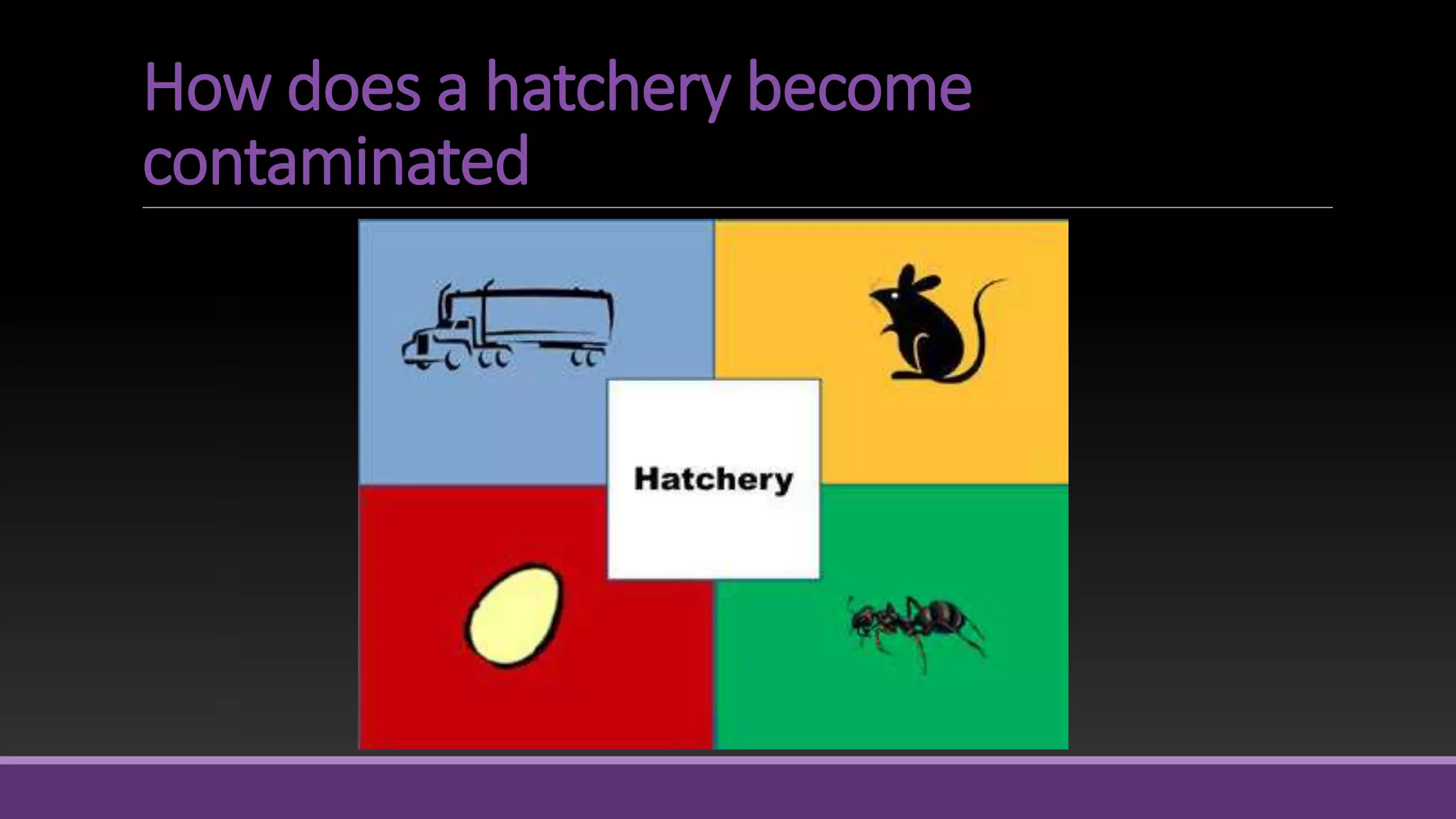
How does a hatchery become
contaminated
Biosecurity for the hatchery must begin at the
breeder farms
Handling Hatching Eggs
Collect hatching eggs from nests frequently.
Use cleaned and disinfected containers to collect eggs for
hatching.
Workers should wear clean outer garments and thoroughly
wash hands with soap and water prior to and after egg
collection.
Do not use dirty eggs for hatching purposes.
Collect dirty eggs in a separate container
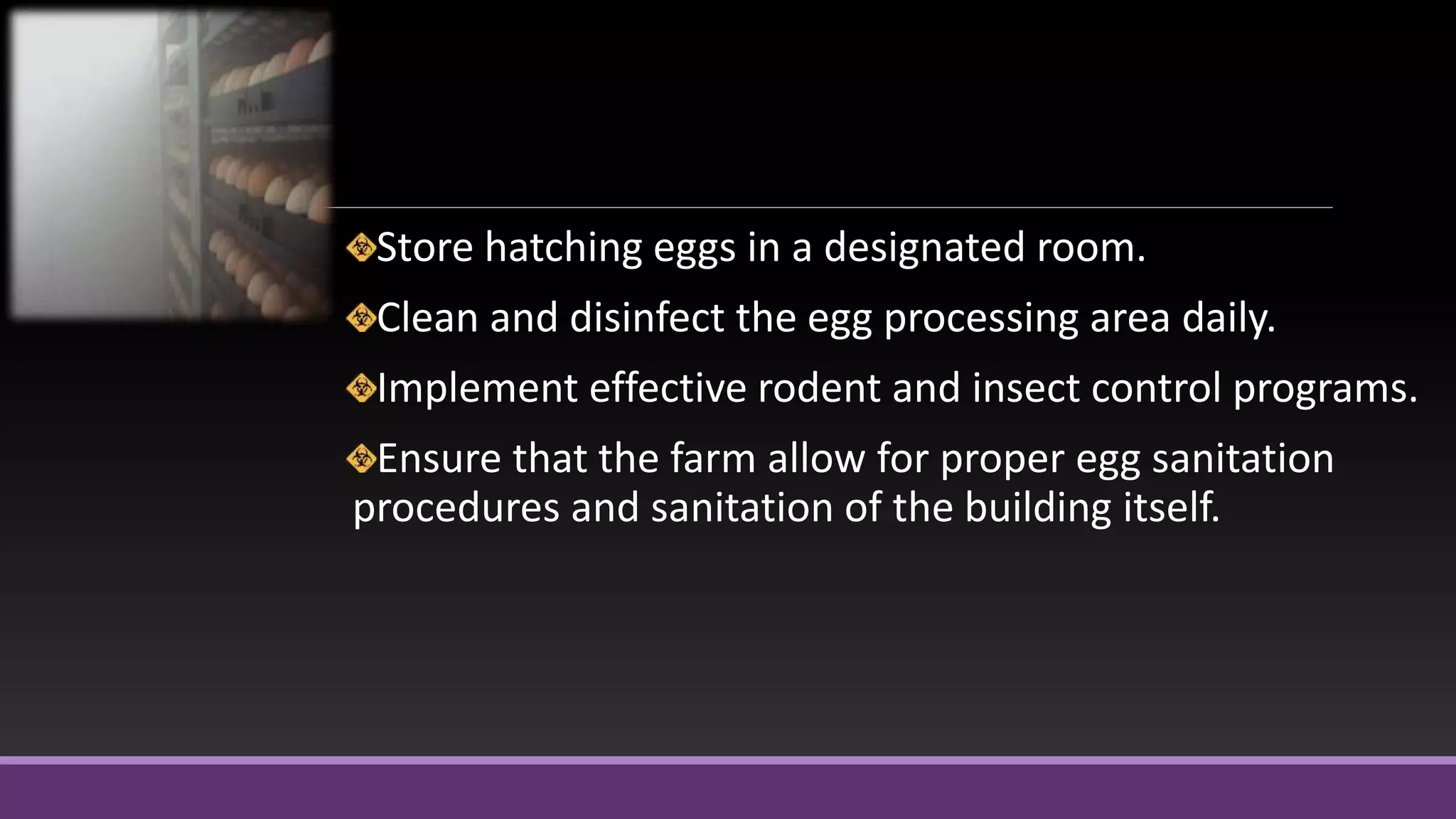
Store hatching eggs in a designated room.
Clean and disinfect the egg processing area daily.
Implement effective rodent and insect control programs.
Ensure that the farm allow for proper egg sanitation
procedures and sanitation of the building itself.
Vehicles and Equipment
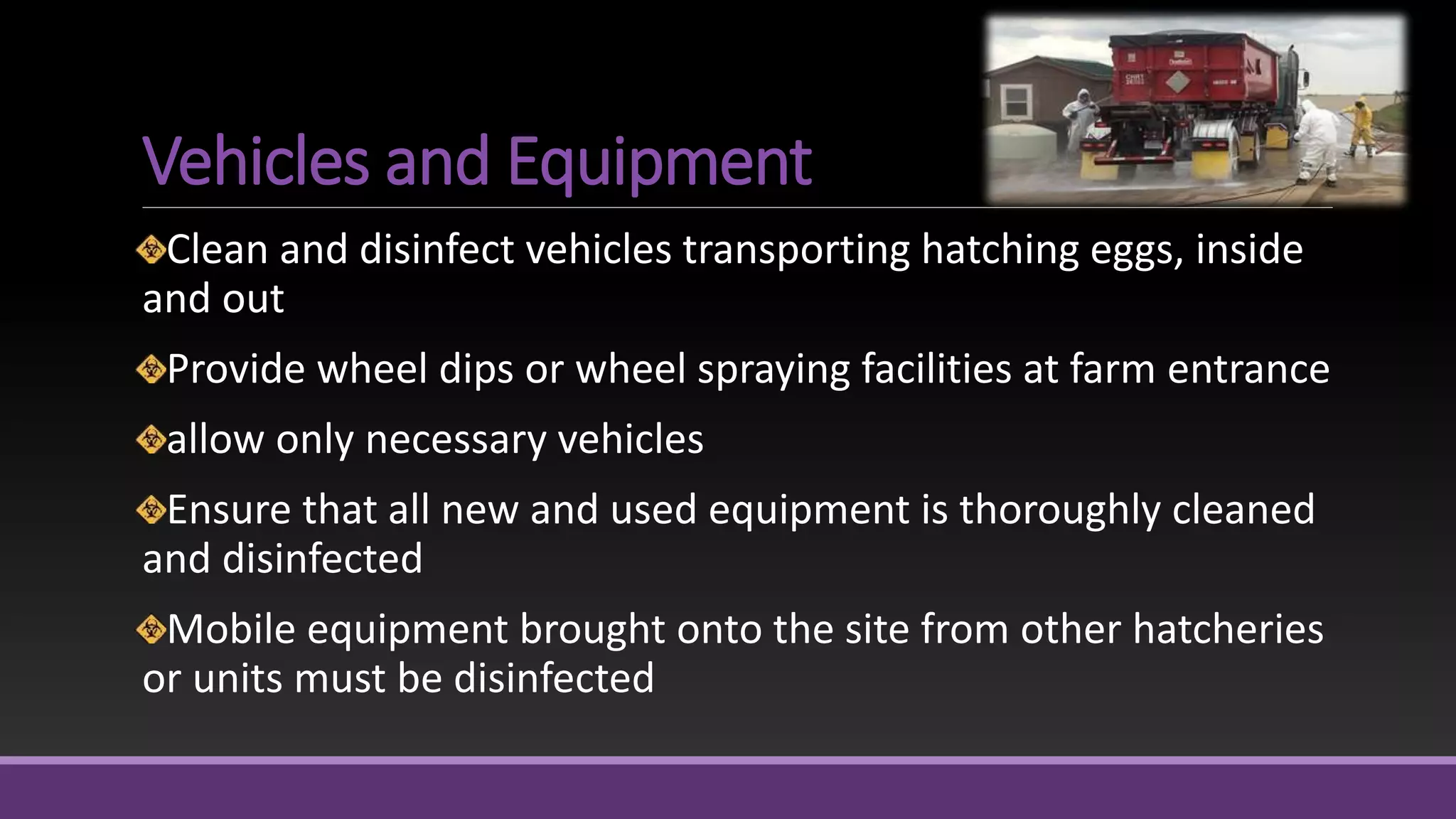
Clean and disinfect vehicles transporting hatching eggs, inside
and out
Provide wheel dips or wheel spraying facilities at farm entrance
allow only necessary vehicles
Ensure that all new and used equipment is thoroughly cleaned
and disinfected
Mobile equipment brought onto the site from other hatcheries
or units must be disinfected
Rodents, Wild Birds, Other Animals, and
Insects
should be as vermin-proof as possible
Maintain a vermin control plan that includes frequent
monitoring and preventing
Rotate bait brands
Use insecticides as necessary.
Keep the area around the hatchery free from vegetation,
debris, and unused equipment.
Hatchery Facility
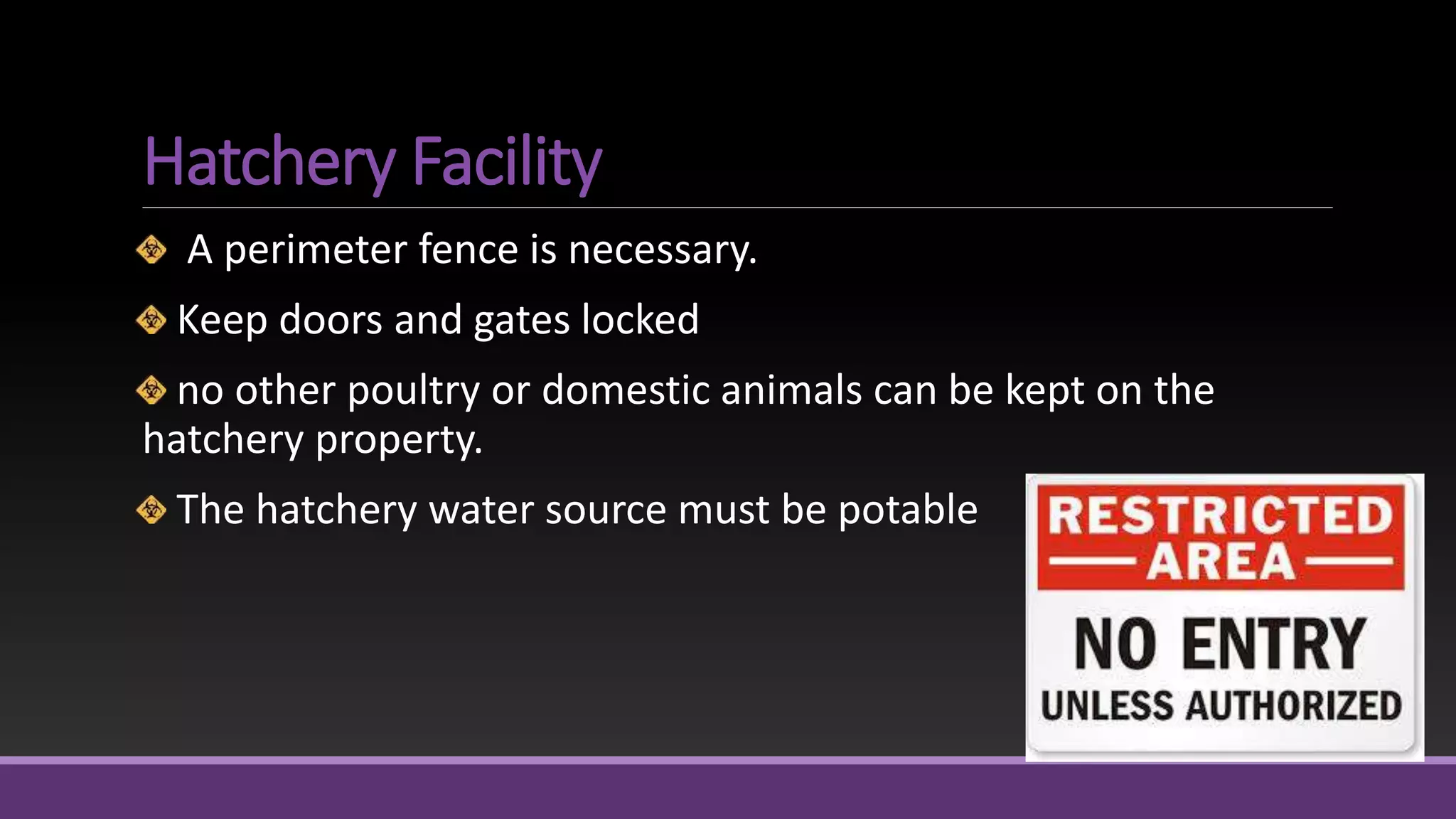
A perimeter fence is necessary.
Keep doors and gates locked
no other poultry or domestic animals can be kept on the
hatchery property.
The hatchery water source must be potable
Hatchery Facility
The hatchery should have sealed concrete floors & walls
Maintain separate areas and ventilation systems for each
room.
Inside traffic should always flow from “clean” areas to
increasingly “dirtier” areas
Positive air flow minimizes the risk of transfer of
contamination from the hatcher back to the setters and to the
egg storage room
Employees and Visitors
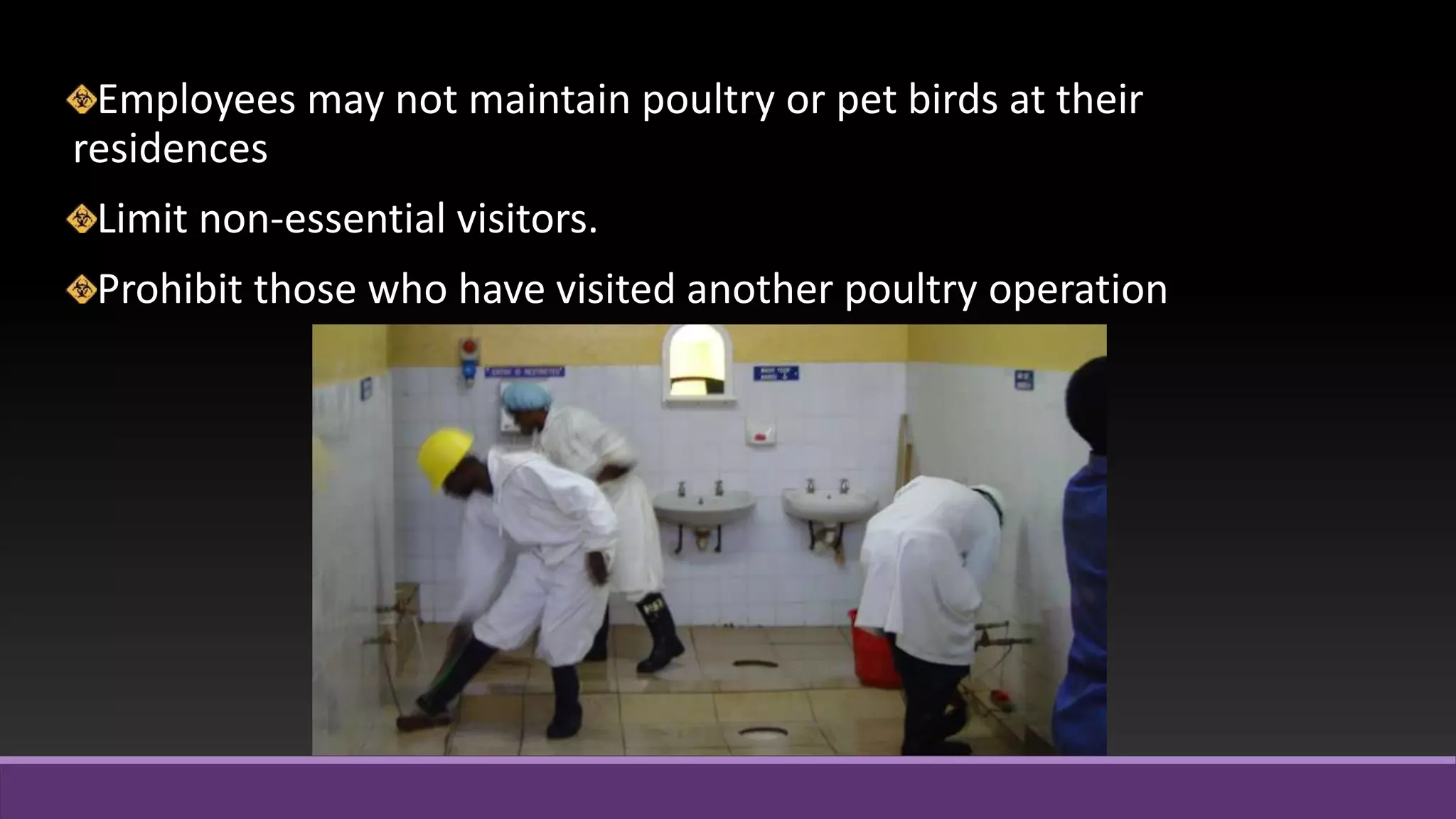
Install foot baths at hatchery entrance
Employees and visitors should clean footwear to remove
organic material
Replenish foot bath daily or when visibly contaminated.
Place hand-sanitizing stations
Place a shower at the entrance to the working area of the
hatchery, furnished with bactericidal soap.
visitors and employees must don freshly laundered coveralls
Employees may not maintain poultry or pet birds at their
residences
Limit non-essential visitors.
Prohibit those who have visited another poultry operation
Sanitation Program
A rigorous sanitation program integrated into the hatchery
operation prevents the accumulation of microorganisms in
the environment.
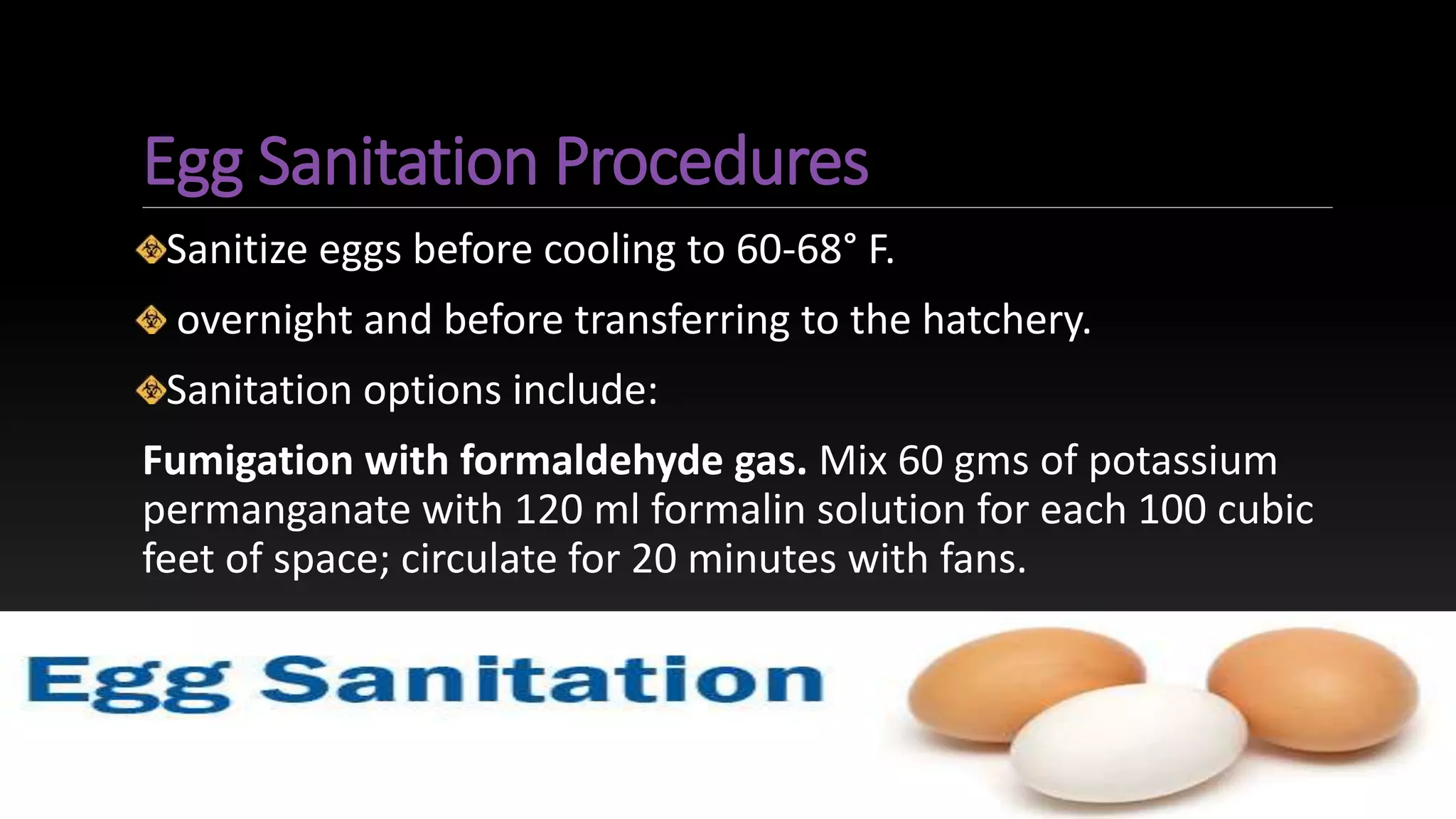
Egg Sanitation Procedures
Sanitize eggs before cooling to 60-68° F.
overnight and before transferring to the hatchery.
Sanitation options include:
Fumigation with formaldehyde gas. Mix 60 gms of potassium
permanganate with 120 ml formalin solution for each 100 cubic
feet of space; circulate for 20 minutes with fans.
Walls, Floors, Ceilings, Windows, Fans,
Ducting, and Machines
• Remove dust and debris from all surfaces and dispose of
accordingly
Apply an appropriate broad-spectrum disinfectant detergent
solution to the setter machine, using a pressure washing system and
leave to dry.
o visual inspection and microbial culture to monitor the sanitation
program.
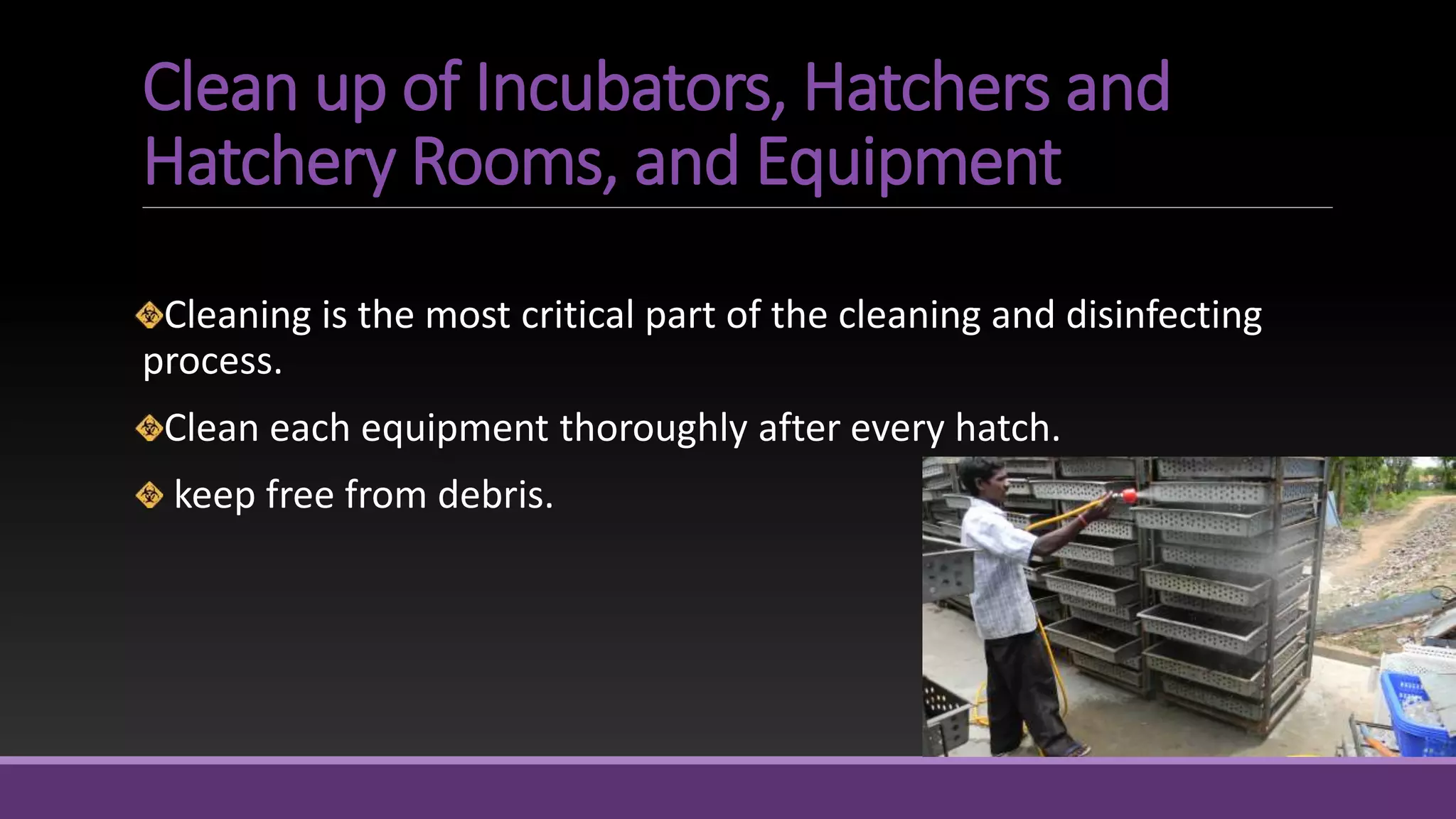
Clean up of Incubators, Hatchers and
Hatchery Rooms, and Equipment
Cleaning is the most critical part of the cleaning and disinfecting
process.
Clean each equipment thoroughly after every hatch.
keep free from debris.
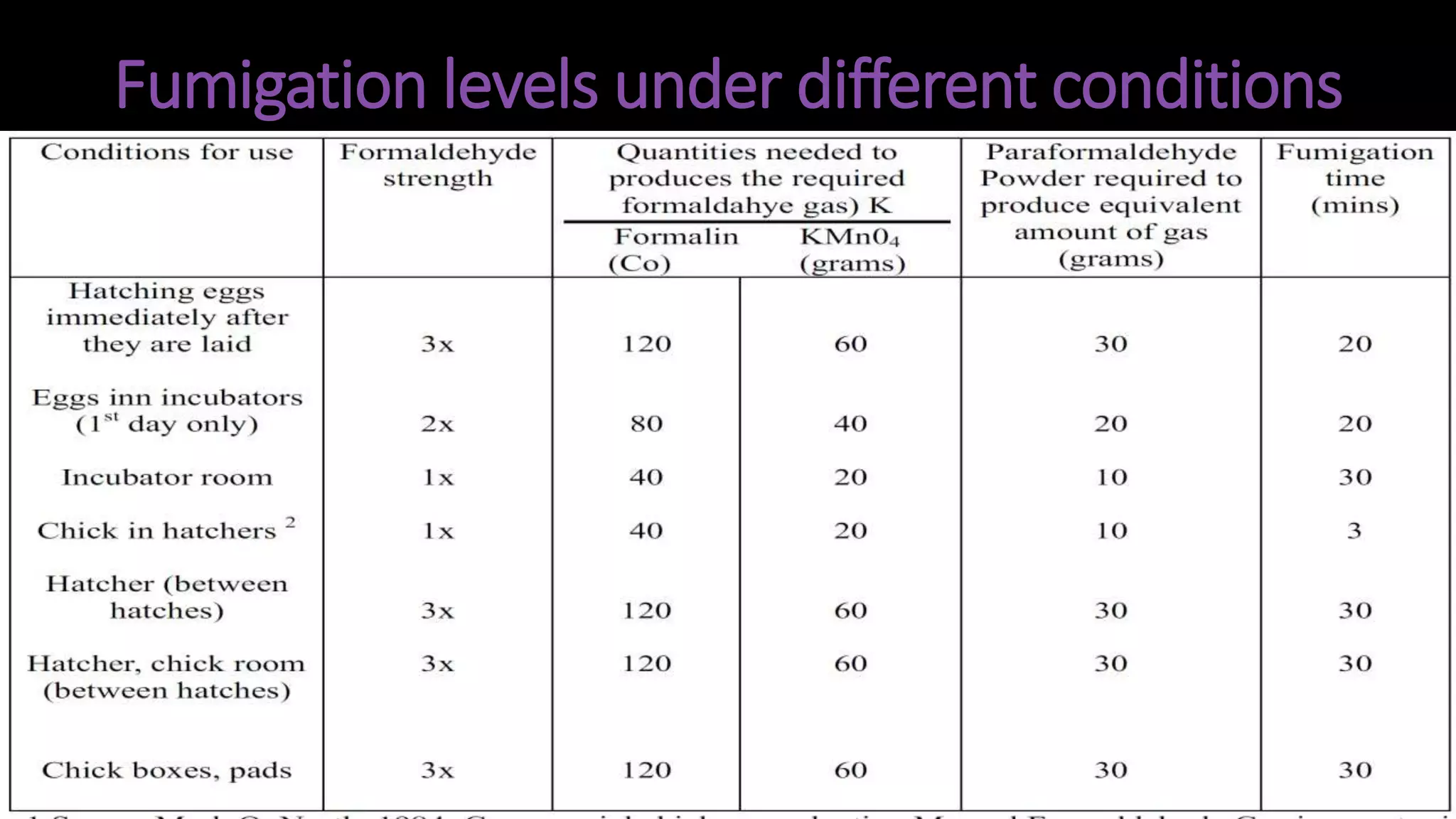
Fumigation levels under different conditions
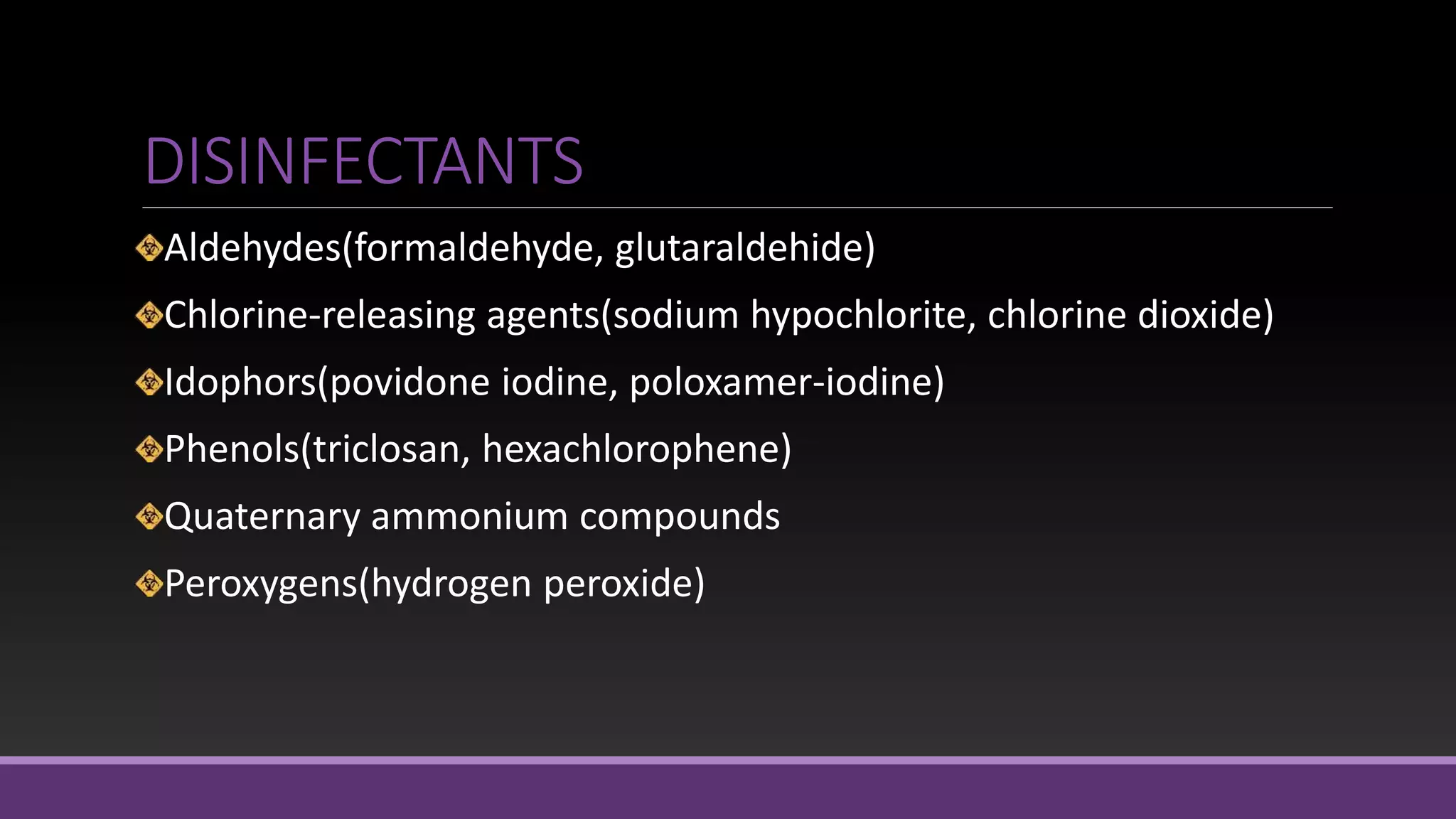
DISINFECTANTS
Aldehydes(formaldehyde, glutaraldehide)
Chlorine-releasing agents(sodium hypochlorite, chlorine dioxide)
Idophors(povidone iodine, poloxamer-iodine)
Phenols(triclosan, hexachlorophene)
Quaternary ammonium compounds
Peroxygens(hydrogen peroxide)
Conclusion
Biosecurity and sanitation are the most effective deterrents against
an infectious incursion in most animal agriculture production
systems. Hatcheries are no exception to that rule. Effective practices
will help hatchery operators avoid possible scrutiny and even legal
litigation, enhance their credibility and reputation for distributing
disease-free chicks, and increase profit margins. Additional keys to
success are continuously providing adequate and thorough training
to employees, documenting each step, and consistently applying
quality sanitation checks.
THANKYOU
Referance;
https://www.chemours.com/Disinfectants_EMEA/en_GB/.../hatchery/standard.html
https://www.poultryimprovement.org/documents/BestManagementPracticesHatcheries.pdf
Commercial chicken egg and meat production- Donalled d bell

Biosecurity in hatchery

  • 1.
  • 2.
    BIOSECURITY Biosecurity is thedevelopment and implementation of the practices, procedures, and programs to protect poultry production systems from unwanted microbes Types of biosecurity 1. Conceptual biosecurity 2. Structural biosecurity 3. Operational biosecurity 4. Functional biosecurity
  • 3.
  • 4.
    How does ahatchery become contaminated
  • 5.
    Biosecurity for thehatchery must begin at the breeder farms
  • 6.
    Handling Hatching Eggs Collecthatching eggs from nests frequently. Use cleaned and disinfected containers to collect eggs for hatching. Workers should wear clean outer garments and thoroughly wash hands with soap and water prior to and after egg collection. Do not use dirty eggs for hatching purposes. Collect dirty eggs in a separate container
  • 7.
    Store hatching eggsin a designated room. Clean and disinfect the egg processing area daily. Implement effective rodent and insect control programs. Ensure that the farm allow for proper egg sanitation procedures and sanitation of the building itself.
  • 8.
    Vehicles and Equipment Cleanand disinfect vehicles transporting hatching eggs, inside and out Provide wheel dips or wheel spraying facilities at farm entrance allow only necessary vehicles Ensure that all new and used equipment is thoroughly cleaned and disinfected Mobile equipment brought onto the site from other hatcheries or units must be disinfected
  • 9.
    Rodents, Wild Birds,Other Animals, and Insects should be as vermin-proof as possible Maintain a vermin control plan that includes frequent monitoring and preventing Rotate bait brands Use insecticides as necessary. Keep the area around the hatchery free from vegetation, debris, and unused equipment.
  • 10.
    Hatchery Facility A perimeterfence is necessary. Keep doors and gates locked no other poultry or domestic animals can be kept on the hatchery property. The hatchery water source must be potable
  • 11.
    Hatchery Facility The hatcheryshould have sealed concrete floors & walls Maintain separate areas and ventilation systems for each room. Inside traffic should always flow from “clean” areas to increasingly “dirtier” areas Positive air flow minimizes the risk of transfer of contamination from the hatcher back to the setters and to the egg storage room
  • 12.
    Employees and Visitors Installfoot baths at hatchery entrance Employees and visitors should clean footwear to remove organic material Replenish foot bath daily or when visibly contaminated. Place hand-sanitizing stations Place a shower at the entrance to the working area of the hatchery, furnished with bactericidal soap. visitors and employees must don freshly laundered coveralls
  • 13.
    Employees may notmaintain poultry or pet birds at their residences Limit non-essential visitors. Prohibit those who have visited another poultry operation
  • 14.
    Sanitation Program A rigoroussanitation program integrated into the hatchery operation prevents the accumulation of microorganisms in the environment.
  • 15.
    Egg Sanitation Procedures Sanitizeeggs before cooling to 60-68° F. overnight and before transferring to the hatchery. Sanitation options include: Fumigation with formaldehyde gas. Mix 60 gms of potassium permanganate with 120 ml formalin solution for each 100 cubic feet of space; circulate for 20 minutes with fans.
  • 16.
    Walls, Floors, Ceilings,Windows, Fans, Ducting, and Machines • Remove dust and debris from all surfaces and dispose of accordingly Apply an appropriate broad-spectrum disinfectant detergent solution to the setter machine, using a pressure washing system and leave to dry. o visual inspection and microbial culture to monitor the sanitation program.
  • 17.
    Clean up ofIncubators, Hatchers and Hatchery Rooms, and Equipment Cleaning is the most critical part of the cleaning and disinfecting process. Clean each equipment thoroughly after every hatch. keep free from debris.
  • 18.
    Fumigation levels underdifferent conditions
  • 19.
    DISINFECTANTS Aldehydes(formaldehyde, glutaraldehide) Chlorine-releasing agents(sodiumhypochlorite, chlorine dioxide) Idophors(povidone iodine, poloxamer-iodine) Phenols(triclosan, hexachlorophene) Quaternary ammonium compounds Peroxygens(hydrogen peroxide)
  • 20.
    Conclusion Biosecurity and sanitationare the most effective deterrents against an infectious incursion in most animal agriculture production systems. Hatcheries are no exception to that rule. Effective practices will help hatchery operators avoid possible scrutiny and even legal litigation, enhance their credibility and reputation for distributing disease-free chicks, and increase profit margins. Additional keys to success are continuously providing adequate and thorough training to employees, documenting each step, and consistently applying quality sanitation checks.
  • 21.