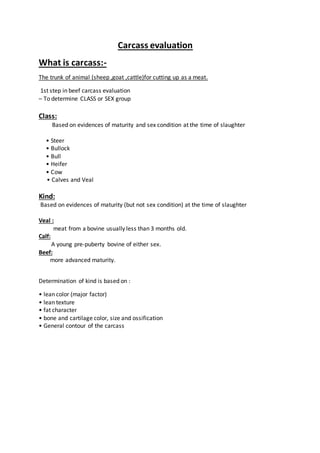
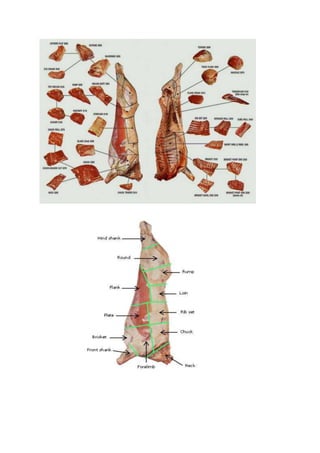
1) Carcass evaluation involves determining the class (sex) and kind (maturity) of an animal based on visual characteristics. Class is determined by examining the pizzle eye, cod fat, and udder fat, while kind is determined by lean color, texture, fat characteristics, and bone ossification.
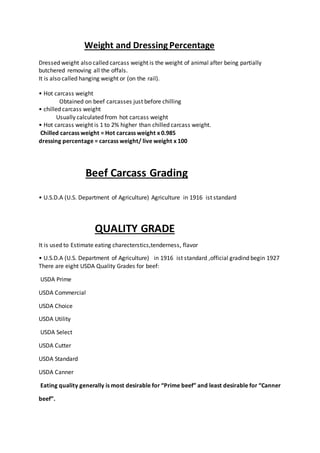
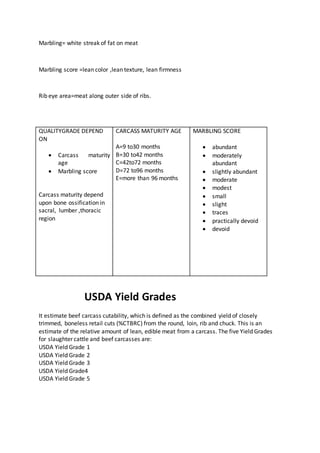
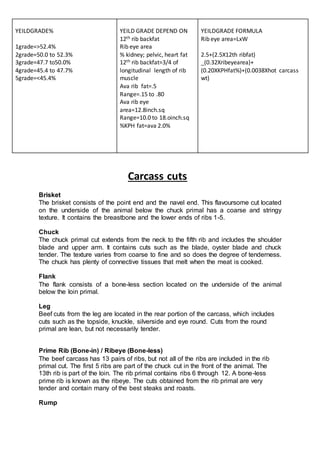
2) Important metrics for carcass quality include weight, dressing percentage, and USDA quality and yield grades. Quality grade depends on marbling score and carcass maturity, while yield grade considers backfat thickness, ribeye area, and KPH fat percentage.
3) The beef carcass is divided into several primal cuts - chuck, rib, loin, round, etc. Each primal cut yields various sub