Goose egg
Prepared by ;
Joseph P Alex
Peculiarities
• Weight : 144g
• Length : 7-12 cm
• Circumference : >10cm
• Colour : white
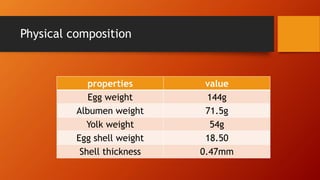
Physical composition
properties value
Egg weight 144g
Albumen weight 71.5g
Yolk weight 54g
Egg shell weight 18.50
Shell thickness 0.47mm
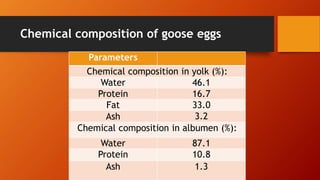
Chemical composition of goose eggs
Parameters
Chemical composition in yolk (%):
Water 46.1
Protein 16.7
Fat 33.0
Ash 3.2
Chemical composition in albumen (%):
Water 87.1
Protein 10.8
Ash 1.3
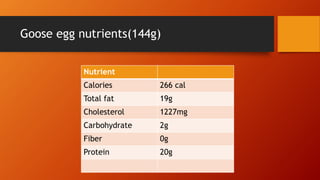
Goose egg nutrients(144g)
Nutrient
Calories 266 cal
Total fat 19g
Cholesterol 1227mg
Carbohydrate 2g
Fiber 0g
Protein 20g
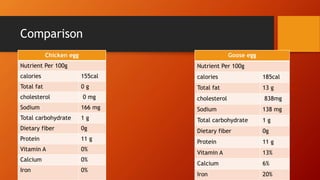
Comparison
Chicken egg
Nutrient Per 100g
calories 155cal
Total fat 0 g
cholesterol 0 mg
Sodium 166 mg
Total carbohydrate 1 g
Dietary fiber 0g
Protein 11 g
Vitamin A 0%
Calcium 0%
Iron 0%
Goose egg
Nutrient Per 100g
calories 185cal
Total fat 13 g
cholesterol 838mg
Sodium 138 mg
Total carbohydrate 1 g
Dietary fiber 0g
Protein 11 g
Vitamin A 13%
Calcium 6%
Iron 20%
INCUBATION
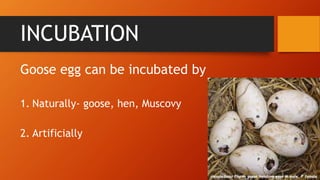
Goose egg can be incubated by
1. Naturally- goose, hen, Muscovy
2. Artificially
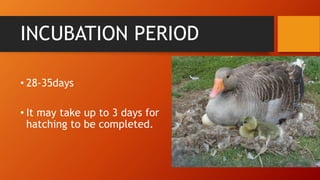
INCUBATION PERIOD
• 28-35days
• It may take up to 3 days for
hatching to be completed.
Natural incubation
• Natural incubation produces the best
hatchability percentage
• Turkeys, hens and Muscovy ducks may be used
• better if Muscovies are used
• 10–15 eggs may be placed under goose
• 4–6 eggs under a broody hen
• Muscovy duck may sit on 6–8 eggs
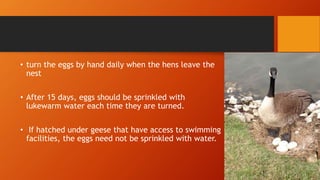
• turn the eggs by hand daily when the hens leave the
nest
• After 15 days, eggs should be sprinkled with
lukewarm water each time they are turned.
• If hatched under geese that have access to swimming
facilities, the eggs need not be sprinkled with water.
Artificial incubation
• Select good quality hatching eggs
• laying goose eggs horizontally rather than vertically produces a higher
hatch rate
• want to turn your eggs 90 degrees four times a day for best hatch rates
• periodically mist them with lukewarm water
• Hatching may start at 28th day
• reduce the humidity and temperature of your unit just slightly to
encourage hatching
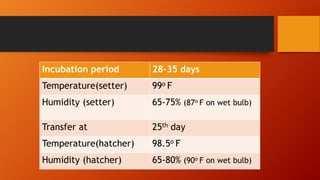
Incubation period 28-35 days
Temperature(setter) 99o F
Humidity (setter) 65-75% (87o F on wet bulb)
Transfer at 25th day
Temperature(hatcher) 98.5o F
Humidity (hatcher) 65-80% (90o F on wet bulb)
Reference
1. http://nutritiondata.self.com/facts/dairy-and-egg-products/127/2
2. http://www.livestrong.com/article/528020-nutritional-stats-on-
chicken-eggs-vs-goose-eggs/
3. http://www.fao.org/docrep/005/Y4359E/y4359e0a.htm
4. https://www.incubators.org/goose-egg-incubation.html
5. http://www.european-poultry-science.com/The-structure-chemical-
composition-and-time-trends-of-egg-quality-characteristics-in-high-
producing-geese,QUlEPTQyMTY5OTAmTUlEPTE2MTAxNA.html
THANKYOU

Goose egg

  • 1.
    Goose egg Prepared by; Joseph P Alex
  • 2.
    Peculiarities • Weight :144g • Length : 7-12 cm • Circumference : >10cm • Colour : white
  • 3.
    Physical composition properties value Eggweight 144g Albumen weight 71.5g Yolk weight 54g Egg shell weight 18.50 Shell thickness 0.47mm
  • 4.
    Chemical composition ofgoose eggs Parameters Chemical composition in yolk (%): Water 46.1 Protein 16.7 Fat 33.0 Ash 3.2 Chemical composition in albumen (%): Water 87.1 Protein 10.8 Ash 1.3
  • 5.
    Goose egg nutrients(144g) Nutrient Calories266 cal Total fat 19g Cholesterol 1227mg Carbohydrate 2g Fiber 0g Protein 20g
  • 6.
    Comparison Chicken egg Nutrient Per100g calories 155cal Total fat 0 g cholesterol 0 mg Sodium 166 mg Total carbohydrate 1 g Dietary fiber 0g Protein 11 g Vitamin A 0% Calcium 0% Iron 0% Goose egg Nutrient Per 100g calories 185cal Total fat 13 g cholesterol 838mg Sodium 138 mg Total carbohydrate 1 g Dietary fiber 0g Protein 11 g Vitamin A 13% Calcium 6% Iron 20%
  • 7.
    INCUBATION Goose egg canbe incubated by 1. Naturally- goose, hen, Muscovy 2. Artificially
  • 8.
    INCUBATION PERIOD • 28-35days •It may take up to 3 days for hatching to be completed.
  • 9.
    Natural incubation • Naturalincubation produces the best hatchability percentage • Turkeys, hens and Muscovy ducks may be used • better if Muscovies are used • 10–15 eggs may be placed under goose • 4–6 eggs under a broody hen • Muscovy duck may sit on 6–8 eggs
  • 10.
    • turn theeggs by hand daily when the hens leave the nest • After 15 days, eggs should be sprinkled with lukewarm water each time they are turned. • If hatched under geese that have access to swimming facilities, the eggs need not be sprinkled with water.
  • 11.
    Artificial incubation • Selectgood quality hatching eggs • laying goose eggs horizontally rather than vertically produces a higher hatch rate • want to turn your eggs 90 degrees four times a day for best hatch rates • periodically mist them with lukewarm water • Hatching may start at 28th day • reduce the humidity and temperature of your unit just slightly to encourage hatching
  • 14.
    Incubation period 28-35days Temperature(setter) 99o F Humidity (setter) 65-75% (87o F on wet bulb) Transfer at 25th day Temperature(hatcher) 98.5o F Humidity (hatcher) 65-80% (90o F on wet bulb)
  • 16.
    Reference 1. http://nutritiondata.self.com/facts/dairy-and-egg-products/127/2 2. http://www.livestrong.com/article/528020-nutritional-stats-on- chicken-eggs-vs-goose-eggs/ 3.http://www.fao.org/docrep/005/Y4359E/y4359e0a.htm 4. https://www.incubators.org/goose-egg-incubation.html 5. http://www.european-poultry-science.com/The-structure-chemical- composition-and-time-trends-of-egg-quality-characteristics-in-high- producing-geese,QUlEPTQyMTY5OTAmTUlEPTE2MTAxNA.html
  • 17.