BASICS OF PELLETING
Muhammad Arslan Musa
M.Sc. (Hons.) Poultry Science
arslan2062@gmail.com
Muhammad Arslan Musa
Pelleting
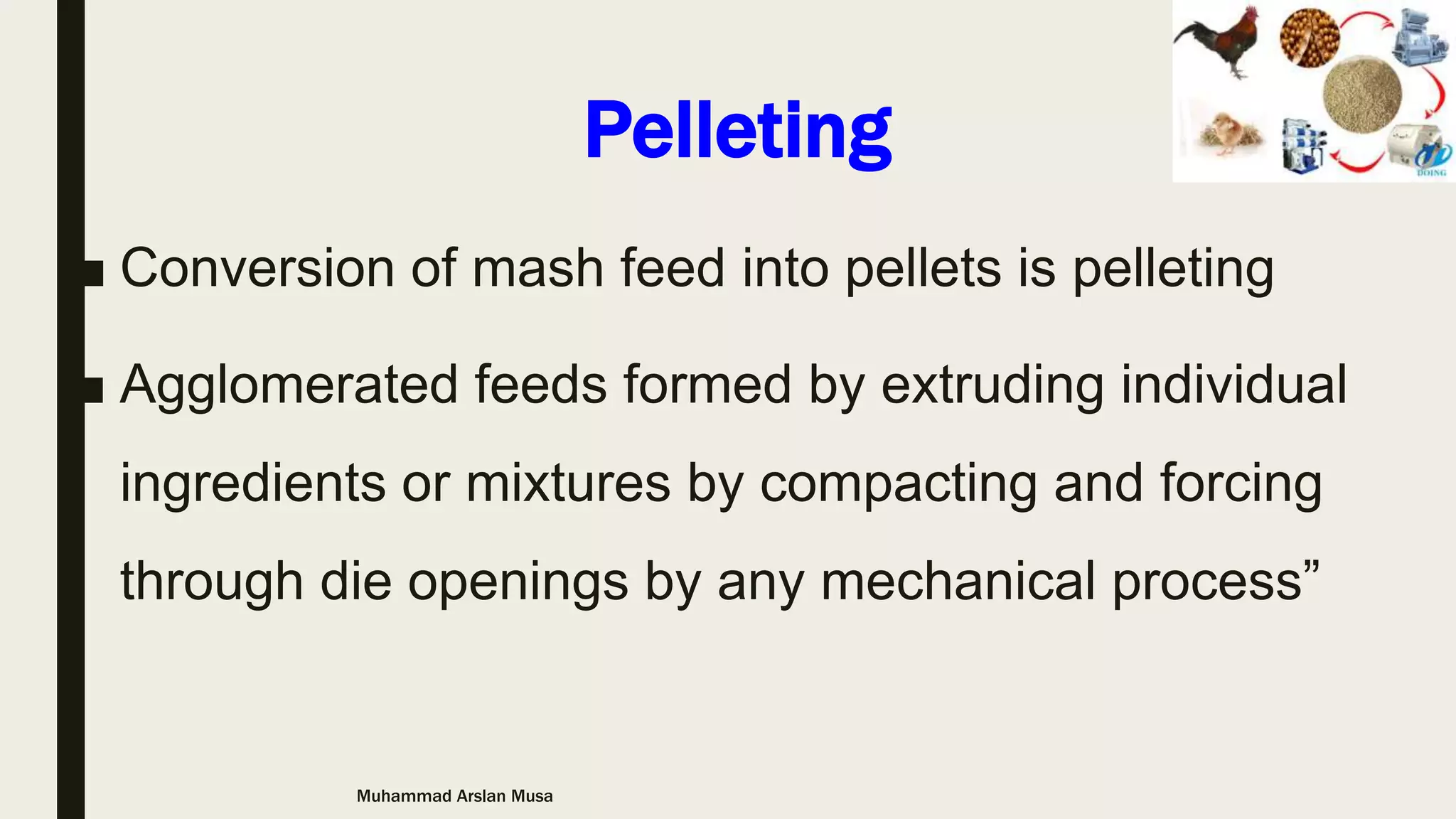
■ Conversion of mash feed into pellets is pelleting
■ Agglomerated feeds formed by extruding individual
ingredients or mixtures by compacting and forcing
through die openings by any mechanical process”
Muhammad Arslan Musa
Advantages of Pelleting
■ Minimize feed wastage
■ Increased nutrient density and nutrient availability
■ Reduce dustiness and decreased microbial load
■ increase palatability and bulk density
■ Reducing feeding time about 3 times than mash feed
■ Decrease energy loss on prehention
Muhammad Arslan Musa
Pelleting Process
■ Pelleting process involves
■ Conditioning
■ Compression
■ Cooling
Muhammad Arslan Musa
Conditioning
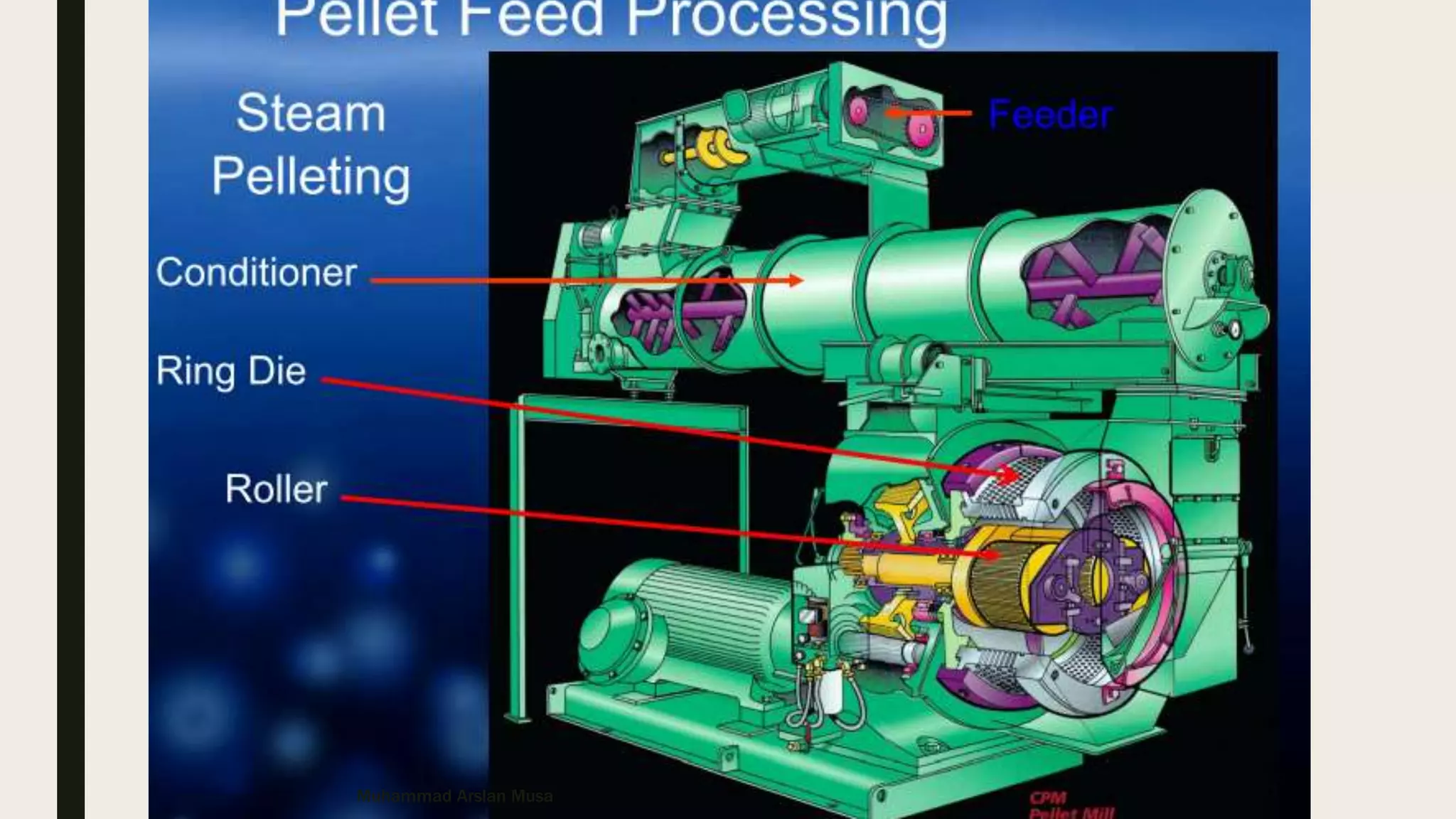
■ Modification of physical properties of mash by steam
addition
■ Steam has ability to carry heat and moisture
■ Grains and meals are good insulators of heat
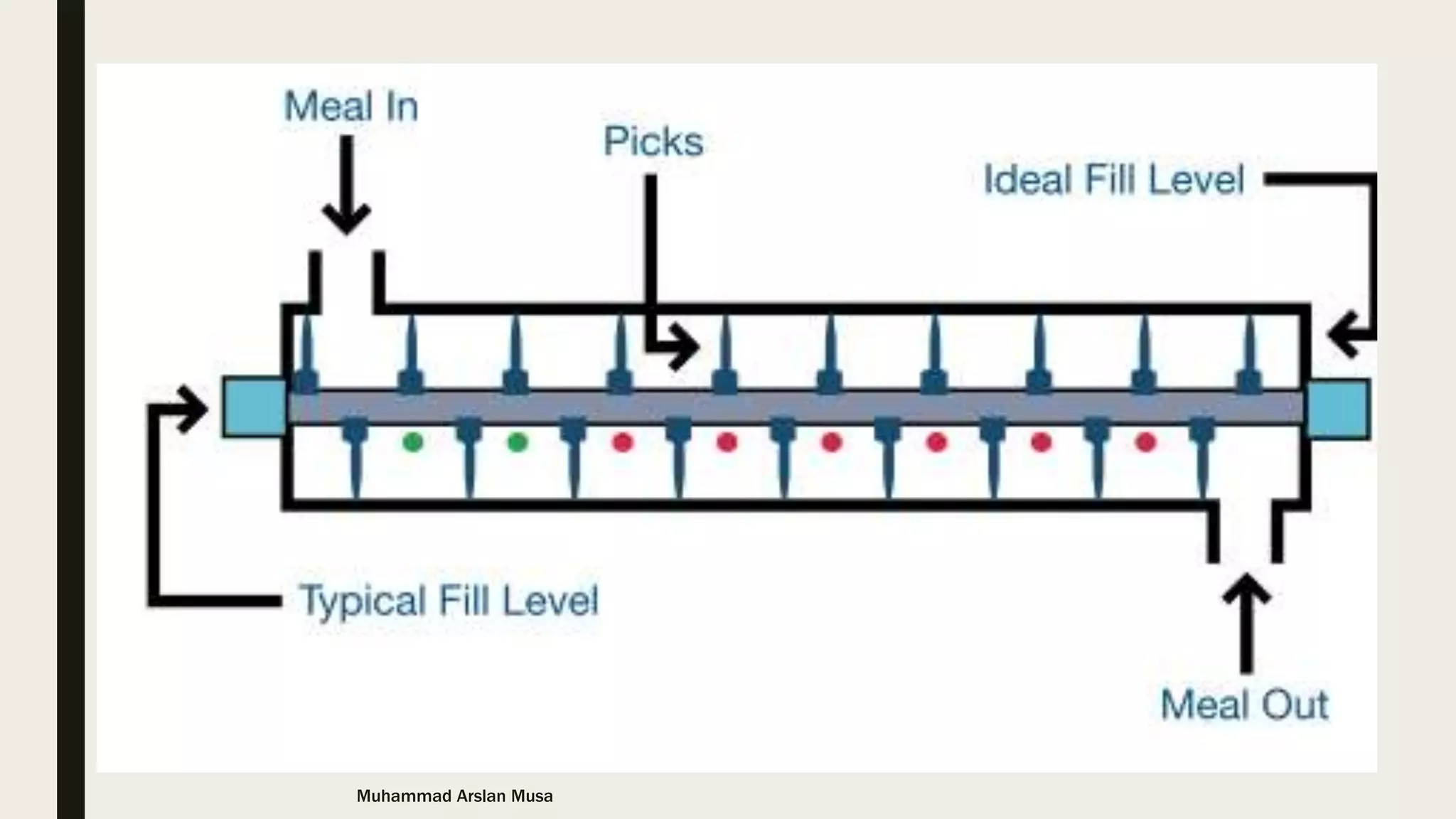
■ Grinding and retention time in conditioner are
important
■ Conditioner has usually 1.5 to 4.6 m long with 38-76 cm
diameter
Muhammad Arslan Musa
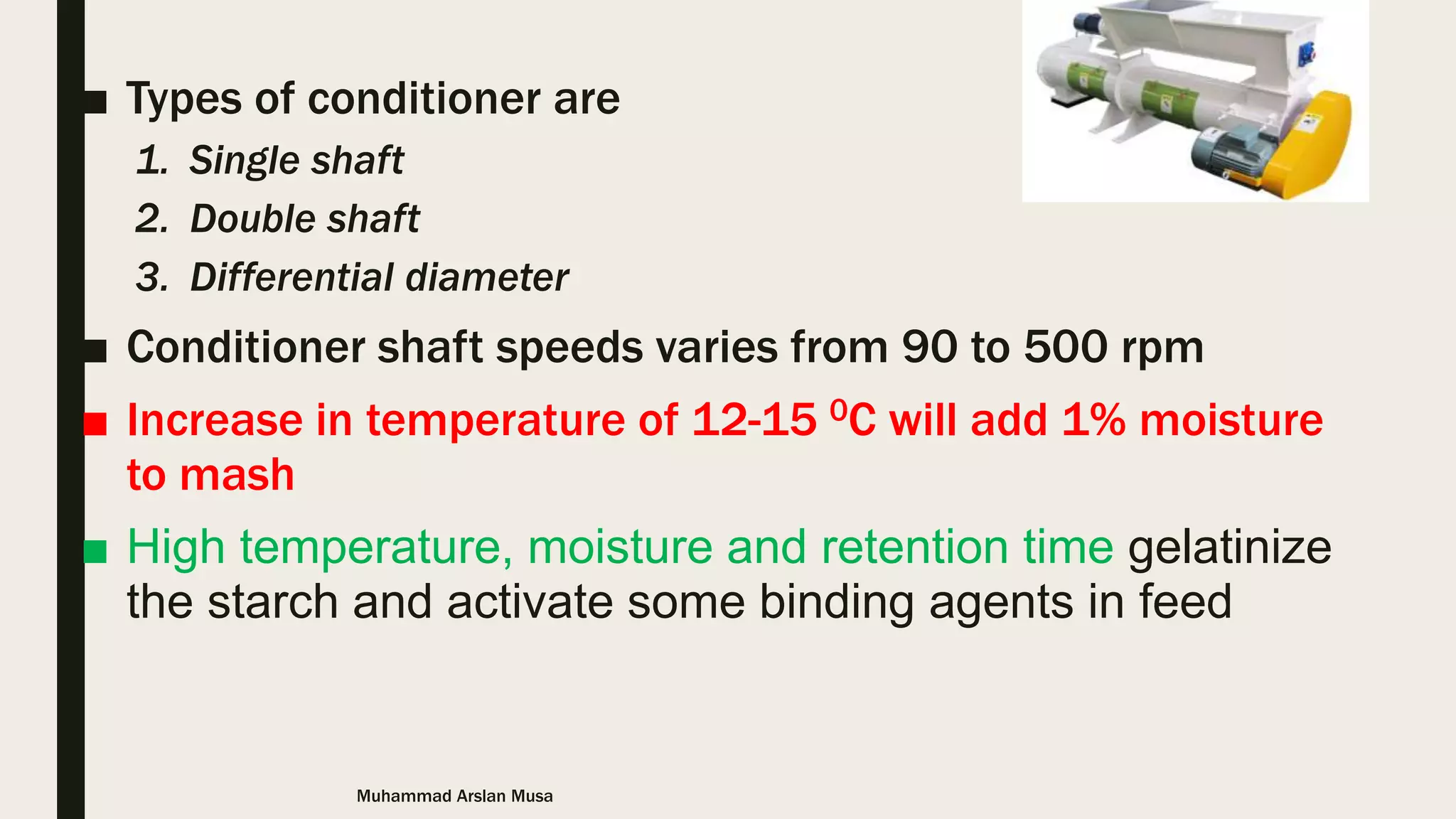
■ Types of conditioner are
1. Single shaft
2. Double shaft
3. Differential diameter
■ Conditioner shaft speeds varies from 90 to 500 rpm
■ Increase in temperature of 12-15 0C will add 1% moisture
to mash
■ High temperature, moisture and retention time gelatinize
the starch and activate some binding agents in feed
Muhammad Arslan Musa
Physical Requirements for
Conditioning
Temperature 80-90 °C
Pressure 2-3 bar
Retention Time 30- 90 seconds
Moisture addition 4-5%
Muhammad Arslan Musa
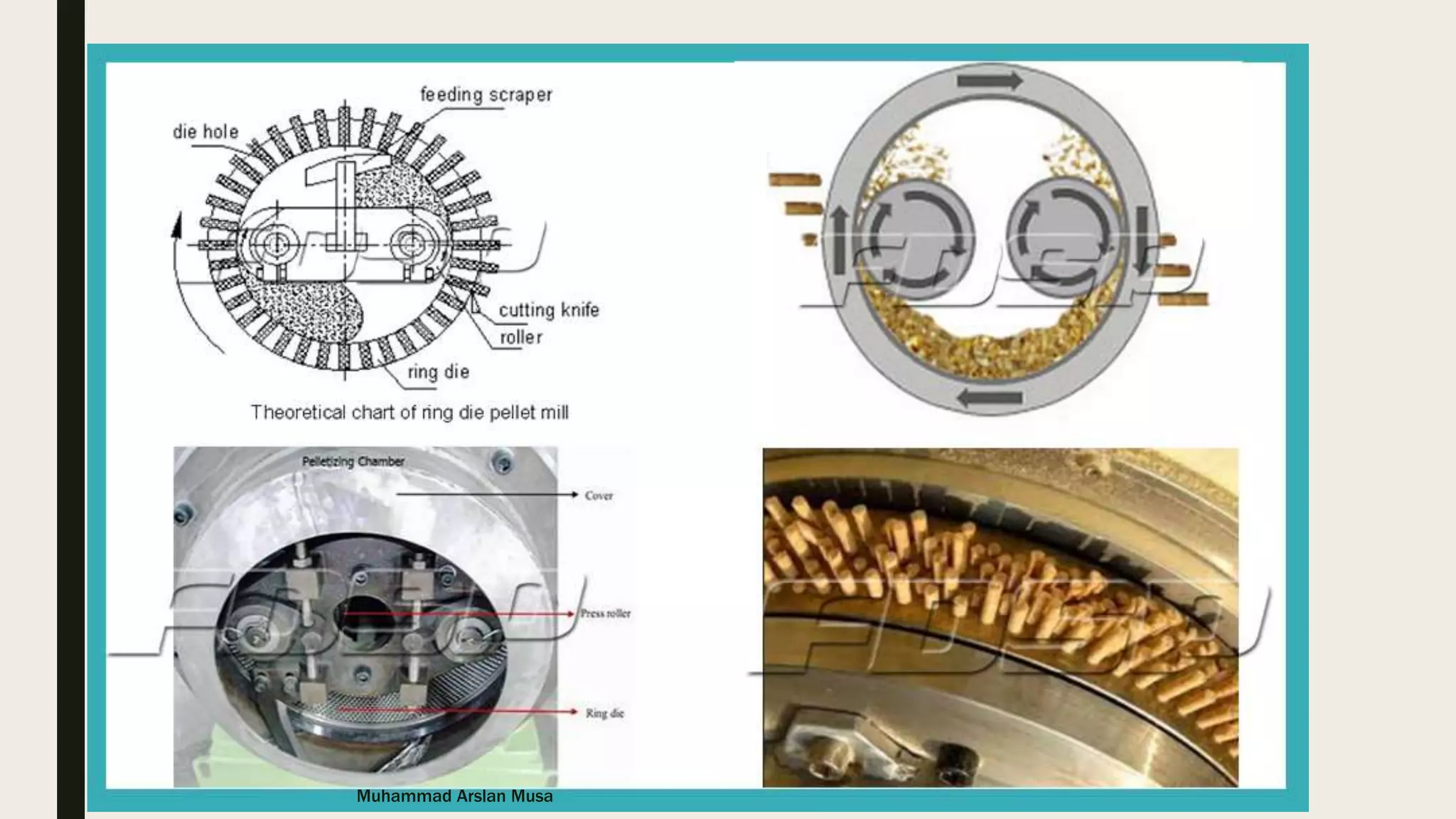
Compression
■ Die selection usually based on these parameters
■ Die speed (pellet quality decreased by increasing die speed)
■ Number of holes in die (important for production rate)
■ Dimension of die hole (more length with less diameter
produce more hard pellet)
■ Die maintenance (should be properly maintained for better
pellet quality) Muhammad Arslan Musa
Muhammad Arslan Musa
Cooling
■ Added moisture and heat is removed from pellets in cooler
■ Reduce temperature from about 85 0C to above 5-8 0C from
atmospheric temperature
■ Usually, removes 4-6 % moisture
■ Recommended air for 1-ton pellets is 3000-5000 cubic meter
with air speed of 25 meter per second
Muhammad Arslan Musa
Cooler Types
■ Horizontal (moving bed)
■ Vertical (2 columns of pellet moving down)
■ Counter-flow
Muhammad Arslan Musa
Factors Affecting Moisture
Removal in Cooler
■ Initial moisture of pellets
■ Temperature difference
■ Moisture difference of pellets and air
■ Air flow rate
■ Retention time
■ Diameter of pellet
■ Fat coating on pellets
■ Porosity of pellets
Muhammad Arslan Musa
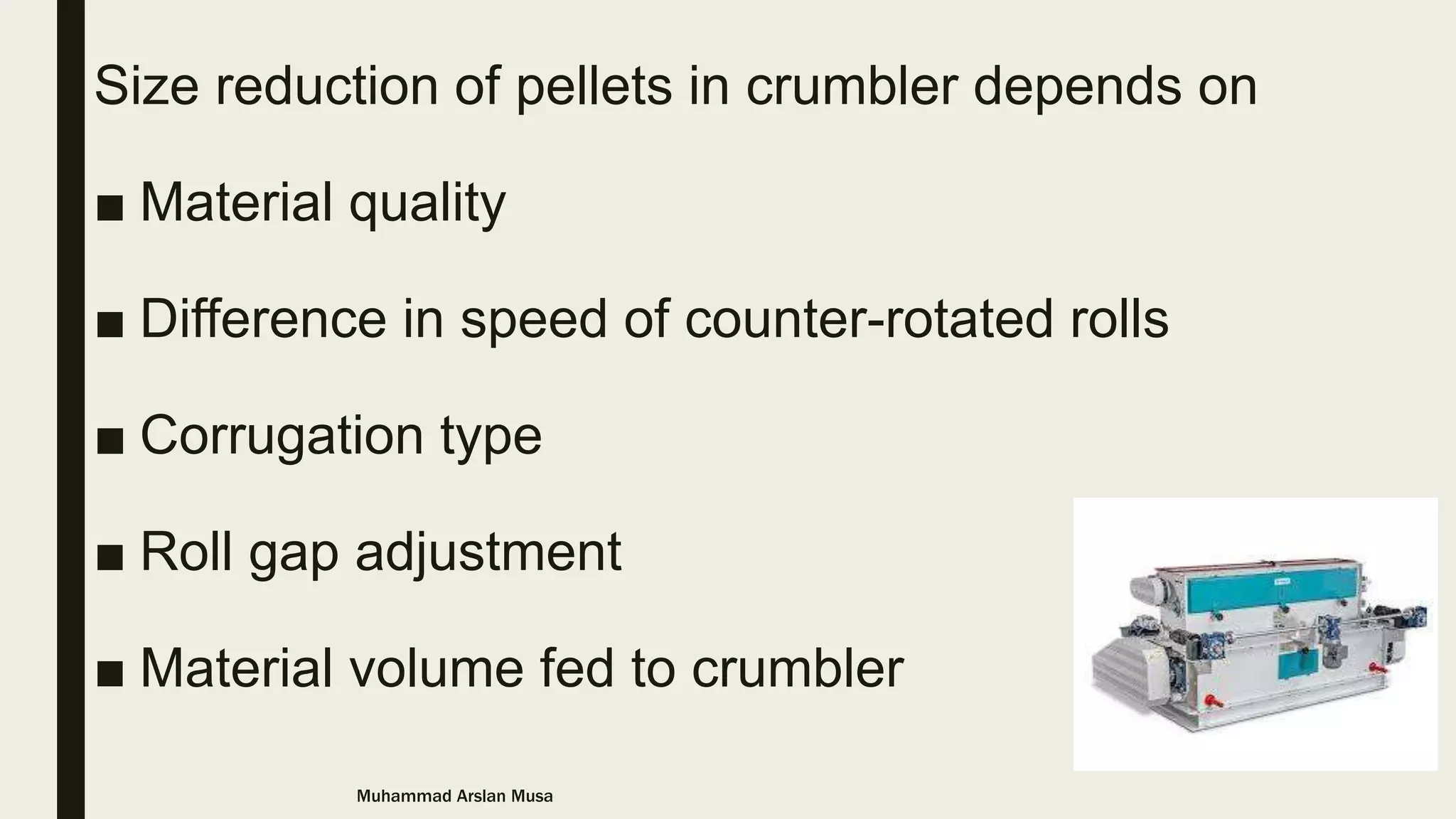
Crumbler
■ Used to making crumbs by crushing the pellets
■ Consists one or two sets of rolls that rotates in opposite
direction with different speed
■ Crumbs size can be increased or decreased by increasing or
decreasing the gap between two rolls
Muhammad Arslan Musa
Size reduction of pellets in crumbler depends on
■ Material quality
■ Difference in speed of counter-rotated rolls
■ Corrugation type
■ Roll gap adjustment
■ Material volume fed to crumbler
Muhammad Arslan Musa

Basics of Pelleting

  • 1.
    BASICS OF PELLETING MuhammadArslan Musa M.Sc. (Hons.) Poultry Science arslan2062@gmail.com Muhammad Arslan Musa
  • 2.
    Pelleting ■ Conversion ofmash feed into pellets is pelleting ■ Agglomerated feeds formed by extruding individual ingredients or mixtures by compacting and forcing through die openings by any mechanical process” Muhammad Arslan Musa
  • 3.
    Advantages of Pelleting ■Minimize feed wastage ■ Increased nutrient density and nutrient availability ■ Reduce dustiness and decreased microbial load ■ increase palatability and bulk density ■ Reducing feeding time about 3 times than mash feed ■ Decrease energy loss on prehention Muhammad Arslan Musa
  • 4.
  • 5.
    Pelleting Process ■ Pelletingprocess involves ■ Conditioning ■ Compression ■ Cooling Muhammad Arslan Musa
  • 6.
  • 7.
    Conditioning ■ Modification ofphysical properties of mash by steam addition ■ Steam has ability to carry heat and moisture ■ Grains and meals are good insulators of heat ■ Grinding and retention time in conditioner are important ■ Conditioner has usually 1.5 to 4.6 m long with 38-76 cm diameter Muhammad Arslan Musa
  • 8.
    ■ Types ofconditioner are 1. Single shaft 2. Double shaft 3. Differential diameter ■ Conditioner shaft speeds varies from 90 to 500 rpm ■ Increase in temperature of 12-15 0C will add 1% moisture to mash ■ High temperature, moisture and retention time gelatinize the starch and activate some binding agents in feed Muhammad Arslan Musa
  • 9.
  • 10.
    Physical Requirements for Conditioning Temperature80-90 °C Pressure 2-3 bar Retention Time 30- 90 seconds Moisture addition 4-5% Muhammad Arslan Musa
  • 11.
  • 12.
    Compression ■ Die selectionusually based on these parameters ■ Die speed (pellet quality decreased by increasing die speed) ■ Number of holes in die (important for production rate) ■ Dimension of die hole (more length with less diameter produce more hard pellet) ■ Die maintenance (should be properly maintained for better pellet quality) Muhammad Arslan Musa
  • 13.
  • 14.
    Cooling ■ Added moistureand heat is removed from pellets in cooler ■ Reduce temperature from about 85 0C to above 5-8 0C from atmospheric temperature ■ Usually, removes 4-6 % moisture ■ Recommended air for 1-ton pellets is 3000-5000 cubic meter with air speed of 25 meter per second Muhammad Arslan Musa
  • 15.
    Cooler Types ■ Horizontal(moving bed) ■ Vertical (2 columns of pellet moving down) ■ Counter-flow Muhammad Arslan Musa
  • 16.
    Factors Affecting Moisture Removalin Cooler ■ Initial moisture of pellets ■ Temperature difference ■ Moisture difference of pellets and air ■ Air flow rate ■ Retention time ■ Diameter of pellet ■ Fat coating on pellets ■ Porosity of pellets Muhammad Arslan Musa
  • 17.
    Crumbler ■ Used tomaking crumbs by crushing the pellets ■ Consists one or two sets of rolls that rotates in opposite direction with different speed ■ Crumbs size can be increased or decreased by increasing or decreasing the gap between two rolls Muhammad Arslan Musa
  • 18.
  • 19.
    Size reduction ofpellets in crumbler depends on ■ Material quality ■ Difference in speed of counter-rotated rolls ■ Corrugation type ■ Roll gap adjustment ■ Material volume fed to crumbler Muhammad Arslan Musa
  • 20.