Hydrops
Dr. Tarek Sayed
Objectives
What is hydrops fetalis ?
What causes hydrops fetalis ?
Who is affected by hydrops fetalis ?
What are the symptoms of hydrops fetalis ?

Why is hydrops fetalis a concern ?
How is hydrops fetalis diagnosed ?
Treatment for hydrops fetalis :
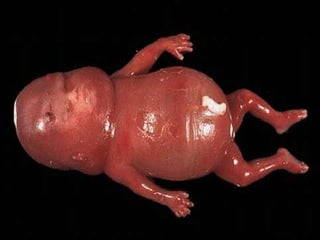
What is hydrops fetalis ?
• Hydrops fetalis is a severe, life-threatening problem of
severe edema (swelling) in the fetus and newborn. It is also
called hydrops.

• Presence of excess extra-cellular fluid in two or more
sites
 Pericardial effusion
 Pleural Effusion
 Ascites
 Placental Enlargement
Non-immune Hydrops Fetalis
What causes hydrops
fetalis?
• Hydrops develops when too much fluid leaves the
bloodstream and goes into the tissues. Many different
diseases and complications can cause hydrops, including the
following:
• Immune:
• Hydrops can develop as the baby's organs are unable to
compensate for the anemia. The heart begins to fail and
large amounts of fluid build up in the baby's tissues and
organs.
What causes hydrops fetalis ?
• non-immune :
includes all other diseases or complications that may interfere
with the baby's ability to manage fluid. There is no one
mechanism to explain non-immune hydrops. Some of the
diseases or complications that are often associated with
hydrops include the following:

•
•
•
•
•
•

severe anemias
congenital infections (infections present at birth)
heart or lung defects
chromosomal abnormalities and birth defects
liver disease
renal disease
Pathogenesis
• Three main hypothesis:

Anemia
Cardiac Failure
Reduction in Osmotic Pressure
(Hypoproteinaemia
Pathogenesis
• Fetal Anemia:
 High output cardiac failure
Increase in umbilical venous pressure
 Portal hypertension in severely effected
fetuses due to increase in hepatic
erythropoetic tissue.
 Hypoxia and acidosis predispose to epithelial
damage in capillaries that allows loss of fluid
to extravascular comp
Pathogenesis
• Fetal Anemia:

 Alpha ( ) Thalasaemia
 Secondary to Feto-maternal Hemorrhage
 Twin-twin transfusion
 Other Hemoglobinopathies
Pathogenesis
Cardiac Failure:

Commonest Mechanism
Increase in Cardiac Size
Increased Fetal Venous Pressure

Causes include:
Cardiomyopathies
Tachyarythmias
Bradycardias (Congenital heart block)

Obstructive left heart disease
Ebstien’s anomaly
Atrial isomerism
Pathogenesis
Reduced Osmotic pressure:
Hypoproteiaemia with Subsequent
Reduction in Osmotic Pressure
Anemia Along With Destruction of Hepatic Architecture
Congenital Nephrosis
Pathogenesis
• Other :
 Obstruction to venous return

 Congenital cystic adenomatoid malformation of
lung
 Impaired lymphatic drainage
 Cystic hygroma

 Karyotypic abnormalities (45XO)
 Connective tissue malformation

Fetal Infections:
TORCH
Parvo Virus B19
Who is affected by hydrops fetalis?
• Immune hydrops is not as common
• Non-immune hydrops occurs rarely.
• The incidence of hydrops can vary between populations
Why is hydrops fetalis a concern?
• About half of unborn babies with hydrops do not survive
• Risks are also high for babies born with hydrops, with
survival often depending on the cause and treatment.
What are the symptoms of hydrops fetalis?

• During pregnancy, symptoms may include:
large amounts of amniotic fluid
thickened placenta
ultrasound of the fetus shows enlarged liver, spleen, or
heart, and fluid buildup in the fetus' abdomen

• After birth, symptoms may include:
pale coloring
severe edema overall, especially in the baby's
abdomen
enlarged liver and spleen
respiratory distress
How is hydrops fetalis diagnosed?
•
•
•
•
•
•
•

complete medical history and physical examination
diagnostic procedures for hydrops fetalis may include:
Ultrasound
fetal blood sampling
amniocentesis
Fetal echo
Placental thickness
Treatment for hydrops fetalis:
•

based on:

• gestational age, overall health, and medical
history
• Extent of the disease
• Treatment of hydrops depends on the cause
• help for respiratory distress
• removal of excessive fluid from spaces
• medications to help the kidneys remove excess
fluid
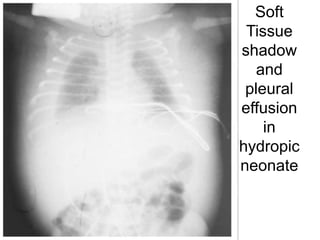
Soft
Tissue
shadow
and
pleural
effusion
in
hydropic
neonate
• Thank

Hydrops

  • 1.
  • 2.
    Objectives What is hydropsfetalis ? What causes hydrops fetalis ? Who is affected by hydrops fetalis ? What are the symptoms of hydrops fetalis ? Why is hydrops fetalis a concern ? How is hydrops fetalis diagnosed ? Treatment for hydrops fetalis :
  • 3.
    What is hydropsfetalis ? • Hydrops fetalis is a severe, life-threatening problem of severe edema (swelling) in the fetus and newborn. It is also called hydrops. • Presence of excess extra-cellular fluid in two or more sites  Pericardial effusion  Pleural Effusion  Ascites  Placental Enlargement
  • 4.
  • 5.
    What causes hydrops fetalis? •Hydrops develops when too much fluid leaves the bloodstream and goes into the tissues. Many different diseases and complications can cause hydrops, including the following: • Immune: • Hydrops can develop as the baby's organs are unable to compensate for the anemia. The heart begins to fail and large amounts of fluid build up in the baby's tissues and organs.
  • 6.
    What causes hydropsfetalis ? • non-immune : includes all other diseases or complications that may interfere with the baby's ability to manage fluid. There is no one mechanism to explain non-immune hydrops. Some of the diseases or complications that are often associated with hydrops include the following: • • • • • • severe anemias congenital infections (infections present at birth) heart or lung defects chromosomal abnormalities and birth defects liver disease renal disease
  • 7.
    Pathogenesis • Three mainhypothesis: Anemia Cardiac Failure Reduction in Osmotic Pressure (Hypoproteinaemia
  • 8.
    Pathogenesis • Fetal Anemia: High output cardiac failure Increase in umbilical venous pressure  Portal hypertension in severely effected fetuses due to increase in hepatic erythropoetic tissue.  Hypoxia and acidosis predispose to epithelial damage in capillaries that allows loss of fluid to extravascular comp
  • 9.
    Pathogenesis • Fetal Anemia: Alpha ( ) Thalasaemia  Secondary to Feto-maternal Hemorrhage  Twin-twin transfusion  Other Hemoglobinopathies
  • 10.
    Pathogenesis Cardiac Failure: Commonest Mechanism Increasein Cardiac Size Increased Fetal Venous Pressure Causes include: Cardiomyopathies Tachyarythmias Bradycardias (Congenital heart block) Obstructive left heart disease Ebstien’s anomaly Atrial isomerism
  • 11.
    Pathogenesis Reduced Osmotic pressure: Hypoproteiaemiawith Subsequent Reduction in Osmotic Pressure Anemia Along With Destruction of Hepatic Architecture Congenital Nephrosis
  • 12.
    Pathogenesis • Other : Obstruction to venous return  Congenital cystic adenomatoid malformation of lung  Impaired lymphatic drainage  Cystic hygroma  Karyotypic abnormalities (45XO)  Connective tissue malformation Fetal Infections: TORCH Parvo Virus B19
  • 13.
    Who is affectedby hydrops fetalis? • Immune hydrops is not as common • Non-immune hydrops occurs rarely. • The incidence of hydrops can vary between populations
  • 14.
    Why is hydropsfetalis a concern? • About half of unborn babies with hydrops do not survive • Risks are also high for babies born with hydrops, with survival often depending on the cause and treatment.
  • 15.
    What are thesymptoms of hydrops fetalis? • During pregnancy, symptoms may include: large amounts of amniotic fluid thickened placenta ultrasound of the fetus shows enlarged liver, spleen, or heart, and fluid buildup in the fetus' abdomen • After birth, symptoms may include: pale coloring severe edema overall, especially in the baby's abdomen enlarged liver and spleen respiratory distress
  • 16.
    How is hydropsfetalis diagnosed? • • • • • • • complete medical history and physical examination diagnostic procedures for hydrops fetalis may include: Ultrasound fetal blood sampling amniocentesis Fetal echo Placental thickness
  • 17.
    Treatment for hydropsfetalis: • based on: • gestational age, overall health, and medical history • Extent of the disease • Treatment of hydrops depends on the cause • help for respiratory distress • removal of excessive fluid from spaces • medications to help the kidneys remove excess fluid
  • 18.
  • 20.