NON IMMUINE HYDROPS
FETALIS UNIT IV
DR VARSHA DESHMUKH
KAY
HISTORY
• 25 Yrs. Old
• 7 Months Amenorrhoea
• Swelling of Feet 1 month
• Headache 3 days
OBST. HISTORY
• G5 P4 L1 A0
• First 3 Preterm deliveries all died.
• 4th
FTND 3 year old female live KAY
GENERAL EXAMINATION
• GC Moderate, afebrile, pulse 96 /min.,
BP – 150/110 mm.Hg.
• Pallor +, Edema +
• CVS, RS wnl
• Per abdomen
• Ut over distended, tense, fetal parts
not felt, FHS CNL
• Per Vaginum Cx 1 Fl, 60 % Effaced,
Membranes + breech at – 2 St.
• Pelvis adequate
• Provisional Diagnosis G5 P4 L1 A0,
Sev. PIH, ? Twins ? Hydramnios
• Ultrasonography KAY
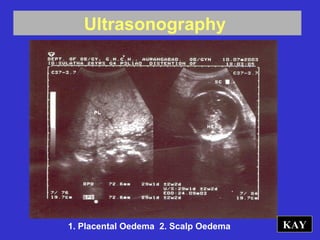
Ultrasonography
KAY1. Placental Oedema 2. Scalp Oedema
Ultrasonography
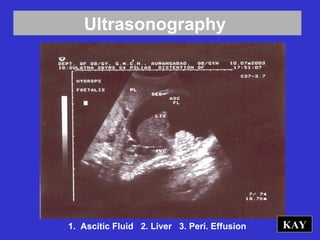
KAY1. Ascitic Fluid 2. Liver 3. Peri. Effusion
LABOUR NOTES
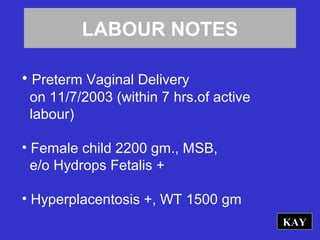
• Preterm Vaginal Delivery
on 11/7/2003 (within 7 hrs.of active
labour)
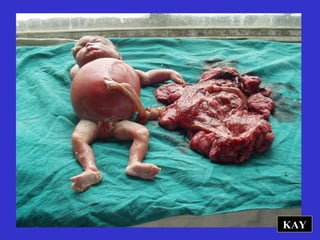
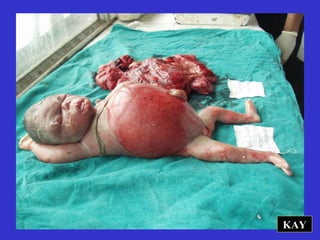
• Female child 2200 gm., MSB,
e/o Hydrops Fetalis +
• Hyperplacentosis +, WT 1500 gm
KAY
KAY
KAY
INVESTIGATIONS
• Bld gr Orh+ve
• Hemogram Normal
• LFTs, KFTs Wnl
• BSL Normal
• Urine Exam. Normal
• Findings of neonatal autopsy :
• Macerated baby, distension of abd, edema all over body,
peeling of skin.
• Pericardial effusion, fluid in peritoneal cavity 200 cc.
• Congested liver, lungs, spleen, kidneys
• diagnosis – non immunize hydrops fetalis
KAY
INTRODUCTION
Potter in 1943 described clinical entity, that
affected non-Rh sensitised pregnancies,
NIH –
1) Fetal ansarca.
2) Placental oedema
3) Fetal serous effusions
NIH does not represent a specific
disease. “Late manifestation of many
severe diseases”. KAY
ETIOLOGY
• Cardiovascular anomalies -
tachyarrhythmia, Anatomic defects
• Chromosomal - Down syndrome, Turner
Syndrome.
• Malformation syndrome
• Twin pregnancy- Twin transfusion
syndrome
• Hematologic - Arteriovenous shunt
• Genitourinary - Congenital nephrosis
KAY
ETIOLOGY
• Respiratory - Pulmonary hypoplasia
• Gastrointestinal
• Liver
• Maternal - Severe diabetes mellitus,
severe anemia, Hypoproteinemia
• Placenta-umbilical cord - Chorionic vein
thrombosis
• Medications - Antepartum indomethacin
• Infectious - Parvovirus B 19, TORCH
• Miscellaneous KAY
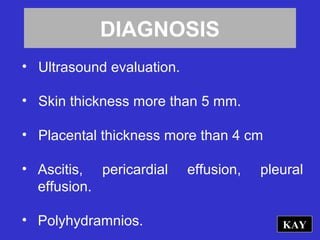
DIAGNOSIS
• Ultrasound evaluation.
• Skin thickness more than 5 mm.
• Placental thickness more than 4 cm
• Ascitis, pericardial effusion, pleural
effusion.
• Polyhydramnios. KAY
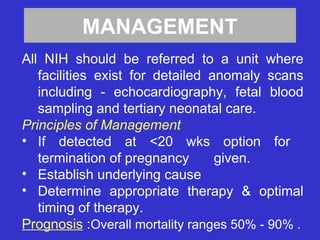
MANAGEMENT
All NIH should be referred to a unit where
facilities exist for detailed anomaly scans
including - echocardiography, fetal blood
sampling and tertiary neonatal care.
Principles of Management
• If detected at <20 wks option for
termination of pregnancy given.
• Establish underlying cause
• Determine appropriate therapy & optimal
timing of therapy.
Prognosis :Overall mortality ranges 50% - 90% .
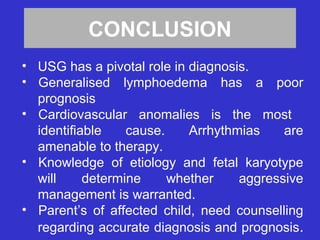
CONCLUSION
• USG has a pivotal role in diagnosis.
• Generalised lymphoedema has a poor
prognosis
• Cardiovascular anomalies is the most
identifiable cause. Arrhythmias are
amenable to therapy.
• Knowledge of etiology and fetal karyotype
will determine whether aggressive
management is warranted.
• Parent’s of affected child, need counselling
regarding accurate diagnosis and prognosis.
Non immuine hydrops fetalis

Non immuine hydrops fetalis

  • 1.
    NON IMMUINE HYDROPS FETALISUNIT IV DR VARSHA DESHMUKH KAY
  • 2.
    HISTORY • 25 Yrs.Old • 7 Months Amenorrhoea • Swelling of Feet 1 month • Headache 3 days OBST. HISTORY • G5 P4 L1 A0 • First 3 Preterm deliveries all died. • 4th FTND 3 year old female live KAY
  • 3.
    GENERAL EXAMINATION • GCModerate, afebrile, pulse 96 /min., BP – 150/110 mm.Hg. • Pallor +, Edema + • CVS, RS wnl • Per abdomen • Ut over distended, tense, fetal parts not felt, FHS CNL • Per Vaginum Cx 1 Fl, 60 % Effaced, Membranes + breech at – 2 St. • Pelvis adequate • Provisional Diagnosis G5 P4 L1 A0, Sev. PIH, ? Twins ? Hydramnios • Ultrasonography KAY
  • 4.
  • 5.
    Ultrasonography KAY1. Ascitic Fluid2. Liver 3. Peri. Effusion
  • 6.
    LABOUR NOTES • PretermVaginal Delivery on 11/7/2003 (within 7 hrs.of active labour) • Female child 2200 gm., MSB, e/o Hydrops Fetalis + • Hyperplacentosis +, WT 1500 gm KAY
  • 7.
  • 8.
  • 9.
    INVESTIGATIONS • Bld grOrh+ve • Hemogram Normal • LFTs, KFTs Wnl • BSL Normal • Urine Exam. Normal • Findings of neonatal autopsy : • Macerated baby, distension of abd, edema all over body, peeling of skin. • Pericardial effusion, fluid in peritoneal cavity 200 cc. • Congested liver, lungs, spleen, kidneys • diagnosis – non immunize hydrops fetalis KAY
  • 10.
    INTRODUCTION Potter in 1943described clinical entity, that affected non-Rh sensitised pregnancies, NIH – 1) Fetal ansarca. 2) Placental oedema 3) Fetal serous effusions NIH does not represent a specific disease. “Late manifestation of many severe diseases”. KAY
  • 11.
    ETIOLOGY • Cardiovascular anomalies- tachyarrhythmia, Anatomic defects • Chromosomal - Down syndrome, Turner Syndrome. • Malformation syndrome • Twin pregnancy- Twin transfusion syndrome • Hematologic - Arteriovenous shunt • Genitourinary - Congenital nephrosis KAY
  • 12.
    ETIOLOGY • Respiratory -Pulmonary hypoplasia • Gastrointestinal • Liver • Maternal - Severe diabetes mellitus, severe anemia, Hypoproteinemia • Placenta-umbilical cord - Chorionic vein thrombosis • Medications - Antepartum indomethacin • Infectious - Parvovirus B 19, TORCH • Miscellaneous KAY
  • 13.
    DIAGNOSIS • Ultrasound evaluation. •Skin thickness more than 5 mm. • Placental thickness more than 4 cm • Ascitis, pericardial effusion, pleural effusion. • Polyhydramnios. KAY
  • 14.
    MANAGEMENT All NIH shouldbe referred to a unit where facilities exist for detailed anomaly scans including - echocardiography, fetal blood sampling and tertiary neonatal care. Principles of Management • If detected at <20 wks option for termination of pregnancy given. • Establish underlying cause • Determine appropriate therapy & optimal timing of therapy. Prognosis :Overall mortality ranges 50% - 90% .
  • 15.
    CONCLUSION • USG hasa pivotal role in diagnosis. • Generalised lymphoedema has a poor prognosis • Cardiovascular anomalies is the most identifiable cause. Arrhythmias are amenable to therapy. • Knowledge of etiology and fetal karyotype will determine whether aggressive management is warranted. • Parent’s of affected child, need counselling regarding accurate diagnosis and prognosis.