Developing Tools for Hydromodification Management and Assessment Eric Stein S. Ca. Coastal Water Research Project (SCCWRP) [email_address]
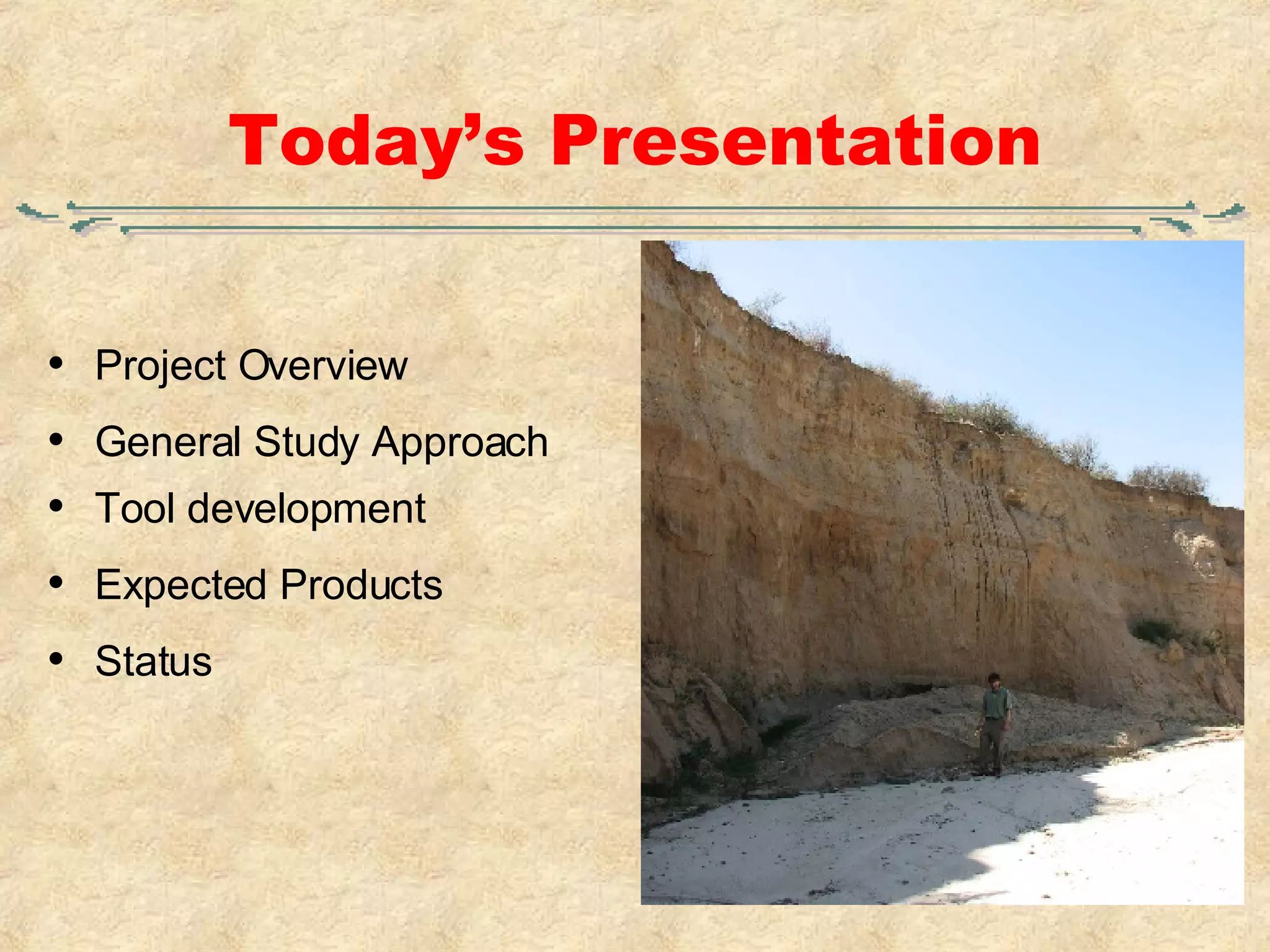
Today’s Presentation Project Overview General Study Approach Tool development Expected Products Status
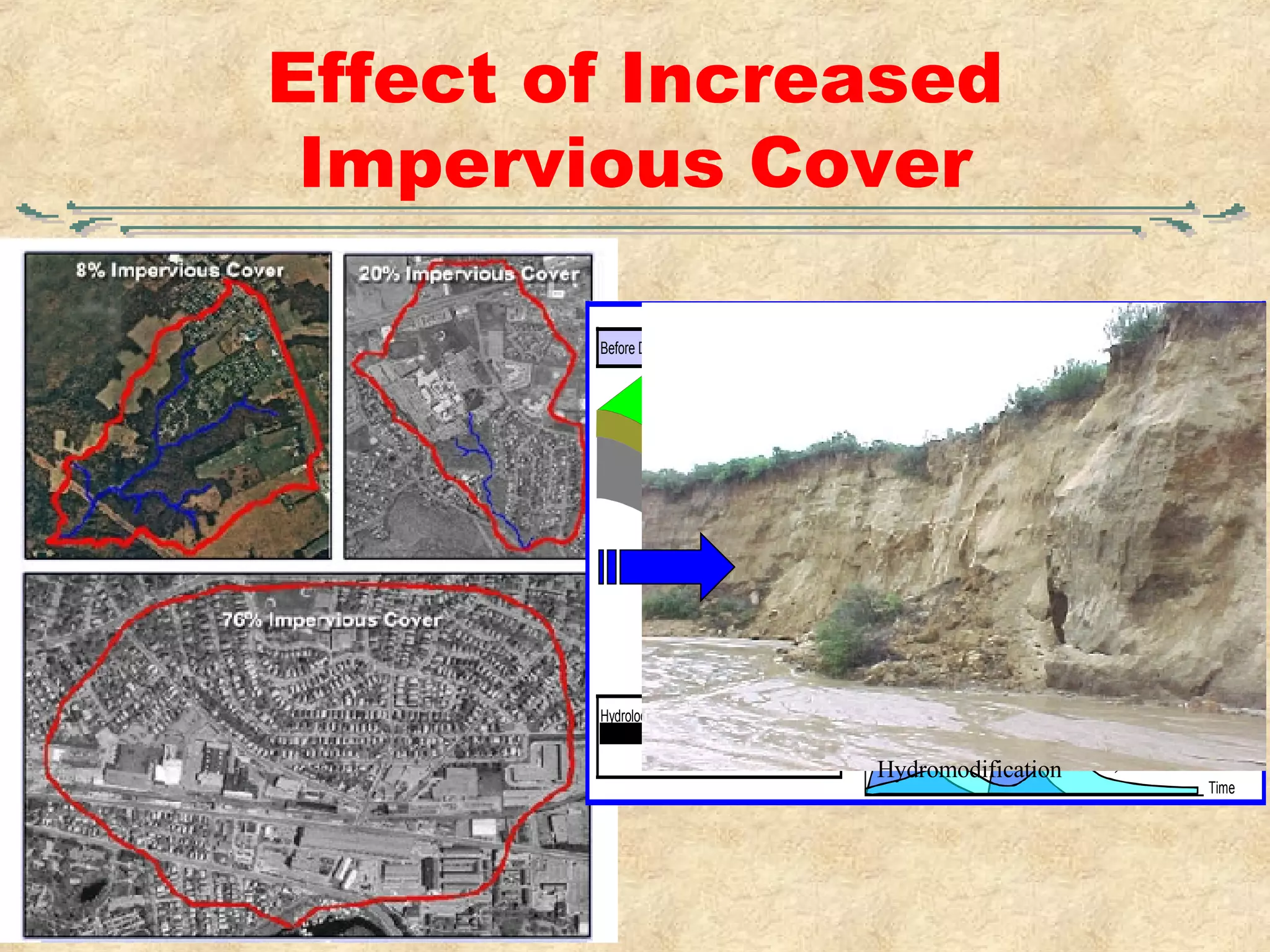
Effect of Increased Impervious Cover Hydromodification
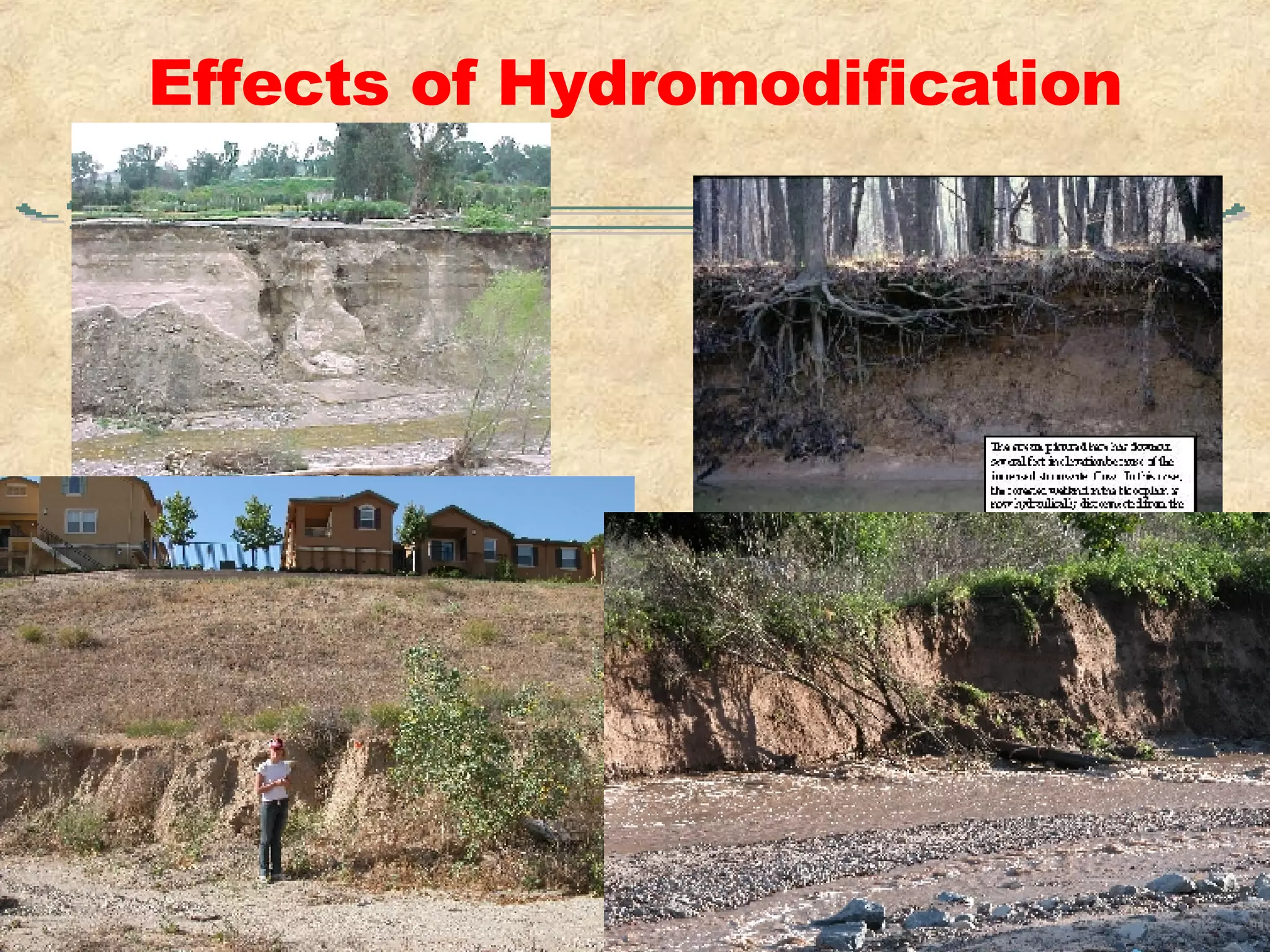
Effects of Hydromodification
Regional Issue    Regional Approach Relationship between increased impervious cover and stream stability is a regional concern Build on previous work: Stormwater Monitoring Coalition (SMC) Santa Clara County Contra Costa County
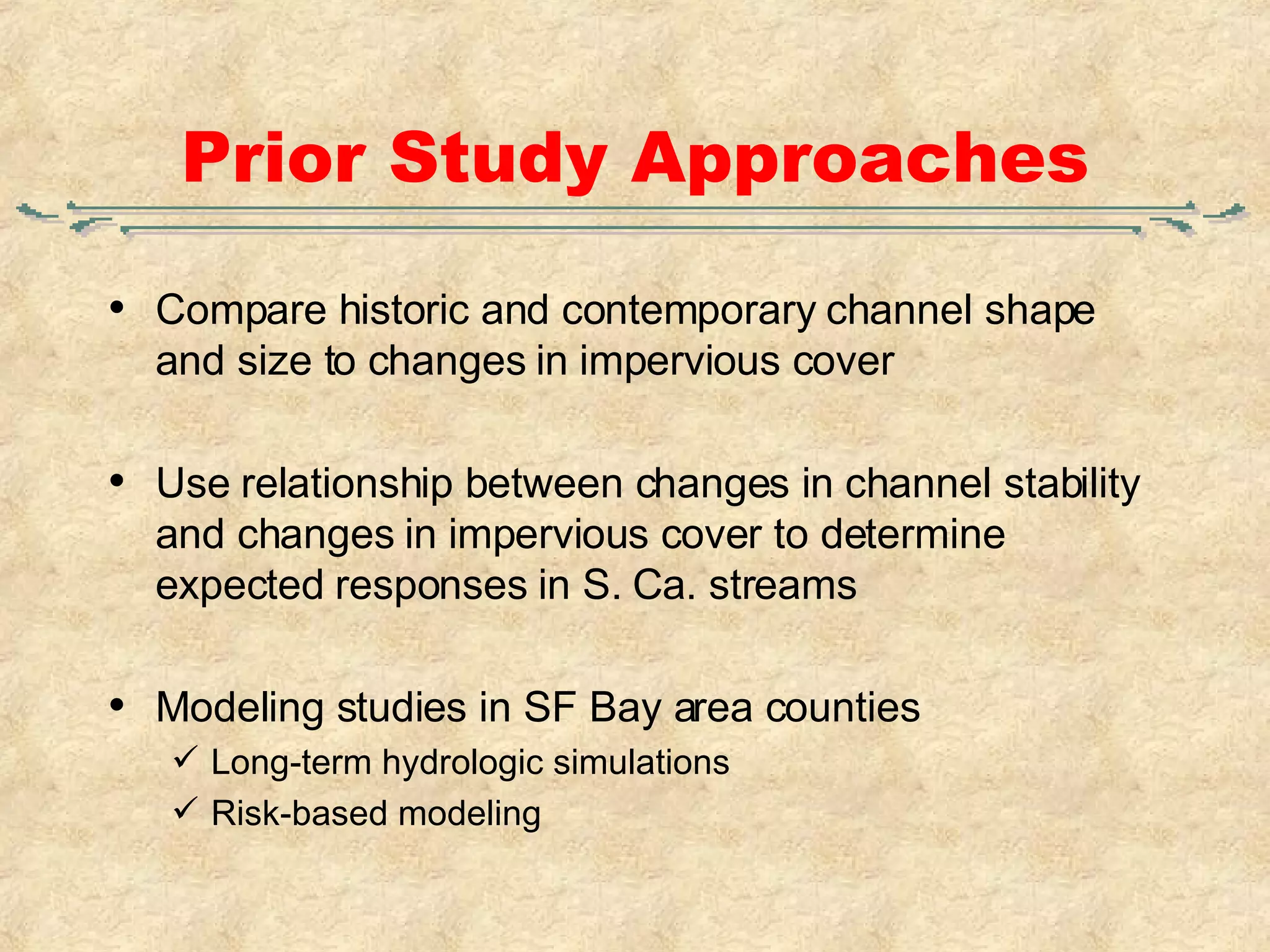
Prior Study Approaches Compare historic and contemporary channel shape and size to changes in impervious cover Use relationship between changes in channel stability and changes in impervious cover to determine expected responses in S. Ca. streams Modeling studies in SF Bay area counties Long-term hydrologic simulations Risk-based modeling
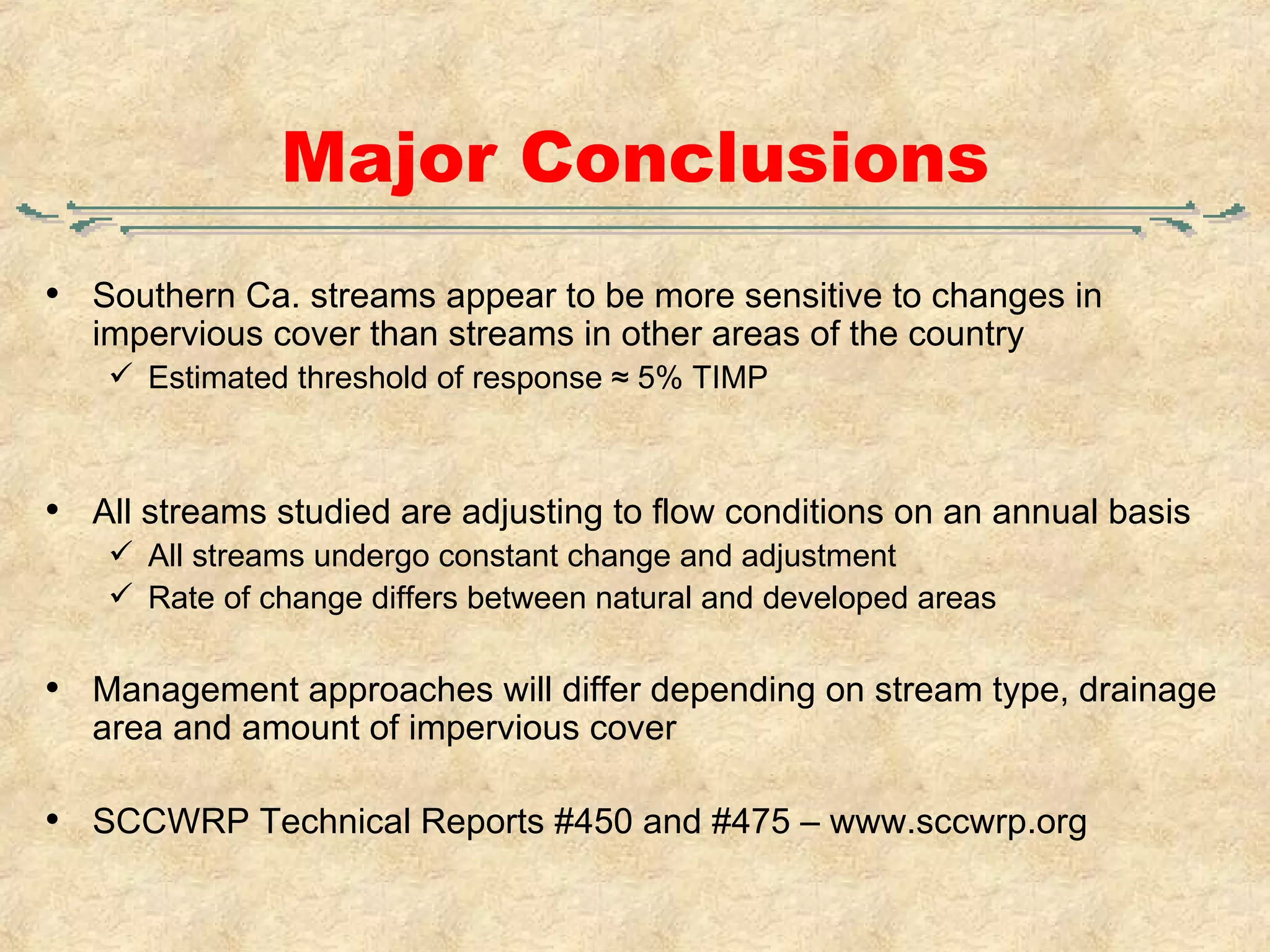
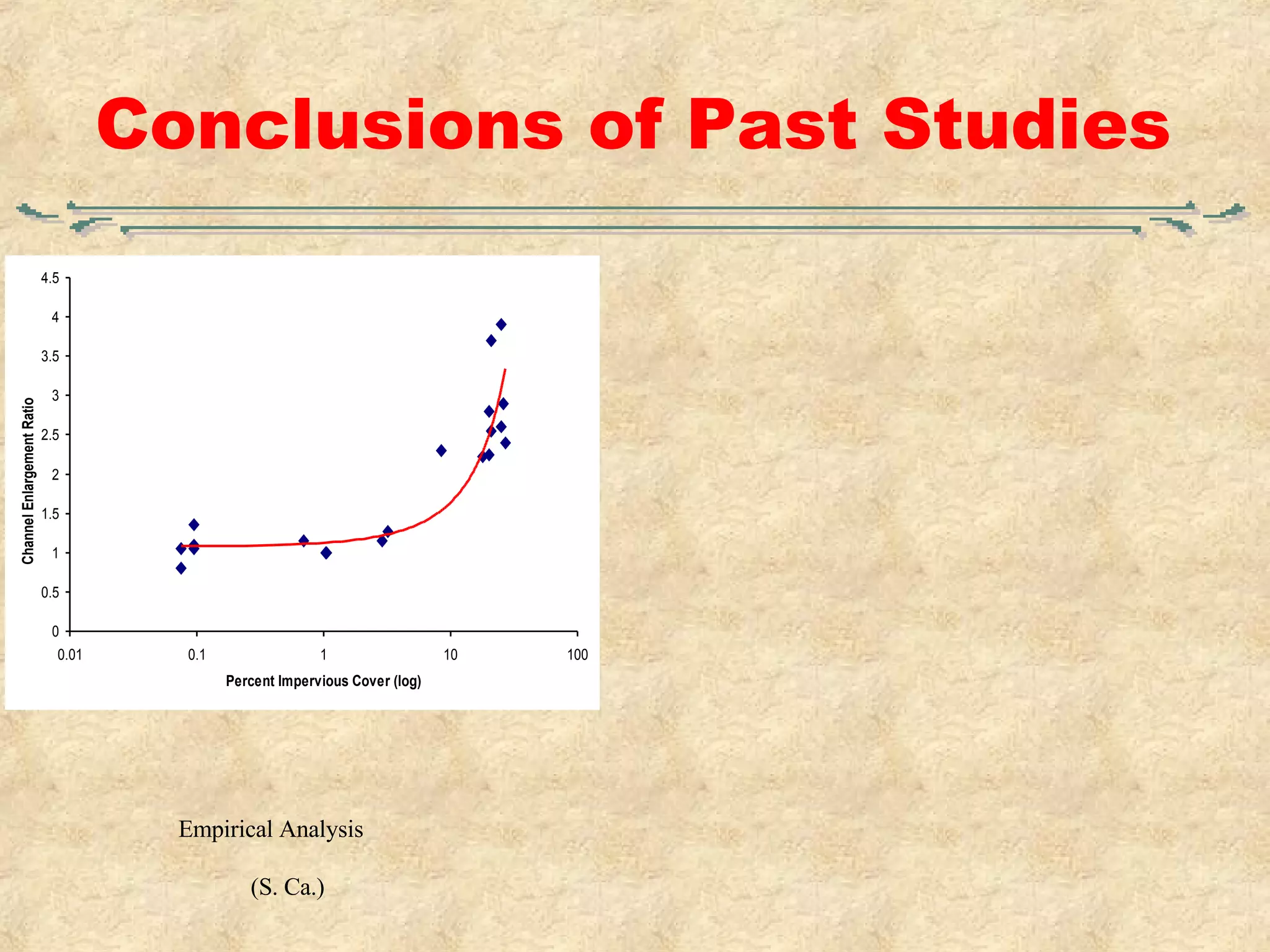
Major Conclusions Southern Ca. streams appear to be more sensitive to changes in impervious cover than streams in other areas of the country Estimated threshold of response ≈ 5% TIMP All streams studied are adjusting to flow conditions on an annual basis All streams undergo constant change and adjustment Rate of change differs between natural and developed areas Management approaches will differ depending on stream type, drainage area and amount of impervious cover SCCWRP Technical Reports #450 and #475 – www.sccwrp.org
Conclusions of Past Studies Empirical Analysis (S. Ca.)
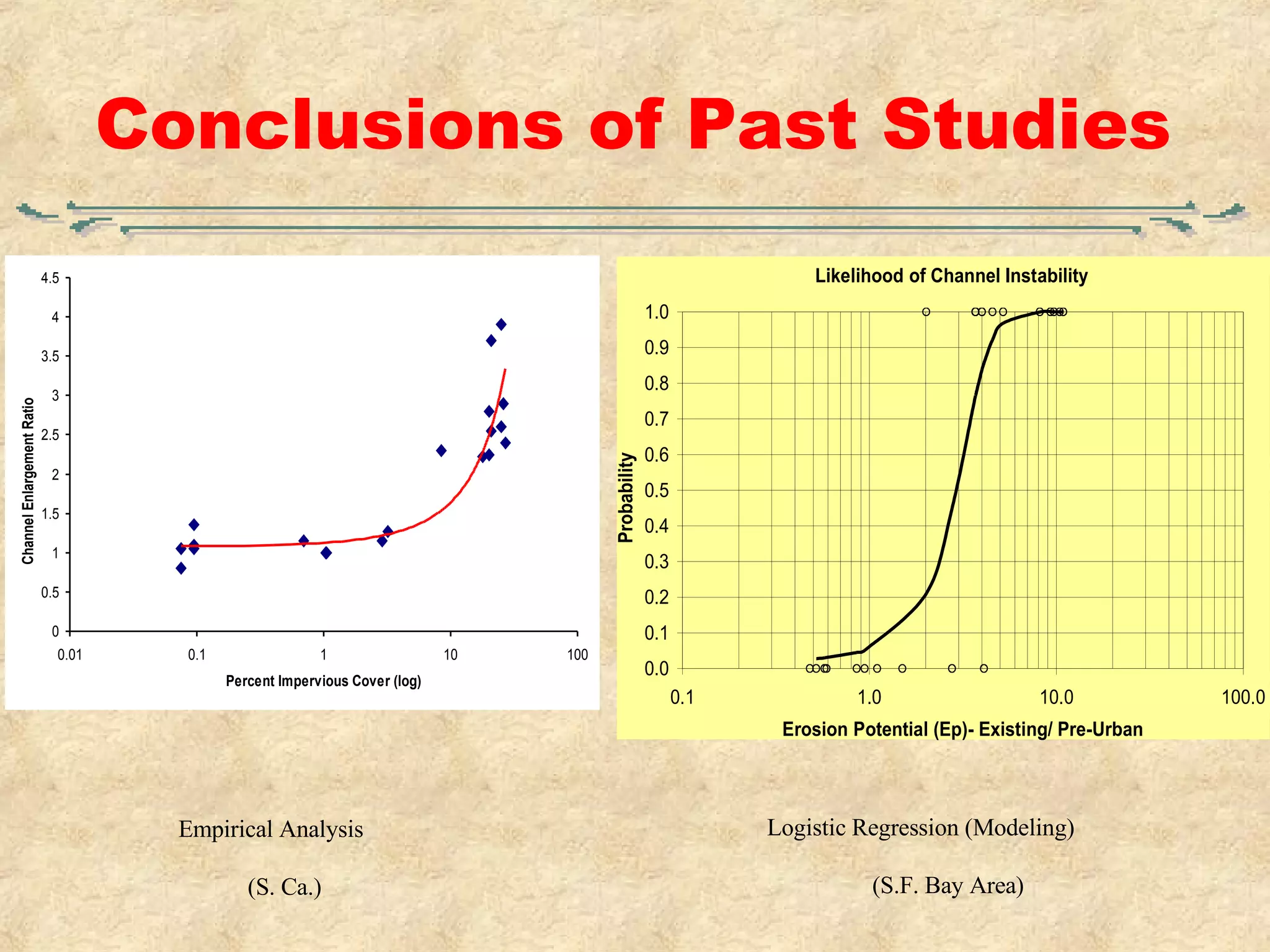
Conclusions of Past Studies Empirical Analysis (S. Ca.)  Logistic Regression (Modeling) (S.F. Bay Area)
Current Study Joint project between SCCWRP and Colorado State Univ. Based on results of 2005 workshop Funded by Proposition 50 Which streams are at the greatest risk of effects of hydromodification? What are the anticipated effects in terms of increased erosion, sedimentation, or habitat loss, associated with increases in impervious cover? What are some potential management measures that could be implemented to offset hydromodification effects?
Major Tasks Develop protocols for mapping and classification Susceptibility evaluation Develop protocols for monitoring and assessment Additional data for model development Develop and calibrate predictive models Develop management tools
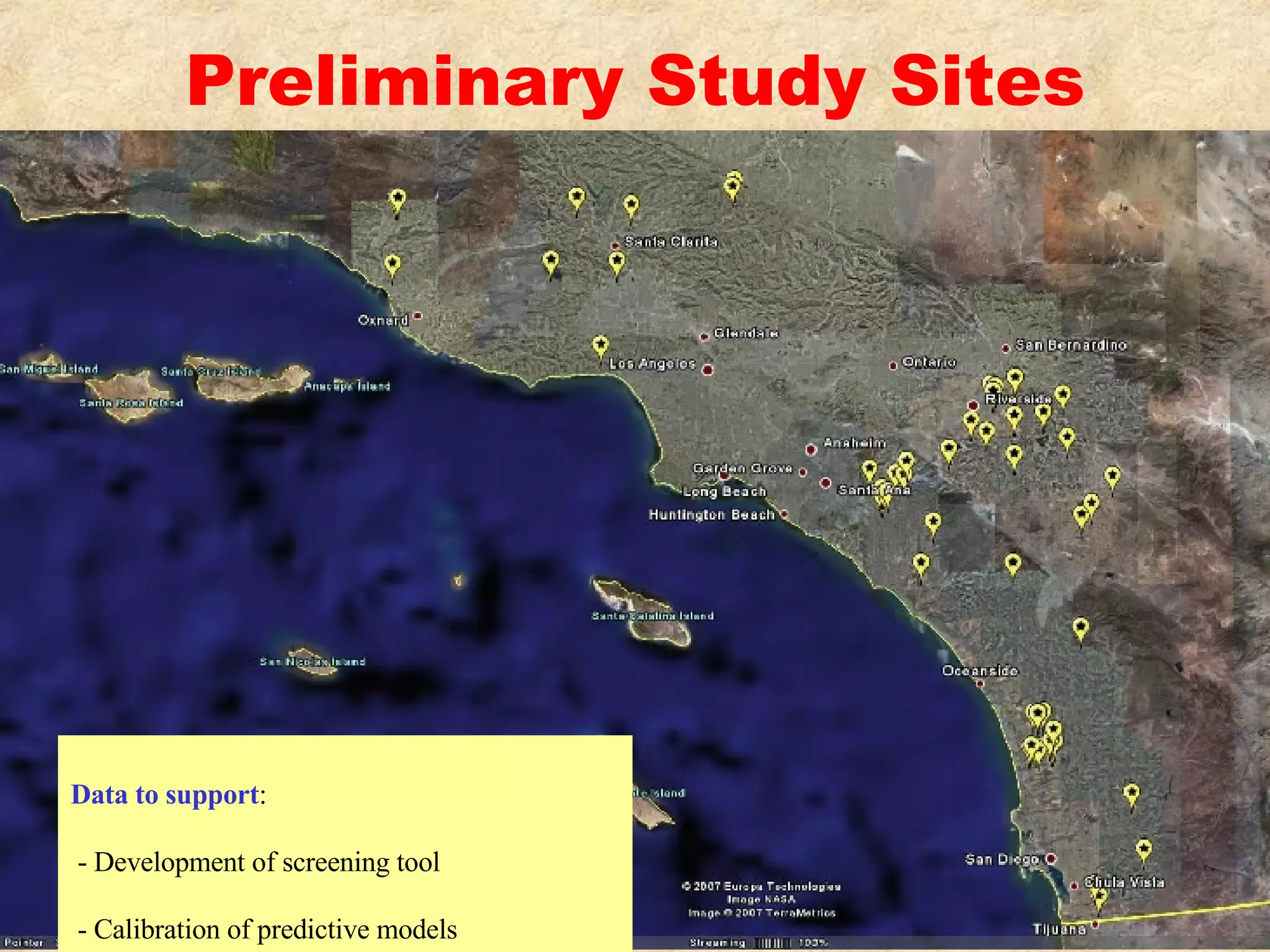
Preliminary Study Sites Data to support : - Development of screening tool - Calibration of predictive models - Development of standard monitoring protocols
Expected Products Screening tool – evaluate whether or not a project is likely to be of concern for hydromodification Checklists Effects tools –evaluate the expected magnitude or intensity of effect  Models, decision tree, nomograph or plots  Mitigation tools –guide recommended mitigation and management measures.  fact sheets, design criteria, sizing standards
Screening Tool Not all streams are the same Level of concern & appropriate management strategy will differ based on: Condition of stream Condition of catchment Anticipated change in land use/runoff Existing control/management measures Proposed management measures Tool to help prioritize level of effort/attention Checklist, decision tree, etc.
Elements of Screening Tool Intrinsic Channel Properties Catchment Characteristics Existing Infrastructure
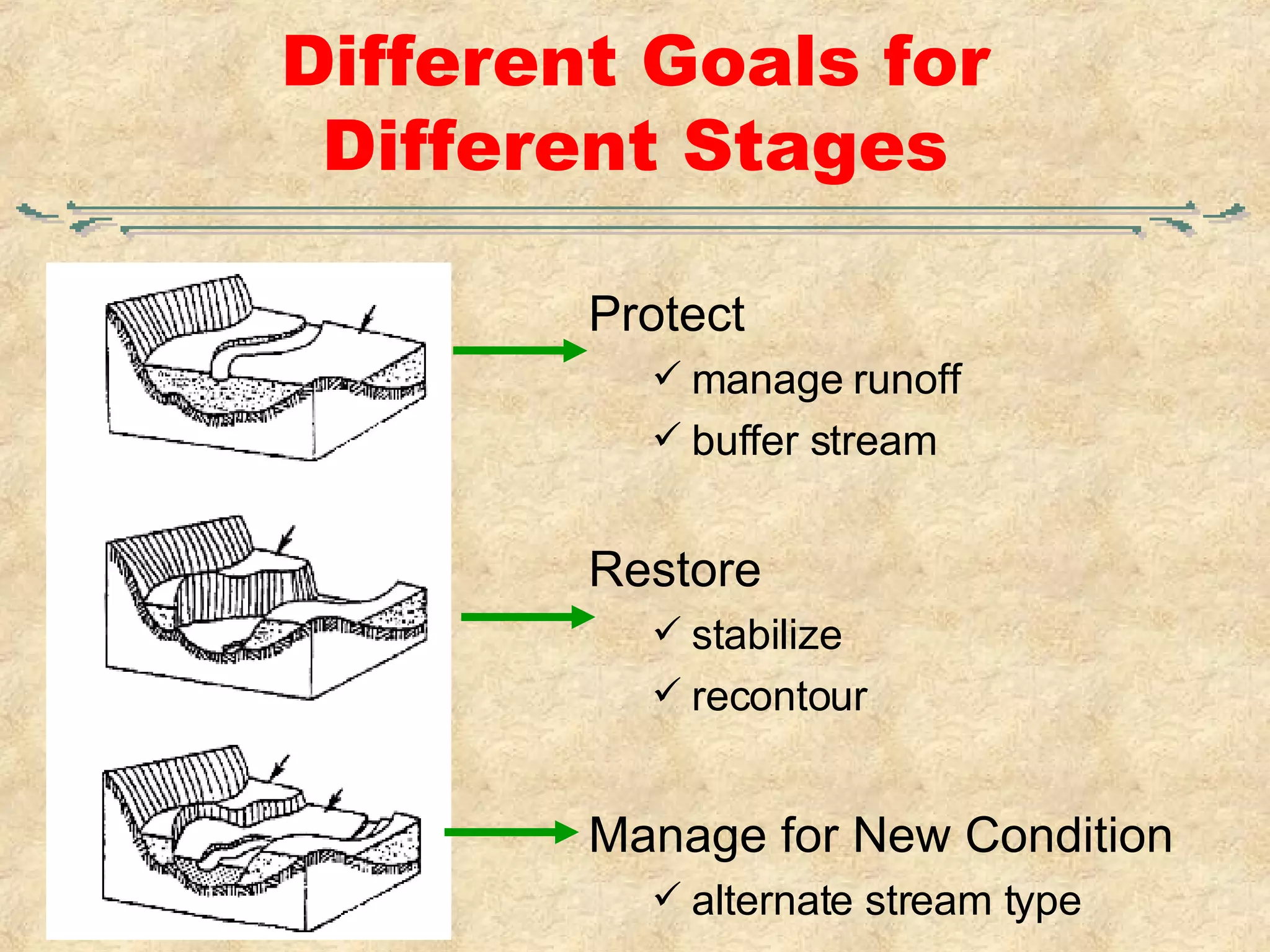
Different Goals for Different Stages Protect manage runoff buffer stream Restore stabilize recontour Manage for New Condition alternate stream type
Modeling Tool Channels are dynamic, vary over multiple time scales Goal is to understand long-term “equilibrium” condition after proposed land use change Ultimate target period beyond most typical monitoring Need to “translate” model results into simple to use tools for planners & managers Nomographs, plots, tables
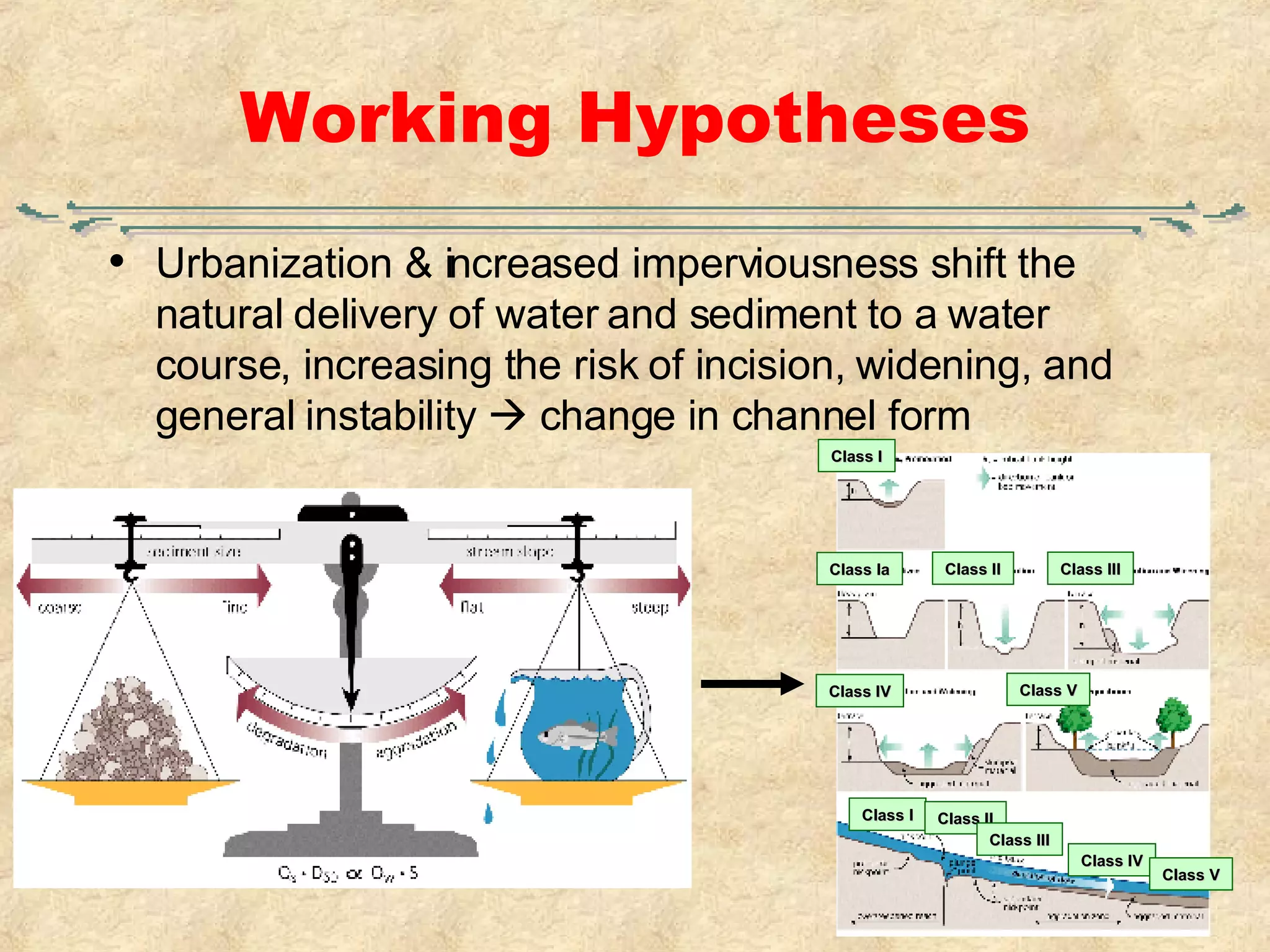
Working Hypotheses Urbanization & increased imperviousness shift the natural delivery of water and sediment to a water course, increasing the risk of incision, widening, and general instability    change in channel form Class III Class II Class IV Class V Class I Class V Class II Class III Class I Class Ia Class IV
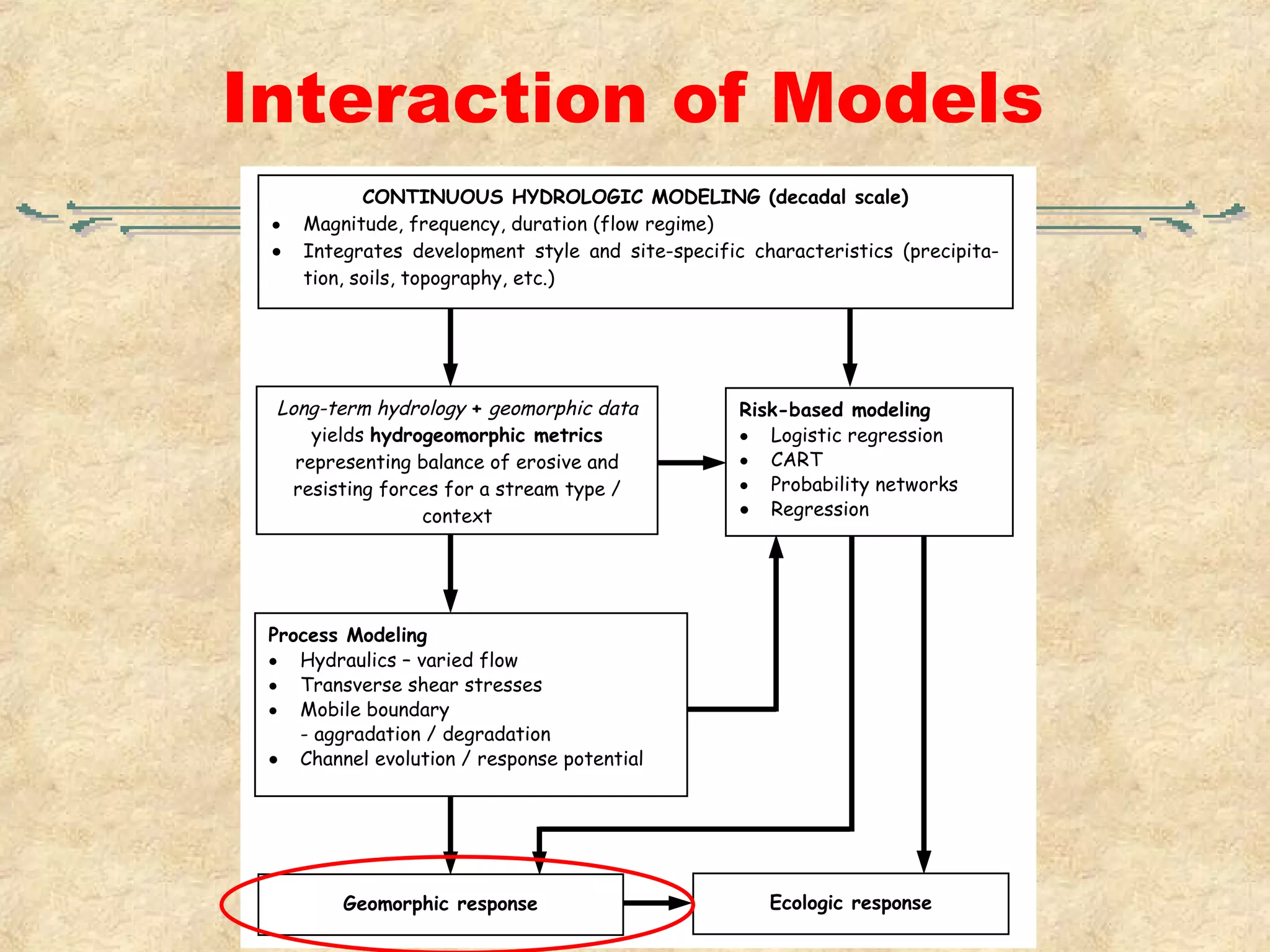
Interaction of Models
Mitigation Tool Management response will vary based on: Existing channel condition Proposed change in land use, runoff Need to select appropriate management actions: On site runoff control Stream channel buffering Floodplain restoration Structural control Manage for new “equalibrium” condition Decision tools for managers, planners, etc Fact sheets, decision trees, tables
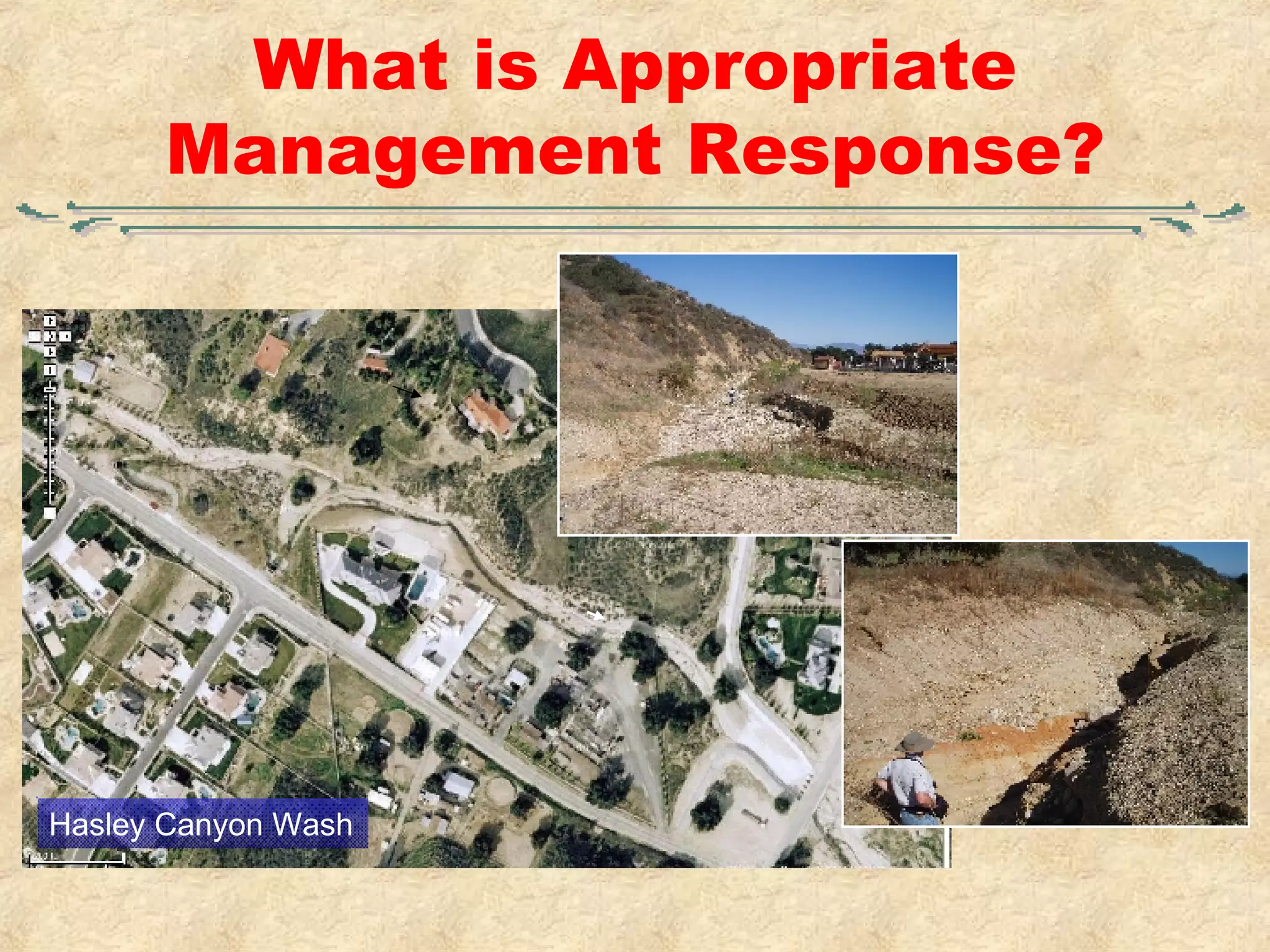
What is Appropriate Management Response? Hasley Canyon Wash
Next Steps Site selection completed Field data collection – Summer 2007 Produce draft protocols & monitoring recs. – Fall 2007 Produce draft screening tools – Spring 2008 Modeling – 2009 Final Products – Winter 2010
Questions? Eric Stein  714-755-3233  [email_address]

Hydromod Tools Eric Stein

  • 1.
    Developing Tools forHydromodification Management and Assessment Eric Stein S. Ca. Coastal Water Research Project (SCCWRP) [email_address]
  • 2.
    Today’s Presentation ProjectOverview General Study Approach Tool development Expected Products Status
  • 3.
    Effect of IncreasedImpervious Cover Hydromodification
  • 4.
  • 5.
    Regional Issue  Regional Approach Relationship between increased impervious cover and stream stability is a regional concern Build on previous work: Stormwater Monitoring Coalition (SMC) Santa Clara County Contra Costa County
  • 6.
    Prior Study ApproachesCompare historic and contemporary channel shape and size to changes in impervious cover Use relationship between changes in channel stability and changes in impervious cover to determine expected responses in S. Ca. streams Modeling studies in SF Bay area counties Long-term hydrologic simulations Risk-based modeling
  • 7.
    Major Conclusions SouthernCa. streams appear to be more sensitive to changes in impervious cover than streams in other areas of the country Estimated threshold of response ≈ 5% TIMP All streams studied are adjusting to flow conditions on an annual basis All streams undergo constant change and adjustment Rate of change differs between natural and developed areas Management approaches will differ depending on stream type, drainage area and amount of impervious cover SCCWRP Technical Reports #450 and #475 – www.sccwrp.org
  • 8.
    Conclusions of PastStudies Empirical Analysis (S. Ca.)
  • 9.
    Conclusions of PastStudies Empirical Analysis (S. Ca.) Logistic Regression (Modeling) (S.F. Bay Area)
  • 10.
    Current Study Jointproject between SCCWRP and Colorado State Univ. Based on results of 2005 workshop Funded by Proposition 50 Which streams are at the greatest risk of effects of hydromodification? What are the anticipated effects in terms of increased erosion, sedimentation, or habitat loss, associated with increases in impervious cover? What are some potential management measures that could be implemented to offset hydromodification effects?
  • 11.
    Major Tasks Developprotocols for mapping and classification Susceptibility evaluation Develop protocols for monitoring and assessment Additional data for model development Develop and calibrate predictive models Develop management tools
  • 12.
    Preliminary Study SitesData to support : - Development of screening tool - Calibration of predictive models - Development of standard monitoring protocols
  • 13.
    Expected Products Screeningtool – evaluate whether or not a project is likely to be of concern for hydromodification Checklists Effects tools –evaluate the expected magnitude or intensity of effect Models, decision tree, nomograph or plots Mitigation tools –guide recommended mitigation and management measures. fact sheets, design criteria, sizing standards
  • 14.
    Screening Tool Notall streams are the same Level of concern & appropriate management strategy will differ based on: Condition of stream Condition of catchment Anticipated change in land use/runoff Existing control/management measures Proposed management measures Tool to help prioritize level of effort/attention Checklist, decision tree, etc.
  • 15.
    Elements of ScreeningTool Intrinsic Channel Properties Catchment Characteristics Existing Infrastructure
  • 16.
    Different Goals forDifferent Stages Protect manage runoff buffer stream Restore stabilize recontour Manage for New Condition alternate stream type
  • 17.
    Modeling Tool Channelsare dynamic, vary over multiple time scales Goal is to understand long-term “equilibrium” condition after proposed land use change Ultimate target period beyond most typical monitoring Need to “translate” model results into simple to use tools for planners & managers Nomographs, plots, tables
  • 18.
    Working Hypotheses Urbanization& increased imperviousness shift the natural delivery of water and sediment to a water course, increasing the risk of incision, widening, and general instability  change in channel form Class III Class II Class IV Class V Class I Class V Class II Class III Class I Class Ia Class IV
  • 19.
  • 20.
    Mitigation Tool Managementresponse will vary based on: Existing channel condition Proposed change in land use, runoff Need to select appropriate management actions: On site runoff control Stream channel buffering Floodplain restoration Structural control Manage for new “equalibrium” condition Decision tools for managers, planners, etc Fact sheets, decision trees, tables
  • 21.
    What is AppropriateManagement Response? Hasley Canyon Wash
  • 22.
    Next Steps Siteselection completed Field data collection – Summer 2007 Produce draft protocols & monitoring recs. – Fall 2007 Produce draft screening tools – Spring 2008 Modeling – 2009 Final Products – Winter 2010
  • 23.
    Questions? Eric Stein 714-755-3233 [email_address]