Urban Runoff
Greg Gearheart
State Water Resources Control Board
Urban Runoff Problems
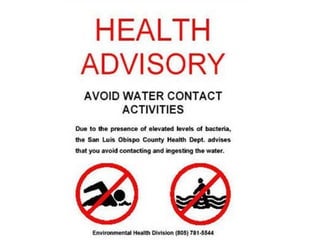
• Pollution
– Beach closures
– Water quality impairment
– Fish kills
– Plastic debris
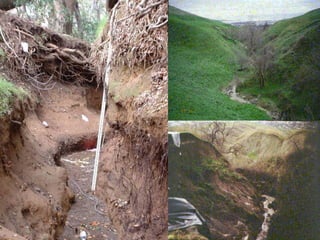
• Physical alteration of the
watershed / water bodies
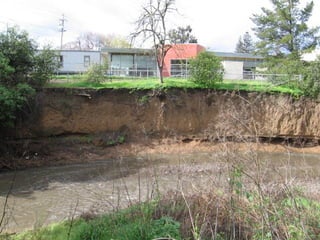
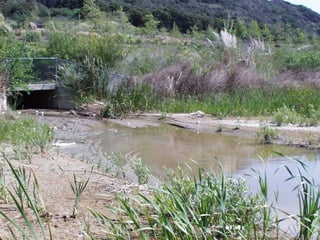
– Stream incision / erosion / deposition
– Habitat destruction
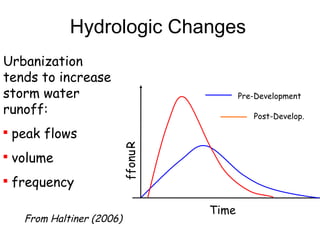
Hydrologic Changes
Runoff
Time
Pre-Development
Urbanization
tends to increase
storm water
runoff:

peak flows

volume

frequency
Post-Develop.
From Haltiner (2006)
Regulatory Solution
• Stormwater Program
– A Clean Water Act-based program
– A permitting solution
– “Forces” stormwater peg into the
existing hole designed to protect
surface waters
– Has evolved over the years to include
new tools and connect to TMDLs
Overview of the Clean Water
Act
• Federal Water Pollution Control Act of
1972, amended 1977
– NPDES programs
– Permits are a privilege, not a right
– Effluent limits must be both technology and
water quality based
• 1987 – added Section 402(p) to CWA
covering stormwater
Overview of the Clean Water
Act
• All “point sources”
• “Discharging a pollutant”
• Into a “Water of the U.S”
>>>>Must obtain a NPDES (National
Pollutant Discharge Elimination
System) Permit
What is a Point Source ?
• Point Source
– Discharge though a discrete
conveyance into waters of the US
• Industrial facilities
• Sewage treatment plants
• Stormwater from industrial sites and
storm sewers
– Non-point source
• Runoff that is not a point source
What is a Water of the
U.S ?
• All waters currently used, used in
the past, or susceptible to use for
interstate commerce including all
waters which are subject to the ebb
and flow of the tide
US Waters – Examples
• Rivers, lakes and streams
• Tributaries
• Territorial seas
• Wetlands
• Ephemeral washes
Stormwater Program Overview
• Municipal Program – urban runoff
• Industrial Program – industrial
sector specific runoff
• Program Overlap
– Many industrial sites discharge INTO
Municipal Separate Storm Sewer
Systems (MS4s)
Municipal Stormwater
Permits
• Municipal Separate Storm Sewer
Systems (MS4s)
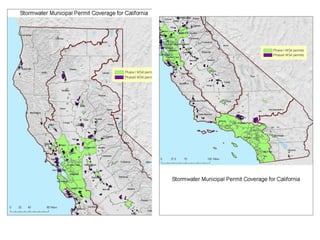
– Phase I
• Municipalities > 100,000 population
– Phase II
• Small municipalities and others
– 9th
circuit court decision 1992
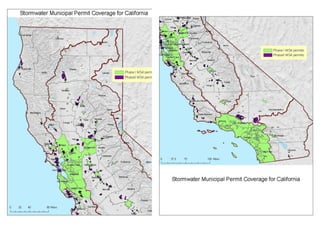
MS4 – Phase 1
• 26 Regional Water Board Phase I
MS4 Permits
• Covering over 1000 entities in CA
• 1 Statewide - Caltrans Permit
Municipal Permits
• Municipal permits (under Phase I) areMunicipal permits (under Phase I) are
issued by Regional Boards for:issued by Regional Boards for:
• Municipalities > 100,000Municipalities > 100,000
• Contiguous municipalities sharing aContiguous municipalities sharing a
large MS4large MS4
• Small municipalities covered underSmall municipalities covered under
Phase II regulationsPhase II regulations
MS4 Phase II – 6 Minimum
Program Elements
• Education an Outreach
• Public Participation/Involvement
• Illicit Discharge Detection and
Elimination
• Construction Site Runoff Control
• Post Construction Runoff Control
• Pollution Prevention/Good
Housekeeping
MS4 – Phase I Issues
• June 19, 2006 - State Water Board released Blue
Ribbon Panel Report
• Municipal Discharges - Panel Recommended
• (Action Levels and improve accountability)
• Impaired water bodies and TMDLs are being
implemented through MS4 permits
• Over 1000 cities, counties, and other governmental
agencies regulated – significant
MS4 – Phase II
• Current permit requires MS4s to
enroll and for Rbs to approve SWMP
• About 150 MS4s currently “covered”
• New Phase II permit being drafted
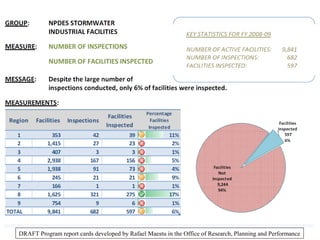
Industrial Stormwater
Permits
• Industrial General Permit (SB Order
97-03-DWQ)
– Sector/SIC code specific
• Construction General Permit (SB
Order No. 99-08-DWQ)
– Construction and development industry
– All projects that disturb 1 acre or
more of land must obtain coverage
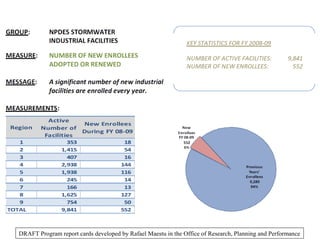
DRAFT Program report cards developed by Rafael Maestu in the Office of Research, Planning and Performance
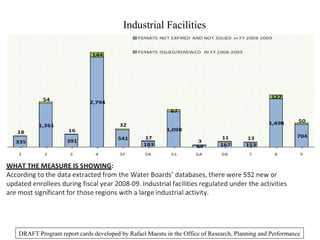
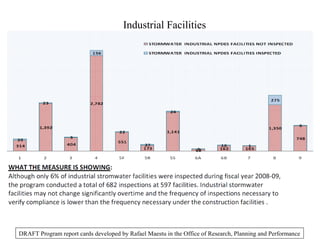
Industrial Facilities
DRAFT Program report cards developed by Rafael Maestu in the Office of Research, Planning and Performance
Industrial Facilities
DRAFT Program report cards developed by Rafael Maestu in the Office of Research, Planning and Performance
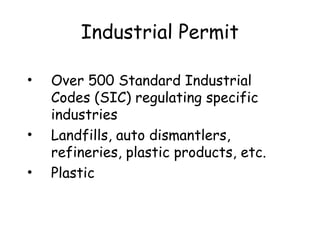
Industrial Permit
• Over 500 Standard Industrial
Codes (SIC) regulating specific
industries
• Landfills, auto dismantlers,
refineries, plastic products, etc.
• Plastic
DRAFT Program report cards developed by Rafael Maestu in the Office of Research, Planning and Performance
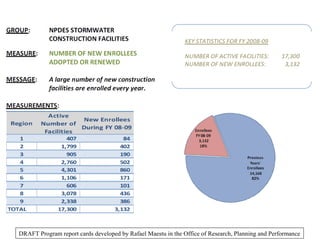
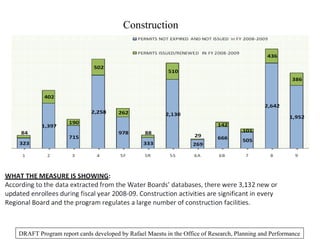
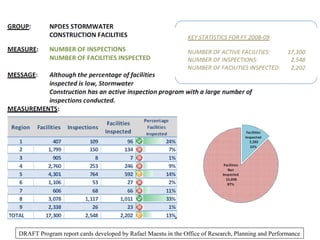
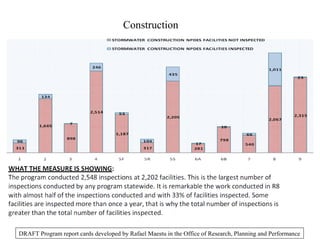
Construction
DRAFT Program report cards developed by Rafael Maestu in the Office of Research, Planning and Performance
Construction
DRAFT Program report cards developed by Rafael Maestu in the Office of Research, Planning and Performance
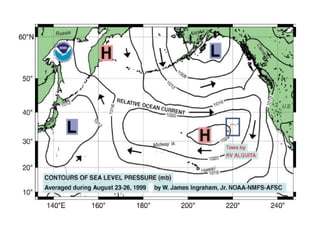
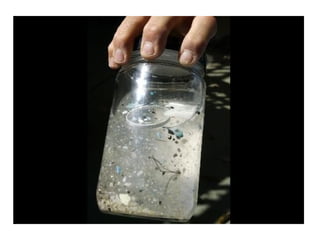
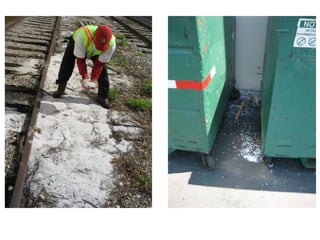
Plastic Debris Program
• ~400 facilities regulated under the
industrial general permit (IGP)
• ~3000 facilities statewide that
handle preproduction plastic pellets
in some manner
• Part of global problem – fate and
transport in the environment of
plastic is impressive
The Construction Stormwater
Program
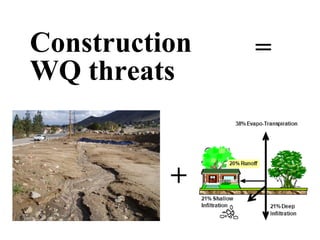
Construction Activity Threats
• Two-fold – construction projects have the
potential to cause impacts to our beneficial
uses of water both during and after the
project.
• During – potential for sediment erosion
discharges.
• After – potential for pollutant export and
hydromodification impacts as a result of how
the new landscape functions.
+
+
=Construction
WQ threats
Who needs coverage
1) All sites that disturb more than one
acre
2) All sites that are less than one acre but
part of a “larger plan of development”
3) All sites that are thought to be a
threat to water quality, as deemed by
the appropriate RWQCB
Permit Reissuance Goals
1) Adopt a risk-based permit approach-
“not all sites are created equal”
2) Improve “performance” measurement
of program
3) Establish standards to avoid, minimize
and mitigate post-construction impacts
associated with all new and re-
development projects triggering the
construction activity permit
Program “Performance” Elements
• Certification and training expectations
• Effluent monitoring = feedback for site
amd program
• Receiving water monitoring = feedback
for “water quality outcome”
goals/objectives
• Performance-based post-construction
runoff standards (pre = post)
Risk Approach
• Three risk categories
• Aimed at sediment transport and
receiving water risk of construction
activities “normal distribution”
assumption (most projects should not be
high risk)
• Incentives/requirements linked to risk.
Direct Erosion / Sediment
Control Requirements
• Old model used SWPPP as main vehicle
• New approach to use Rain Event Action
Plan (REAP) as primary tool (SWPPP
becomes more a master
document/library)
• Requirements based on risk
• Prevention and planning incentives
Post-Construction Impacts
Post-Construction Standards
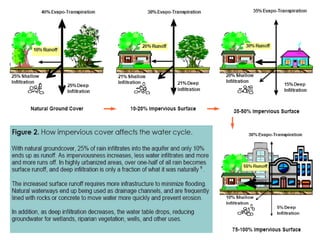
• Design to mimic pre-development water
balance
• Preserve existing time of concentration
• Protect channels
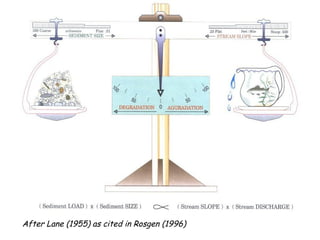
After Lane (1955) as cited in Rosgen (1996)
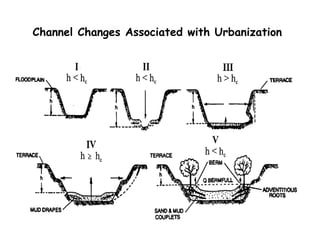
Channel Changes Associated with Urbanization
The future
• Low Impact Development (LID) and
Green Infrastructure (GI)
represent “natural systems”
approach to building better urban
landscapes.
• Both aim to protect and/or restore
“natural hydrology” and ecological
processes
• LID – site and neighborhood scale
• GI – community and watershed scale
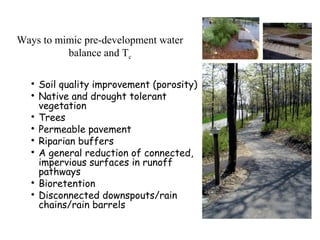
Ways to mimic pre-development water
balance and Tc

Soil quality improvement (porosity)

Native and drought tolerant
vegetation

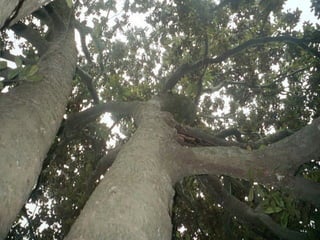
Trees

Permeable pavement

Riparian buffers

A general reduction of connected,
impervious surfaces in runoff
pathways
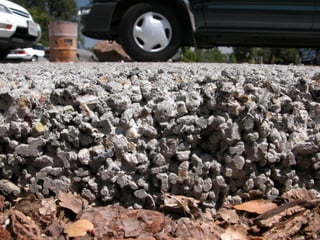

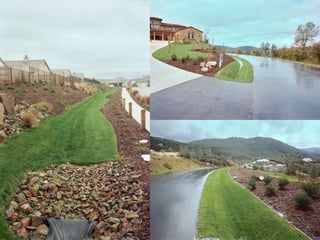
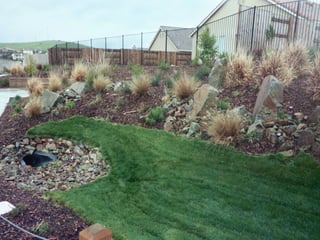
Bioretention

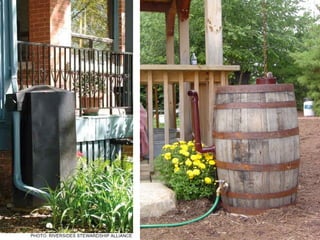
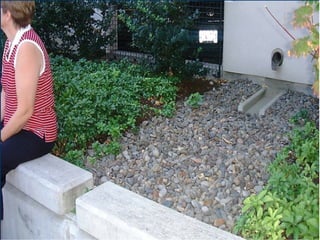
Disconnected downspouts/rain
chains/rain barrels
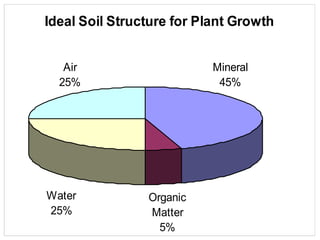
Ideal Soil Structure for Plant Growth
Mineral
45%
Organic
Matter
5%
Water
25%
Air
25%
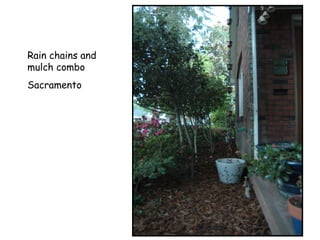
Rain chains and
mulch combo
Sacramento
Greg Gearheart
916.341.5892
ggearheart@waterboards.ca.gov

Urban Runoff - Storm Water 101

  • 1.
    Urban Runoff Greg Gearheart StateWater Resources Control Board
  • 2.
    Urban Runoff Problems •Pollution – Beach closures – Water quality impairment – Fish kills – Plastic debris • Physical alteration of the watershed / water bodies – Stream incision / erosion / deposition – Habitat destruction
  • 8.
    Hydrologic Changes Runoff Time Pre-Development Urbanization tends toincrease storm water runoff:  peak flows  volume  frequency Post-Develop. From Haltiner (2006)
  • 13.
    Regulatory Solution • StormwaterProgram – A Clean Water Act-based program – A permitting solution – “Forces” stormwater peg into the existing hole designed to protect surface waters – Has evolved over the years to include new tools and connect to TMDLs
  • 14.
    Overview of theClean Water Act • Federal Water Pollution Control Act of 1972, amended 1977 – NPDES programs – Permits are a privilege, not a right – Effluent limits must be both technology and water quality based • 1987 – added Section 402(p) to CWA covering stormwater
  • 15.
    Overview of theClean Water Act • All “point sources” • “Discharging a pollutant” • Into a “Water of the U.S” >>>>Must obtain a NPDES (National Pollutant Discharge Elimination System) Permit
  • 16.
    What is aPoint Source ? • Point Source – Discharge though a discrete conveyance into waters of the US • Industrial facilities • Sewage treatment plants • Stormwater from industrial sites and storm sewers – Non-point source • Runoff that is not a point source
  • 17.
    What is aWater of the U.S ? • All waters currently used, used in the past, or susceptible to use for interstate commerce including all waters which are subject to the ebb and flow of the tide
  • 18.
    US Waters –Examples • Rivers, lakes and streams • Tributaries • Territorial seas • Wetlands • Ephemeral washes
  • 19.
    Stormwater Program Overview •Municipal Program – urban runoff • Industrial Program – industrial sector specific runoff • Program Overlap – Many industrial sites discharge INTO Municipal Separate Storm Sewer Systems (MS4s)
  • 20.
    Municipal Stormwater Permits • MunicipalSeparate Storm Sewer Systems (MS4s) – Phase I • Municipalities > 100,000 population – Phase II • Small municipalities and others – 9th circuit court decision 1992
  • 22.
    MS4 – Phase1 • 26 Regional Water Board Phase I MS4 Permits • Covering over 1000 entities in CA • 1 Statewide - Caltrans Permit
  • 23.
    Municipal Permits • Municipalpermits (under Phase I) areMunicipal permits (under Phase I) are issued by Regional Boards for:issued by Regional Boards for: • Municipalities > 100,000Municipalities > 100,000 • Contiguous municipalities sharing aContiguous municipalities sharing a large MS4large MS4 • Small municipalities covered underSmall municipalities covered under Phase II regulationsPhase II regulations
  • 24.
    MS4 Phase II– 6 Minimum Program Elements • Education an Outreach • Public Participation/Involvement • Illicit Discharge Detection and Elimination • Construction Site Runoff Control • Post Construction Runoff Control • Pollution Prevention/Good Housekeeping
  • 25.
    MS4 – PhaseI Issues • June 19, 2006 - State Water Board released Blue Ribbon Panel Report • Municipal Discharges - Panel Recommended • (Action Levels and improve accountability) • Impaired water bodies and TMDLs are being implemented through MS4 permits • Over 1000 cities, counties, and other governmental agencies regulated – significant
  • 26.
    MS4 – PhaseII • Current permit requires MS4s to enroll and for Rbs to approve SWMP • About 150 MS4s currently “covered” • New Phase II permit being drafted
  • 27.
    Industrial Stormwater Permits • IndustrialGeneral Permit (SB Order 97-03-DWQ) – Sector/SIC code specific • Construction General Permit (SB Order No. 99-08-DWQ) – Construction and development industry – All projects that disturb 1 acre or more of land must obtain coverage
  • 30.
    DRAFT Program reportcards developed by Rafael Maestu in the Office of Research, Planning and Performance
  • 31.
    Industrial Facilities DRAFT Programreport cards developed by Rafael Maestu in the Office of Research, Planning and Performance
  • 32.
    DRAFT Program reportcards developed by Rafael Maestu in the Office of Research, Planning and Performance
  • 33.
    Industrial Facilities DRAFT Programreport cards developed by Rafael Maestu in the Office of Research, Planning and Performance
  • 34.
    Industrial Permit • Over500 Standard Industrial Codes (SIC) regulating specific industries • Landfills, auto dismantlers, refineries, plastic products, etc. • Plastic
  • 35.
    DRAFT Program reportcards developed by Rafael Maestu in the Office of Research, Planning and Performance
  • 36.
    Construction DRAFT Program reportcards developed by Rafael Maestu in the Office of Research, Planning and Performance
  • 37.
    DRAFT Program reportcards developed by Rafael Maestu in the Office of Research, Planning and Performance
  • 38.
    Construction DRAFT Program reportcards developed by Rafael Maestu in the Office of Research, Planning and Performance
  • 39.
    Plastic Debris Program •~400 facilities regulated under the industrial general permit (IGP) • ~3000 facilities statewide that handle preproduction plastic pellets in some manner • Part of global problem – fate and transport in the environment of plastic is impressive
  • 43.
  • 44.
    Construction Activity Threats •Two-fold – construction projects have the potential to cause impacts to our beneficial uses of water both during and after the project. • During – potential for sediment erosion discharges. • After – potential for pollutant export and hydromodification impacts as a result of how the new landscape functions.
  • 45.
  • 46.
    Who needs coverage 1)All sites that disturb more than one acre 2) All sites that are less than one acre but part of a “larger plan of development” 3) All sites that are thought to be a threat to water quality, as deemed by the appropriate RWQCB
  • 47.
    Permit Reissuance Goals 1)Adopt a risk-based permit approach- “not all sites are created equal” 2) Improve “performance” measurement of program 3) Establish standards to avoid, minimize and mitigate post-construction impacts associated with all new and re- development projects triggering the construction activity permit
  • 48.
    Program “Performance” Elements •Certification and training expectations • Effluent monitoring = feedback for site amd program • Receiving water monitoring = feedback for “water quality outcome” goals/objectives • Performance-based post-construction runoff standards (pre = post)
  • 49.
    Risk Approach • Threerisk categories • Aimed at sediment transport and receiving water risk of construction activities “normal distribution” assumption (most projects should not be high risk) • Incentives/requirements linked to risk.
  • 50.
    Direct Erosion /Sediment Control Requirements • Old model used SWPPP as main vehicle • New approach to use Rain Event Action Plan (REAP) as primary tool (SWPPP becomes more a master document/library) • Requirements based on risk • Prevention and planning incentives
  • 51.
  • 52.
    Post-Construction Standards • Designto mimic pre-development water balance • Preserve existing time of concentration • Protect channels
  • 55.
    After Lane (1955)as cited in Rosgen (1996)
  • 56.
    Channel Changes Associatedwith Urbanization
  • 57.
    The future • LowImpact Development (LID) and Green Infrastructure (GI) represent “natural systems” approach to building better urban landscapes. • Both aim to protect and/or restore “natural hydrology” and ecological processes • LID – site and neighborhood scale • GI – community and watershed scale
  • 58.
    Ways to mimicpre-development water balance and Tc  Soil quality improvement (porosity)  Native and drought tolerant vegetation  Trees  Permeable pavement  Riparian buffers  A general reduction of connected, impervious surfaces in runoff pathways  Bioretention  Disconnected downspouts/rain chains/rain barrels
  • 59.
    Ideal Soil Structurefor Plant Growth Mineral 45% Organic Matter 5% Water 25% Air 25%
  • 62.
    Rain chains and mulchcombo Sacramento
  • 72.

Editor's Notes

  • #2 Q’s: Very familiar with stormwater program ? How many pretreatment operators ? How many municipalities – phase I ? II ?
  • #16 NPDES permit is a “license to discharge”
  • #17 Point source – includes stormwater from industrial , construction & storm sewers - does not include agriculture return flows