Humour at work
Óvári Virág
EL66JE
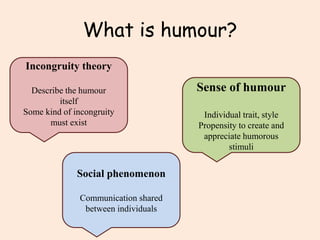
What is humour?
Incongruity theory
Describe the humour
itself
Some kind of incongruity
must exist
Sense of humour
Individual trait, style
Propensity to create and
appreciate humorous
stimuli
Social phenomenon
Communication shared
between individuals
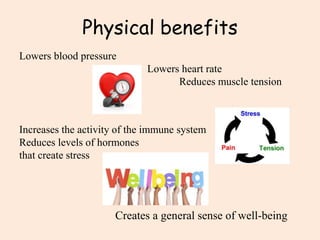
Physical benefits
Lowers blood pressure
Lowers heart rate
Reduces muscle tension
Increases the activity of the immune system
Reduces levels of hormones
that create stress
Creates a general sense of well-being
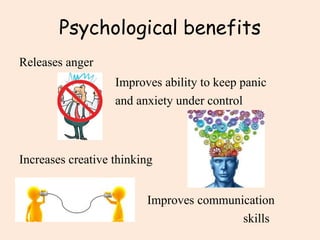
Psychological benefits
Releases anger
Improves ability to keep panic
and anxiety under control
Increases creative thinking
Improves communication
skills
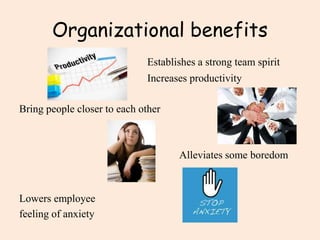
Organizational benefits
Establishes a strong team spirit
Increases productivity
Bring people closer to each other
Alleviates some boredom
Lowers employee
feeling of anxiety
Different ways of using humour at
work
• Use humour to loosen up the atmosphere
• Imagine what will your favourite comedian comment on
such a situation
• Try to use self-affecting humour
• A touch of humour will result in a more effective work
place
• Lighten up a tense situation with humour
• Use comics or funny stuff in the work place
• Use stress-reducing devices or toys with the sense of
humour
• In a stressful situation, run a funny fantasy in the head to
help feel the control
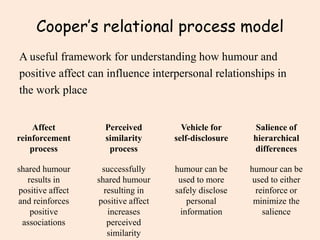
Cooper’s relational process model
A useful framework for understanding how humour and
positive affect can influence interpersonal relationships in
the work place
Affect
reinforcement
process
shared humour
results in
positive affect
and reinforces
positive
associations
Perceived
similarity
process
successfully
shared humour
resulting in
positive affect
increases
perceived
similarity
Vehicle for
self-disclosure
humour can be
used to more
safely disclose
personal
information
Salience of
hierarchical
differences
humour can be
used to either
reinforce or
minimize the
salience
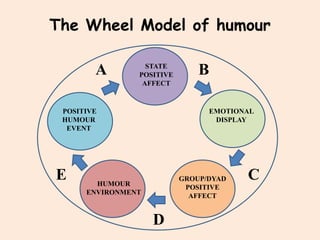
The Wheel Model of humour
STATE
POSITIVE
AFFECT
C
A B
POSITIVE
HUMOUR
EVENT
HUMOUR
ENVIRONMENT
GROUP/DYAD
POSITIVE
AFFECT
EMOTIONAL
DISPLAY
E
D
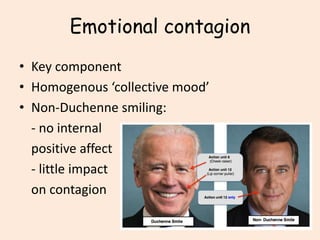
Emotional contagion
• Key component
• Homogenous ‘collective mood’
• Non-Duchenne smiling:
- no internal
positive affect
- little impact
on contagion
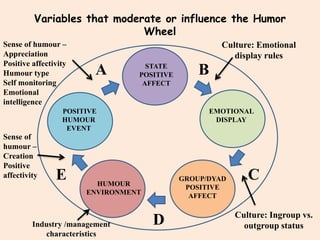
Variables that moderate or influence the Humor
Wheel
STATE
POSITIVE
AFFECT
C
A B
POSITIVE
HUMOUR
EVENT
HUMOUR
ENVIRONMENT
GROUP/DYAD
POSITIVE
AFFECT
EMOTIONAL
DISPLAY
E
D
Culture: Emotional
display rules
Culture: Ingroup vs.
outgroup statusIndustry /management
characteristics
Sense of
humour –
Creation
Positive
affectivity
Sense of humour –
Appreciation
Positive affectivity
Humour type
Self monitoring
Emotional
intelligence
Thank you for your attention!
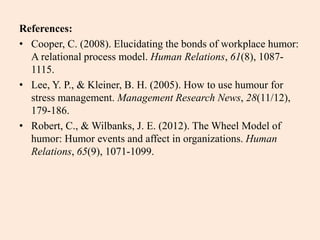
References:
• Cooper, C. (2008). Elucidating the bonds of workplace humor:
A relational process model. Human Relations, 61(8), 1087-
1115.
• Lee, Y. P., & Kleiner, B. H. (2005). How to use humour for
stress management. Management Research News, 28(11/12),
179-186.
• Robert, C., & Wilbanks, J. E. (2012). The Wheel Model of
humor: Humor events and affect in organizations. Human
Relations, 65(9), 1071-1099.

Humour at work presentation

  • 1.
  • 2.
    What is humour? Incongruitytheory Describe the humour itself Some kind of incongruity must exist Sense of humour Individual trait, style Propensity to create and appreciate humorous stimuli Social phenomenon Communication shared between individuals
  • 3.
    Physical benefits Lowers bloodpressure Lowers heart rate Reduces muscle tension Increases the activity of the immune system Reduces levels of hormones that create stress Creates a general sense of well-being
  • 4.
    Psychological benefits Releases anger Improvesability to keep panic and anxiety under control Increases creative thinking Improves communication skills
  • 5.
    Organizational benefits Establishes astrong team spirit Increases productivity Bring people closer to each other Alleviates some boredom Lowers employee feeling of anxiety
  • 6.
    Different ways ofusing humour at work • Use humour to loosen up the atmosphere • Imagine what will your favourite comedian comment on such a situation • Try to use self-affecting humour • A touch of humour will result in a more effective work place • Lighten up a tense situation with humour • Use comics or funny stuff in the work place • Use stress-reducing devices or toys with the sense of humour • In a stressful situation, run a funny fantasy in the head to help feel the control
  • 7.
    Cooper’s relational processmodel A useful framework for understanding how humour and positive affect can influence interpersonal relationships in the work place Affect reinforcement process shared humour results in positive affect and reinforces positive associations Perceived similarity process successfully shared humour resulting in positive affect increases perceived similarity Vehicle for self-disclosure humour can be used to more safely disclose personal information Salience of hierarchical differences humour can be used to either reinforce or minimize the salience
  • 8.
    The Wheel Modelof humour STATE POSITIVE AFFECT C A B POSITIVE HUMOUR EVENT HUMOUR ENVIRONMENT GROUP/DYAD POSITIVE AFFECT EMOTIONAL DISPLAY E D
  • 9.
    Emotional contagion • Keycomponent • Homogenous ‘collective mood’ • Non-Duchenne smiling: - no internal positive affect - little impact on contagion
  • 10.
    Variables that moderateor influence the Humor Wheel STATE POSITIVE AFFECT C A B POSITIVE HUMOUR EVENT HUMOUR ENVIRONMENT GROUP/DYAD POSITIVE AFFECT EMOTIONAL DISPLAY E D Culture: Emotional display rules Culture: Ingroup vs. outgroup statusIndustry /management characteristics Sense of humour – Creation Positive affectivity Sense of humour – Appreciation Positive affectivity Humour type Self monitoring Emotional intelligence
  • 11.
    Thank you foryour attention!
  • 12.
    References: • Cooper, C.(2008). Elucidating the bonds of workplace humor: A relational process model. Human Relations, 61(8), 1087- 1115. • Lee, Y. P., & Kleiner, B. H. (2005). How to use humour for stress management. Management Research News, 28(11/12), 179-186. • Robert, C., & Wilbanks, J. E. (2012). The Wheel Model of humor: Humor events and affect in organizations. Human Relations, 65(9), 1071-1099.