Larry D. Weas Ed. D. Program  Adult & Higher Education   Using Humor in HRD and Training
Overview   As the old saying goes, laughter is the best medicine. Workplaces that encourage laughter have happier, healthier and more productive workers and, as a result, see an increase in profits and results. Relationships, rapport, cooperation, influence and staff development can all be enhanced by the appropriate use of humor. Humor creates a pleasant working environment, motivates employees, decreases anxiety and stress, boosts morale, increases creativity, and enhances problem-solving skills.
The Goal   The goal in HRD and training is to provide organizations, managers, and employees with a heightened understanding of the importance of fostering and incorporating appropriate humor in the workplace.  These specific goals are to help organizations, managers, and employees: Understand the benefits of nurturing humor in the workplace.  Incorporate humor into the workplace.  Recognize humor guidelines and obstacles.
The Benefits Humor, Laughter, and Productivity   Using  humor  in the workplace benefits employees and employers both physically and psychologically. Laughter and humor increases the immune system response, cardiovascular strength, relaxation, muscle tone, decreases muscle tension and pain, and speeds recovery.  It also has the power to… increase motivation and energy. Increase socialization. improve concentration and memory. enhance creativity. reduce emotional anxiety and aggression.  nurture self-esteem.
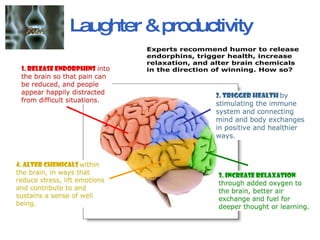
Additionally,   humor and laughter can benefit employees because:  Laughter  releases endorphins that reduce stress, create a sense of wellbeing, and make you feel more alert.  Humor can help people think more creatively. If an employee is stuck on a problem, a good laugh can help them clear their mind of any negative thoughts and return to the issue with a fresh positive outlook.  People with a good sense of humor are better communicators and team players.  Humor builds self-confidence, makes people less afraid to make mistakes, and helps people regroup from negative events.  The Benefits Humor, Laughter, and Productivity
Laughter & productivity
Here are some suggestions on how organizations can incorporate humor in the workplace—these are merely suggestions and should be used to help managers develop their own fun activities that fit the culture of their specific organization and management style.  Create a humor bulletin board : Put the bulletin board in the lunchroom or other social area where everyone can post tasteful cartoons, jokes, and funny photos.  Create a humor break room:  This room should contain cartoon and joke books, and fun props. Employees can use this room when they feel like they need a good laugh.  The Culture Incorporating Humor in the Workplace
Create a tension release area:  This room can contain a pool table, chalk board, mini-basketball hoops, a deck of cards, hula hoops etc. for employees to “play” with when they need a break. This will encourage employees to take a break from their day to relieve some stress to avoid getting burnt out.  Have fun dress-up days:  Consider a day in which everyone is encouraged to wear a silly tie, shoes, shirt, etc. Many companies do this on Halloween or April Fools Day, but you can create your own fun days like, “Silly Hat Day” or “Ugly Tie Day”.  Give Gag Gifts and Fun Awards:  Give employees funny gifts and awards to recognize their hard work in a humorous way. Give employees mugs with a funny phrase, or a gift that represents a challenge they just overcame. For example, a manager gave an employee who was always “putting out fires” on various projects and plastic fire extinguisher.  The Culture Incorporating Humor in the Workplace
Laugh at yourself:  If you have the confidence to laugh at yourself and your mistakes, your fellow employees will be more relaxed. You immediately become more approachable when you show others your “human side”. Find humor in everyday situations :  People can easily relate to these types of jokes and they won’t make anyone feel bad.  Be aware of cultural differences:  It is essential to for managers to raise the issue of cultural differences in fun and humor. What seems appropriate for one group may not well-received by another.  The Culture Incorporating Humor in the Workplace
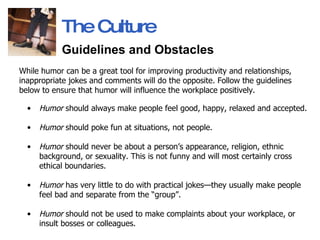
While humor can be a great tool for improving productivity and relationships, inappropriate jokes and comments will do the opposite. Follow the guidelines below to ensure that humor will influence the workplace positively.  The Culture Guidelines and Obstacles   Humor  should always make people feel good, happy, relaxed and accepted.  Humor  should poke fun at situations, not people.  Humor  should never be about a person’s appearance, religion, ethnic background, or sexuality. This is not funny and will most certainly cross ethical boundaries.  Humor  has very little to do with practical jokes—they usually make people feel bad and separate from the “group”.  Humor  should not be used to make complaints about your workplace, or insult bosses or colleagues.
Thank You! Questions or Comments

Using Humor in HRD and Training

  • 1.
    Larry D. WeasEd. D. Program Adult & Higher Education Using Humor in HRD and Training
  • 2.
    Overview As the old saying goes, laughter is the best medicine. Workplaces that encourage laughter have happier, healthier and more productive workers and, as a result, see an increase in profits and results. Relationships, rapport, cooperation, influence and staff development can all be enhanced by the appropriate use of humor. Humor creates a pleasant working environment, motivates employees, decreases anxiety and stress, boosts morale, increases creativity, and enhances problem-solving skills.
  • 3.
    The Goal The goal in HRD and training is to provide organizations, managers, and employees with a heightened understanding of the importance of fostering and incorporating appropriate humor in the workplace. These specific goals are to help organizations, managers, and employees: Understand the benefits of nurturing humor in the workplace. Incorporate humor into the workplace. Recognize humor guidelines and obstacles.
  • 4.
    The Benefits Humor,Laughter, and Productivity Using humor in the workplace benefits employees and employers both physically and psychologically. Laughter and humor increases the immune system response, cardiovascular strength, relaxation, muscle tone, decreases muscle tension and pain, and speeds recovery. It also has the power to… increase motivation and energy. Increase socialization. improve concentration and memory. enhance creativity. reduce emotional anxiety and aggression. nurture self-esteem.
  • 5.
    Additionally, humor and laughter can benefit employees because: Laughter releases endorphins that reduce stress, create a sense of wellbeing, and make you feel more alert. Humor can help people think more creatively. If an employee is stuck on a problem, a good laugh can help them clear their mind of any negative thoughts and return to the issue with a fresh positive outlook. People with a good sense of humor are better communicators and team players. Humor builds self-confidence, makes people less afraid to make mistakes, and helps people regroup from negative events. The Benefits Humor, Laughter, and Productivity
  • 6.
  • 7.
    Here are somesuggestions on how organizations can incorporate humor in the workplace—these are merely suggestions and should be used to help managers develop their own fun activities that fit the culture of their specific organization and management style. Create a humor bulletin board : Put the bulletin board in the lunchroom or other social area where everyone can post tasteful cartoons, jokes, and funny photos. Create a humor break room: This room should contain cartoon and joke books, and fun props. Employees can use this room when they feel like they need a good laugh. The Culture Incorporating Humor in the Workplace
  • 8.
    Create a tensionrelease area: This room can contain a pool table, chalk board, mini-basketball hoops, a deck of cards, hula hoops etc. for employees to “play” with when they need a break. This will encourage employees to take a break from their day to relieve some stress to avoid getting burnt out. Have fun dress-up days: Consider a day in which everyone is encouraged to wear a silly tie, shoes, shirt, etc. Many companies do this on Halloween or April Fools Day, but you can create your own fun days like, “Silly Hat Day” or “Ugly Tie Day”. Give Gag Gifts and Fun Awards: Give employees funny gifts and awards to recognize their hard work in a humorous way. Give employees mugs with a funny phrase, or a gift that represents a challenge they just overcame. For example, a manager gave an employee who was always “putting out fires” on various projects and plastic fire extinguisher. The Culture Incorporating Humor in the Workplace
  • 9.
    Laugh at yourself: If you have the confidence to laugh at yourself and your mistakes, your fellow employees will be more relaxed. You immediately become more approachable when you show others your “human side”. Find humor in everyday situations : People can easily relate to these types of jokes and they won’t make anyone feel bad. Be aware of cultural differences: It is essential to for managers to raise the issue of cultural differences in fun and humor. What seems appropriate for one group may not well-received by another. The Culture Incorporating Humor in the Workplace
  • 10.
    While humor canbe a great tool for improving productivity and relationships, inappropriate jokes and comments will do the opposite. Follow the guidelines below to ensure that humor will influence the workplace positively. The Culture Guidelines and Obstacles Humor should always make people feel good, happy, relaxed and accepted. Humor should poke fun at situations, not people. Humor should never be about a person’s appearance, religion, ethnic background, or sexuality. This is not funny and will most certainly cross ethical boundaries. Humor has very little to do with practical jokes—they usually make people feel bad and separate from the “group”. Humor should not be used to make complaints about your workplace, or insult bosses or colleagues.
  • 11.