Reproductive 
health 
~KUSH SEHGAL 
XII SCIENCE
WHAT IS REPRODUCTIVE 
HEALTH…? 
 It is the state of physical, 
emotional, behavioral and 
social fitness for leading a 
reproductive life. 
 According to WHO: A total 
well being in all aspects of 
reproduction, i.e., physical, 
emotional, behavioral and 
social
REPRODUCTIVE HEALTH- PROBLEMS & STRATEGIES 
 India was among the 1st 
countries to initiate actions 
& plans to attain total 
reproductive health as social 
goal. 
 These programs are called 
as ‘ FAMILY PLANNING’- 
initiated in 1951.
 Improved programs covering 
reproduction related areas are 
in operation- ‘Reproductive & 
Child Health Care Programs’ 
(RCH) 
 Create awareness about 
various reproduction aspects & 
provide facilities and support 
to build reproductively healthy 
society
POPULATION EXPLOSION AND BIRTH CONTROL 
 The increase in size and growth of human 
population is called population explosion. 
 Indian population- 350 million at 
independence and crossed 1 billion in May 
2000 
 Alarming growth rate- scarcity of basic 
requirements (food, shelter & clothing)
 The reason for high population explosion are, 
1. Decline in death rate. 
2. Longer life span. 
3. Decline in maternal mortality rate (MMR) 
4. Decline in infant mortality rate (IMR) 
5. Some religious belief against birth control. 
6. Lack of reproductive health knowledge.
CONTRACEPTION 
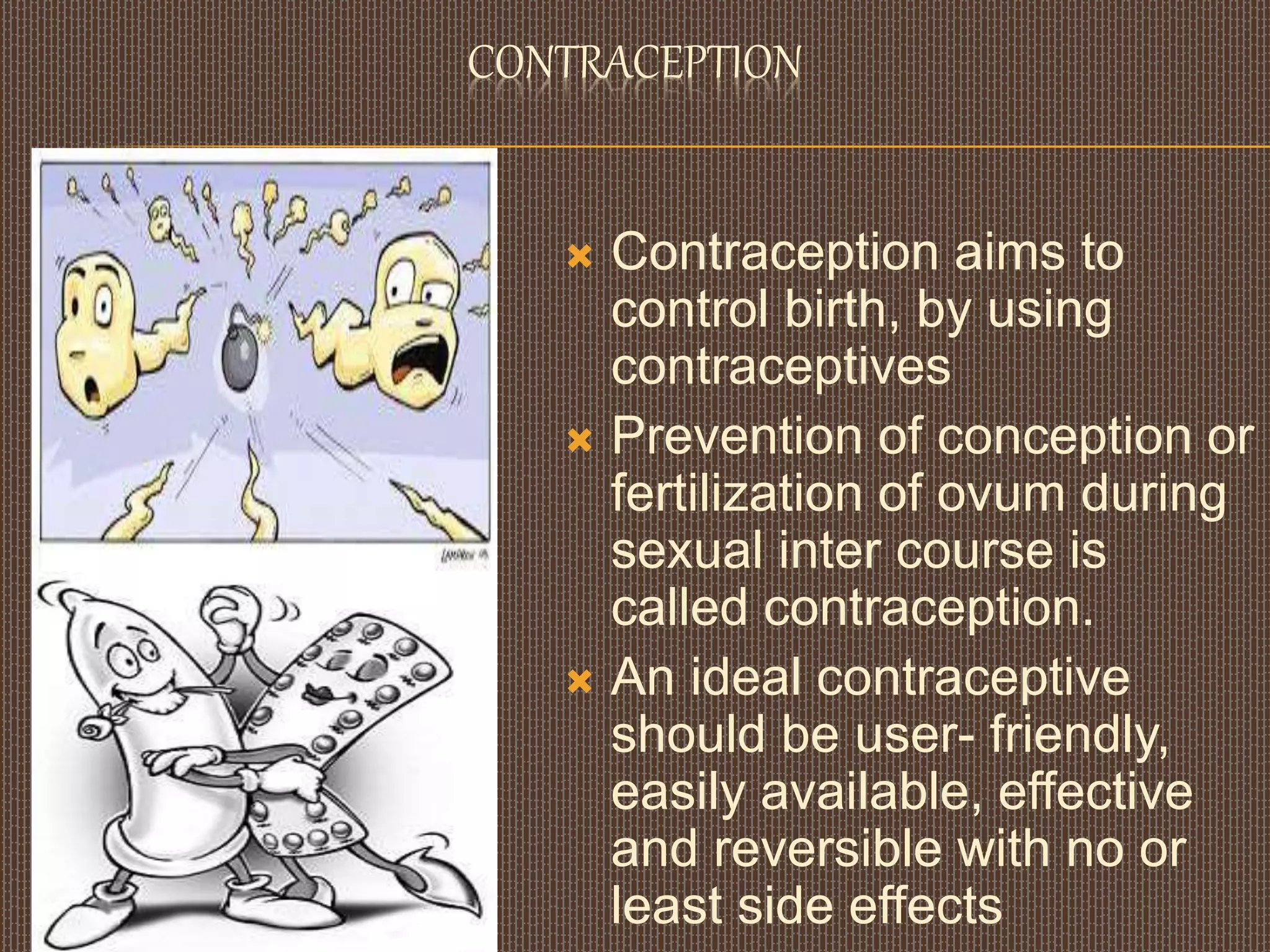
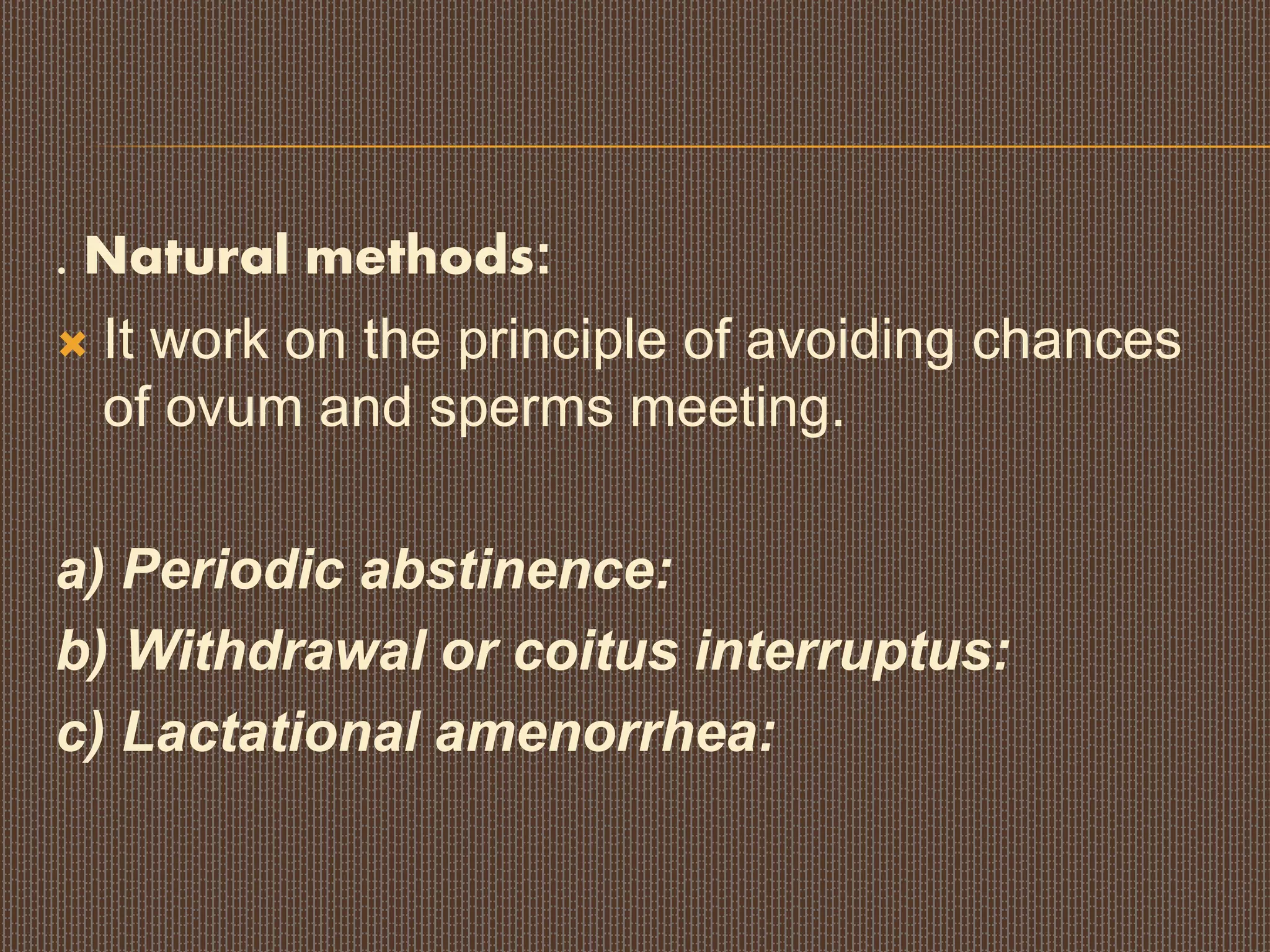
 Contraception aims to 
control birth, by using 
contraceptives 
 Prevention of conception or 
fertilization of ovum during 
sexual inter course is 
called contraception. 
 An ideal contraceptive 
should be user- friendly, 
easily available, effective 
and reversible with no or 
least side effects
THE DIFFERENT TYPES OF CONTRACEPTIVES ARE: 
1. Natural / Traditional method 
2. Barrier method 
3. Intra uterine device [IUD’s] 
4. Oral contraceptives 
5. Injection and implants 
6. Surgical method
. Natural methods: 
 It work on the principle of avoiding chances 
of ovum and sperms meeting. 
a) Periodic abstinence: 
b) Withdrawal or coitus interruptus: 
c) Lactational amenorrhea:
Physical contraceptive or Barrier 
methods: 
 This method prevents contact of 
sperm and ovum by barrier. 
 Available both for male and 
female. 
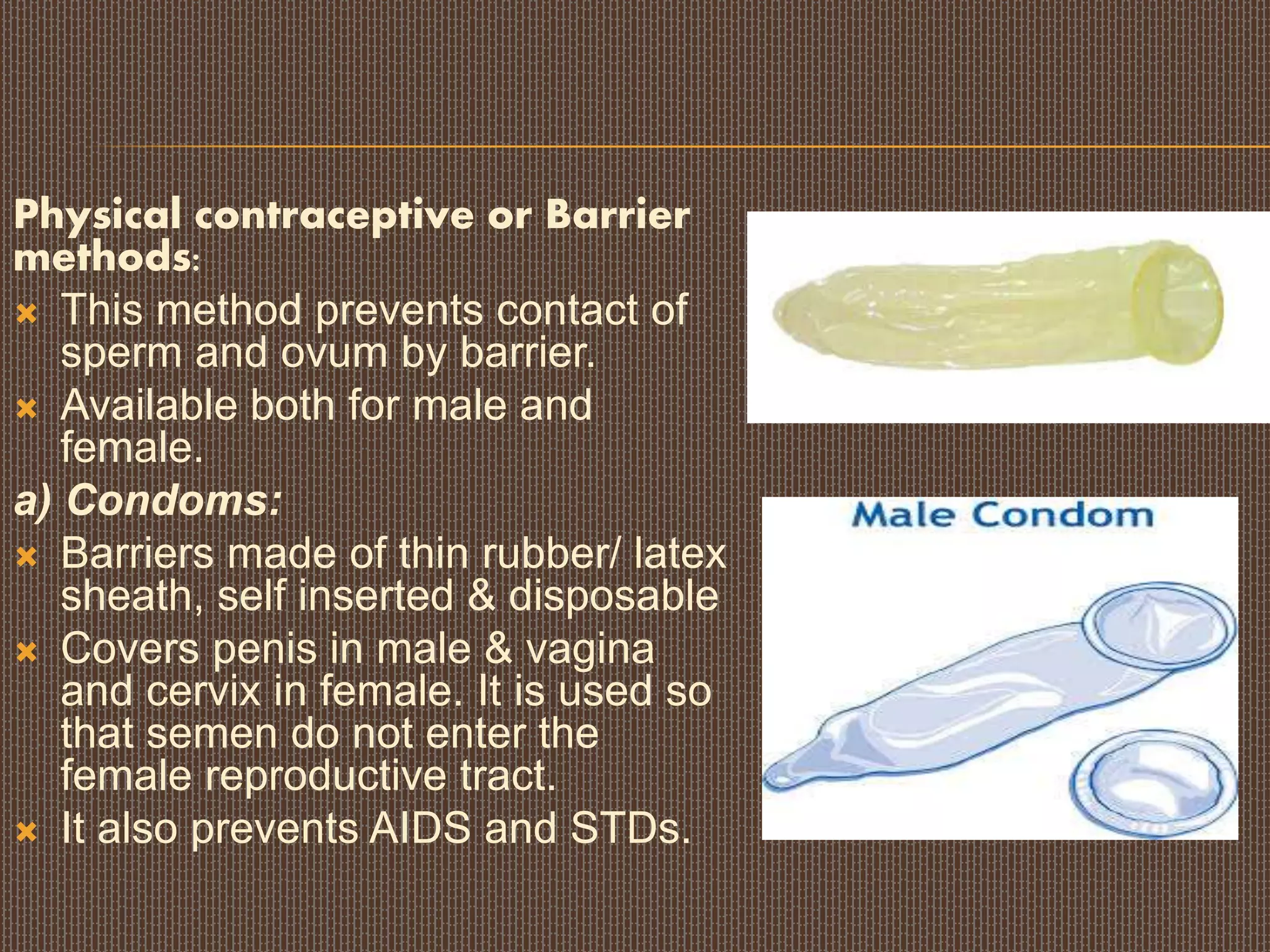
a) Condoms: 
 Barriers made of thin rubber/ latex 
sheath, self inserted & disposable 
 Covers penis in male & vagina 
and cervix in female. It is used so 
that semen do not enter the 
female reproductive tract. 
 It also prevents AIDS and STDs.
b) Diaphragm, cervical 
caps and vaults: 
 Barrier, made of rubber 
latex. 
 Inserted into the female 
reproductive tract to cover 
the cervix 
 Block entry of sperm 
through cervix, reusable 
 Spermicidal cream, jellies, 
foams along with these 
barriers
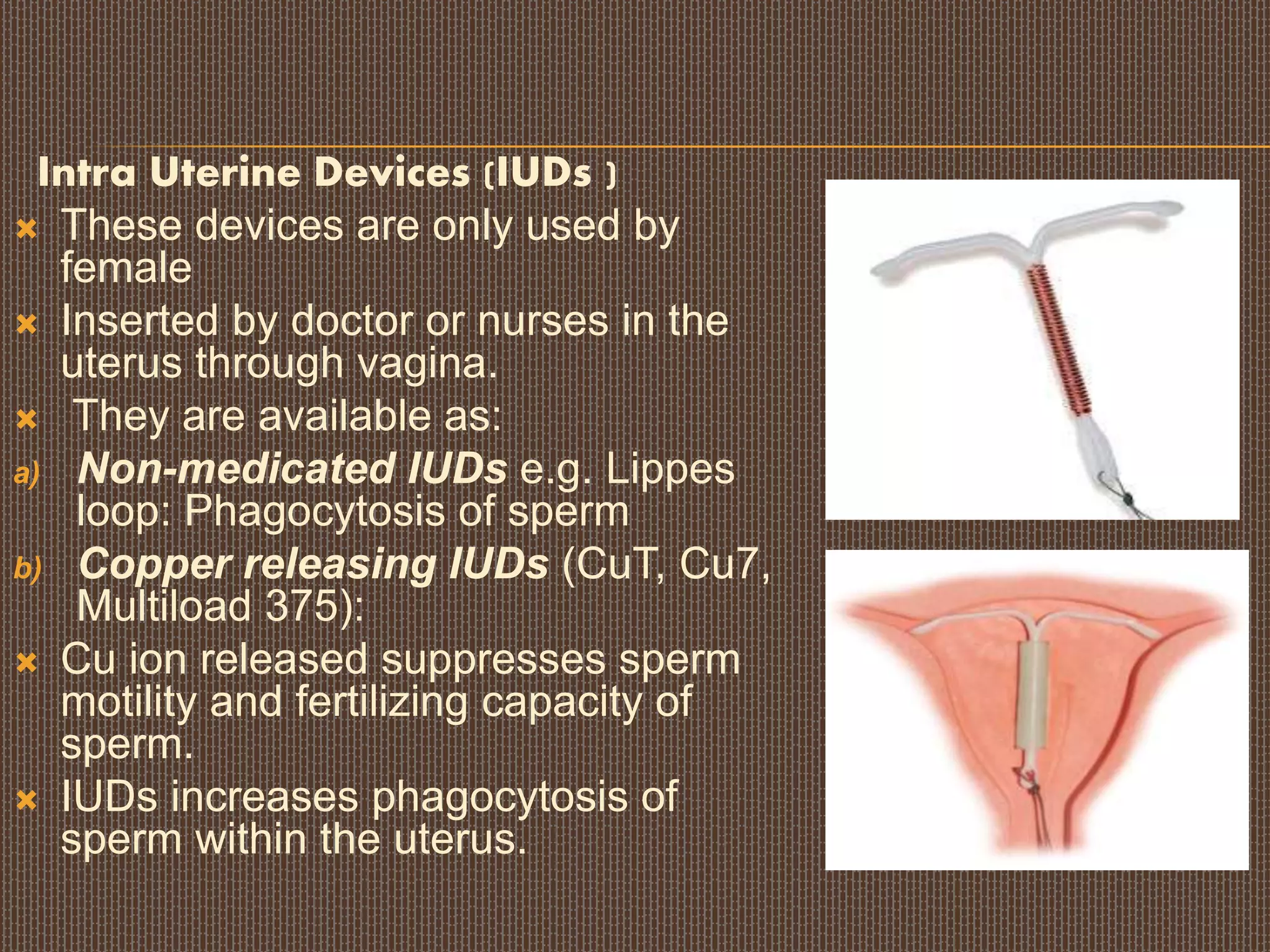
Intra Uterine Devices (IUDs ) 
 These devices are only used by 
female 
 Inserted by doctor or nurses in the 
uterus through vagina. 
 They are available as: 
a) Non-medicated IUDs e.g. Lippes 
loop: Phagocytosis of sperm 
b) Copper releasing IUDs (CuT, Cu7, 
Multiload 375): 
 Cu ion released suppresses sperm 
motility and fertilizing capacity of 
sperm. 
 IUDs increases phagocytosis of 
sperm within the uterus.
Injections or implants: 
 Progesterone alone or in combination with estrogen used as 
injections or implants under the skin of female. 
 Action similar to pills, effective for long periods 
 Progesterone or combination of progesterone and estrogen 
or IUDs- within 72 hours of coitus are effective as 
emergency contraceptives to avoid possible pregnancy 
due to rape or unprotected intercourse
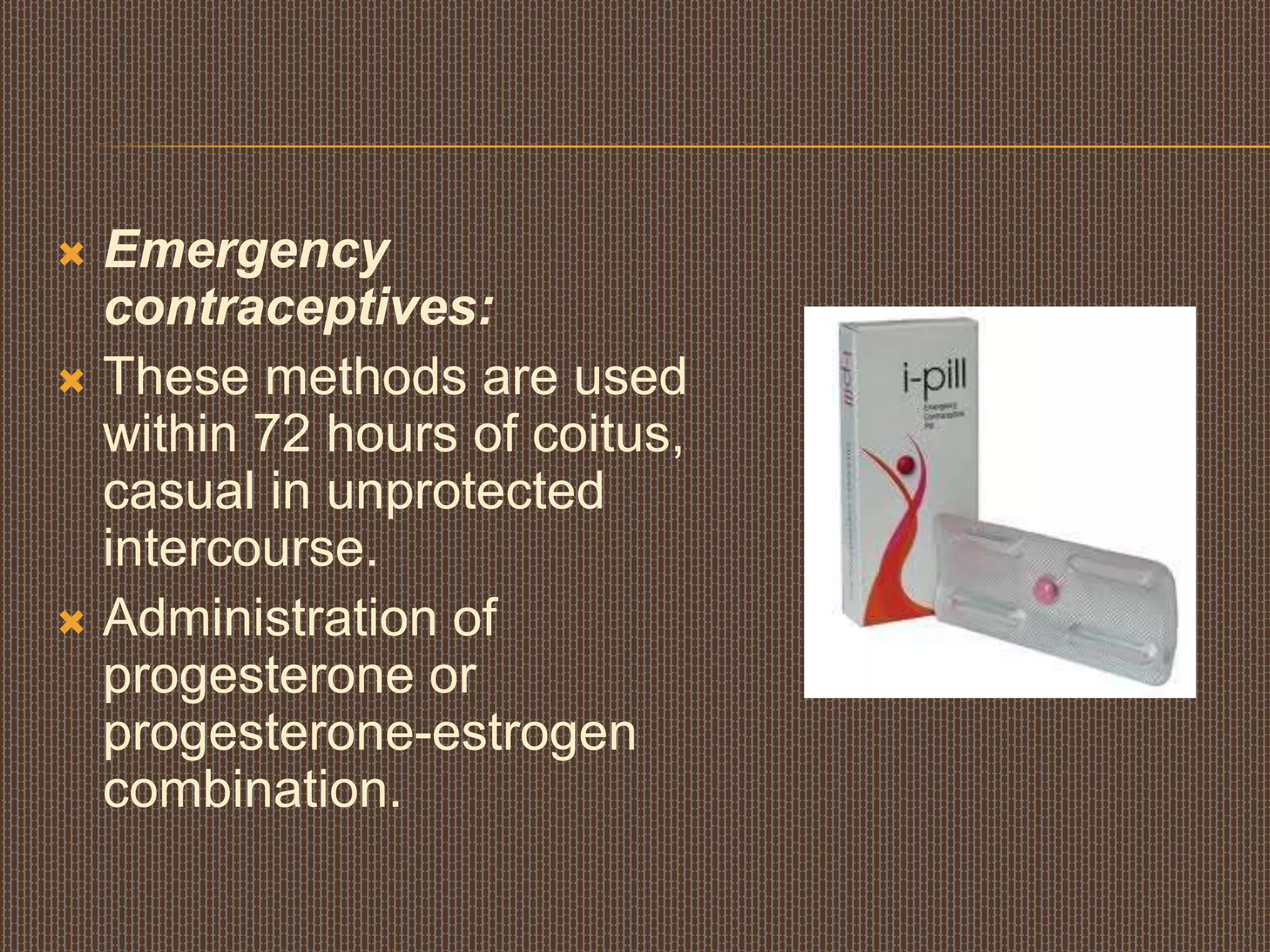
 Emergency 
contraceptives: 
 These methods are used 
within 72 hours of coitus, 
casual in unprotected 
intercourse. 
 Administration of 
progesterone or 
progesterone-estrogen 
combination.
Surgical methods: 
 It is also called as sterilization method 
advised to male/ female partner to prevent any 
future pregnancy. 
 Blocks gamete transport, thus prevent 
conception 
 Sterilization in male is called-vasectomy & 
female- ‘tubectomy’ 
 Vasectomy- a small part of the vas deferens is 
removed or tied up through incision made on 
scrotum
SEXUALLY TRANSMITTED DISEASES (STDS) 
 Diseases or infections which are transmitted 
through sexual intercourse are called 
Sexually transmitted diseases (STDs)/ 
Venereal diseases (VD)/ Reproductive tract 
infections (RTI) 
 Gonorrhea, Syphilis, Genital herpes, 
Chlamydiasis, genital warts, Trichomoniasis, 
hepatitis-B and HIV
 Mode of transmission- Hepatitis- B & HIV 
1. Sexual contact with infected person 
2. Sharing of injection needles 
3. Sharing the unsterilized surgical instruments 
4. Transfusion of blood from infected person to 
healthy person 
5. Infected mother to foetus 
 Except hepatitis-B, genital herpes and HIV 
infections, others are curable.
INFERTILITY 
 The couple unable to produce children in spite of 
unprotected sex is due to Infertility. Problems of 
infertility may be in male or female. 
 The reason of infertility may be:- physical, congenial, 
diseases, drugs, immunological or even 
psychological. 
 Female are blamed often in India 
 Specialized Health care units like Infertility clinics-diagnose, 
corrective treatments to have child 
 When treatments are not enough, couple are assisted 
with techniques called assisted reproductive 
technologies (ART)
Reproductive health- class 12 cbse

Reproductive health- class 12 cbse

  • 1.
    Reproductive health ~KUSHSEHGAL XII SCIENCE
  • 2.
    WHAT IS REPRODUCTIVE HEALTH…?  It is the state of physical, emotional, behavioral and social fitness for leading a reproductive life.  According to WHO: A total well being in all aspects of reproduction, i.e., physical, emotional, behavioral and social
  • 3.
    REPRODUCTIVE HEALTH- PROBLEMS& STRATEGIES  India was among the 1st countries to initiate actions & plans to attain total reproductive health as social goal.  These programs are called as ‘ FAMILY PLANNING’- initiated in 1951.
  • 4.
     Improved programscovering reproduction related areas are in operation- ‘Reproductive & Child Health Care Programs’ (RCH)  Create awareness about various reproduction aspects & provide facilities and support to build reproductively healthy society
  • 5.
    POPULATION EXPLOSION ANDBIRTH CONTROL  The increase in size and growth of human population is called population explosion.  Indian population- 350 million at independence and crossed 1 billion in May 2000  Alarming growth rate- scarcity of basic requirements (food, shelter & clothing)
  • 6.
     The reasonfor high population explosion are, 1. Decline in death rate. 2. Longer life span. 3. Decline in maternal mortality rate (MMR) 4. Decline in infant mortality rate (IMR) 5. Some religious belief against birth control. 6. Lack of reproductive health knowledge.
  • 8.
    CONTRACEPTION  Contraceptionaims to control birth, by using contraceptives  Prevention of conception or fertilization of ovum during sexual inter course is called contraception.  An ideal contraceptive should be user- friendly, easily available, effective and reversible with no or least side effects
  • 9.
    THE DIFFERENT TYPESOF CONTRACEPTIVES ARE: 1. Natural / Traditional method 2. Barrier method 3. Intra uterine device [IUD’s] 4. Oral contraceptives 5. Injection and implants 6. Surgical method
  • 10.
    . Natural methods:  It work on the principle of avoiding chances of ovum and sperms meeting. a) Periodic abstinence: b) Withdrawal or coitus interruptus: c) Lactational amenorrhea:
  • 11.
    Physical contraceptive orBarrier methods:  This method prevents contact of sperm and ovum by barrier.  Available both for male and female. a) Condoms:  Barriers made of thin rubber/ latex sheath, self inserted & disposable  Covers penis in male & vagina and cervix in female. It is used so that semen do not enter the female reproductive tract.  It also prevents AIDS and STDs.
  • 12.
    b) Diaphragm, cervical caps and vaults:  Barrier, made of rubber latex.  Inserted into the female reproductive tract to cover the cervix  Block entry of sperm through cervix, reusable  Spermicidal cream, jellies, foams along with these barriers
  • 13.
    Intra Uterine Devices(IUDs )  These devices are only used by female  Inserted by doctor or nurses in the uterus through vagina.  They are available as: a) Non-medicated IUDs e.g. Lippes loop: Phagocytosis of sperm b) Copper releasing IUDs (CuT, Cu7, Multiload 375):  Cu ion released suppresses sperm motility and fertilizing capacity of sperm.  IUDs increases phagocytosis of sperm within the uterus.
  • 14.
    Injections or implants:  Progesterone alone or in combination with estrogen used as injections or implants under the skin of female.  Action similar to pills, effective for long periods  Progesterone or combination of progesterone and estrogen or IUDs- within 72 hours of coitus are effective as emergency contraceptives to avoid possible pregnancy due to rape or unprotected intercourse
  • 15.
     Emergency contraceptives:  These methods are used within 72 hours of coitus, casual in unprotected intercourse.  Administration of progesterone or progesterone-estrogen combination.
  • 17.
    Surgical methods: It is also called as sterilization method advised to male/ female partner to prevent any future pregnancy.  Blocks gamete transport, thus prevent conception  Sterilization in male is called-vasectomy & female- ‘tubectomy’  Vasectomy- a small part of the vas deferens is removed or tied up through incision made on scrotum
  • 19.
    SEXUALLY TRANSMITTED DISEASES(STDS)  Diseases or infections which are transmitted through sexual intercourse are called Sexually transmitted diseases (STDs)/ Venereal diseases (VD)/ Reproductive tract infections (RTI)  Gonorrhea, Syphilis, Genital herpes, Chlamydiasis, genital warts, Trichomoniasis, hepatitis-B and HIV
  • 20.
     Mode oftransmission- Hepatitis- B & HIV 1. Sexual contact with infected person 2. Sharing of injection needles 3. Sharing the unsterilized surgical instruments 4. Transfusion of blood from infected person to healthy person 5. Infected mother to foetus  Except hepatitis-B, genital herpes and HIV infections, others are curable.
  • 21.
    INFERTILITY  Thecouple unable to produce children in spite of unprotected sex is due to Infertility. Problems of infertility may be in male or female.  The reason of infertility may be:- physical, congenial, diseases, drugs, immunological or even psychological.  Female are blamed often in India  Specialized Health care units like Infertility clinics-diagnose, corrective treatments to have child  When treatments are not enough, couple are assisted with techniques called assisted reproductive technologies (ART)