
THE
DIGESTIVE SYSTEM
Food
Digestion
Phases Include
1. Ingestion
2. Movement
3. Mechanical and Chemical Digestion
4. Absorption
5. Elimination
Types of Digestion
Mechanical (physical)
Chemical (enzymes)
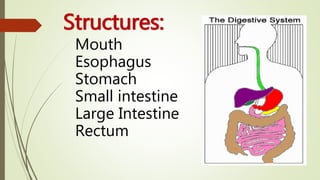
Structures:
Mouth
Esophagus
Stomach
Small intestine
Large Intestine
Rectum
Mouth
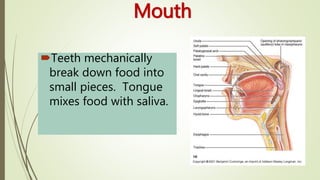
Teeth mechanically
break down food into
small pieces. Tongue
mixes food with saliva.
Esophagus
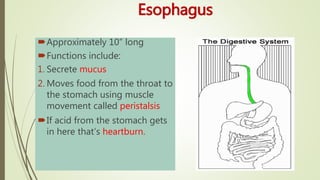
Approximately 10” long
Functions include:
1. Secrete mucus
2. Moves food from the throat to
the stomach using muscle
movement called peristalsis
If acid from the stomach gets
in here that’s heartburn.
Stomach
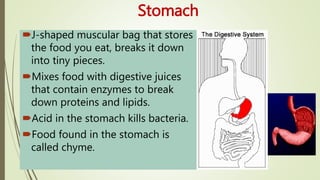
J-shaped muscular bag that stores
the food you eat, breaks it down
into tiny pieces.
Mixes food with digestive juices
that contain enzymes to break
down proteins and lipids.
Acid in the stomach kills bacteria.
Food found in the stomach is
called chyme.
Small Intestine
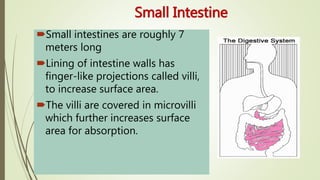
Small intestines are roughly 7
meters long
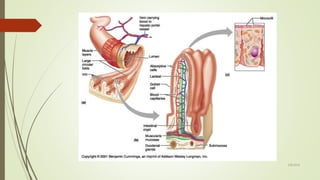
Lining of intestine walls has
finger-like projections called villi,
to increase surface area.
The villi are covered in microvilli
which further increases surface
area for absorption.
3/8/2016
Small Intestine
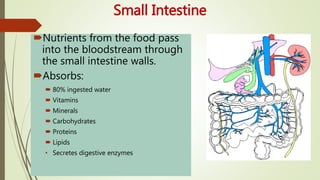
Nutrients from the food pass
into the bloodstream through
the small intestine walls.
Absorbs:
 80% ingested water
 Vitamins
 Minerals
 Carbohydrates
 Proteins
 Lipids
• Secretes digestive enzymes
Large Intestine
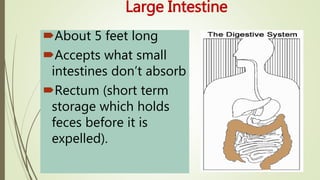
About 5 feet long
Accepts what small
intestines don’t absorb
Rectum (short term
storage which holds
feces before it is
expelled).
Large Intestine
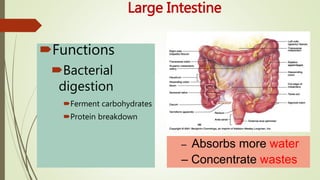
Functions
Bacterial
digestion
Ferment carbohydrates
Protein breakdown
– Absorbs more water
– Concentrate wastes
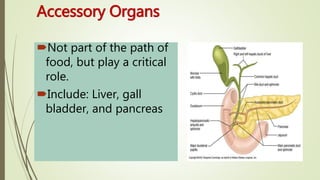
Accessory Organs
Not part of the path of
food, but play a critical
role.
Include: Liver, gall
bladder, and pancreas
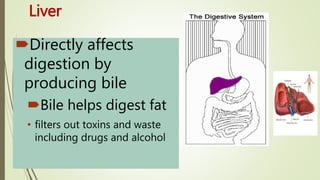
Liver
Directly affects
digestion by
producing bile
Bile helps digest fat
• filters out toxins and waste
including drugs and alcohol
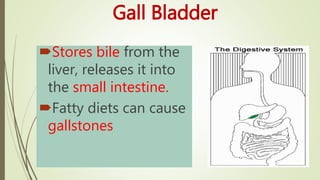
Gall Bladder
Stores bile from the
liver, releases it into
the small intestine.
Fatty diets can cause
gallstones
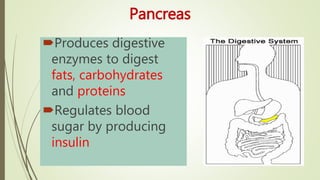
Pancreas
Produces digestive
enzymes to digest
fats, carbohydrates
and proteins
Regulates blood
sugar by producing
insulin

The Human Digestive System