NATURAL
ENVIRONMENT
Name- Abhra Pawan Sharma
Class- 9H
Roll no- 4
ENVIRONMENT
 Everything around us is known as environment.
 It includes every living and non living thing.
 Everything which we see in our surroundings such
as sunlight, atmosphere, land, water, minerals,
humans, plants, animals, insects, air etc. comes in
environment.
 It is the sum of all surroundings which we see.
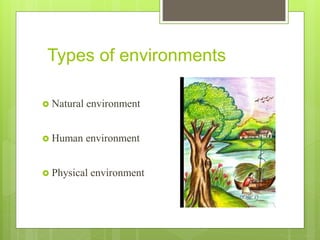
Types of environments
 Natural environment
 Human environment
 Physical environment
NATURAL ENVIRONMENT
 The natural environment means the non human
made surroundings conditions in which all biotic
and abiotic things exists on earth. Natural
environment can further be divided into 4 parts.
Further types of natural
environment
 Lithosphere- It is defined as the rock and crust surface
that covers the earth. An example of lithosphere is the
rocky mountain range.
 Hydrosphere- all the water on the earths surface such as
lakes and seas is known as hydrosphere.
 Atmosphere- the mixture of gases that surrounds the
earth is known as atmosphere.
 Biosphere- the part of earths surface and atmosphere
which supports life and where plants and animals live
is known as biosphere.
Human impact or influence on
environment.
we are living in this environment so we have
definitely gave an impact on environment. So lets see
some positive and negative impact of humans on
environment
NEGATIVE IMPACT
 Humans are continuously cutting down trees and littering
have a negative impact on environment
 Pollution is everywhere, from the trash thrown out on the
free way to the millions of metric tons of pollution pumped
into the atmosphere every year.
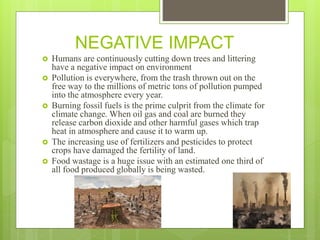
 Burning fossil fuels is the prime culprit from the climate for
climate change. When oil gas and coal are burned they
release carbon dioxide and other harmful gases which trap
heat in atmosphere and cause it to warm up.
 The increasing use of fertilizers and pesticides to protect
crops have damaged the fertility of land.
 Food wastage is a huge issue with an estimated one third of
all food produced globally is being wasted.
POSITIVE IMPACT
 Promoting afforestation plays an important role in reducing air
pollution by improving overall air quality.
 Conserving water resources- By not throwing industrial wastes,
domestic wastes into rivers, lakes etc. water pollution can be
prevented. Technique like rain water harvesting, watershed
management, drip irrigation helps in conservation of water
resources.
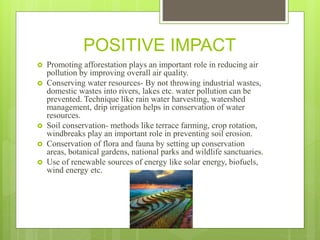
 Soil conservation- methods like terrace farming, crop rotation,
windbreaks play an important role in preventing soil erosion.
 Conservation of flora and fauna by setting up conservation
areas, botanical gardens, national parks and wildlife sanctuaries.
 Use of renewable sources of energy like solar energy, biofuels,
wind energy etc.
CONCLUSION
 Since the dawn of time, human beings have
solemnly dependent on mother nature to fulfil their
needs from inhaling air to sustenance to food
requirements. But we are unable to handle the
greatness of nature, we have overused, exploited,
wasted natural resources which will effect badly
on future generations. So its our duty to utilize the
resources carefully. If we do not then that day is
not so far where there will be no water no food no
oxygen and the life will be impossible.
THANKYOU

NATURAL ENVIRONMENT

  • 1.
    NATURAL ENVIRONMENT Name- Abhra PawanSharma Class- 9H Roll no- 4
  • 2.
    ENVIRONMENT  Everything aroundus is known as environment.  It includes every living and non living thing.  Everything which we see in our surroundings such as sunlight, atmosphere, land, water, minerals, humans, plants, animals, insects, air etc. comes in environment.  It is the sum of all surroundings which we see.
  • 3.
    Types of environments Natural environment  Human environment  Physical environment
  • 4.
    NATURAL ENVIRONMENT  Thenatural environment means the non human made surroundings conditions in which all biotic and abiotic things exists on earth. Natural environment can further be divided into 4 parts.
  • 5.
    Further types ofnatural environment  Lithosphere- It is defined as the rock and crust surface that covers the earth. An example of lithosphere is the rocky mountain range.  Hydrosphere- all the water on the earths surface such as lakes and seas is known as hydrosphere.  Atmosphere- the mixture of gases that surrounds the earth is known as atmosphere.  Biosphere- the part of earths surface and atmosphere which supports life and where plants and animals live is known as biosphere.
  • 6.
    Human impact orinfluence on environment. we are living in this environment so we have definitely gave an impact on environment. So lets see some positive and negative impact of humans on environment
  • 7.
    NEGATIVE IMPACT  Humansare continuously cutting down trees and littering have a negative impact on environment  Pollution is everywhere, from the trash thrown out on the free way to the millions of metric tons of pollution pumped into the atmosphere every year.  Burning fossil fuels is the prime culprit from the climate for climate change. When oil gas and coal are burned they release carbon dioxide and other harmful gases which trap heat in atmosphere and cause it to warm up.  The increasing use of fertilizers and pesticides to protect crops have damaged the fertility of land.  Food wastage is a huge issue with an estimated one third of all food produced globally is being wasted.
  • 8.
    POSITIVE IMPACT  Promotingafforestation plays an important role in reducing air pollution by improving overall air quality.  Conserving water resources- By not throwing industrial wastes, domestic wastes into rivers, lakes etc. water pollution can be prevented. Technique like rain water harvesting, watershed management, drip irrigation helps in conservation of water resources.  Soil conservation- methods like terrace farming, crop rotation, windbreaks play an important role in preventing soil erosion.  Conservation of flora and fauna by setting up conservation areas, botanical gardens, national parks and wildlife sanctuaries.  Use of renewable sources of energy like solar energy, biofuels, wind energy etc.
  • 9.
    CONCLUSION  Since thedawn of time, human beings have solemnly dependent on mother nature to fulfil their needs from inhaling air to sustenance to food requirements. But we are unable to handle the greatness of nature, we have overused, exploited, wasted natural resources which will effect badly on future generations. So its our duty to utilize the resources carefully. If we do not then that day is not so far where there will be no water no food no oxygen and the life will be impossible.
  • 10.