How to make the passive
When we want to give more 
importance to the action 
instead of the person who 
performs it we use the 
passive voice.
To transform an active sentence 
to passive we consider the 
following points: 
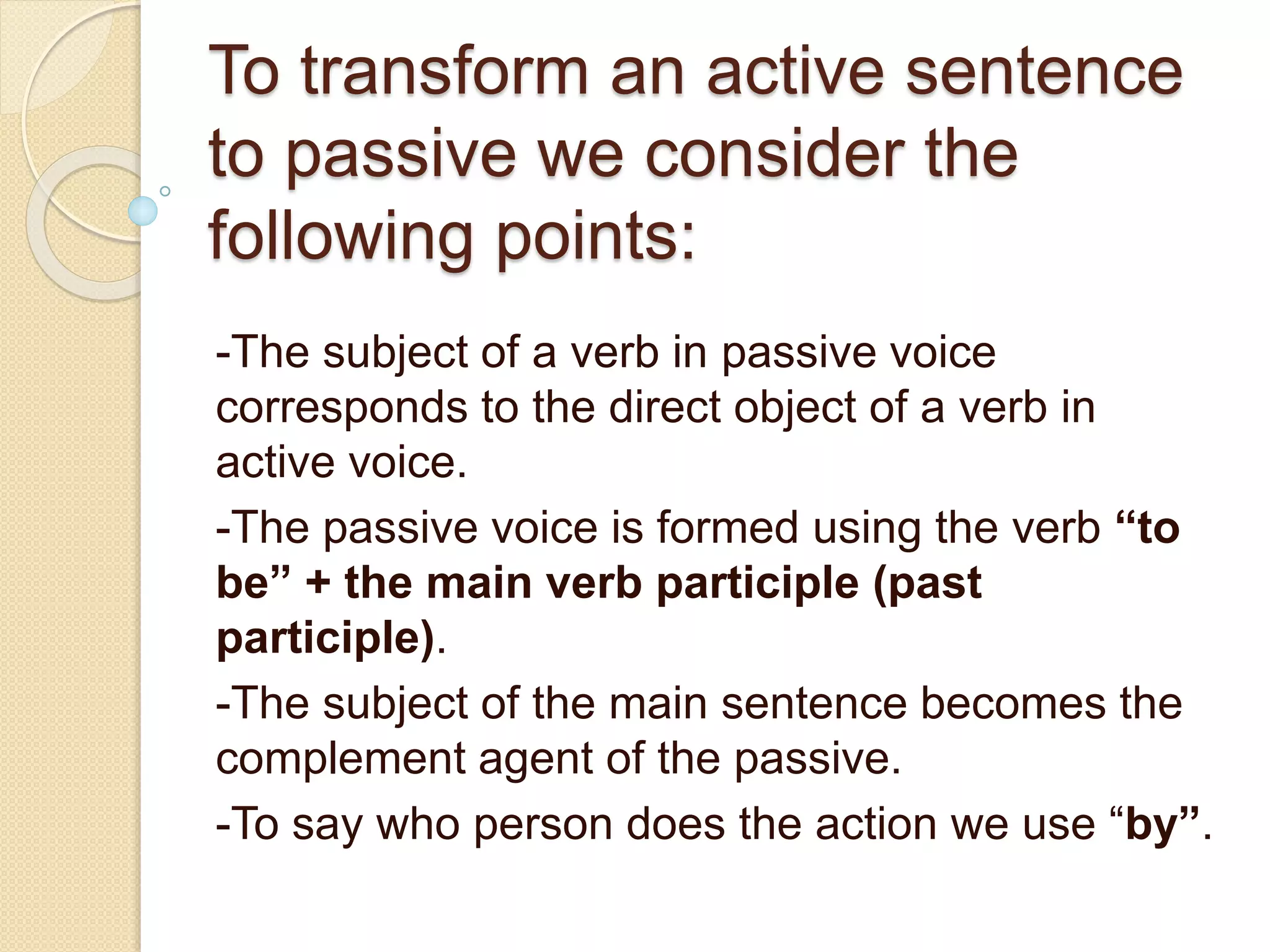
-The subject of a verb in passive voice 
corresponds to the direct object of a verb in 
active voice. 
-The passive voice is formed using the verb “to 
be” + the main verb participle (past 
participle). 
-The subject of the main sentence becomes the 
complement agent of the passive. 
-To say who person does the action we use “by”.
Examples of how to 
transform the verb tenses 
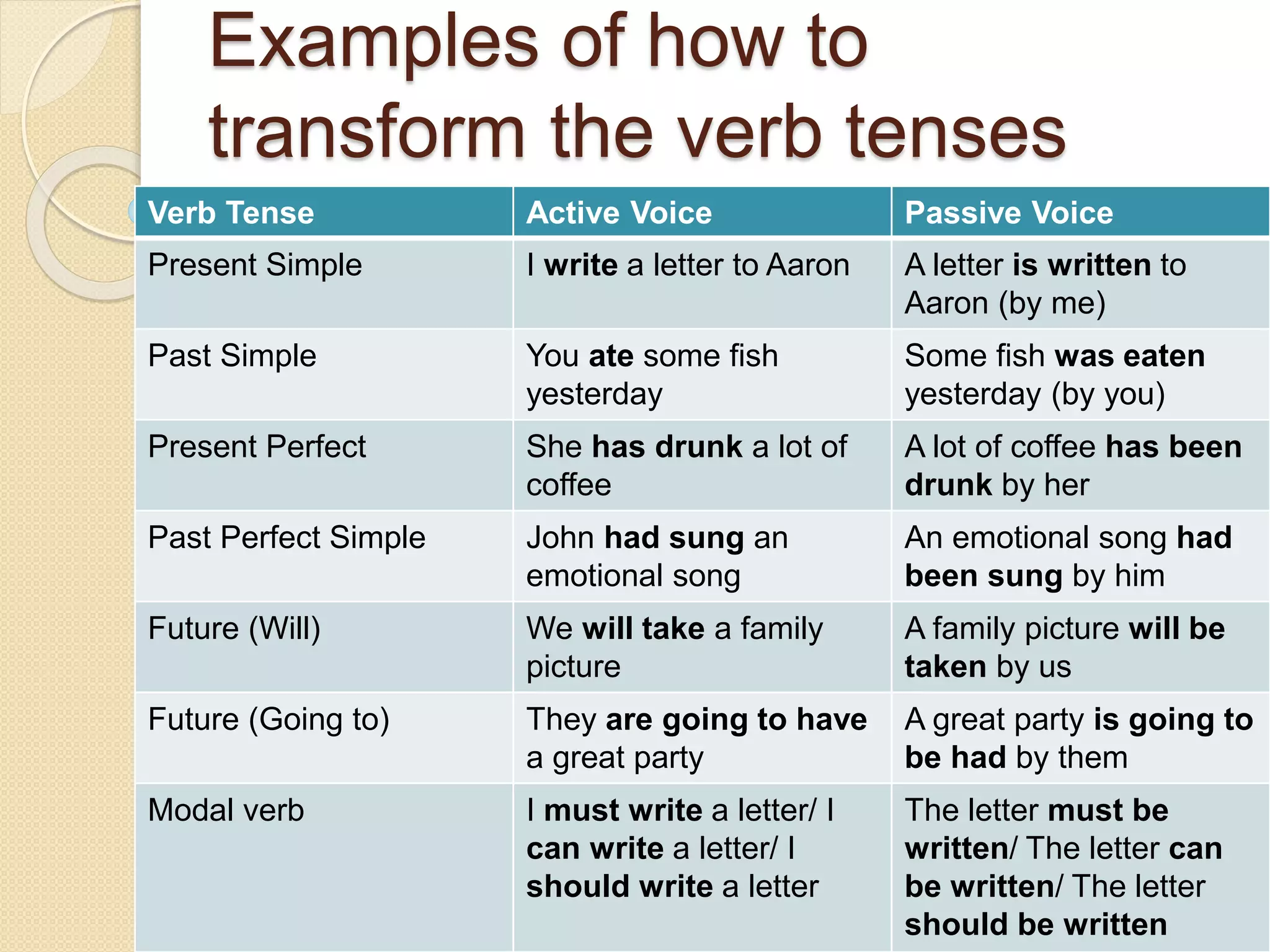
Verb Tense Active Voice Passive Voice 
Present Simple I write a letter to Aaron A letter is written to 
Aaron (by me) 
Past Simple You ate some fish 
yesterday 
Some fish was eaten 
yesterday (by you) 
Present Perfect She has drunk a lot of 
coffee 
A lot of coffee has been 
drunk by her 
Past Perfect Simple John had sung an 
emotional song 
An emotional song had 
been sung by him 
Future (Will) We will take a family 
picture 
A family picture will be 
taken by us 
Future (Going to) They are going to have 
a great party 
A great party is going to 
be had by them 
Modal verb I must write a letter/ I 
can write a letter/ I 
should write a letter 
The letter must be 
written/ The letter can 
be written/ The letter 
should be written

How to make the passive

  • 1.
    How to makethe passive
  • 2.
    When we wantto give more importance to the action instead of the person who performs it we use the passive voice.
  • 3.
    To transform anactive sentence to passive we consider the following points: -The subject of a verb in passive voice corresponds to the direct object of a verb in active voice. -The passive voice is formed using the verb “to be” + the main verb participle (past participle). -The subject of the main sentence becomes the complement agent of the passive. -To say who person does the action we use “by”.
  • 4.
    Examples of howto transform the verb tenses Verb Tense Active Voice Passive Voice Present Simple I write a letter to Aaron A letter is written to Aaron (by me) Past Simple You ate some fish yesterday Some fish was eaten yesterday (by you) Present Perfect She has drunk a lot of coffee A lot of coffee has been drunk by her Past Perfect Simple John had sung an emotional song An emotional song had been sung by him Future (Will) We will take a family picture A family picture will be taken by us Future (Going to) They are going to have a great party A great party is going to be had by them Modal verb I must write a letter/ I can write a letter/ I should write a letter The letter must be written/ The letter can be written/ The letter should be written