Handling
Customer
Complaints
DESINGED BY,
MR.SUNIL KUMAR,
LECTURER
96 percent of dissatisfied
customers never bother to
complain
Each happy customer will tell at
the most six other people
Handling Customer
Complaints are
opportunities…not
problems!
How to Handle Customer
Complaints
Don’t be defensive
Be composed at all times
Don’t take criticisms personally
Offer an apology even if the disservice is
not your fault
Show empathy by using such phrases as:
“I can understand how you feel”, “I
appreciate what you’re saying.”
How to Handle Customer
Complaints
Address customers by name
All communication should be in the first person.
Use “I am sorry” not the royal we
Don’t make excuses or blame others in your
organization
Give the customer your full attention and
establish eye contact
Paraphrase their complaint in your own words
to determine whether you have correctly
understood the situation.
How to Handle Customer
Complaints
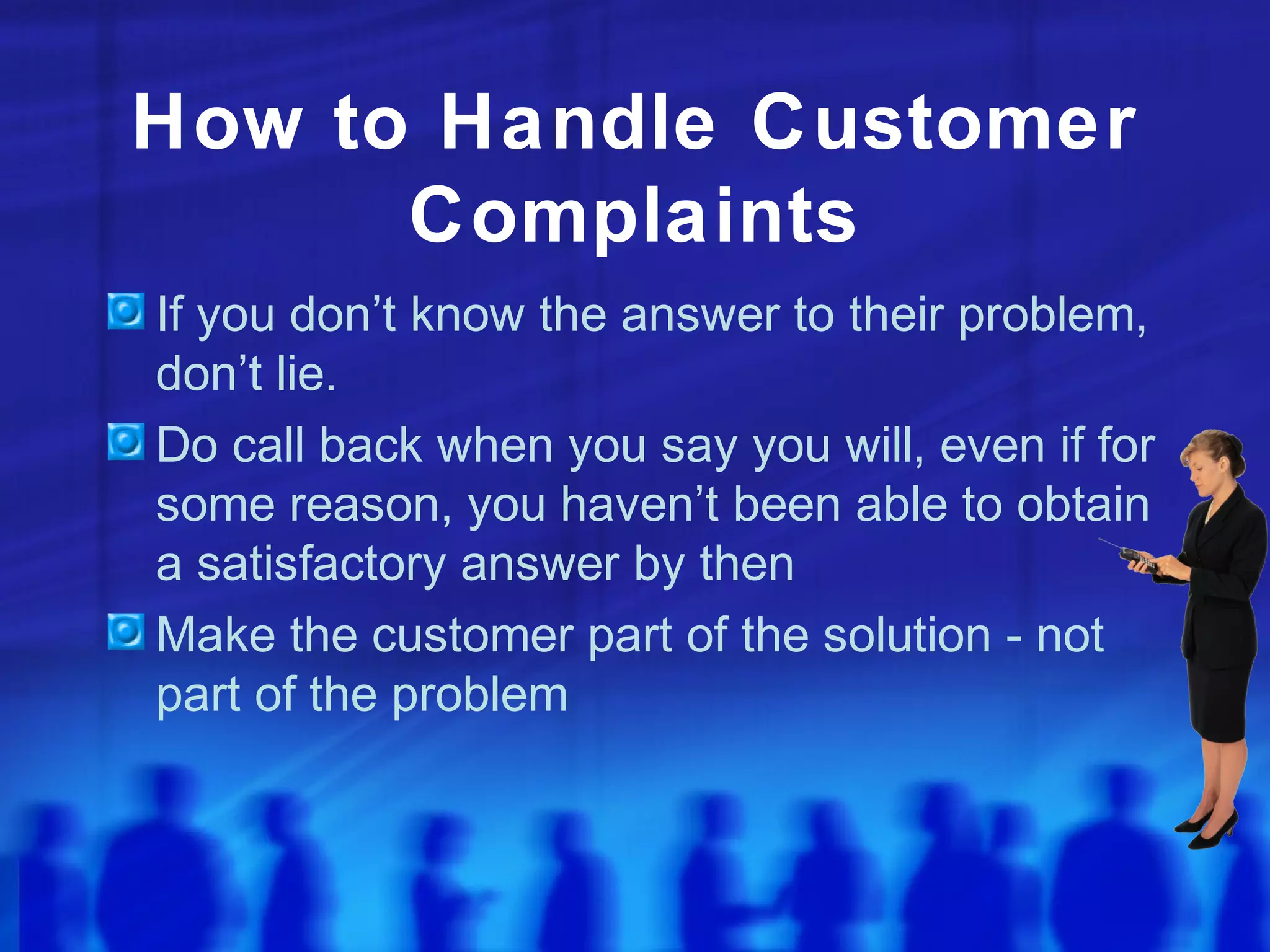
If you don’t know the answer to their problem,
don’t lie.
Do call back when you say you will, even if for
some reason, you haven’t been able to obtain
a satisfactory answer by then
Make the customer part of the solution - not
part of the problem
How to Handle Customer
Complaints
Tell them what you can do…not what
you can’t do
Find out what it will take to turn their
dissatisfaction into satisfaction
If they agree to that solution, act quickly
before they change their mind
Follow up
And remember: You can never win an
argument with a customer
Find out what you
customers really think
Surveys, focus groups, mystery
shopping
One complaint statistically represents
24 similar ones
Test your own service delivery
Listen carefully and
assume nothing
Never assume anything in
communications
Do not dismiss any of the customers
complaint as irrelevant
Give value to actual customer
experience
When all else fails - how
to make amends
95% of customers who have a complaint that
was handled efficiently and promptly will not
only continue to do business but will become
even more brand-loyal (Wharton Business
School)
Product replacements, good will gifts, free of
charge services, etc…
Dashing Salaam!

How to hadle complaints

  • 1.
  • 2.
    96 percent ofdissatisfied customers never bother to complain Each happy customer will tell at the most six other people Handling Customer Complaints are opportunities…not problems!
  • 3.
    How to HandleCustomer Complaints Don’t be defensive Be composed at all times Don’t take criticisms personally Offer an apology even if the disservice is not your fault Show empathy by using such phrases as: “I can understand how you feel”, “I appreciate what you’re saying.”
  • 4.
    How to HandleCustomer Complaints Address customers by name All communication should be in the first person. Use “I am sorry” not the royal we Don’t make excuses or blame others in your organization Give the customer your full attention and establish eye contact Paraphrase their complaint in your own words to determine whether you have correctly understood the situation.
  • 5.
    How to HandleCustomer Complaints If you don’t know the answer to their problem, don’t lie. Do call back when you say you will, even if for some reason, you haven’t been able to obtain a satisfactory answer by then Make the customer part of the solution - not part of the problem
  • 6.
    How to HandleCustomer Complaints Tell them what you can do…not what you can’t do Find out what it will take to turn their dissatisfaction into satisfaction If they agree to that solution, act quickly before they change their mind Follow up And remember: You can never win an argument with a customer
  • 7.
    Find out whatyou customers really think Surveys, focus groups, mystery shopping One complaint statistically represents 24 similar ones Test your own service delivery
  • 8.
    Listen carefully and assumenothing Never assume anything in communications Do not dismiss any of the customers complaint as irrelevant Give value to actual customer experience
  • 9.
    When all elsefails - how to make amends 95% of customers who have a complaint that was handled efficiently and promptly will not only continue to do business but will become even more brand-loyal (Wharton Business School) Product replacements, good will gifts, free of charge services, etc…
  • 10.